
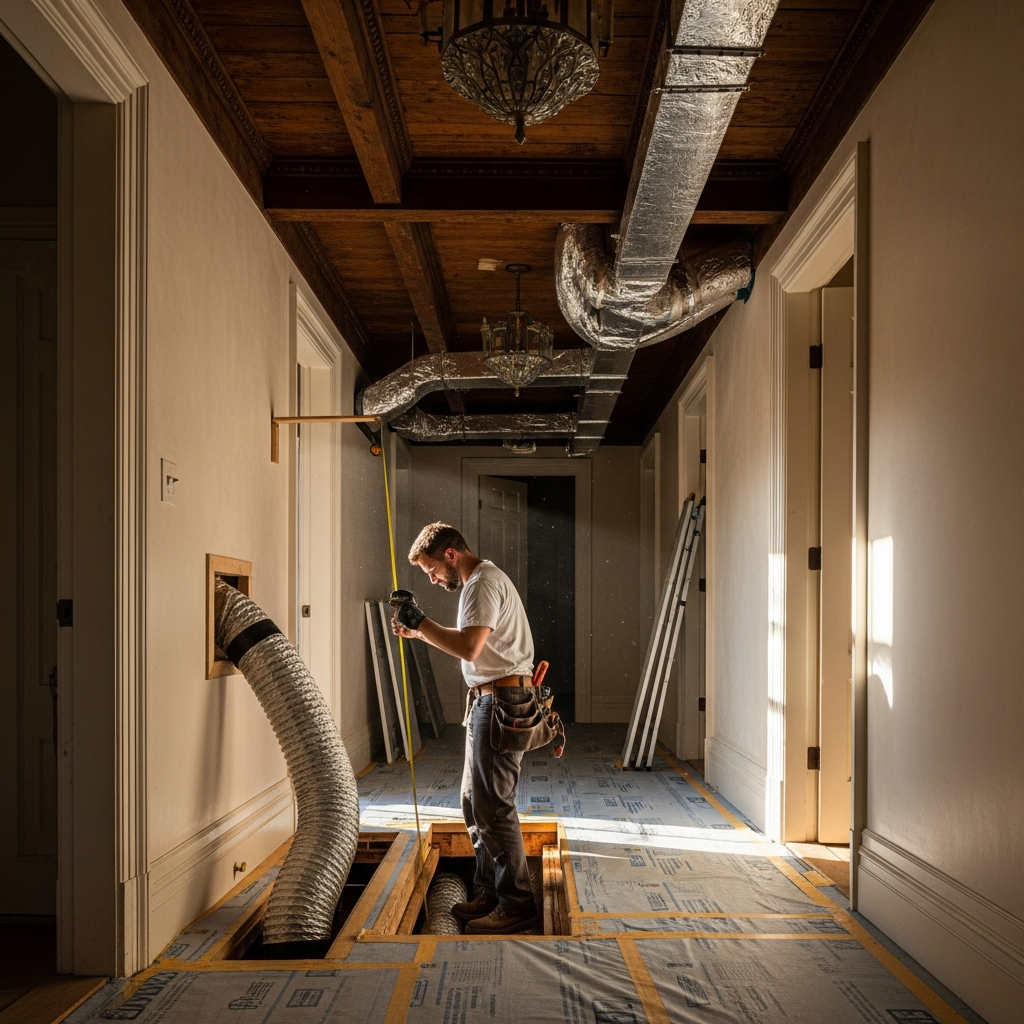
Older homes in Beverly Hills carry a grace and presence that is hard to replicate, from plaster ceilings and intricate millwork to gracious floor plans and sunlit rooms that tell stories from another era. When it comes time to renew the ductwork in these residences, many homeowners start by asking about the “cost,” only to learn that the true conversation is about tailoring a system to the home’s architecture, access, and lifestyle. In that sense, the most helpful first step is education: understanding how materials, design, and the realities of older construction all shape the scope and experience of a successful project. For a concise overview of best practices in duct replacement, it helps to familiarize yourself with reliable guidance so you can translate your comfort goals into a clear plan.
What Makes Older Homes Distinct
Beverly Hills’ older homes range from Spanish Revival classics to mid-century residences with clean lines and elegant proportions. Many were built with systems that have been modified—sometimes several times—over the decades. Ducts might thread through tight chases, share space with vintage wiring, or occupy attics with uneven clearances. It is not unusual to find returns undersized for today’s equipment, supply branches that were re-routed during a remodel, or a patchwork of materials added as needs evolved. These conditions are part of the charm and challenge. They demand a measured approach that respects original finishes while making meaningful improvements in comfort and air quality.
The question of investment in an older home is really a question of goals. Are you seeking quieter operation near bedrooms? More stable temperatures in rooms that swing widely over the course of a day? A path to improved filtration for allergy concerns? The answers guide decisions about new return paths, duct sizing, register placement, and materials that best serve the home without altering its character.
Access and Protection in Vintage Structures
Working in older residences often requires more thoughtful access planning than in newer construction. Crawlspaces may be shallow; attics can be interrupted by knee walls, low rafters, and a patchwork of framing from past additions. The right team maps this terrain carefully. Protecting finishes is essential: floors are covered, pathways are contained, and if any openings are required, they are executed with restraint and then repaired with materials and methods suited to the existing construction—often plaster instead of drywall and wood rather than composite trim. This attention to detail preserves the grace of the home while opening pathways for better airflow.
Designing a System That Honors the Architecture
Design is the hinge between the home’s story and the family’s comfort. In older Beverly Hills properties, rooms that were once formal may now serve as media spaces or home offices, and sleeping areas might shift as families grow. A fresh duct design reads the architecture in light of these present-day behaviors. The goal is to deliver quiet, even air with balanced supply and returns, avoiding the whistling, drafts, or temperature swings that can accompany older systems. Sometimes that means adding a discrete return in a hallway to reduce static pressure; elsewhere it might call for re-routing a trunk line to avoid a sharp transition that has long throttled airflow to a favored room.
Materials and Methods Suited to the Era
The choice of materials is guided by space constraints, acoustics, and durability. Insulated flex can be invaluable for threading through tight chases and creating gentle bends that protect airflow. Rigid metal excels in long, straight pathways and in spaces where a durable, cleanable surface is preferred. Ductboard can serve efficiently in trunks where space and geometry allow. No matter the material, success rests on sealing, insulation, strapping, and intelligent transitions. Long-radius fittings and properly supported runs reduce noise and protect the investment in performance.
Balancing, Zoning, and Noise Control
One of the gifts of a well-planned replacement is the quiet confidence it brings to daily life. Bedrooms that no longer hiss when the system starts, living rooms where conversations are no longer interrupted by a draft, and offices where midday heat does not overwhelm focus—these are the signs of good balancing and intelligent register choices. Zoning can be particularly effective in multi-level vintage homes, but it must be designed around duct capacities and equipment staging to avoid creating a new noise problem while solving an old comfort one. The art lies in finding that smooth, even airflow that feels present but never intrusive.
Energy Code, Inspections, and Documentation
California’s energy code structures expectations for duct insulation, leakage, and performance. In Beverly Hills, proper permitting and inspection ensure that work aligns with these standards. While it adds steps to the process, it also adds accountability and a paper trail that supports future maintenance or resale. Documentation—photos of sealed connections before insulation, final duct maps, and testing results—provides a clear record of what lies behind finishes, which is especially reassuring in homes where access may not be straightforward later.
Indoor Air Quality in the Context of Older Homes
Sealed, well-insulated ducts help keep attic and crawlspace air where it belongs—out of the living space. For families with sensitivities, right-sizing returns to support better filtration can be transformative. Fresh air strategies sometimes make sense, especially in tighter homes that have been improved over time with new windows or weatherization. The key is balance: filtration and ventilation designed to work with the duct system rather than restrict it, preserving the measured static pressures that keep comfort smooth and quiet.
How Scope Evolves During Assessment
Initial assessments do more than count vents; they trace how air moves and where it struggles. Technicians look for sharp turns, constrictions, and signs of past compromises like pinched runs hiding behind access panels. They identify opportunities to add or resize returns, replace restrictive grilles, or move a supply to better wash a room with air. In a vintage home, each revision is weighed against architectural impact. The best results come from targeted changes that offer substantial comfort and performance gains while staying nearly invisible once completed.
Comparing Proposals Without Losing Sight of Goals
Proposals can look different because they emphasize different values. A quick-swap approach may mirror the existing layout with minimal changes. A design-forward plan will articulate changes intended to solve specific problems you describe: that warm corner bedroom, the office that overheats, the echo of noise in a hallway return. Look for mention of static pressure targets, leakage testing, and commissioning steps like airflow verification. These are markers of a process that turns a replacement into a refinement of the home’s comfort system.
As you consider timing and scope, it helps to refresh your understanding of common terms and reasonable expectations. Clear, homeowner-friendly explanations of duct replacement practices can be a useful compass, ensuring that any bid you select is aligned with outcomes that matter to you: quiet, even temperatures and cleaner indoor air, all delivered without compromising the character you cherish.
Post-Project Life: Living With New Ducts
After installation, the best compliment you can pay the work is forgetting it’s there. The system hums along quietly, rooms feel even, and you are free from the little frustrations that once drew attention to airflow. Maintenance is straightforward: filter changes on schedule, keeping registers clear, and occasionally glancing at accessible connections to ensure nothing has shifted. If dampers were set during balancing, keep a record. Should you renovate later, sharing this documentation with your builder helps protect the integrity of the system you now enjoy.
Preserving Aesthetics While Advancing Comfort
A hallmark of a thoughtful project is how little it disturbs the look and feel of your rooms. Register styles can be chosen to complement architecture; openings are minimized and repaired with period-appropriate materials. Where new returns are introduced, they are placed with care to be discreet yet effective. In many older Beverly Hills homes, the greatest compliment after the work is complete is that guests notice only how comfortable and calm the environment feels, not where the air is coming from.
Choosing the Right Partner
Trust is earned through clear communication, respect for the home, and follow-through. An experienced team will explain tradeoffs plainly, welcome questions, and show how measurements inform decisions. When a contractor can point to a constricted trunk and describe exactly how a redesigned path will quiet a room and stabilize temperatures, you know you are in capable hands. The right partner is one who measures success not by how quickly they can finish, but by how comfortably you can live afterward.
FAQs
Do older homes always need complete duct replacement?
Not necessarily. Some systems benefit substantially from targeted improvements like sealing, added returns, or re-routing a few restrictive runs. A thorough assessment determines whether a full replacement provides the most sensible long-term improvement or if selective upgrades will meet your goals.
How disruptive is the process in a vintage Beverly Hills home?
With careful planning, protection, and sequencing, disruption can be kept to a minimum. Teams familiar with older construction use methods that respect finishes and coordinate any necessary repairs with period-appropriate materials so completed work blends seamlessly.
Can new ductwork reduce noise?
Yes. Proper sizing, gentle transitions, quality insulation, and smart register choices all contribute to quieter operation. Balancing plays a big role too, preventing the high velocities and pressure imbalances that cause hissing or whistling.
What should I expect from inspections and code requirements?
Permits and inspections ensure that materials, insulation levels, and sealing methods meet energy and safety standards. The result is a project that is verifiable, documented, and aligned with expectations for performance and durability.
Will new ducts help with allergies or sensitivities?
They can. Sealed ducts and improved return paths support better filtration. When designed correctly, the system can deliver cleaner air without over-restricting flow, providing noticeable relief for many homeowners.
How do I compare bids that look very different?
Focus on outcomes and verification. Look for references to static pressure targets, leakage testing, and commissioning steps. Bids that explain how proposed changes address your specific comfort concerns often deliver the most satisfying results.
Is zoning advisable in older homes?
It can be, particularly in multi-level layouts. The key is to match zoning with duct capacities and equipment staging to avoid creating noise or airflow issues. A thoughtful design integrates zoning as part of a larger balancing strategy.
What maintenance keeps the new system performing?
On-time filter changes, keeping registers clear, and periodic visual checks of accessible connections are simple habits that preserve performance. If dampers were adjusted during balancing, note their positions for future reference.
If you are ready to enhance comfort in your older Beverly Hills home with a measured, design-forward plan, speak with a local team that values quiet, balance, and respect for architecture. Begin the conversation today and explore the next steps in thoughtful duct replacement tailored to the character of your residence.