
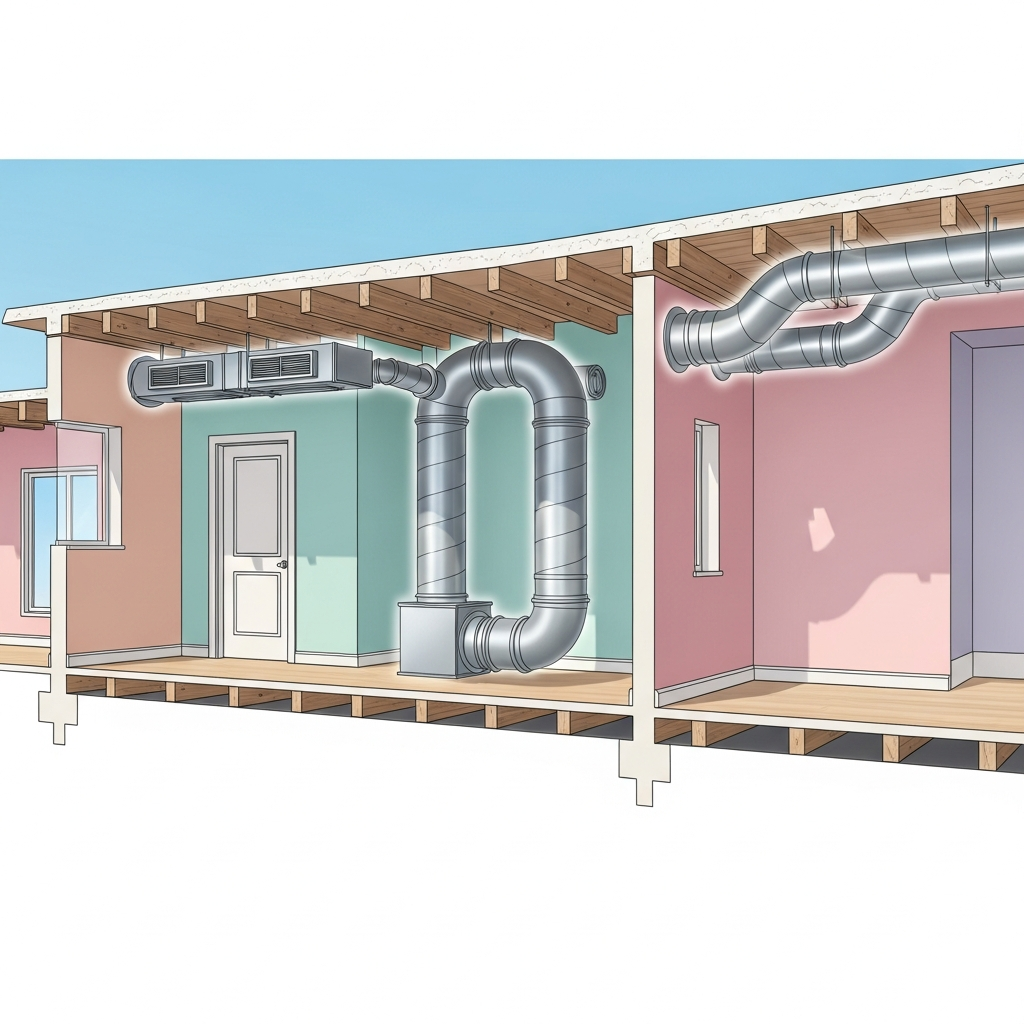
The Hidden System Shaping Everyday Comfort
In Beverly Hills, where architecture ranges from storied estates to postwar bungalows and sleek contemporary builds, homeowners often focus on finishes, views, and landscaping when planning improvements. Yet one unseen system shapes daily life more than nearly any other: the ductwork that distributes conditioned air. While the equipment in your mechanical room or on your roof gets the attention, the network of ducts behind the scenes influences temperature consistency, indoor air quality, and the effort your system expends to keep you comfortable. That is why timely, well-designed duct replacement matters so much in our community.
Our local climate creates unique demands. Summer days can be warm and dry, evenings cooler, and a coastal influence occasionally pushes marine layers inland. Old, leaky, or undersized ducts struggle to adapt to these swings, leading to rooms that warm up faster than others, persistent dust, and equipment that cycles more than it should. When homeowners ask why their recently upgraded air conditioner still leaves parts of the home uncomfortable, the answer is often the same: the distribution network is outdated for today’s expectations.
Because ductwork is hidden, it is easy to defer improvements year after year. The system, after all, still moves air. But moving air is not the same as moving air efficiently, quietly, and cleanly. Replacement is about returning this vital system to form, aligning it with modern building science, and tailoring it to the way you live now.
Comfort Is a Design Decision as Much as a Mechanical One
When you walk through a home that “feels right,” it is rarely an accident. The supply registers are placed to wash exterior walls with gentle air, the returns are sized to prevent noise and drafts, and the duct paths avoid tight turns that create whistling or rattles. Unfortunately, many older systems grew over time as additions were built or interiors were reimagined. A breakfast nook became a home office; a porch was enclosed into a sunroom. Ducts were added piecemeal rather than redesigned as a cohesive system.
Replacement gives you a clean slate. Engineers or experienced designers re-evaluate load needs room by room, confirm that static pressure targets are achievable, and ensure that supply and return are balanced. This redesign creates a home where you do not have to turn the thermostat down ten degrees just to make one stubborn room livable. You get steadier temperatures with gentle airflow that is barely noticeable because it is doing the right job the right way.
Noise is part of comfort, too. Many Beverly Hills homeowners are surprised by how much quieter their homes become after a duct overhaul. Kinks and undersized trunk lines generate turbulence; boots that were hastily taped years ago vibrate under high velocity. Smoother, properly sized runs all but eliminate that mechanical soundtrack, letting you enjoy conversations and quiet evenings without a constant background rush.
Reducing Energy Waste You Cannot See
Energy waste in HVAC systems often happens where you cannot see it: in the unconditioned spaces your ducts traverse. Attics can become extremely warm under summer sun, and any unsealed or poorly insulated duct there is an invitation for loss. Air leaks out, heat leaks in, and your equipment works overtime to overcome a problem that is solvable with better design and materials.
Modern replacement targets leakage head on. Long-life mastics replace aging tapes, mechanical fasteners back up connections, and seams are sealed with attention to detail. Insulation values are upgraded to match conditions in attics and crawlspaces, and supports are installed to prevent sags that collect dust and restrict flow. The result is a system that delivers more of what you pay to condition to the rooms you occupy, not the spaces you avoid.
It is not uncommon for homeowners to comment, after replacement, that their homes reach setpoint faster and hold temperature longer between cycles. That often translates into quieter operation, fewer dramatic swings in comfort, and a subtle but welcome sense that the house is holding itself together thermally even on the hottest afternoons.
Indoor Air Quality and Health
The last few years have sharpened everyone’s focus on the air inside their homes. Duct systems play an outsized role here. Gaps in returns can draw dusty attic air or garage fumes into circulation. Rough interiors and failing seals can trap and recirculate fine particles. Over time, the house can take on a persistent dusty smell that seems to return the day after you clean.
Well-executed duct replacement brings order to these problems. Airtight construction and smooth interiors reduce pollutant pathways. Return placement is reconsidered so that rooms breathe well without pulling from areas that create cross-contamination. Filtration is often improved by providing better access and more surface area, which allows for effective filters without imposing large pressure penalties on the system.
In Southern California, wildfire smoke is a reality some seasons. Airtight ducts and improved return strategies help limit infiltration of smoke particles. While no single measure eliminates outdoor air concerns, replacing the parts of the system that are literally full of holes goes a long way toward maintaining a healthier indoor environment when outdoor conditions fluctuate.
Why Repairs Often Fall Short
Homeowners naturally start with repairs, and sometimes that is all that is needed. But when problems are systemic—undersized trunks, missing returns in large rooms, complex series of tight elbows, runs crushed under past storage—repairs become Band-Aids. You patch one leak and the air simply finds another weak point. You replace one boot and discover the branch line feeding it is too small to matter.
Replacement gives you the chance to step back and remove constraints. You can re-route around obstacles, rebuild plenums for smoother entry and exit, and right-size runs so that airflow matches each room’s needs. This integrity shows up in quieter operation, better control of humidity and temperature, and fewer service calls chasing symptoms rather than causes.
Midway through many projects, homeowners ask whether the improvement will be noticeable in daily life. The answer is nearly always yes. Better duct design shows up every time you walk from a south-facing family room into a north-facing kitchen and do not perceive a temperature cliff. If you would like to explore what this could look like in your home, a conversation about Beverly Hills duct replacement will illuminate design options, timeline, and how to stage work around your routine.
Preserving Architectural Integrity
Another reason duct replacement matters, especially in Beverly Hills, is the need to respect aesthetic heritage. You did not fall in love with your home because of what is in the attic. The beauty lives in the arches, built-ins, stonework, and the way rooms open to gardens and courtyards. Thoughtful projects protect those features. Existing chases are reused where possible, penetrations are minimized, and registers are selected to complement the era. Some homeowners take the opportunity to refresh register finishes so that the final look feels intentional and consistent with the home’s style.
In homes with plaster walls or delicate finishes, contractors take special care with access points. Planning and communication make all the difference. The best teams map out routes and share them with you before starting, so there are no surprises. They stage work to maintain household rhythms, keeping living spaces available and clean at the end of each day. The transformation happens out of sight, which is precisely where ductwork belongs.
Aligning with Modern Equipment and Controls
Another reason replacement matters is compatibility with today’s HVAC equipment. Many newer systems modulate speed and capacity for steadier comfort, but they cannot do their job properly when paired with high-resistance, leaky ducts. A new air handler in an old distribution network is like a performance car on rutted roads. The potential is there, but it is never realized.
By giving modern equipment a clear, well-sized pathway, you unlock its benefits. Air moves at designed velocities, sound drops, and the system’s variable modes become truly useful. Some homeowners use the opportunity to consider zoning in larger residences, dividing sleeping wings from daytime areas. Others simply want reliably balanced airflow that lets smart thermostats do their work without overcorrecting. Replacement makes both possible.
Peace of Mind and Long-Term Value
Homeownership is as much about feeling settled as it is about managing systems. When ducts are renewed, you remove a major source of uncertainty. There are no mystery rattles to track down, no surprise dust blooms each time the system starts, no uncomfortable corners that require extra fans to get through summer afternoons. The home’s baseline performance rises, and with it, your confidence in the house as a place of rest and welcome.
Documentation of the work—layout drawings, airflow readings, and balancing reports—also contributes to long-term value. Whether you plan to stay for decades or might consider selling in the future, demonstrating that your invisible infrastructure is modern and well executed pays dividends in how the property is perceived and inspected. It is one more way your home communicates that it has been cared for thoughtfully.
Frequently Asked Questions
Q: What signs suggest that duct replacement is a better choice than ongoing repairs?
A: Recurrent hot and cold rooms, persistent dust, whistling or rattling at registers, and visible deterioration at boots or plenums are common indicators. If your home has undergone additions without a full redesign of airflow, replacement often delivers far better results than piecemeal fixes.
Q: Will I need to move out during the project?
A: Typically, no. Work is concentrated in attics, crawlspaces, and mechanical areas. Rooms remain usable, and teams protect finishes while coordinating daily access so you can continue your routine.
Q: How does duct replacement affect indoor air quality?
A: Airtight construction and smoother interiors reduce pathways for dust and allergens. Reconsidered return placement and improved filtration access make it easier to capture particulates and maintain a cleaner environment.
Q: Can I zone my home at the same time?
A: Many homeowners do. Zoning works best when the duct design anticipates it, with properly sized runs and thoughtfully located dampers. Replacement is the ideal moment to plan for this because you are already optimizing airflow.
Q: Is new equipment required?
A: No. Many existing systems perform markedly better with improved ducts alone. If your equipment is nearing end of life, coordinating upgrades can maximize performance, but it is not a prerequisite for meaningful comfort gains.
Q: What maintenance is recommended after replacement?
A: Keep filters clean, check accessible runs seasonally, and schedule periodic professional inspections. Because the system is tighter and better balanced, upkeep is generally straightforward.
Talk with a Local Expert
If your home feels close to perfect but not quite there, the path to lasting comfort may run through better distribution. Replacing ducts is a decisive, high-impact upgrade that pays off every hour you spend indoors. When you are ready to explore options, connect with a trusted team specializing in duct replacement in Beverly Hills and start planning a solution that fits your home’s architecture and your daily routine.