
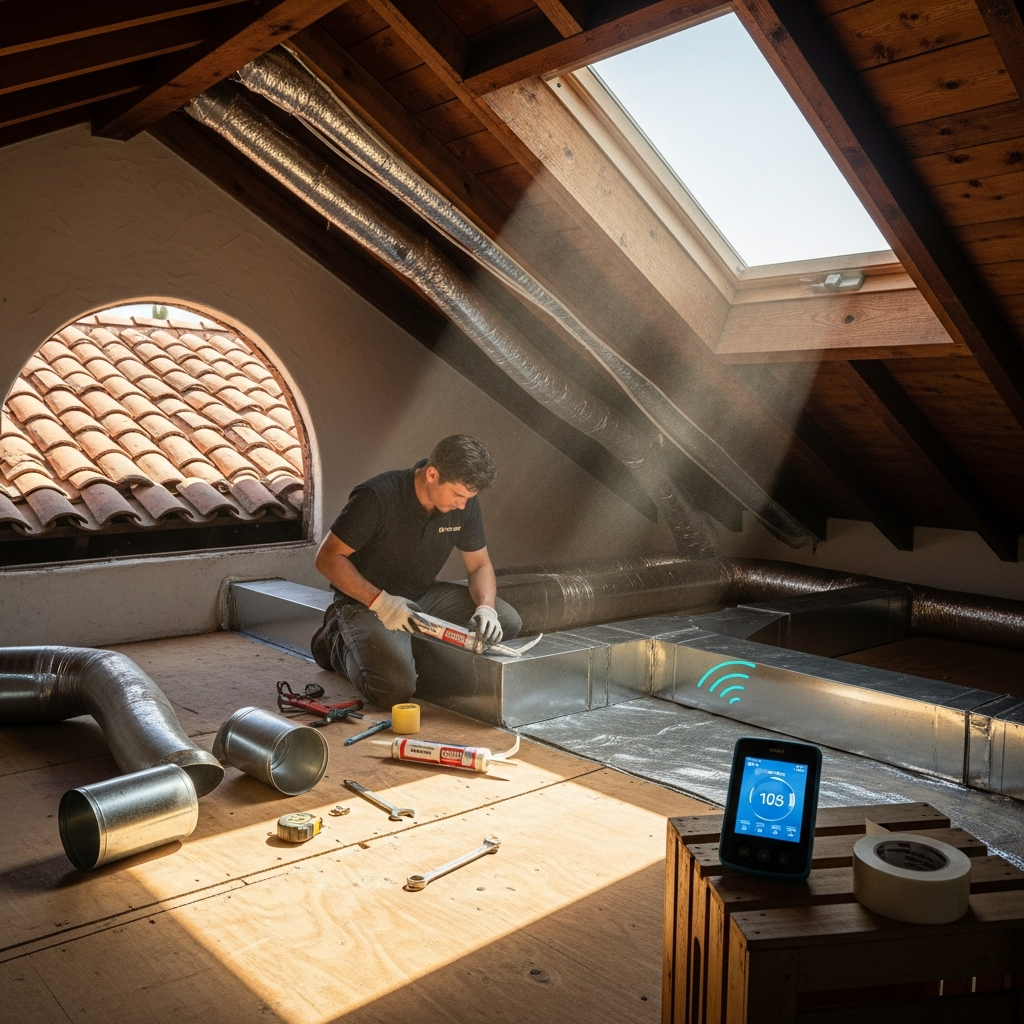
Ask any long-time Beverly Hills resident what they value in a home, and you will hear the same short list: sunlight, serenity, and fresh, clean air. The first two are easy to see and hear. The last one—air quality—lives in the spaces between walls and above the ceiling where your ducts do their quiet, constant work. Over the years, I have investigated countless comfort complaints only to discover that the real problem wasn’t the equipment at all. It was aging, leaky, or poorly designed ductwork pulling unfiltered air from attics and crawlspaces, stirring dust from within, and delivering an uneven, dull feeling to rooms. That is why timely, professional duct replacement can make such a dramatic difference for indoor air quality in Beverly Hills homes.
In our area, homes range from iconic Spanish revivals to crisp moderns with long sightlines and big expanses of glass. They present different challenges for distribution and filtration. Large open volumes invite stratification, while intricate floor plans conceal long duct runs. Add in our seasonal realities—spring pollen, summer heat, dusty fall landscaping projects, and the occasional smoky day drifting from far-off events—and it becomes clear that your ducts are a frontline defense. If they leak or if their interiors have degraded, they can turn from guardians into gateways, inviting in what you don’t want while diminishing what you do.
How Ducts Affect What You Breathe
Every time your air handler runs, it moves thousands of cubic feet of air through the duct network. Ideally, all that air is drawn from the conditioned spaces through adequately sized returns, filtered, tempered, and delivered back to your rooms. When ducts are compromised, however, a different cycle takes hold. Negative pressure in the return path can pull attic air full of insulation fibers and dust. Gaps in the supply side can leak conditioned air into unconditioned spaces and, worse, draw particulates into the system when the blower ramps down. Over time, the inner surfaces of older ducts can accumulate films of dust, pet dander, and the fallout of past moisture events. Even without visible damage, the friction and turbulence of poorly routed runs can trap debris at elbows and tees, creating reservoirs that shed downstream when the system starts and stops.
Replacing ducts hits this problem from multiple angles. Fresh interiors remove accumulated contaminants at the source. Airtight seams stop the unwanted exchange with attics and crawlspaces. Properly sized returns reduce the suction that pulls from wherever it can find air, and smoother routing keeps air velocities within target ranges, minimizing turbulent pockets that can collect dust. In day-to-day terms, this means your filters do the job they are meant to do, rather than being bypassed by leaks or overwhelmed by debris that shouldn’t be in the airstream to begin with.
The Beverly Hills Context: Climate and Construction
Our microclimates influence IAQ more than many realize. Mornings in the canyons can feel crisp, with air stalling in cooler pockets, while afternoons flare with dry warmth that lifts particles and pollen. Homes that breathe too freely through leaky ducts ride these swings indoors as well. Meanwhile, construction styles matter. Vintage plaster and lath walls, original rooflines with minimal plenum space, and later additions that bend the original floor plan all affect how ducts were originally shoehorned into place. It is not uncommon to find a return path snaking through tight framing or a supply trunk making a sequence of abrupt turns. Each compromise adds resistance, and resistance begets noise and dust traps. When we replace ducts, we also reimagine these routes for gentle airflow—fewer sharp elbows, wider sweeps, and dedicated returns where rooms demand it.
Then there’s the impact of today’s airtight windows and insulation upgrades. Modernizing the envelope without modernizing the ducts can create mismatches: rooms that now hold temperature well may receive more air than they need, while other spaces get less than they deserve. The resulting pressure imbalances stir air in odd ways, encouraging infiltration from unconditioned spaces and reducing filter effectiveness. Replacement provides a chance to reset the whole system so every piece—envelope, ducts, equipment—works in concert.
Clean Starts: Materials and Sealing
A new duct system begins with clean materials. Whether we choose lined metal trunks for durability or high-quality insulated flex for tight spaces, the interior surfaces are pristine. Joints are sealed with mastic, not just tape, ensuring connections endure heat, time, and vibration. Returns are given special care because they are the lungs of the system; if they breathe well, your filters perform as designed. We also pay attention to insulation thickness and continuity. Compressed or gapped insulation isn’t merely an energy issue; it can create temperature differentials that promote condensation in rare conditions, and any past moisture is a risk factor for musty odors. Even in our generally dry climate, it pays to build a system that avoids such risks by design.
Good sealing is also a sound strategy for IAQ on days when outdoor air feels less fresh—be it pollen, dust, or regional smoke pushing into Los Angeles County. While your home will still exchange some air naturally and through ventilation strategies, a tight duct system prevents your HVAC from becoming a highway for unwanted particles. The cleaner the distribution network, the more confidently you can lean on higher-MERV filtration without taxing your blower with extra resistance.
Balance, Filtration, and Returns
Even the best filter loses power if the system is unbalanced. With duct replacement, we right-size returns to reduce the negative pressure that once drew from whatever openings it could find. Larger, well-placed return grilles allow a calm, steady flow back to the air handler so the filter sees a full, even face-load. This is where you gain real-world results: measured pressure drops stay within equipment specs, filters capture rather than bypass, and the air feels cleaner in the rooms where you live most.
Homeowners sometimes ask whether swapping to a higher-rated filter alone will solve air quality issues. Filters matter, but they’re part of a system. If the return path is starved, or the supply side leaks, fine filters may increase resistance without improving what reaches your lungs. Replacing ducts reestablishes the fundamentals so filtration shines. With correct duct sizing and a balanced design, we can often upgrade the filter strategy confidently knowing airflow won’t suffer.
Odor Control and Freshness
One of the most immediate benefits our Beverly Hills clients notice is the disappearance of lingering, hard-to-name odors when the system runs. Those odors are usually the signature of dust stirred from inside the ducts or attic-laced air sneaking into the return. A new, tight duct network eliminates those sources. The air handler no longer pulls from dusty cavities; it breathes from the home, through a clean return and filter, and sends that air back along smooth, sealed pathways. The effect isn’t perfumed or artificial; it’s simply the scent of absence—fresh, quiet neutrality that lets the rest of your environment shine.
Comfort and IAQ Are Intertwined
Good indoor air quality shows up as comfort. When a bedroom cools gently without a gust, airborne particles tend to stay settled. When supply temperatures reach the room as designed—rather than warming or cooling against uninsulated metal in an attic—humidity control improves, and microclimates don’t develop behind draperies or in corners. A carefully balanced replacement reduces these tiny but persistent IAQ pitfalls. In our market, I often see the biggest improvements in rooms with tall ceilings, glass walls, and decorative diffusers; with better duct routing and volume control, those rooms transition from tricky to effortless.
The Mid-Project Moment That Matters
Homeowners often have an “aha” moment mid-project when they see the new returns framed in, the smoother trunks installed, and the test readings start to stabilize. This is when it clicks that air quality isn’t an accessory—it’s built into the bones of the system. That’s also when many decide to pair the project with modest filter upgrades or a smart control strategy, confident that the distribution path is now solid. If you’ve ever felt like your filters were doing all the heavy lifting, comprehensive duct replacement is how you give them the supporting cast they need.
Post-Replacement Habits That Keep Air Clean
New ducts set the stage, and a few simple habits keep them performing. Changing filters on schedule prevents dust from building pressure drops that nudge air toward unintended paths. Keeping return grilles clear of furniture ensures smooth breathing for the system. And because ductwork now delivers as designed, routine HVAC maintenance becomes more predictive and less about chasing uneven rooms. Many Beverly Hills homeowners find they can step back and enjoy their homes instead of managing them—no more frequent thermostat tinkering or last-minute room fans before guests arrive.
What You’ll Notice First
The first sign of improved IAQ is often subtle: rooms feel calmer. Dust on surfaces seems to settle more slowly. The startup of the system doesn’t carry a stale breath. Children and guests sensitive to air changes often comment without knowing why. In measured terms, we see healthier static pressures, better delivery at registers, and lower leakage numbers. But you don’t need instruments to appreciate the result—you feel it when you wake rested on a summer morning or when the living room feels equally pleasant whether the system is on or off.
Frequently Asked Questions
Q: Can new ducts help with allergies?
A: They can. By sealing leaks that once pulled in unfiltered air and by providing clean interior surfaces, new ducts reduce the load on filters and help prevent allergens from bypassing filtration. Many clients report fewer seasonal symptoms indoors post-replacement.
Q: Do you recommend any special filters after duct replacement?
A: It depends on your equipment and duct design. With balanced returns and proper sizing, we can often use higher-MERV filters without overtaxing the blower. We’ll match filtration to your needs and system capacity.
Q: Will this help with odors from the attic or crawlspace?
A: Yes. Those odors typically enter through return leaks or supply breaches. New, sealed ducts and well-designed returns cut off those pathways, resulting in a neutral, fresher indoor scent when the system operates.
Q: How quickly will I notice a difference?
A: Most homeowners feel a change immediately when the system first runs. Surfaces collect dust more slowly over the following days and weeks as the new ducts and proper filtration work together.
Q: Is duct cleaning a substitute for replacement?
A: Cleaning can help in some cases, but it can’t solve chronic leakage, undersized returns, poor routing, or degraded insulation. Replacement addresses root causes and sets a long-term foundation for air quality.
Q: What about ventilation—do new ducts mean I don’t need it?
A: Ducts distribute conditioned air; ventilation introduces fresh outdoor air. They serve different roles. With solid ducts in place, we can more thoughtfully add or adjust ventilation strategies if your home needs them.
Q: Will replacement make the system quieter?
A: Typically yes, because proper sizing and smoother transitions reduce turbulence. Less turbulence means fewer opportunities to stir up dust and fewer audible whooshes at registers.
Q: How do you verify improvements?
A: We measure static pressure, leakage, and register delivery before and after. We also discuss lived experience—how rooms feel, how odors change, and whether sensitive occupants notice fewer symptoms.
Ready to Breathe Easier in Beverly Hills?
If pure, calm indoor air matters to you, the path often begins where few people look: inside the distribution network. Let’s reimagine your system so filtration works, returns breathe, and every room feels fresh. Reach out to schedule your assessment and plan your upgraded system today—then enjoy the difference every hour you’re at home by booking your duct replacement with a trusted local team.