
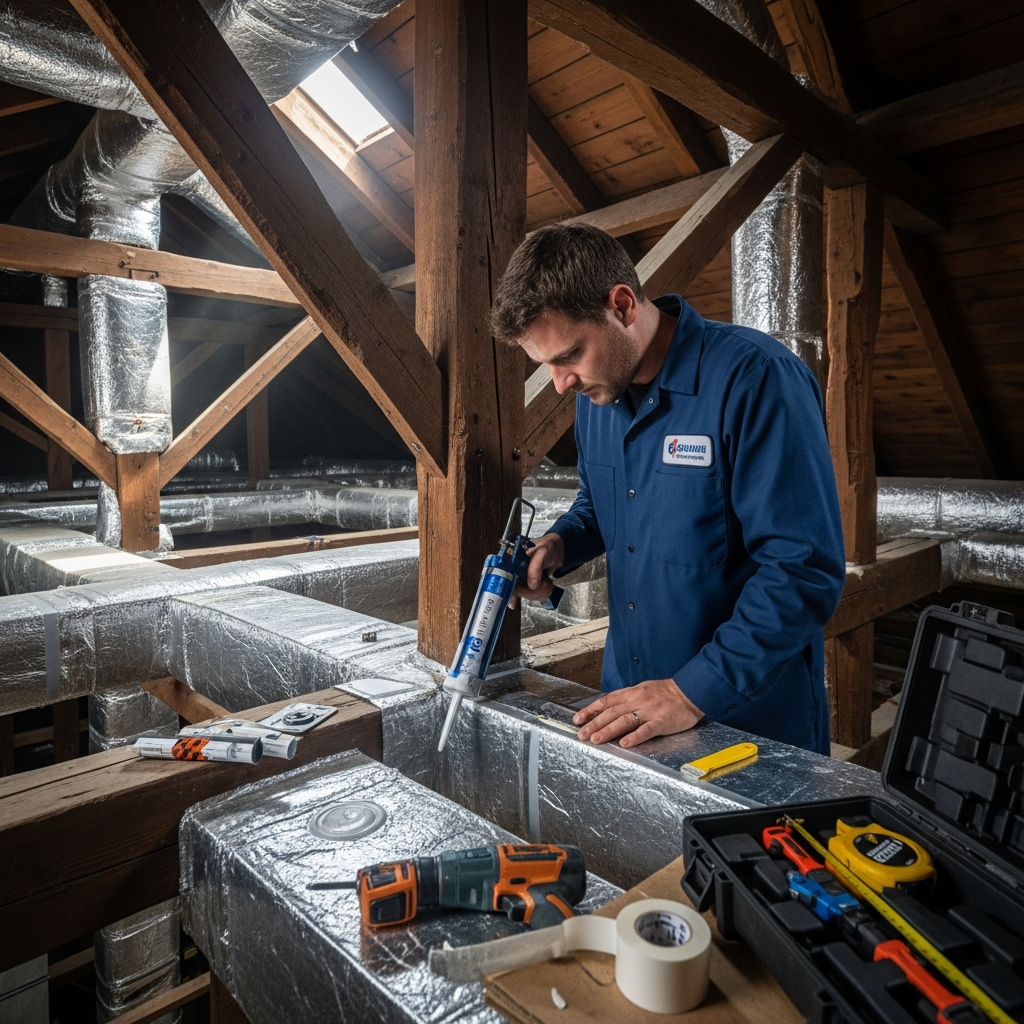
Living and working in Beverly Hills means you come to expect a certain level of comfort at home, whether you are just off Sunset, tucked near the canyons where the breezes shift by the hour, or in a mid-century classic above Wilshire. As a local HVAC specialist who has crawled through more Beverly Hills attics and basements than I can count, I can tell you that comfort here is about more than the thermostat. The hidden infrastructure of your home—the ductwork—does far more than carry heated or cooled air. It shapes how evenly rooms feel, how quietly your system runs, how clean the indoor air stays, and how efficiently you use energy. That is why homeowners who invest in thoughtful, quality duct replacement tend to notice immediate, everyday benefits that go well beyond the obvious.
In Beverly Hills, our housing stock spans historic estates with intricate architectural bones to newer builds aiming for cutting-edge efficiency. Each home tells a story, and the duct system is part of it. Older sheet metal trunks often have seams that have shifted over the decades, insulation that has thinned, and turns that made sense before new additions changed the airflow needs. Newer homes, on the other hand, sometimes inherit rushed installations that never quite matched the designer’s vision. When the ducts don’t match the home, you feel it as a persistent draft in the den, a bedroom that lags behind, or a whisper-turns-to-roar when the air handler kicks on. Replacing ducts is about rewriting that story in your favor—aligning airflow with how you actually live in your rooms.
Think for a moment about your daily patterns. Mornings can start crisp in the flats and cool along the canyon shadows, while afternoons bring radiant warmth, especially in spaces with sun-catching glass. If your ducts are undersized, poorly routed, or leaky, your system works harder to compensate. It short-cycles, it struggles, and it runs longer, all while giving you less. Once a system is rebalanced with new ducts sized to both the equipment and the architecture, you often get steadier temperatures with fewer starts and stops. That calm steadiness is what most homeowners describe as a luxurious difference: the home just feels right, and it feels right everywhere.
Comfort You Can Measure—and Feel
When ducts are replaced, we have a chance to correct long-standing imbalances. That’s more than a contractor’s promise; we can map static pressure, perform room-by-room load calculations, and design distribution that meets actual demand. In practical terms, this means a family room with high ceilings finally receives the supply volume it needs without overdriving noise, and a primary suite no longer hogs all the conditioned air at the expense of the guest rooms. You feel it as evenness—air that arrives gently rather than blasting from a single, too-loud register, and temperatures that settle within a degree or two throughout your home. For multi-level Beverly Hills properties, proper duct replacement can also tame the notorious “hot upstairs, cold downstairs” pattern with corrected return paths and strategic zoning.
Noise is another quiet victory. Old metal ducts can transmit fan rumble or develop a kind of metallic chatter as they expand and contract with temperature changes. New ducts, supported and insulated correctly, absorb sound rather than broadcast it. The mechanicals fade into the background, and what remains is a soft, confident hush. In high-end Beverly Hills renovations where acoustics matter—screening rooms, pianos in the salon—this reduction in background noise becomes a daily pleasure.
Energy Efficiency and a Lighter Footprint
Here in Southern California, we tend to run air conditioning more than heating, and when the mercury rises, every percentage of efficiency counts. Duct leakage is a thief; it steals conditioned air into attics and crawlspaces and forces your system to run longer. By replacing ducts—especially when adding modern mastic sealing at all joints and transitions—you often cut leakage dramatically. Combined with fresh, properly rated insulation, the improvement shows up as reduced runtime, steadier performance in the heat of the afternoon, and fewer complaints from the rooms that used to limp along.
Beyond utility statements, there’s a sense of resilience that comes with a tighter, smarter duct system. During heat waves, an efficient distribution network means your equipment has the best chance to keep up without straining. During cooler winter nights, the same system holds warmth longer and distributes it more evenly, so you aren’t bouncing the thermostat just to chase comfort. For homes pursuing greener living, duct replacement aligns with broader upgrades like high-efficiency heat pumps, enhanced envelope sealing, and smart controls, helping make each investment more effective.
Healthier Indoor Air and a Clean Aesthetic
While this article focuses on benefits, it’s hard to overstate the link between ductwork and indoor air quality. We regularly see aging ducts with residues of dust, old insulation fibers, and the remnants of past leaks that once drew in attic particulates. Even if you are diligent with filter changes, a compromised duct network can continually introduce contaminants. With replacement, we can create a clean slate—fresh interiors, airtight seams, and a design that promotes adequate returns so the air handler breathes freely. The result is cleaner airflow that keeps surfaces from collecting dust as quickly and reduces the musty undertone people sometimes notice when their systems first kick on.
There’s also the visual side. Registers and grilles that once whistled or rattled can be replaced and right-sized. In a Beverly Hills home where design details matter, you want a mechanical system that never argues with your architecture. Duct replacement gives us the opportunity to adjust diffuser locations so airflow complements furniture placement, art walls, and architectural focal points, rather than blasting straight at them.
Local Nuances: Beverly Hills Homes Are Unique
Working across the city, you learn to read a house. In the flats, space may be tighter above the ceiling, so we pay extra attention to duct routing that preserves headroom while keeping transitions gentle for airflow. In the hillside and canyon properties, we encounter more temperature differentials from morning to afternoon, as well as tricky runs that have to respect structural spans. In older estates, there can be charming (and challenging) original framing that deserves to be preserved. Duct replacement lets us honor those constraints while still delivering a modern standard of comfort.
The dry season also brings added considerations. Keeping ducts sealed and insulated helps buffer indoor environments against outdoor particulates that can ride seasonal breezes. When we pair new ductwork with upgraded filtration and tight return plenums, homeowners notice the home stays fresher even on high pollen days or when nearby landscaping projects kick up dust.
When Is It Time to Replace?
Some signs are obvious: hot or cold spots that never seem to resolve, noise that feels disproportionate to the system’s size, and visible damage such as crushed flexible runs or rusting sheet metal. Others are subtler: rooms that never quite dehumidify, a recurring film of dust on furniture despite clean filters, or the need to lower the thermostat further than you used to for the same comfort. If your ducts are two or three decades old, they’ve simply witnessed a lot—renovations, roof work, seismic retrofits—and those life events often shift or compromise duct performance. Testing can confirm: measuring static pressure, checking delivery at registers, and assessing leakage all give a clear picture of whether replacement is wise.
Importantly, duct replacement is not an indictment of past work. Materials and standards evolve, homes evolve, and your expectations evolve. Updating the distribution system is a way to align your home with how you live now. Whether you’re hosting frequently, working from a quiet home office, or creating a serene retreat, ducts tailored to those patterns become an invisible ally.
What the Replacement Process Looks Like
Most homeowners are relieved to learn that duct replacement can be methodical and surprisingly neat when properly planned. We start with design—room-by-room loads, return strategy, and a routing plan that respects structure and aesthetics. We then stage the work to minimize disruption, often tackling areas in a sequence that keeps core living spaces as intact as possible each day. Old ducts are removed carefully, sections are bagged to contain dust, and work areas are tidied daily. New ducts go in with attention to support spacing, radius of turns, and airtight transitions. Before registers go back on, we verify airflow and static, so the finish line is truly a finish line.
Communication is key during installation. If we discover a better route that shortens a run or reduces a friction-heavy bend, we’ll talk it through with you. The result is a system that is not only designed well on paper but optimized for the real-world quirks of your home. Homeowners appreciate that this phase is also a good time to address related improvements, like return grille upgrades or a smarter thermostat, knowing that balance and efficiency start with distribution. It’s in this middle stretch of planning and fine-tuning that many residents become genuinely excited about comprehensive duct replacement, because they can see the new system taking shape and understand the why behind each decision.
Materials, Insulation, and Craftsmanship
Choice of materials matters. In tighter spaces, high-quality flexible duct with the right insulation value and gentle sweeps can outperform rigid options that would force too many fittings. In straight, accessible trunks, smooth metal with internal lining or external insulation gives a durable backbone. What matters most is that every joint is sealed with mastic, supports are frequent and secure, and transitions are designed for airflow first. Insulation should be continuous and uncompressed; a crushed blanket does little good. In our climate, this attention keeps the cool where it belongs in summer and holds warmth in winter mornings.
Craftsmanship shows up in the details you might never see. A well-turned elbow with a wide radius, a wye that splits flow without turbulence, a return path that prevents whistling—these are the quiet signatures of a system built to last. Over time, these details add up to less wear on your blower, fewer nuisance noises, and a consistent comfort that feels almost effortless.
Balancing, Testing, and The First Season
After installation, we test. It’s tempting to assume new ducts automatically equal perfect performance, but measurement verifies success. We confirm total external static pressure, dial in damper positions to balance room delivery, and check temperature split across the coil or heat exchanger. Many Beverly Hills homeowners schedule the replacement just before peak season so they can enjoy an immediate payoff. The first summer with a truly balanced system is a revelation: rooms that once lagged now keep pace, and the thermostat can be set and left alone without micromanaging.
During that first season, it’s also common to discover new preferences—perhaps you like a bit more air in a light-drenched living room during late afternoons, or you prefer a touch less in a bedroom for a calmer sound at night. With well-designed ducts, those fine-tunes are easy and precise. Register adjustments and mild damper tweaks provide personalization without upsetting the overall equilibrium.
Resale Value and Everyday Enjoyment
Real estate in Beverly Hills rewards homes that deliver quiet, consistent comfort. Savvy buyers increasingly ask about mechanicals, and ductwork is part of the conversation. Documentation of a recent, professional replacement—complete with test results and design notes—signals care and long-term value. Even if you’re not selling soon, that sense of completeness matters. As the seasons turn, you’ll notice the absence of little frustrations: the room that once needed a sweater, the workout space that never cooled, the late-night rumble that used to break the calm. Replacing ducts erases those frictions and replaces them with tranquility.
Longevity and Peace of Mind
New ducts, properly installed, are not just a quick fix; they’re a foundation for the next decade or two of comfort. With sealed seams, proper support, and correct sizing, your blower works in its comfort zone rather than at its limits. Less strain translates to fewer repairs across the entire HVAC system. Filters work more effectively, coils stay cleaner longer, and thermostats can do their job without overcorrecting. That peace of mind is especially valuable when your home doubles as a sanctuary from an always-on city life.
Frequently Asked Questions
Q: How long does a typical duct replacement take in a Beverly Hills home?
A: Most projects range from a couple of days to a full week, depending on home size, accessibility, and whether we’re also relocating registers or adding returns. We plan the sequence to minimize disruption and keep living spaces comfortable throughout.
Q: Will new ducts reduce the noise of my system?
A: In many cases, yes. Properly sized and supported ducts with the right insulation and smooth transitions dampen noise. Balancing airflow also prevents the “wind tunnel” effect that makes some registers feel loud.
Q: Do I need to replace my equipment at the same time?
A: Not necessarily. Many homeowners see significant gains from duct replacement alone. However, if your equipment is nearing the end of its life, coordinating timelines can optimize performance and reduce total disruption.
Q: How do you determine the right duct size for each room?
A: We perform load calculations that consider square footage, orientation, windows, insulation, and how each space is used. From there, we design supply and return paths that meet those needs without excess static pressure.
Q: Will new ducts help with dust on my furniture?
A: Often, yes. Airtight ducts with proper filtration reduce the pathways for unfiltered air to enter the system. Many homeowners report visibly less dust settling after replacement.
Q: What about permits and code requirements?
A: We follow local codes and best practices, including proper support, insulation values, and sealing standards. When permits or inspections apply, we coordinate them and provide documentation of test results.
Q: Is there a best season to schedule duct replacement?
A: Spring and fall shoulder seasons are popular because demand on heating and cooling is lighter, but we perform replacements year-round. Planning ahead helps secure preferred dates and ensures you’re ready for peak temperatures.
Q: How will I know the new system is performing as promised?
A: We provide measurements—static pressure, airflow at key registers, and temperature splits—along with a walkthrough so you can feel and understand the improvements in each room.
Ready for Better Comfort in Beverly Hills?
If you’re ready to enjoy quieter rooms, steadier temperatures, and cleaner indoor air, now is a great time to schedule a consultation. Let’s look at your home together, design the right solution, and make comfort feel effortless every day. For a seamless start, schedule your duct replacement with a local team that treats your home like its own.