
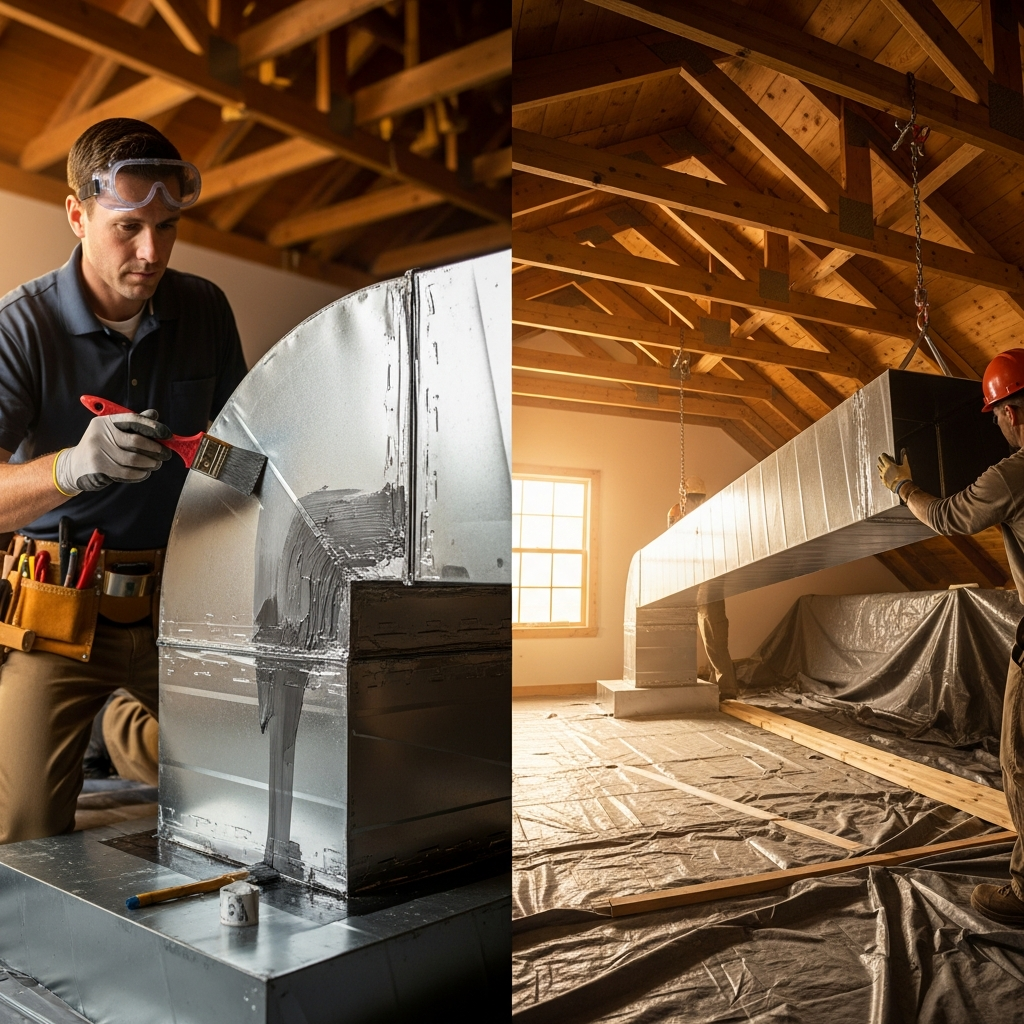
Choosing between repairing and replacing ductwork in Beverly Hills is not unlike deciding whether to restore a classic car or invest in a modern touring machine. Both paths can be right, but only when matched to the condition of what you have, the way you drive, and the journeys you plan to take. Our homes, whether perched along winding canyon roads or settled among the flats, ask for thoughtful airflow that complements their design and daily rhythms. When ducts age, loosen, or outgrow the demands of renovated spaces, it is time to decide which route will best restore quiet, even comfort. To make that decision with confidence, it helps to consult experienced professionals in duct replacement who also understand repair strategy, so you can see the full picture before committing.
Both repair and replacement can solve problems. Repair is targeted: reseal joints, patch a damaged section, support a sagging span, or reposition a register. Replacement starts fresh, clearing old constraints to achieve a right-sized, well-balanced layout. The right choice depends on system age, leakage, access, and how your home has evolved through remodels. It also depends on how sensitive you are to noise, dust, and temperature swings. Each factor nudges the needle in one direction or the other. The goal is to weigh them carefully and align the solution with how you actually use the rooms you love.
When repair makes sense
Repair shines when the bones are strong. If the trunk is sized appropriately, runs are routed sensibly, and material condition is sound, repairs can restore performance. Typical scenarios include replacing a crushed branch, recentering a boot at the ceiling, resealing leaky collars, or adding proper supports where flex has sagged. In homes where the layout is fundamentally correct but wear-and-tear has introduced leakage and friction, these targeted fixes can return calm, even airflow without a major overhaul.
Repairs are also a good bridge when timing is tight. Perhaps you are hosting an event soon or planning a renovation in the near future. Addressing the most disruptive issues—like a noisy return or a persistently warm bedroom—can provide relief now while you schedule a more comprehensive solution later. Thoughtful repairs emphasize durable sealing, correct support spacing, and adjustments that do not compromise future replacement plans.
When replacement is the better call
Replacement earns its case when the system’s fundamentals are no longer aligned with your home. If extensive leakage, undersized returns, compressed runs, or a patchwork of past remodels have created chronic hot and cool zones, starting fresh restores design integrity. Replacement allows correct trunk sizing, carefully balanced branches, smoother fittings, and returns positioned for quiet, effective draw. It is also the only path when materials have aged beyond reliable repair—brittle liners, degraded insulation, or widespread joint failure.
In Beverly Hills, replacement is often the moment to harmonize additions with original spaces. Many homes evolved room by room, and the duct system followed suit with band-aid branches. A comprehensive redesign collapses these layers into a single, coherent plan that supports how the home functions today. The payoff is felt in the first evening after commissioning: temperatures converge, noise fades, and the atmosphere becomes invitingly steady.
Evaluating condition: what pros look for
A careful evaluation begins with a visual survey of accessible areas. Technicians look for signs of air leakage—dust lines around joints, insulation darkened by infiltrating air, or temperature differences near registers. They check support spacing, the radius of bends, and the integrity of mastic and tapes. On the performance side, static pressure readings reveal whether the equipment is working too hard, and airflow measurements show which rooms are underserved. If the story told by the data matches the visible wear, the case for repair or replacement becomes clear.
Older homes deserve special attention to chases and penetrations. Over time, gaps can appear where ducts pass through framing, inviting unconditioned air, dust, and pests. Sealing these is part of both repair and replacement, but starting anew often makes comprehensive sealing more achievable. When comfort goals include quieter operation and cleaner air, thorough sealing and right-sizing are non-negotiable.
Noise, drafts, and everyday experience
Nothing captures the difference between repair and replacement like the way a home sounds and feels. A well-executed repair might silence a whistling register or steady a wobbly branch, improving the experience right where it matters most. Replacement, by contrast, changes the background of the entire home: fans operate in a calmer zone, supplies deliver a gentle wash instead of bursts, and temperature drift between floors narrows. For households sensitive to sound, for babies napping, or for home offices hosting long calls, these qualities are significant.
Drafts are another telltale. If you feel a chill across a favorite chair or a persistent warm edge by a bay window, the cause might be register placement or throw distance. Repairs can reposition a grille or adjust a damper; replacement can re-route and resize the branch entirely, choosing a diffuser pattern that spreads air softly across the room. The more global the issue, the more replacement pulls ahead as the comprehensive solution.
Access and the structure of the decision
Access shapes feasibility. In attics with generous standing room, repairs and replacements alike move efficiently. In shallow crawl spaces with a maze of plumbing and wiring, even small tasks require planning. Replacement can streamline future maintenance by consolidating runs and creating clearer pathways, whereas piecemeal repairs may leave a tangle that is difficult to service. When future-proofing is a priority, replacement offers a chance to cleanly organize the system so that subsequent filter changes, inspections, and minor tweaks are straightforward.
Protection of finishes is central in Beverly Hills. Whether repairing or replacing, reputable teams treat your home like a gallery: runners laid early, containment set for any demolition, and surfaces protected as tools and materials move in and out. This approach reduces stress for everyone and signals that the same respect will be shown inside the walls and ceilings where your ducts live.
Air quality and cleanliness considerations
Air quality often sits quietly behind the decision but carries real weight. Leaky or poorly sealed ductwork can draw air from attics or crawl spaces, carrying dust and odors into living rooms and bedrooms. Sealing during repair can help; replacing with a fully sealed, tested system is the surest fix. Right-sized returns and continuous insulation protect not only temperature but also the freshness of your environment. These benefits are especially noticeable for families with allergies or for homes that host frequent gatherings where comfort and cleanliness set the tone.
Commissioning—testing for leakage, verifying static pressure, and balancing room-by-room—provides the final seal of approval. Good numbers align with good feelings: rooms respond quickly, fans sound relaxed, and surfaces gather less dust. These are tangible outcomes that endure long after the conversation about repair versus replacement is over.
Blending practicality with aesthetics
Every decision in a Beverly Hills home must respect both function and form. Repair may be the pragmatic choice when a few targeted corrections solve the problem without touching the broader layout. Replacement carries aesthetic advantages, too, albeit out of sight: registers aligned perfectly with ceiling lines, boots sealed so trim remains pristine, and routing that avoids lighting or millwork. The unseen craftsmanship keeps the seen beauty untouched.
Either path benefits from thoughtful diffuser choices. In formal rooms, a grille that spreads air quietly preserves the ambiance. In media spaces, low-noise patterns keep the focus on the screen, not the ceiling. Your contractor can guide these decisions during either a repair or a replacement plan.
Mid-course evaluations and staged approaches
Sometimes the best solution is staged. Begin with repairs that restore immediate comfort—reseals, added supports, small reroutes—and plan for a strategic replacement in the future. Mid-course evaluations during this journey confirm that the bridge solutions are holding and inform the final design. This approach allows you to adapt the plan to any changes in your home or routine, keeping the end goal of steady, quiet comfort in sight.
When a replacement is selected, a mid-project walkthrough ensures register locations, return sizes, and branch routes are locked in with your input. It is also the ideal time to discuss opportunities like subtle zoning for sleeping areas or improved filtration in a home office. Having a partner whose core service is professional duct replacement ensures these refinements are executed with precision.
Frequently asked questions
Q: How do I know if repair is enough?
A: If the overall layout is sound and problems are localized—such as a few leaky joints or a crushed branch—repair can be effective. A quick system assessment with airflow and pressure readings will clarify whether targeted fixes will deliver the comfort you expect.
Q: When is replacement the smarter choice?
A: When leakage is widespread, returns are undersized, or years of remodels have created a tangled network that never balances well, replacement restores design integrity. It is also preferred when materials have aged beyond reliable repair.
Q: Will replacement make my home quieter?
A: Yes. Thoughtful sizing, smoother fittings, and right-sized returns typically reduce noise. Many homeowners describe a softer, steadier background sound after a well-planned replacement.
Q: Can I stage the work?
A: Absolutely. Strategic repairs can stabilize immediate issues, with a designed replacement scheduled later. Staging allows you to maintain comfort while organizing timing and access around your calendar.
Q: What about air quality?
A: Both repair and replacement can improve air quality, but a comprehensive replacement with verified sealing and balanced returns most reliably reduces dust and infiltration from attics or crawl spaces.
Q: How disruptive is the process?
A: With experienced crews who protect finishes, coordinate access, and communicate daily, disruption is limited. The work is planned around your schedule, and job sites are kept orderly from start to finish.
Q: Do I need to change registers or grilles?
A: Not always, but diffuser style and placement influence comfort. During either path, your contractor can advise whether a minor change to a register will help achieve a softer, more even delivery.
Take the next step with clarity
Whether you are leaning toward precise repairs or a clean-slate redesign, the best choice is the one aligned with your home’s architecture and your comfort priorities. Start with a candid evaluation that weighs leakage, layout, and daily experience. Then proceed with a plan that is respectful, organized, and thoroughly tested. When you are ready to put the question to rest and enjoy a home that feels composed in every room, schedule expert duct replacement and move forward with confidence.