
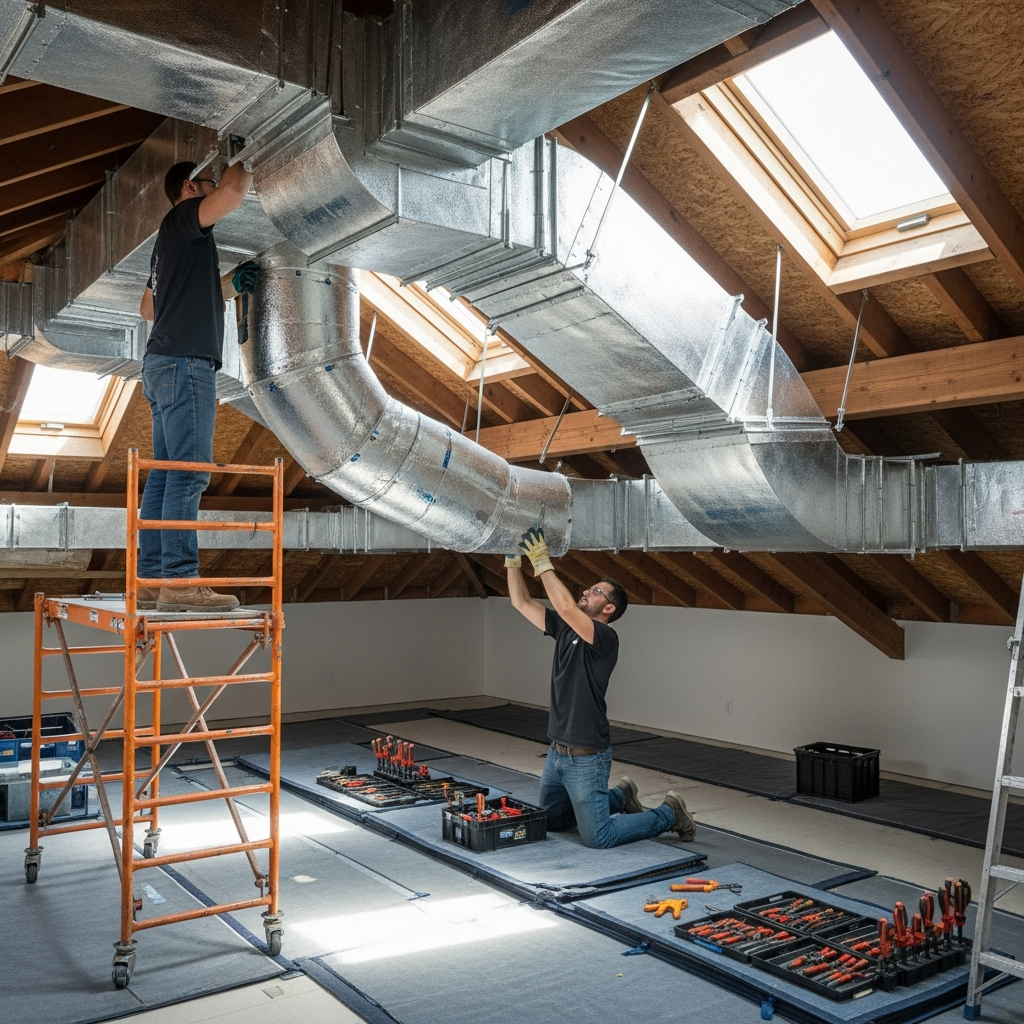
Among homeowners in Beverly Hills who are planning a distribution upgrade, sheet metal ductwork often rises to the top of the conversation. The reasons are easy to appreciate: durable construction, stable geometry that protects airflow, and interiors that can be inspected and kept tidy over the long haul. If you are exploring a sheet metal duct replacement, the smartest place to start is by understanding how design, fabrication, and installation choices interact with your home’s architecture and daily life. As you gather insight, it helps to consult a local guide to duct replacement so you can translate preferences into a plan that fits our region’s standards and your expectations for comfort.
Sheet metal is a craft as much as a material. The difference between a merely adequate job and a beautiful one shows up in radius elbows that soothe airflow, transitions that step gracefully, and hangers that hold lines straight without telegraphing vibration into the structure. In Beverly Hills, where homes span eras and styles, those choices are always framed by the imperative to protect finishes and maintain the calm, composed feel homeowners prize.
Why Sheet Metal Appeals To Beverly Hills Homeowners
Rigid metal ducts provide a stable cross-section that resists compression and kinks. That stability protects airflow, which in turn supports even temperatures and quiet operation. Smooth interiors discourage dust accumulation, and connections can be sealed with precision. For homeowners who value longevity and serviceability, these traits are compelling.
There is also an aesthetic dimension, even when the work is concealed. Straight, well-supported runs reflect care, and that care ripples into everything from inspection ease to the confidence you feel handing a home to future occupants. In mechanical closets and short exposed sections, neat fabrication elevates the space, turning a utility area into something that feels intentionally designed.
Design Considerations: From Plenum To Diffuser
Every sheet metal system tells a story from the equipment plenum to the furthest diffuser. The first chapter is about static pressure and velocity. Proper trunk sizing sets the tone, and early reductions must be staged gently. Abrupt shifts in dimension or direction are the enemy of quiet. Where direction changes are necessary, radius elbows or segmented sections smooth the transition. At takeoffs, balancing dampers should be placed with future accessibility in mind.
Return strategy deserves equal attention. Undersized returns can turn a graceful supply network into a noisy, strained system. When returns are sized and located properly, supply air can amble rather than sprint, achieving the same comfort with less turbulence. In multi-story homes, multiple returns stabilize pressure between floors and help maintain even temperatures throughout the day and night.
Fabrication Quality And On-Site Adjustments
Fabrication matters deeply in sheet metal work. Tight seams, consistent Pittsburg locks, and cleanly cut openings signal a shop that takes pride. On-site, installers read the house and adjust, nudging a transition here or rerouting a branch there to avoid obstructions without adding extra elbows. The goal is not just to make the duct fit; it is to make the air flow as if the duct were the only path it ever wanted to take.
Support systems matter too. Straps and hangers should hold runs without biting into the material, and vibration isolation should be used wisely at the equipment to prevent structure-borne sound. In attics, proper clearance from the roof deck and adequate insulation over the metal protect performance in hot afternoons and cool nights.
Sealing, Insulation, And Verification
Metal ducts reward a careful sealing strategy. Mastic at joints, properly seated gaskets at fittings, and tape used as reinforcement rather than as the primary seal all contribute to low leakage. Once insulated, the system should present a continuous, snug jacket that maintains supply temperature and discourages condensation on cool nights when humidity spikes.
Verification is the quiet finale. A leakage test and static pressure measurements confirm that craftsmanship translates into performance. Photographs of key transitions and damper locations help with future service, and a simple legend showing branch flows assists with seasonal tuning if needed.
Working Within Beverly Hills Homes
Many local homes present elegant complications. Shallow attics, vaulted ceilings, and built-in cabinetry leave limited pathways. In these conditions, sheet metal’s predictable geometry becomes an advantage because you can design routes with confidence. When a perfect path does not exist, designers weigh whether a subtle framing modification or a short run of insulated flex at the final leg will achieve a better overall result without disturbing finishes.
Crews here are also sensitive to the way noise carries in quiet homes. That is one reason gentle reductions and slow bends are favored. When your dining room hosts conversation rather than a background whoosh, you feel the benefit every day.
Indoor Air Quality, Cleanability, And Long-Term Upkeep
Owners who choose metal often cite cleanability. Smooth interiors can be inspected when registers are removed, and access panels can be designed thoughtfully for major components. While routine cleaning should not be necessary when filtration is well-managed, the ability to look and verify gives peace of mind. Good return placement and quality filters reduce dust settlement so surfaces stay cleaner and the air remains fresh.
Longevity is about more than material; it is about design that anticipates service. Where dampers are visible from access points and where trunks can be reached without crawling across fragile insulation, future adjustments and inspections become easy. A system that can be tuned in minutes, not hours, is a system that will actually be tuned when life changes.
What To Expect During A Sheet Metal Replacement
Expect a methodical sequence. After protection is in place, crews remove old ducts and evaluate framing as it is revealed. They stage new sections, confirm takeoff placement, and assemble trunks on-site or bring them ready-made from the shop. Hangers go up, isolation pads are set, and transitions are aligned before final fastening. Only then do they wrap insulation to create a continuous envelope. This order protects the integrity of each step and allows for crisp, verifiable results.
Communication is constant. If a hidden obstruction appears, you are presented with options and clear implications for performance and finishes. Thoughtful teams also coordinate with electricians and low-voltage trades to ensure harmony inside chases and closets that serve multiple systems.
Coordination With Architecture And Aesthetics
Where registers are visible focal points, your contractor can work with your designer to select styles and finishes that complement the room while providing the throw pattern your layout calls for. Vintage homes may favor period-appropriate grilles, while modern spaces can benefit from linear diffusers placed to vanish into shadow lines. The goal is to have air arrive so naturally that you notice the comfort, not the component.
In some projects, minor drywall or paint touch-ups accompany a more optimal route or an improved return location. When these are anticipated and coordinated, the result looks and feels intentional, elevating both performance and appearance.
Why Testing And Documentation Elevate The Result
It is easy to admire the look of new metal ducts. Testing and documentation ensure that what looks good also performs exceptionally. Measured leakage, static pressure profiles, and recorded damper positions mean you are not guessing about outcomes. A photo log of concealed work and a simple diagram support future service and become part of the home’s story for the next owner.
That story includes how the home feels after the upgrade. Homeowners consistently describe steadier temperatures and a sense of calm silence where once there was rumble and hiss. Those lived-in results are the true hallmarks of a well-executed sheet metal replacement.
Frequently Asked Questions
Are sheet metal ducts always the best choice?
They are an excellent backbone for many systems, especially where longevity, quiet operation, and cleanability are priorities. Final connections may still use insulated flex to manage micro-adjustments or vibration, chosen carefully for short, well-supported runs.
Will metal ducts be louder than other types?
Not when designed correctly. Proper sizing, gentle transitions, and isolation at the equipment create a system that operates with a hushed presence. Many homeowners find the result noticeably quieter than what they replaced.
How do installers protect my home during the work?
Expect floor protection, sealed access points, and daily cleanup. In attics, temporary decking and careful movement protect ceilings and insulation. Teams coordinate with other trades when pathways are shared.
Can we keep our existing registers and grilles?
Often yes, provided they support even distribution. Where improvements to throw or aesthetics are desired, your team can recommend options that blend with the room’s design language.
How do you verify performance after installation?
Technicians measure leakage and static pressure, confirm room-to-room balance, and document damper positions. Photos of concealed transitions and a simple legend become part of the closeout package.
If you are ready to bring durable, quiet performance to your home, partner with a team that treats sheet metal as both craft and science. Begin by exploring a Beverly Hills resource for duct replacement and schedule a design visit that turns your goals into a composed, long-lasting system.