
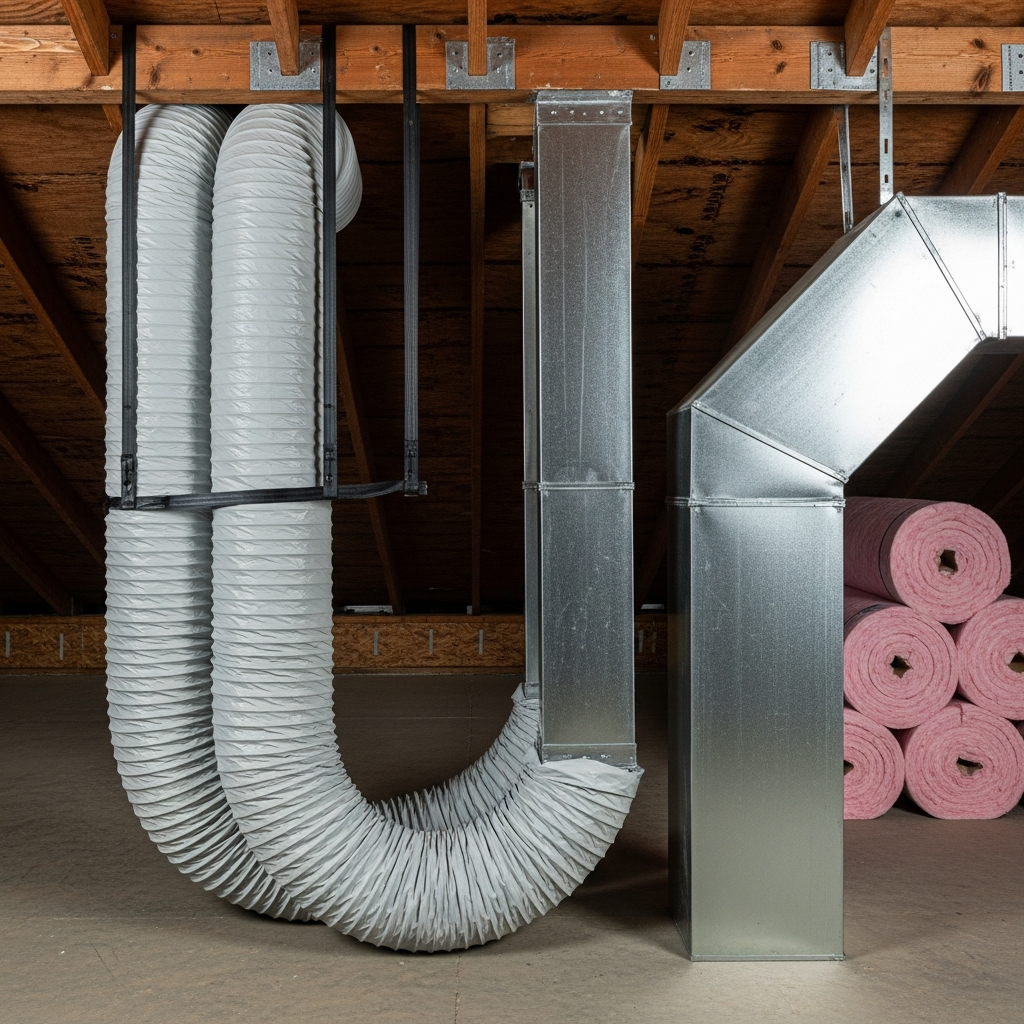
When homeowners in Beverly Hills weigh a duct upgrade, the conversation often circles around two families of material: flexible insulated duct and rigid duct, typically sheet metal. Each has a place, and the best projects use them thoughtfully. Understanding how they compare in real-world homes—from the flats to hillside properties—will help you choose with confidence and set expectations for comfort, quiet, and long-term reliability. Before you invite anyone to measure, it can be useful to study a neighborhood-focused overview of duct replacement so that the vocabulary and trade-offs feel familiar.
The aim here is not to crown a universal winner, but to show how purpose, routing, and craftsmanship determine outcomes. Flex duct offers agility for short, final connections and vibration control. Rigid ducts excel as the main arteries, protecting airflow with stable geometry and easy-to-verify joints. In Beverly Hills homes, which often feature complex ceiling planes and prized finishes, the interplay between these materials can make or break how the air feels day to day.
How Flex Duct Performs In Practice
Quality flexible duct is insulated, lightweight, and capable of graceful curves that avoid cutting into finished surfaces. When supported at proper intervals and gently routed, it can shine on short legs to registers where a small directional adjustment is needed. Its inherent damping helps quell vibration, an asset near air handlers mounted in tight spaces.
Where flex struggles is in long, meandering runs or tight bends squeezed into undersized chases. Compression and unnecessary length increase friction, reducing airflow and increasing noise. In homes that already suffer from uneven temperatures, misused flex can compound the problem. The remedy is simple: use it briefly and beautifully, treating it as a finishing brush rather than a broad stroke.
Why Rigid Ducts Anchor The System
Rigid ducts—most often sheet metal—provide a reliable backbone for airflow. Their consistent cross-section resists kinks and crushing, preserving designed velocities and reducing turbulence. With radius elbows, smooth transitions, and sealed joints, rigid systems move air with a composed hush that homeowners appreciate immediately.
Because they hold shape, rigid ducts are predictable in design and verification. Static pressure calculations translate neatly to real-world performance, and installers can tune dampers with confidence. In multi-story homes, rigid trunks stabilize distribution across floors and help maintain even temperatures in bedrooms and living spaces alike.
Noise, Comfort, And The Human Experience
Most homeowners begin this journey wanting even temperatures and a quieter home. Material choice influences both. Rigid trunks reduce whoosh by smoothing transitions and limiting friction losses. Short, well-supported flex at the very end of a run can serve as a vibration cushion and micro-alignment tool, allowing the diffuser to sit perfectly without forcing an awkward elbow.
Register selection also contributes. In living rooms and bedrooms meant for conversation or rest, diffusers with gentle throw patterns complement the ducts’ calm delivery. When the system is tuned as a whole, you notice that air simply arrives, rather than declaring itself.
What Beverly Hills Homes Ask Of Their Ducts
Architecture here spans decades of building practices. Some homes present shallow attics with little room for sweeping bends; others have vaulted ceilings or flat roofs with tight chases. In these conditions, rigid trunks earn their keep by carrying air efficiently through the main pathways. Flex proves its value when a final few inches of adjustment avoid opening a ceiling or when a register location must align with a room’s design symmetry.
Return strategy is especially important in our market. Many older houses rely on a single hall return that starves the system. Right-sized returns placed with an eye for pressure balance make the entire network feel unburdened, which in turn raises the ceiling for quiet, even operation regardless of supply material.
Installation Craft: The Deciding Factor
Material choice matters, but execution makes the difference you live with. For flex, that means avoiding tight bends, eliminating unnecessary length, maintaining roundness with supportive strapping, and sealing connections with care. For rigid, it means radius elbows over sharp corners, smooth transitions, isolation at equipment, and thoughtful hanger placement. When both are installed with craft, they complement each other and dissolve into the architecture.
Documentation is part of that craft. Photos of concealed work, a map of damper positions, and a legend of airflow targets turn a complex system into something you can understand at a glance. In homes where every detail matters, that transparency is part of the value.
Filtration, Air Quality, And Health
Air quality is front-of-mind in Southern California. A well-designed duct system, whether primarily rigid or flex-assisted, should support robust filtration and a return strategy that discourages drawing from dusty cavities. With wildfire smoke and seasonal pollen in the mix, this attention keeps surfaces cleaner and breathing easier. Returns sized to let air wander calmly rather than rush also cut noise and ease stress on equipment.
Proper sealing further protects indoor air. Leaky ducts not only waste conditioned air; they can also pull unwanted air from attics or wall cavities. During replacement, thorough sealing and verification replace guesswork with measurable confidence.
Coordination With Design And Daily Life
Many Beverly Hills projects are as much about aesthetic coordination as they are about performance. When register placement aligns with a room’s geometry, the eye relaxes. Linear diffusers can disappear into shadow lines, and period-appropriate grilles can honor heritage interiors. Material choice behind the grille exists in service of that final effect, and skilled teams work backward from the room to the trunk, not the other way around.
Living through the work should also feel composed. Protection at access points, daily cleanup, and clear communication make a big difference. Phased work in occupied homes allows families to maintain routines, while careful scheduling keeps pets and delivery drivers happy.
Permits, Testing, And Peace Of Mind
Permitting and verification align replacement with California’s performance targets. Third-party testing of duct sealing and measurements of static pressure demonstrate results you can rely on. That paperwork, paired with photos and a simple diagram, supports resale narratives and future service calls with clarity.
In practice, homeowners value the way verification correlates with comfort. When a system tests well, it typically feels calm, with fewer drafts and more even temperatures from room to room.
Making The Choice: Flex, Rigid, Or Both
Most Beverly Hills homes benefit from a hybrid approach. Let rigid trunks carry the load quietly and efficiently. Use flex sparingly and elegantly to finish connections where small adjustments or vibration isolation matter. This combination leverages the strengths of each material while avoiding their pitfalls.
During design, walk through rooms and talk about how you live. A home office with long calls, a nursery that needs afternoon naps, a primary suite with western exposure—each detail informs diffuser selection, branch sizing, and damper placement. The best systems are tuned to people first, materials second.
Frequently Asked Questions
Is flex duct acceptable in a high-end home?
Yes, when used thoughtfully for short, well-supported final connections. It excels at small directional adjustments and vibration isolation. The key is to avoid long or compressed runs, which add friction and noise.
Will rigid ducts make my system quieter?
Properly designed rigid trunks with smooth transitions reduce turbulence and whoosh, delivering a notably quieter experience. Pairing them with short flex connections can further damp vibration near registers.
Can I reuse existing register locations?
Often, yes. A site visit evaluates whether existing placements serve the room’s comfort and aesthetics. Where improvement is possible, new locations are coordinated to blend with the design language.
How do you verify that a hybrid system performs well?
Technicians test for leakage, measure static pressure, and balance room-to-room flows. Documentation of damper positions and a simple diagram support future adjustments.
What about indoor air quality and smoke events?
A balanced return strategy and robust filtration protect indoor air. Proper sealing prevents ducts from pulling air from dusty cavities, keeping surfaces cleaner and breathing easier during smoke or high-pollen days.
If you are ready to calm the air in every room with a design that balances agility and backbone, connect with a Beverly Hills team that treats your home with care. Begin by reviewing a neighborhood-focused overview of duct replacement and schedule a visit to design a quiet, durable system for how you live.