
Introduction
Residential duct replacement in Beverly Hills is part engineering, part craftsmanship, and part hospitality. It is engineering because airflow must be measured, calculated, and balanced so that each room receives the air it needs. It is craftsmanship because those calculated pathways are built from real materials that must be sealed, insulated, and supported with care. And it is hospitality because the work takes place inside the homes where we live, entertain, and relax, where finishes deserve protection and schedules require respect. When all three elements come together, a home becomes quieter, more even, and more enjoyable every day.
Many local homeowners have already upgraded equipment only to find that uneven rooms, dusty surfaces, or background hiss persist. The common thread is a distribution system that no longer fits the property or the way a family lives in it. Replacing the ducts redefines the foundation of comfort, aligning hidden infrastructure with daily life. If you are exploring options, a clear, local primer on duct replacement will help you understand what an exemplary project looks like from first walkthrough to final verification.
Understanding the Beverly Hills Context
Our city’s residences are as varied as their views. In the Flats, attics can be spacious yet intricate, weaving around original framing and plaster. In Benedict and Coldwater Canyons, hillside homes stack mechanical spaces vertically and thread ducts through tight chases and vaulted ceilings. Trousdale Estates introduces wide spans and floor-to-ceiling glass that demand disciplined diffuser selection and distribution strategy. A residential duct replacement here is never just a swap; it is an adaptation of building science to architecture and lifestyle.
Climate also plays a subtle role. While summers are warm, evenings can cool quickly, and microclimates shift with elevation and exposure. Ducts must deliver steady comfort through these variations, balancing solar gains in bright rooms with the stillness of shaded interiors. That kind of balance is the product of thoughtful design and meticulous execution.
From Assessment to Design
Every successful project begins with attentive listening and a careful look. The walkthrough documents room-by-room comfort, drafts, noise, and dust patterns. Technicians measure static pressure, examine insulation integrity, and trace the path of each trunk and branch. The objective is to understand not only what is broken but what was never quite right. Perhaps a long run feeds two distant rooms through a series of tight bends, or returns sit where furniture now blocks them. These insights become the seeds of a new design.
Design translates observations into a plan. Duct sizes are calculated to provide the right velocity and volume. Trunks may be relocated to shorten runs; returns may be added or enlarged to reduce pressure and enhance filtration. Diffusers are chosen to suit each space—linear for modern minimalism, high-throw for tall rooms, or quiet, broad patterns for bedrooms. This phase should include discussion and options, making sure the plan aligns with how you actually use the home.
Materials and Methods
No single material is perfect for every situation. Sheet metal excels for trunks and branches where precision and durability are paramount. Flex is ideal for short, carefully supported final connections that allow small adjustments to diffuser placement. Duct board can be advantageous for acoustics when sealed meticulously. What matters most is how each material is used: seams sealed with durable mastic, supports placed to prevent sagging, bends formed to maintain smooth airflow, and insulation installed continuously without compression.
Attention to detail extends to accessories. Balancing dampers enable fine-tuning, turning good systems into great ones. Thoughtful selection of registers and grilles marries function with aesthetics, allowing air to move gracefully while the visible elements complement the room’s design. Even hardware choices, from low-profile screws to gasketed collars, contribute to a system that feels engineered, not improvised.
Protection, Cleanliness, and Respect
Residential work requires a hospitality mindset. Floors are covered, corners padded, and pathways planned so that materials move without grazing finishes. Demolition is contained to limit dust migration, and equipment is protected so that work in one area does not compromise comfort in another. Daily cleanups and clear communication make the project feel orderly and respectful. This approach is not an extra—it is the standard a Beverly Hills home deserves.
Cleanliness also influences performance. Debris left inside ducts or plenums can create noise and restrict airflow. Responsible crews keep the interior of the system clean from the first installation step, ensuring that when air begins to move, it does so through clear, smooth passages.
Installation and the Midpoint Check
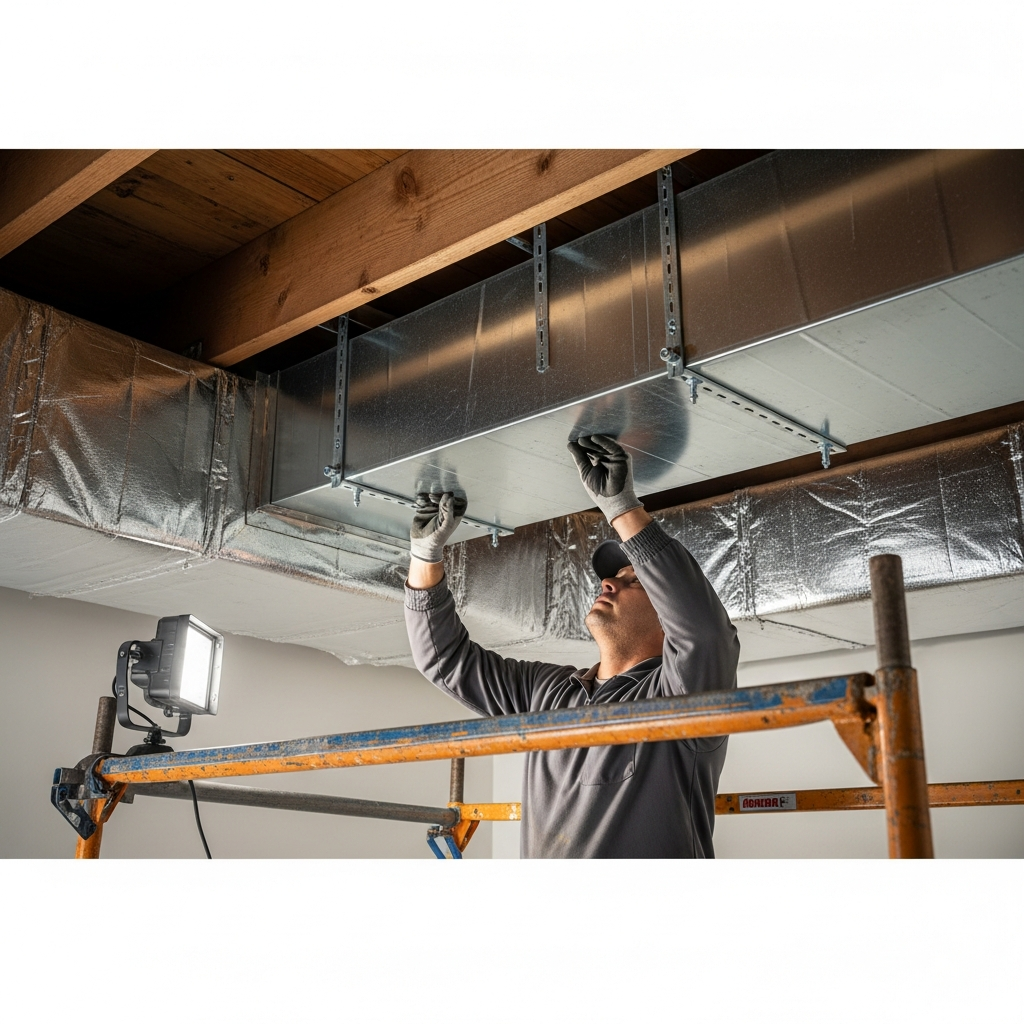
Installation proceeds from trunks to branches to final connections, with pressure and space considerations guiding every inch. Supports are spaced to maintain shape, insulation is applied continuously, and joints receive deliberate, thorough sealing. As the system takes form, a midpoint check aligns reality with design. This is the moment to confirm diffuser choices, approve small relocations for better aesthetics or acoustics, and address any surprises inside soffits or attics.
Homeowners often appreciate a quick reference to make decisions with confidence during this phase. Reviewing a succinct guide to duct replacement services helps you ask precise questions and weigh options that will shape everyday comfort for years.
Balancing and Commissioning
When installation concludes, the system is balanced and verified. Airflow to each register is measured, dampers are adjusted, and temperature splits are confirmed. This step is what turns an installation into a finished system. Balanced airflow prevents noisy outliers, ensures quick recovery after doors or windows open, and keeps rooms in sync with one another. Commissioning produces a documented baseline—a record that your duct system performs to specification and a resource for future remodeling or equipment upgrades.
During handover, technicians will also discuss maintenance habits: how to keep returns clear, how to access filters easily, and what signs suggest it is time for a checkup. Clarity here sustains the gains achieved through replacement.
Indoor Air Quality by Design
Duct replacement offers a rare opportunity to hardwire better air into the home. Properly sized returns allow filters to do their job without starved, noisy airflow. Sealed ducts minimize the chance of drawing dust from attics or crawl spaces. For households sensitive to allergens or during the occasional smoke event, the ability to improve filtration and maintain it with easy access is a meaningful advantage. These details convert theoretical air quality upgrades into everyday reality.
Vent placement matters as well. Supplies that sweep air along ceilings reduce drafts and improve mixing. Diffuser choices tailored to room geometry maintain comfort without calling attention to themselves, making a room feel tranquil rather than “blown on.”
Acoustics and Aesthetics
Quiet is a common goal across Beverly Hills homes, and duct replacement is the pathway to get there. By lowering static pressure, smoothing transitions, and choosing diffusers for soft throw and low noise, the system fades into the background. In rooms where sound is paramount—a media room, nursery, or study—acoustical lining and strategic routing calm the last hints of rumble or hiss. Visually, register selection and placement can be tuned so that the air seems to appear from nowhere, letting the room’s design speak.
Even the way a grille frames a view matters. Aligning finishes and profiles with door hardware and lighting trims creates a sense of cohesion you might not consciously notice, but would miss if it were wrong. That is the level of integration a residential project should target.
Documentation and Long-Term Confidence
Homeowners appreciate certainty. A well-documented replacement includes drawings or photos of hidden runs, test results that quantify leakage and airflow, and a summary of materials and methods used. This package is valuable when selling, remodeling, or simply maintaining the system over time. It shows that the home’s invisible infrastructure is engineered, not improvised, and that performance is a known quantity rather than a guess.
That confidence is part of the return on the project. Every day you experience smooth, quiet comfort is a day you are reminded that the invisible can be a source of peace.
What You Will Notice First
Most homeowners notice silence first—the absence of hiss or rumble. Then comes evenness: rooms hold temperature without fuss, and recovery after doors open is quick. Dust settles less. The home feels poised rather than reactive. These are the day-to-day signals that the ducts are doing their job so the equipment can do its job without strain.
On busy mornings and quiet evenings alike, you simply move through a home that cooperates. That is the promise of a well-executed replacement: living becomes smoother in ways you feel but rarely think about.
Frequently Asked Questions
How do I know it is time to replace my residential ducts?
Look for consistent patterns: uneven rooms, noisy registers, persistent dust, or evidence of widespread leakage or deteriorated insulation. Testing provides clarity by quantifying pressure and airflow, revealing whether targeted repairs will suffice or a replacement will deliver the results you want.
How disruptive is the process in a lived-in home?
Thoughtful teams plan protection and access so life continues around the work. Expect daily cleanups, dust containment, and scheduled milestones. Communication about noisier or high-access tasks helps you plan around routines.
What materials are best for residential projects?
Most homes benefit from a hybrid: rigid sheet metal for main trunks, short, well-supported flex for final connections, and careful use of acoustical elements where quiet is critical. Craftsmanship—sealing, support spacing, and insulation continuity—matters most.
Will new ducts help if I already upgraded my equipment?
Yes. Equipment cannot overcome restrictive or leaky ducts. Replacement reduces resistance and leakage, allowing your system to deliver the comfort it was designed to provide. Many homeowners are surprised at how quickly rooms fall in line after the distribution is corrected.
Do I need permits and testing in Beverly Hills?
Permits and verification testing are part of a professional process, providing assurance that the system meets standards and giving you documentation for future projects or transactions. Your contractor should coordinate this from start to finish.
Can I phase the project?
Phasing is possible with a plan. Address the most impactful areas first—such as return upgrades or the longest restrictive runs—while designing the remainder so today’s work integrates seamlessly with tomorrow’s. Good planning avoids rework.
What happens after the project finishes?
You receive a system that is balanced, tested, and documented. Technicians explain filter access, return care, and signs that suggest a tune-up is due. With this foundation, the system should deliver quiet, even comfort season after season.
Ready for a home that cooperates?
If you are ready to align your home’s hidden infrastructure with the way you live, partner with specialists who blend design, craftsmanship, and respect for your space. Begin your planning with local insights into residential duct replacement and take the first step toward a quieter, more even, and more delightful home.