
Introduction
In Beverly Hills, comfort is part of the architecture. Whether your home is a classic Mediterranean, a hillside modern, or a dignified manor in the Flats, the atmosphere indoors should feel effortless—quiet, even, and fresh. When rooms run hot and cold, registers whistle, or dust seems to reappear after every cleaning, the question arises: fix what you have or start anew? Deciding between duct repair and full replacement is not a matter of guesswork. It is a measured evaluation of the system’s condition, design, and the way your household actually uses the home today.
As a local technician will tell you, many systems have layers of history. Additions, remodels, and quick fixes can leave a trail of compromises in the ductwork that no longer suits the property. Repair can be the right call when problems are isolated. Replacement shines when the underlying layout is flawed or the ducts have reached the end of their useful life. Understanding where your home falls on that spectrum is the first step. If you are gathering information, a reliable overview of duct replacement can help you frame the discussion before a professional assessment.
Start With Evidence, Not Assumptions
Before choosing a path, collect data. A well-performed evaluation measures static pressure, checks register airflow, and documents temperature differences across rooms. Visual inspection reveals crimps, disconnected segments, insulation gaps, and questionable transitions. These objective findings identify whether a few strategic repairs will restore performance or whether the system is compromised at a fundamental level. For homes with a quiet but persistent comfort gap, testing often shows that ducts are undersized or that long, tortuous runs are starving distant rooms of air.
Listening to the household matters, too. Perhaps a home office was carved from a former patio, or a guest suite became a regular living space for family members. The distribution system must match the way rooms are actually used, not the way they were in years past. When everyday living patterns shift, duct design may need to follow suit.
When Repair Makes Sense
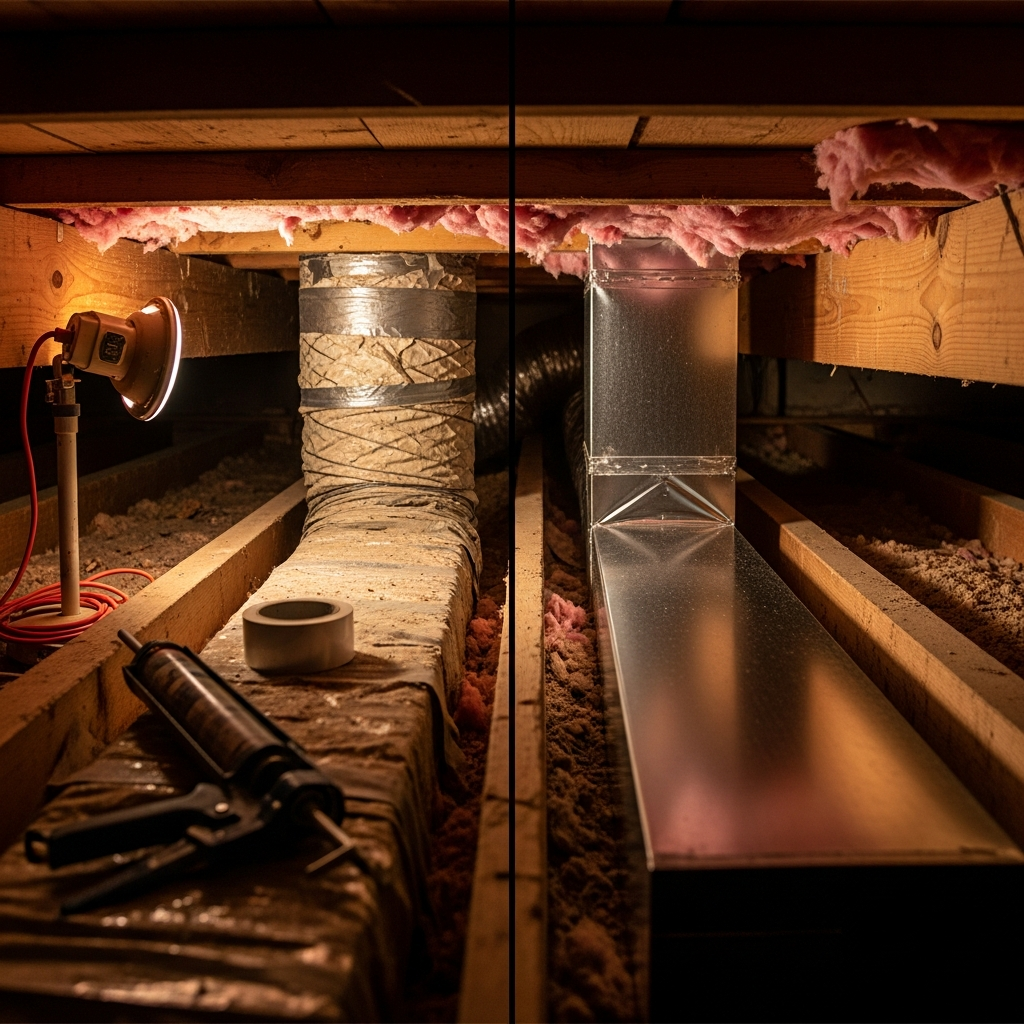
Repairs excel when problems are localized and the original design is sound. Examples include a disconnected collar at a trunk, a crushed flex section caused by storage in the attic, or an aging plenum seal that no longer holds. Refastening, resealing, and properly supporting these segments can restore airflow and quiet operation. Another repair scenario involves replacing a handful of diffusers with models that better match the throw and spread needed for a room, solving drafts without touching the larger system.
In homes with thoughtfully routed sheet metal trunks and branches, targeted improvements—like installing balancing dampers, upgrading return pathways, or increasing insulation continuity—can pay dividends. The common thread is that the system’s bones are solid. Repair keeps those bones working while correcting small missteps accumulated over time.
When Replacement Is Wiser
Replacement becomes the smarter choice when testing reveals systemic issues. If pressure readings are high throughout, registers hiss, and distant rooms underperform even after adjustments, the ductwork may simply be too restrictive. Layouts that rely on long runs with multiple sharp turns create friction that robs rooms of air. Similarly, a lack of return capacity forces the system to inhale through too-small openings, creating noise and limiting filtration effectiveness. In these cases, patchwork repairs rarely deliver the harmony homeowners expect.
Materials and age matter as well. Ducts that have deteriorated insulation, chronic air leakage, or internal contamination beyond simple cleaning are candidates for replacement. In some older homes, ducts may be routed through spaces that are no longer appropriate or that complicate maintenance and verification. A redesign offers the chance to correct those pathways, provide better access, and ready the home for future equipment updates or zoning.
Architecture and Lifestyle Drive the Decision
Beverly Hills homes carry details that shape comfort: large west-facing glass, expansive open plans, or secluded guest suites. A repair might bring a small win to one room but miss the broader improvement a redesign can provide. Consider how you entertain, work, and relax. If bedrooms, office space, and primary gathering areas each deserve different temperature priorities, a replacement that enables zoning or redistributes supply and returns can align the system with your daily routine. Your home does not stand still, and your duct strategy should not either.
Acoustics offer another clue. If quiet is a priority for a home theater or a nursery, duct replacement gives you freedom to introduce acoustical lining, adjust diffuser types, and temper velocities in a way repairs cannot always accommodate. Quiet is a product of deliberate design, not luck.
Permits, Standards, and Confidence
A full replacement typically brings a verification mindset that repairs do not always require. Post-install testing documents leakage levels, confirms airflow to each room, and records temperature performance. This record is valuable to homeowners and future buyers alike, aligning with Beverly Hills’ expectations for professionalism and transparency. While conscientious contractors test their repairs as well, a replacement project is an opportunity to reset the system to a known, optimized baseline.
Permits and inspections provide an additional layer of assurance. They memorialize the work for future renovations and ensure alignment with current standards. For homeowners who want peace of mind that their comfort infrastructure is not only improved but also documented, replacement makes that possible in a comprehensive way.
Costs Without Numbers: Thinking in Value
It is natural to wonder about the investment difference between repair and replacement. While specific figures depend on scope, a useful lens is value over time. Strategic repairs can be ideal when the system is structurally sound. But if you find yourself returning to the same issues—noisy vents, uneven rooms, dust that persists—replacement may convert a cycle of minor fixes into a singular, coherent solution. Value is realized in everyday comfort, reduced strain on equipment, and the quiet satisfaction of a home that simply behaves.
Another way to view value is the opportunity for future upgrades. A well-designed replacement creates pathways that are ready for zoning, advanced filtration, or equipment updates. It is an investment in a framework that will serve long after the details of the project fade from memory.
Middle-Mile Decisions That Matter
Many projects hinge on choices made halfway through. Once demolition reveals true conditions, you might decide to relocate a return for better filtration access, reroute a trunk to shorten a problematic run, or change diffuser types in a few rooms to quiet the last hints of hiss. These are relatively small choices with outsized impact. Use this moment to align design and lifestyle—bringing supply to the reading nook that gets afternoon sun or softening the throw in a dining area where quiet conversation matters most.
During this phase, it can be helpful to revisit your goals with a concise, locally informed reference. Beverly Hills homeowners often consult a clear guide to duct replacement services to ensure the mid-course corrections serve long-term comfort rather than quick wins.
Indoor Air Quality and Healthful Spaces
Whether you are repairing or replacing, do not overlook returns, filtration, and infiltration control. Proper return sizing makes filters more effective and reduces noise. Thorough sealing limits the chance that dust from attics or crawl spaces finds its way into the airstream. If wildfire smoke occasionally reaches our area, planning for better filtration access becomes a practical necessity rather than a luxury. Replacement provides the blank slate to implement these strategies holistically; repair can still make meaningful gains when it targets the right locations.
Vent placement also shapes how fresh the home feels. Supplies that sweep air along ceilings temper drafts and improve mixing, while diffusers selected for the specific room geometry maintain comfort without calling attention to themselves. These details represent the difference between technical adequacy and lived-in excellence.
The Experience After the Work Is Done
Homeowners often describe the post-project feeling in simple terms: calm. Rooms stop arguing with each other. The system no longer surges to overcome resistance. Conversations feel easier without a hiss from a nearby register. Whether reached through a strategic repair campaign or a comprehensive replacement, that calm is the goal. When you open a door late at night and the temperature beyond is already perfect, you know the distribution system is finally working with you.
That new baseline also protects your equipment. Blowers and compressors that are not battling excessive resistance or leakage enjoy a more predictable workload. Over time, that steadiness supports reliability—a benefit that is hard to assign a number to, yet easy to appreciate when seasons change and the home remains unfailingly comfortable.
Frequently Asked Questions
How can I tell if I should repair or replace my ducts?
Start with testing and inspection. If issues are isolated—like a crushed section or a leaking joint—repair can solve them. If measurements show high static pressure, widespread leakage, or design flaws that starve rooms of air, replacement is usually the wiser path.
Will a few repairs fix noisy registers?
Sometimes. If noise stems from a specific restriction or a poorly chosen diffuser, a targeted repair may quiet it. If the noise results from high system-wide pressure and undersized trunks or returns, replacement offers the comprehensive pressure relief needed for lasting quiet.
Does replacing ducts help indoor air quality?
Yes. Thorough sealing and right-sized returns reduce the chance that unconditioned air is drawn into the system. Replacement also provides an opportunity to design for better filtration access, making ongoing maintenance more practical and effective.
Do I need permits for duct replacement in Beverly Hills?
Permits and inspections help verify safety and performance. They also provide documentation appreciated by future buyers or during remodels. A reputable contractor will coordinate permits, testing, and final reports.
How long does a typical replacement take compared to repairs?
Repairs can often be completed quickly if access is straightforward. Replacements take longer due to design, demolition, installation, and verification. Clear scheduling and communication keep both options predictable.
Can I phase work—repair now and plan for replacement later?
Yes, with a strategy. Address the most impactful issues first—like critical leaks or return deficiencies—while designing a roadmap that allows future replacement without undoing recent improvements. Good planning prevents rework.
What benefits should I expect after a full replacement?
Expect quieter operation, more even temperatures, and more effective filtration. The equipment often runs with less strain, and spaces that once lagged behind the thermostat finally fall in line with the rest of the home.
Ready to put the question to rest?
If you are weighing repair against replacement, let evidence guide you and design define the solution. In a city that values both beauty and performance, your duct system should be as refined as your finishes. Begin with a clear assessment and, when replacement is the right move, explore a trusted resource for Beverly Hills duct replacement to see how thoughtful planning turns everyday comfort into an art form.