
Replacing ducts in Beverly Hills homes should feel like a clear path to better comfort, but the route can be complicated by architecture, past renovations, and the quiet realities of how air moves through a building. Understanding the most common pitfalls prepares you to navigate the process with calm and clarity. Whether you live in a hillside contemporary with tiered rooms or a classic single-story on the flats, the goal is the same: a system that disappears into the background while your home takes center stage. If you are just beginning to gather information, it can be helpful to consult a local perspective on duct replacement so that you can spot issues early and steer the project toward a smooth finish.
Many issues start long before installation day. Legacy ductwork often reflects decades of adjustments, each reasonable in isolation, but together creating a patchwork that strains performance. Kinked flex sections, undersized returns, abrupt transitions, and leaky seams can coexist with surprisingly comfortable rooms on mild days—until a heat wave or a cool snap tests the system. Replacing ducts is your chance to reset these compromises. Yet, new complications can arise if design and craftsmanship do not move in lockstep.
Improper sizing and airflow mismatch
One of the most common mistakes is treating ducts as generic tubes that simply need to fit from A to B. Airflow is a measured resource. Oversized ducts can reduce velocity too much, failing to mix air well in rooms and leaving corners stagnant. Undersized ducts raise static pressure, forcing equipment to labor and creating noise at registers. The sweet spot depends on room loads, exposure, glazing, and use. A living room with high ceilings and large windows needs a different approach than a shaded study lined with bookshelves. When sizing is right, comfort becomes even and assured rather than a rolling average.
Return air deserves equal attention. A single hallway return might suffice in a small, open home but will starve bedrooms at the far end of a wing in a larger one. Under-door cuts help, but well-placed returns bring balance that you can feel within days. If you are replacing ducts, insist that the return strategy be part of the conversation rather than an afterthought.
Tight spaces and tricky routing
Beverly Hills attics and crawlspaces are not always generous. In older homes, framing may vary, soffits may hide surprises, and access can be challenging. In hillside properties, stepped floor plates and vaulted ceilings create long, indirect paths for air. Poor routing choices—sharp elbows where a gentle radius would do, branches that double back on themselves, or sags in flex—compound static pressure and noise. Taking time to map the terrain pays dividends. Sometimes moving a trunk by a few inches, or rotating a wye fitting, cleans the path so thoroughly that the system feels different even at the same thermostat setting.
It is also common to discover that prior remodels left ducts sharing chases with plumbing or electrical, which narrows the usable space. When that happens, thoughtful coordination with other trades is essential to avoid compaction or future service conflicts. A good plan commits to clean pathways with reliable supports and uses transitions sized for airflow rather than convenience.
Leaky connections and incomplete sealing
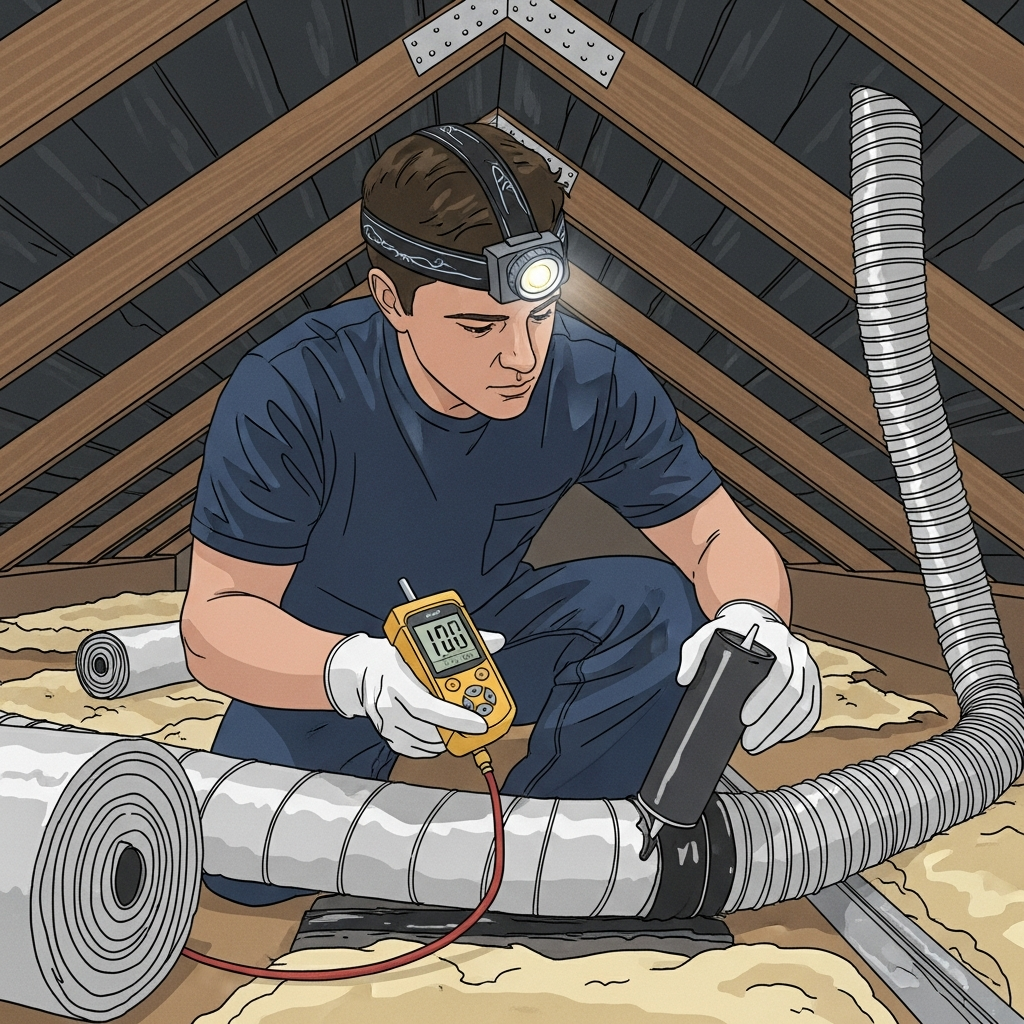
Leaks are the quiet saboteurs. Even small gaps at joints or takeoffs can drift conditioned air into attics and crawlspaces while drawing dusty, hot air into the system. Tapes can age and lift; mastic applied thinly may crack. The cure is straightforward but essential: generous mastic at all seams, sealed boots at ceilings and walls, and test ports that allow verification. Post-install pressure tests confirm that performance meets targets. Skipping this step can leave efficiency and comfort on the table regardless of how neat the ducts look from the outside.
Pay attention to boots and registers as well. If a boot is poorly sealed to the ceiling, attic air can bypass the system and spill dust around the grille perimeter. A tidy caulk line and careful insulation around the boot prevent this invisible but common issue.
Noise from turbulence and velocity
Noise carries in quiet homes. Register hiss, rumble in trunks, and flutter in dampers usually point to turbulence or excessive velocity. Right-sized transitions and adequate return area relieve the pressure that causes these sounds. The difference can be immediate at night when the home is still. A system that inhales and exhales gently keeps conversation and sleep undisturbed.
Register selection affects sound, too. A grille with too tight a pattern for the airflow will whistle, while one with the correct free area will disperse air smoothly. Those details are easy to overlook during the rush to finish, but they set the tone for daily living.
Poor balance between rooms
Even with correct duct sizing overall, distribution can skew comfort if branch lengths vary wildly or if rooms with different exposures receive similar airflow. Balance is not a fixed target; it evolves with seasons and use. A design that includes accessible balancing dampers, along with a post-install tuning visit, ensures your home settles into a steady state. Skipping that follow-up is a common reason some rooms stay stubbornly off while others feel perfect.
Zoning missteps can also undermine balance. If zones are carved by convenience rather than use and exposure, the system may short-cycle in one area while struggling in another. Clear zoning maps that reflect how you occupy the home stabilize comfort and conserve energy.
Inadequate insulation and condensation risks
Duct insulation protects both efficiency and finishes. Gaps, compressed wrap, or torn vapor barriers can lead to condensation risks where cold ducts meet warm, humid air. While Beverly Hills is generally dry, morning marine influence and cool nights can create micro-conditions where moisture forms. Correct insulation thickness and intact vapor barriers guard against these subtle but important concerns. In conditioned attics or sealed crawlspaces, strategies may differ; the point is not a one-size-fits-all answer but a close read of your home’s realities.
Insulation also tempers sound. Heavier wrap keeps trunk lines calmer, a welcome trait in homes where quiet is prized. Neglecting insulation quality invites audible reminders of airflow you would otherwise never notice.
Access and serviceability oversights
What feels tidy on paper can become frustrating if filter access, damper location, or test ports are placed where regular service is awkward. A common issue is forgetting the human element. You should be able to reach filters without gymnastics. Dampers should be labeled and accessible. Service pathways should be clear enough to avoid scuffed surfaces or disturbed insulation every time a technician visits. Building for the long term means honoring the small moments that keep a system at its best.
Documentation matters here. As-built diagrams, photos, and a brief legend of component locations can save hours later. Without them, even a great installation forces future teams to rediscover the layout from scratch.
Coordination gaps with other trades
Electrical, lighting, cabinetry, and HVAC inevitably meet in the ceilings and walls. If coordination falters, conflicts show up as compromised duct runs or rushed changes that introduce new problems. Holding a quick alignment meeting before work begins can preempt conflicts. In homes with tight design tolerances—coffered ceilings, reveal details, or integrated lighting—this step is not optional. The best experiences feel choreographed rather than improvised.
When conflicts are unavoidable, transparent discussion of tradeoffs maintains quality. It is better to slightly adjust a register location with a purposeful plan than to squeeze a duct through a gap that will hum or restrict airflow for years.
Permitting, testing, and overlooked verification
Performance verification is the quiet hero of successful replacements. Tests for duct leakage and static pressure validate the promise of new materials and careful routing. In their absence, problems hide. A system can look immaculate yet still waste energy through invisible leaks or run too hard because of subtle choke points. Embrace testing as the moment that turns craftsmanship into measurable comfort.
Permitting and compliance ensure that safety and energy standards are met. While paperwork may feel distant from day-to-day comfort, the structure it imposes helps protect outcomes. A team that treats these steps as integral to quality signals that they are committed to doing the work right.
Expectations and communication
Another frequent issue is misaligned expectations. Homeowners may imagine a single-day transformation, while the space and complexity call for a methodical, multi-day effort. Installers might underestimate the time needed to protect finishes and coordinate with other trades. Naming the likely challenges at the outset breeds trust. When everyone agrees on a sequencing plan, daily goals, and cleanup standards, the experience feels less like construction and more like care.
Good communication also invites midcourse refinements. If a register location feels visually awkward once marked on the ceiling, that is the time to adjust. If a branch rattles during the first run, calling it out promptly allows small fixes that keep the project on track.
Stories from the field
Take a 1930s home near the Beverly Hills Hotel with layered remodels and charming nooks that trapped heat by afternoon. The initial replacement plan left the hallway return untouched. During commissioning, the team noticed bedrooms lagged in cooling. A modest change—adding a secondary return near the primary suite—brought the wing into balance. Without testing and responsiveness, the project might have closed with lingering dissatisfaction.
In a hillside property overlooking the canyons, long duct runs to a glass-wrapped living area created velocity noise that intruded on quiet evenings. Replacing two sharp elbows with long-radius transitions and upsizing a short section of trunk relieved the pressure spike. The sound diminished to a soft whisper, and the room regained its calm presence.
Turning potential issues into advantages
Every challenge is also an opportunity to refine. Tight spaces prompt creative routing that can shorten runs and reduce losses. Coordination with lighting can yield better register placement that avoids glare and drafts. Insisting on accessible filters and labeled dampers future-proofs your investment. By anticipating the common issues, you set a tone for craftsmanship where small decisions compound into daily comfort.
The most important thread through all of this is partnership. Choose a team that invites your observations, explains tradeoffs clearly, and treats testing as an ally. Together, you can prevent typical pitfalls from gaining ground and transform the hidden system into a quiet asset that supports your home’s character.
Frequently asked questions
Why do new ducts sometimes still feel noisy?
Noise typically stems from turbulence due to tight elbows, undersized returns, or high static pressure. Even with new materials, layout and sizing must align with airflow targets. Adjusting transitions or adding return capacity often brings immediate relief.
How can I ensure my new ducts are sealed properly?
Ask for visible mastic at all seams, sealed boots at ceilings, and a post-install leakage test with documented results. Clear photos of critical joints can supplement your records and support future service.
What if my attic or crawlspace is very tight?
A skilled team will stage the work to create access, use compact tools, and plan supports carefully. Sometimes smaller, strategic redesigns—like moving a trunk run a few inches—improve both access and airflow. The goal is not forcing a fit but designing a clean path.
Can duct replacement fix temperature differences between floors?
Often, yes. Balanced zoning, improved return placement, and smarter routing reduce stratification between levels. Commissioning adjustments after installation complete the picture.
Do I need new registers?
Not always, but choosing registers with appropriate free area and throw can lower noise and improve mixing. In many homes, modern registers also offer a visual refresh that blends with your decor.
What role does testing play?
Testing validates that leakage is low, static pressure is healthy, and each room’s airflow matches design intent. It turns good intentions into measured performance and provides a baseline for maintenance.
How should I prepare my home before work begins?
Clear access to attic hatches and work areas, remove fragile items near registers, and coordinate with other trades if needed. A brief walk-through to set protection and cleanup standards sets the tone for a smooth project.
Will replacement handle dust and odors?
Proper sealing and return placement reduce infiltration from attics and garages, which helps with dust and odors. Filtration upgrades, matched to the duct design, further improve indoor air quality.
How long will the project take?
Timeline depends on access, home size, and coordination. A detailed scope and daily milestones help maintain progress without rushing delicate steps like sealing and testing.
What if I notice an issue after installation?
Share observations quickly. Small adjustments to damper positions or register angles often resolve lingering hot or cool spots. Commissioning should include time for this fine-tuning.
If you are ready to move from concerns to confidence, partner with a Beverly Hills team that knows the terrain, respects the architecture, and proves performance through testing. Begin with a conversation rooted in your home’s story, and let design lead the way. When you want a clear starting point, explore trusted local insights into duct replacement and schedule a visit that turns common issues into uncommon comfort.