
Understanding AC Maintenance Requirements in Beverly Hills
Beverly Hills homes are carefully composed—from the acoustics in a screening room to the quiet whisper in a hallway lined with art—and the expectations placed on air conditioning reflect that care. Meeting maintenance requirements here means honoring manufacturer guidance, local practices, and the rhythms of our climate, all while protecting finishes and privacy. Homeowners who approach the task with a clear plan enjoy steadier comfort and fewer disruptions. Many begin by scheduling professional air conditioning maintenance requirements before the first real heat, using that visit to align documentation, timing, and access.
Requirements fall into three broad categories: what the equipment makers ask for, what good building stewardship suggests, and what life in Beverly Hills teaches us over time. When those strands are woven together, the result is a maintenance program that feels natural rather than obligatory.
Manufacturer Expectations and Warranty Protection
Most modern systems carry clear guidance for routine care: periodic inspections, filter changes, coil cleaning, drain verification, electrical testing, and confirmation of safety controls. Following those steps on a reasonable schedule protects warranties and, more importantly, preserves peak performance. Documenting each visit—notes, readings, and photos—builds a file that supports any future claims and helps technicians track subtle shifts that may warrant preemptive attention.
Manufacturers also outline requirements for compatible filters and acceptable pressure drops. Choosing a filter that is too restrictive can compromise airflow and, in some cases, void portions of coverage. Your technician can measure static pressure with your preferred filter to ensure you meet both comfort goals and equipment guidelines. Similarly, when equipment has been paired with zoning or specialty diffusers, the commissioning details should be retained; they inform future balancing and protect the intent of the original design.
Local Practice: Access, Discretion, and Care
In Beverly Hills, access considerations are part of the requirement set, even if they do not appear in technical manuals. Mechanical closets behind bespoke cabinetry, rooftop units hidden behind parapets, and air handlers serving glass-wrapped rooms all demand thoughtful, tidy service. That means shoe covers and floor protection, careful removal and replacement of panels, and coordination with household staff to preserve privacy and flow. The expectation is that rooms look untouched when service is complete, and outdoor spaces remain as serene as before the visit.
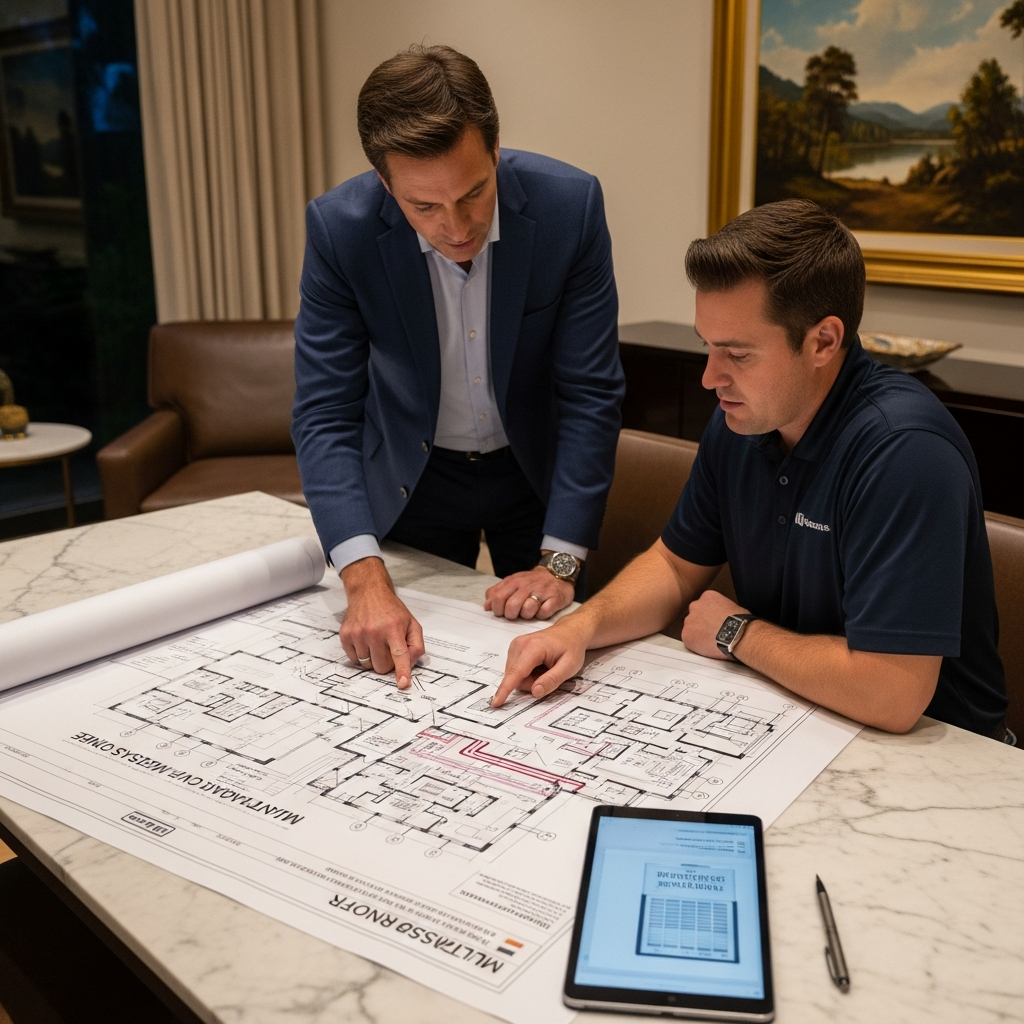
Safety is also nonnegotiable. Technicians adhere to best practices when working at heights or near delicate finishes, and they verify that disconnects and safety switches function before and after service. Where estates include multiple systems, clear labeling and a property map are essential requirements, reducing confusion and ensuring each unit receives full attention without repeated intrusions into occupied rooms.
Climate-Driven Requirements
Our climate sets its own rules. Microclimates produce real variation: a home on a sunlit slope experiences a different afternoon load than one shaded by mature trees; canyon winds carry dust that coastal breezes do not. Maintenance must reflect those realities. Filters and outdoor coils require more frequent checks in dusty conditions; drains deserve heightened attention after humid stretches; and post-wind-event cleaning often restores the quiet efficiency that defines comfortable interiors.
Wildfire seasons, when they arise, add another layer. Fine particulates may enter outdoor coils or accumulate near returns, which calls for professional cleaning afterward. A requirement here is flexibility—adapting the plan to the season rather than clinging to a fixed schedule. That agility keeps your system aligned with the real world beyond your windows.
Documentation as a Requirement, Not a Nicety
Thorough records are more than helpful—they are foundational. Each visit should log filter status, coil condition, static pressure, electrical readings, drain performance, and any tuning performed on registers or controls. Over time, this file helps answer key questions without guesswork: how a particular zone behaves each July, whether a fan motor has shown a trend, or which rooms benefit from diffuser adjustments. Estate managers often keep these records alongside other household manuals so any new technician can understand the home’s cooling history at a glance.
Photos of coil surfaces before and after cleaning, confirmation of safety switch function, and notes on landscaping near outdoor units are small details that pay large dividends later. If future upgrades are considered, designers can review the history and make decisions that respect the way the home has been lived in, not just how it was drawn.
Requirements for Multi-System Properties
Many Beverly Hills residences run multiple systems that must work in quiet coordination. Requirements here include clear zone naming, labeled equipment, and a rotating maintenance plan that respects occupancy patterns. Guest houses, wellness spaces, and theaters often have very different needs than main living areas. A maintenance plan that treats them as unique zones yields finer control and fewer interruptions.
Access planning is equally important. Technicians should have a defined path through the property, protective materials ready for delicate floors, and a checklist that keeps each visit efficient. Outdoor condensers benefit from confirmed clearances, and irrigation should be set to avoid spraying equipment. These might sound like niceties, but in practice they are essential requirements that keep service graceful.
Working with Controls and Ventilation
Controls are a living part of the requirement set. Thermostats and zone controllers should be updated and calibrated so their decisions reflect how you actually use the home. Where dedicated ventilation is part of the design—often in gyms, spas, or studios—maintenance must include confirmation that those systems coordinate with cooling. The result is air that feels fresher and equipment that works with less strain.
In homes with advanced automation, documenting how cooling set points integrate with shading and lighting is helpful. If the home’s rhythm evolves, a quick recalibration ensures the system remains responsive without overworking.
The Mid-Season Requirement You Will Feel
Some requirements are felt rather than written. Mid-season attention—focused on filters, coils, and drains—keeps the machine poised through the warmest weeks. This is also the moment to confirm zone balance in rooms that see afternoon sun or evening gatherings. A short, well-timed visit can restore the hush that defines a well-tuned home, and it is a perfect time to discuss a refined manufacturer maintenance cadence for the rest of the year.
FAQ: Maintenance Requirements
What does “required” maintenance usually include? Periodic inspections, filter changes, coil cleaning, drain verification, electrical testing, and confirmation of safety controls, supported by clear documentation. The exact cadence depends on your home’s usage and environment.
Will using the wrong filter really matter? It can. Filters that are too restrictive for your blower reduce airflow and comfort and may conflict with equipment guidance. Choose a filter that balances air quality goals with measured system performance.
How do I ensure privacy during service? Work with a team that coordinates schedules, protects finishes, and moves discreetly. Provide a property map if you manage multiple systems; it helps minimize time in living areas.
What should I watch between visits? Keep returns and outdoor units clear, listen for new sounds, notice any moisture, and call if the system behaves out of character. Small cues often signal simple fixes.
Can maintenance requirements improve indoor air? Yes. Clean coils, correct filtration, and coordinated ventilation elevate the character of interior air while easing strain on equipment.
How do wildfire or wind events change requirements? They typically trigger earlier filter checks and post-event cleaning of outdoor coils. Adapting quickly preserves efficiency and comfort.
Your home deserves cooling that feels effortless and private. Align with a plan that honors manufacturer guidance, local best practices, and the subtle cues of our climate. When it is time to act, schedule your next air maintenance and enjoy a home that stays composed through every season in Beverly Hills.