
In a community that values both beauty and thoughtful stewardship, it is natural to ask how work behind the walls influences the world outside your windows. Duct replacement may seem like a purely indoor decision, but its environmental ripple touches energy use, air quality, and even the lifespan of finishes and equipment. In Beverly Hills, where architecture intersects with landscape and light, the environmental story is woven through everyday comfort. Understanding that story helps you make decisions that honor your home’s character while contributing to a healthier city. If you are at the stage of gathering ideas, looking into local expertise on duct replacement offers a helpful frame for aligning performance with values.
The environmental impact of ducts begins with leakage and resistance. Old or poorly installed ducts allow conditioned air to escape into attics and crawlspaces while drawing in dusty, hot air. This loss forces equipment to run longer and harder, consuming more energy to deliver the same result. When ducts are replaced with a design focused on tight connections and smooth routing, the home uses less energy to achieve the same or better comfort. That is the first and most immediate environmental benefit: reduced energy demand during peak hours when the grid strains and the air outside feels still.
Efficiency as a form of conservation
Think of efficiency as quiet conservation. Every reduction in leakage, every softened elbow radius, every supply run shortened by a few feet adds up to fewer minutes of compressor and fan operation. On warm afternoons when sun lights the boulevards and canyons glow, a home that breathes easily places a smaller load on the grid. This is especially meaningful during late-day peaks when energy generation can be most resource-intensive. In aggregate, many homes with optimized duct systems support a city that hums more gently.
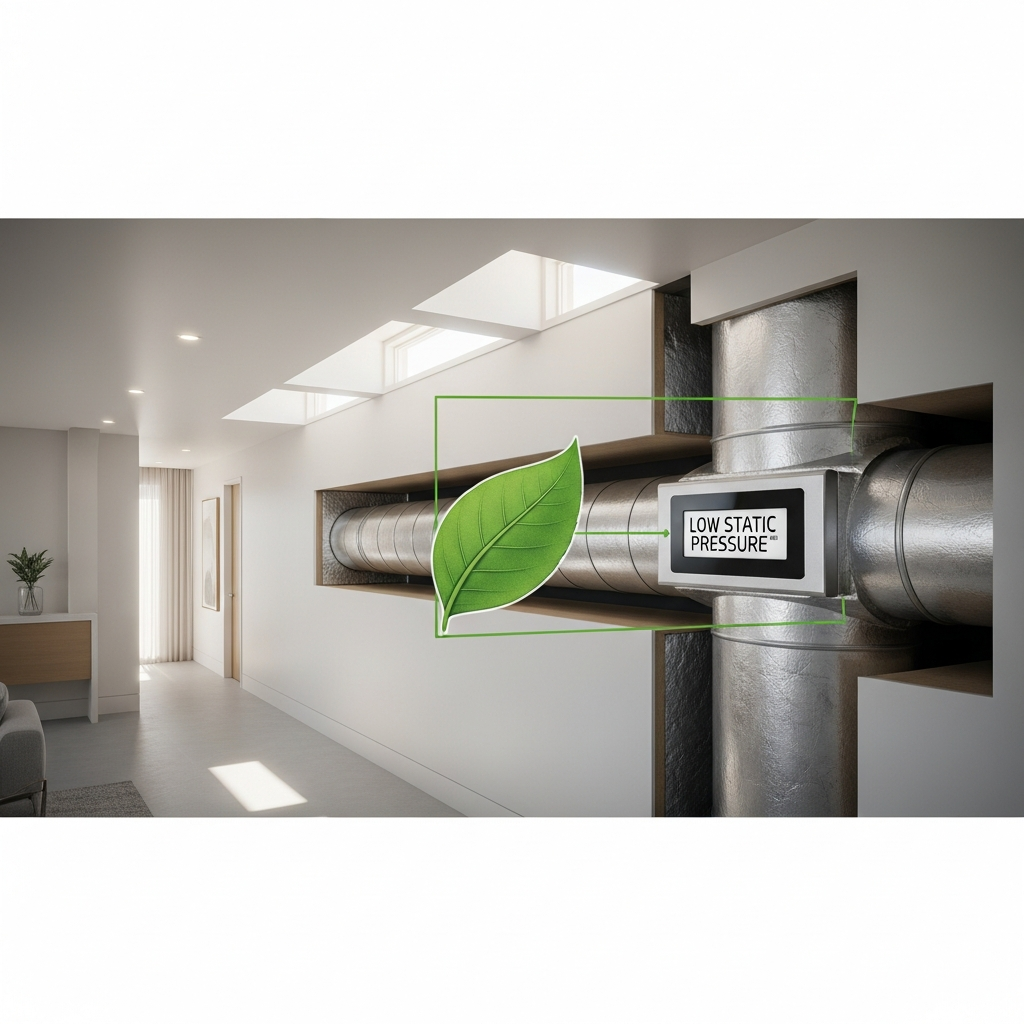
Better ducts also preserve the delicate work your equipment does. When static pressure drops and airflow aligns with design targets, your system spends more time in its efficient operating range. This steady-state behavior extends equipment life, delaying the environmental cost of premature replacement. Fewer truck rolls, fewer parts, and more years of service all reflect conservation in a practical, local way.
Indoor air as part of the environmental equation
The environment you inhabit most is the air inside your home. Duct replacement that seals connections and positions returns wisely reduces infiltration of attic dust and outdoor particulates. On days when wildfire smoke drifts across the region or when winds lift fine particles into the air, a sealed system with thoughtfully chosen filtration protects your indoor environment. Improved indoor air quality can decrease the need for standalone purifiers that consume additional energy, and it makes your home a refuge when outdoor conditions are less than ideal.
Cleaner indoor air also supports the longevity of finishes and textiles. Reduced dust deposition means less frequent deep cleaning, fewer harsh chemicals, and extended life for rugs, draperies, and upholstery. This, too, is environmental stewardship in practice—using and replacing fewer materials over time.
Materials, waste, and responsible choices
Any replacement project generates material decisions and waste streams. Selecting durable duct materials and high-quality insulation reduces the need for future intervention. Metal trunks with well-supported flexible branches, properly sealed with low-VOC mastics and adhesives, create a system built for the long haul. Responsible disposal of old materials—separating recyclable metal from non-recyclable debris—keeps more matter in productive cycles and less in landfills.
The adhesives and sealants used in modern duct systems have evolved, with many options available that minimize off-gassing. Choosing products designed for indoor environmental quality preserves the fresh neutrality of your home while protecting installers and occupants. This consideration aligns with an overall strategy of using better components less often—investing once and maintaining well.
Designing for gentle operation
Environmental performance includes how a system sounds. A quieter home is one where equipment and ducts operate within optimal ranges. Turbulence often signals wasted energy. When a replacement design reduces sharp turns, balances returns, and resets velocities to healthy levels, noise declines and efficiency rises together. This synergy feels luxurious while it quietly reduces consumption.
In homes that invite natural ventilation during shoulder seasons, a well-designed duct system can complement open windows by maintaining gentle air mixing without overcooling or overheating. The instinct to open the house on a breezy evening is easier to honor when mechanical systems do not compete. These small, seasonal choices save energy and reconnect you to the climate that makes Beverly Hills distinctive.
Resilience during challenging air days
Recent years have reminded us that air quality can change quickly. On days marked by regional smoke or dust events, a home with sealed ducts and appropriate filtration becomes a sanctuary. The environmental comfort you gain is twofold: improved personal health outcomes and avoided use of temporary devices that may be less efficient. By designing ducts that can accommodate higher-efficiency filters without compromising airflow, you give your home a tool to face future air quality challenges with poise.
Resilience also includes temperature stability during power events. Efficient ducts that keep the envelope comfortable with shorter run times can help a home ride through brief interruptions without dramatic swings. While no duct system can replace backup power, every gain in passive stability moderates extremes and eases recovery once power returns.
Microclimates and Beverly Hills architecture
Beverly Hills spans flats and hills, shaded streets and sun-drenched slopes. These microclimates shape environmental performance. In canyons, cool mornings give way to warm afternoons; on the flats, broad attics can heat quickly under full sun. Replacement duct designs that respond to these patterns reduce the urge to overcorrect with aggressive thermostat changes. Zoning, return placement, and register selection, all tuned to exposure, preserve calm comfort with less energy.
Architecture adds its own layer. Homes with expansive glazing demand airflow that tempers solar gain without cold drafts. Older homes with thick walls and varied ceiling heights need patient routing to maintain velocities that mix air gently. Meeting architecture where it lives is itself an environmental act; it respects what the building is good at and supplements where needed, rather than fighting against form and wasting effort.
Equipment longevity and embodied impact
Every manufactured object carries embodied energy—the resources used to create, transport, and eventually recycle or dispose of it. When ducts reduce stress on your HVAC equipment, they contribute to a longer, calmer life for those components. Fewer replacements over the decades mean fewer resources consumed and fewer disruptions that accompany major equipment changes. It is the quiet arithmetic of stewardship, multiplied across neighborhoods, that gradually shifts a city’s footprint.
Even within the duct system, choosing components that last—corrosion-resistant hangers, sturdy insulation, registers that maintain finish—reduces the churn of small replacements. The beauty of this approach is that it asks for attention primarily at the moment of design and installation; maintenance then becomes the craft of preserving, not constantly intervening.
Comfort that nudges behavior
Environmental outcomes are shaped by behavior, and behavior is shaped by comfort. When your home maintains temperature evenly and quietly, you are less likely to resort to space heaters in one room or window units in another. You may feel comfortable setting slightly wider temperature bands, because the experience is steady rather than reactive. Over months, those small choices reduce consumption without feeling like sacrifice. Comfort, in this sense, is not indulgent; it is practical and ecological.
A similar dynamic applies to fresh air. With a balanced system, you can introduce outdoor air on good days without stirring up dust from attics or crawlspaces. You enjoy the evening breeze and the sound of leaves without doubting the indoor experience that follows.
Community-level benefits
While a single home’s ducts are a small piece of the citywide puzzle, communities are built from such pieces. A neighborhood with many efficient systems presents a gentler demand profile to the grid. In peak times, that can reduce the need for the least efficient generation sources to come online. It also means quieter neighborhoods, because systems are not laboring noisily at the same hour. The cumulative effect is a city that feels a little calmer and breathes a little easier.
Real estate conversations also change when efficient, well-documented systems become expected. Buyers learn to ask about duct leakage test results and airflow balance, which encourages better practice citywide. Transparency becomes a tool of conservation as much as of comfort.
End-of-life considerations and upgrades
Eventually, every system component reaches the end of its service. Planning for responsible disposal and for upgrades that preserve past investments keeps environmental goals intact. If you later adopt equipment that uses different airflow profiles, a well-designed duct system can often accommodate the change with minor adjustments. This backward compatibility avoids the waste of wholesale rework and keeps material out of landfills.
When select components do need replacement, sourcing parts with recycled content and choosing finishes that endure indoor conditions extends the cycle of responsible use. The key is to think in decades rather than seasons, letting today’s decisions echo positively over time.
Measuring what matters
Environmental impact thrives on measurement. Commissioning tests that document duct leakage and static pressure provide a baseline. Periodic rechecks confirm that performance stays true. This data guides maintenance and supports any future improvements, keeping the system honest and the environmental benefits durable. In a world full of claims, measurement is the friendly kind of proof that protects your investment and the ideals behind it.
Homeowners often find that once the system is measured and tuned, they think about it less, which is healthy. The environment benefits most when good design allows daily life to proceed without fuss, quietly saving energy and reducing waste while you enjoy the spaces you love.
Frequently asked questions
Does replacing ducts really reduce my home’s environmental footprint?
Yes. Tight, well-designed ducts lower energy use by reducing leakage and resistance. They also help equipment run in its efficient range, which cuts consumption and extends component life.
What about the materials removed during replacement?
Responsible projects separate recyclable metal from non-recyclable debris and choose low-VOC sealants and adhesives for the new work. Durable materials reduce future waste and interventions.
Will I notice air quality improvements?
Most homeowners report less dust and fewer odors when returns are placed wisely and ducts are sealed. On days with regional smoke or high pollen, appropriate filtration within a balanced system can make a noticeable difference.
Do efficient ducts make my equipment last longer?
Often, yes. Lower static pressure and balanced airflow reduce wear, allowing equipment to operate more gently. Over time, that can delay replacements and reduce the environmental cost associated with manufacturing and installing new components.
Can I pair duct replacement with other green upgrades?
Certainly. Insulation improvements, air sealing of the building envelope, and smart controls complement new ducts. Sequencing these projects thoughtfully maximizes gains without duplicating effort.
How do I know my new ducts are performing as intended?
Commissioning tests provide measurements for leakage and static pressure, while room-by-room airflow checks confirm balance. Keep this documentation; it is your environmental and comfort baseline.
Is zoning environmentally beneficial?
When designed well, zoning directs comfort where it is needed and reduces waste in seldom-used areas. It allows gentler operation overall, which can lower energy use without compromising experience.
Do quieter ducts really indicate better environmental performance?
Often they do. Quieter operation usually means lower turbulence and healthier static pressure, both of which support efficient energy use. Sound is a helpful proxy for system health.
What maintenance supports the environmental gains?
Regular filter changes, clear supply and return paths, and occasional performance checks maintain low resistance and balanced airflow. These habits keep the system operating where it saves energy most effectively.
Will duct replacement change how I use my home?
In a positive way. Even temperatures and quiet operation invite you to use spaces more flexibly and to avoid stopgap devices like space heaters or window units. Comfort encourages choices that consume less without feeling restrictive.
If you want your home to feel distinctly comfortable while treading more lightly, begin with a conversation that links design, measurement, and long-term care. A thoughtful plan will honor your architecture and daily rhythms while reducing consumption and waste. For a simple, local starting point, explore Beverly Hills guidance on duct replacement and schedule a visit that turns environmental intent into the quiet, lasting comfort you live with every day.