
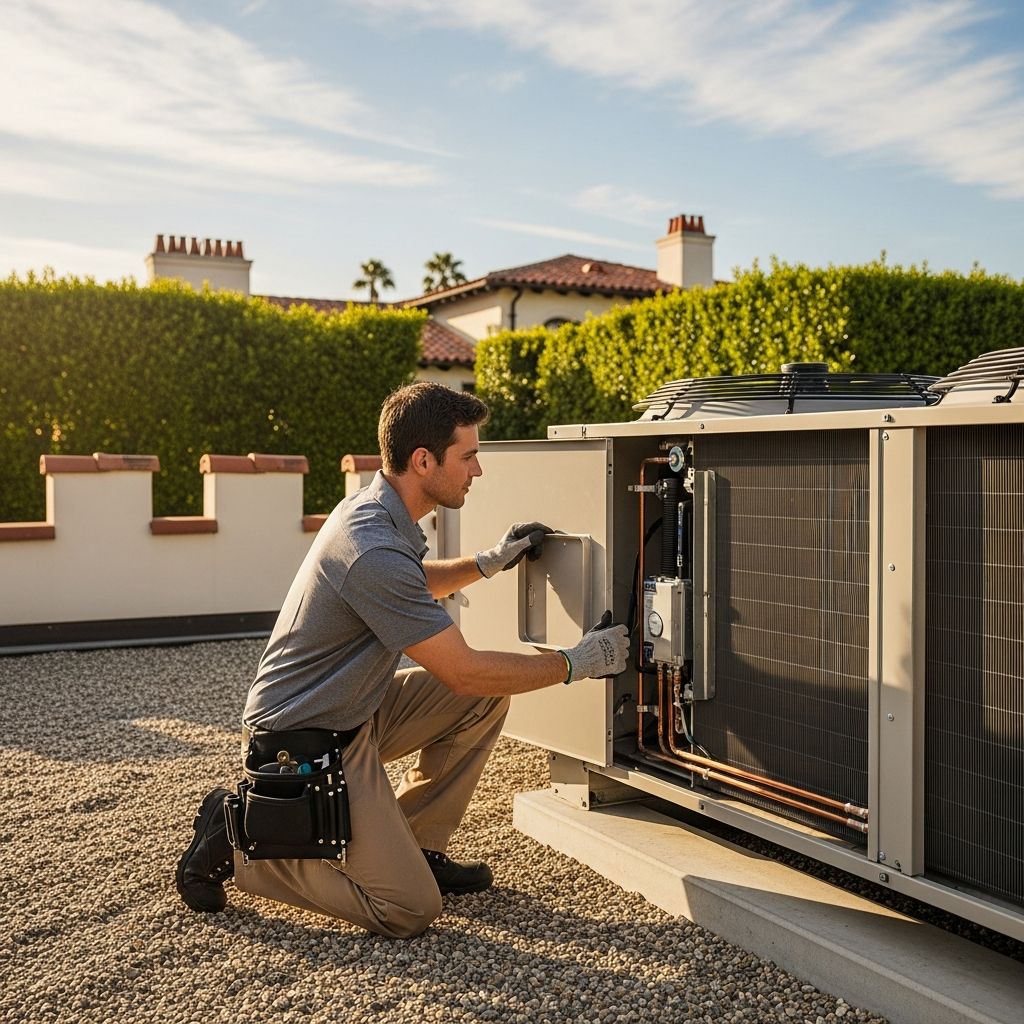
What Beverly Hills Homeowners Should Know About Air Conditioning Maintenance Cost
Ask five Beverly Hills neighbors what drives air conditioning maintenance cost, and you will likely hear five different answers, each shaped by the age of their home, the quirks of their system, and the way our microclimates change block by block from Trousdale to the Flats to Beverly Crest. That is the reality here: every property is its own ecosystem, with unique expectations around comfort, quiet, and presentation. When we talk about the financial side of caring for an AC system, the smartest approach is to step back and consider the full picture—how equipment design, installation quality, daily use, and thoughtful planning influence both the experience and the lifetime value of your system. And in that full picture, routine air conditioning maintenance is the linchpin that keeps everything running smoothly and predictably.
Cost conversations can feel slippery because there is no one-size-fits-all home in Beverly Hills. Some residences rely on compact rooftop packages concealed behind parapets, others have multiple air handlers hidden in mechanical closets, and many estates use zoned systems feeding rooms with precise, whisper-quiet distribution. The path to an accurate budget is to focus on the drivers you can control—ease of access, seasonal timing, the number of systems, cleanliness of coils and filters, and the consistency of professional inspections. When those pieces are handled thoughtfully, surprises become rare and your AC rewards you with steady performance and refined comfort.
The Local Context That Shapes Your Spend
Microclimate is a term we use often here because it truly matters. Even within a few miles, coastal breezes, hillside exposures, and canyon winds change how hard an air conditioner must work. Homes that soak up full sun in the afternoon, or that handle persistent dust from nearby construction or landscaping work, typically need more frequent attention to filters, condenser surfaces, and drains. Our local flora—eucalyptus, jacaranda, ficus—sheds debris that can find its way into outdoor equipment, which adds to airflow resistance and compels the system to work longer for the same result. Attention to outdoor clearances, landscape trimming, and protective screening can quietly lower run time and reduce wear, which in turn stabilizes maintenance needs over the season.
Architecture also affects the rhythm of care. Long duct runs in historic or extensively remodeled homes may introduce subtle leaks, while newer high-efficiency builds often trade accessible, open equipment rooms for hidden, acoustically isolated spaces. Carefully designed concealment looks wonderful but can add time for technicians to reach service panels, change filters, or inspect drains. That added time is not just about access; it is about preserving finishes, working neatly, and safeguarding art, rugs, and millwork as tools come and go. In Beverly Hills, white-glove service is not a luxury; it is the baseline homeowners expect, and that service ethic is part of the maintenance equation.
The Real Value Behind Routine Attention
It is easy to think of maintenance as a checklist—change filters, wash coils, verify refrigerant levels, test capacitors, calibrate thermostats, inspect drains. Those steps are crucial, but the deeper value is cumulative. Consistent care flattens the peaks and valleys of performance. A system that is kept clean, lubricated where applicable, and electrically healthy rarely drifts into the conditions that shorten component life. Compressor strain eases, fan motors spin with less effort, and temperature swings tighten up. When maintenance is scheduled before heat waves, technicians can catch subpar airflow or marginal capacitors that might otherwise fail just as the forecast turns warm.
Documentation adds another layer of protection. Detailed service notes, photos of cleaned coils, recorded static pressure readings, and confirmation that safety controls function properly do more than tell a story; they help build a predictive timeline. Over time, your technician learns how your particular equipment behaves, and small anomalies spotted in spring can inform preventive steps before the next summer. That continuity of knowledge is priceless in larger estates where multiple systems must coordinate to keep living spaces, theaters, gyms, and guest houses at ideal conditions without calling attention to themselves.
Planning That Minimizes Surprises
Timing is one of the most underappreciated maintenance levers. If you wait for the first truly hot week to schedule service, you will compete with everyone else who waited too. Booking early allows for unhurried, detailed work and faster follow-through on any recommendations. Early appointments also let technicians sequence repairs or part replacements without the pressure of a live heat wave. In some properties, we see owners align AC care with other home services—window cleaning, gutter clearing, pool equipment inspections—so access is coordinated and the home returns to full privacy with minimal comings and goings.
Another planning element is filtration strategy. Talk to your technician about the right MERV rating for your system and your lifestyle. Higher filtration efficiency can improve air quality but may restrict airflow if not matched to the blower design. Finding the right balance, and setting a realistic replacement cadence, can keep your system operating squarely in its sweet spot. For households hosting frequent gatherings or with pets, stepping up the inspection frequency during peak months can catch a clogging filter before it silently undermines system performance.
Equipment Age, Upgrades, and Long-View Thinking
Age does not automatically dictate outcomes. We see older systems that purr along gracefully because their owners have invested in steady care, and newer systems that struggle due to neglect, blocked returns, or poor ventilation. That said, as equipment ages, electrical components and seals naturally drift from original spec. Proactive attention to contactors, capacitors, and drain pan conditions can prevent cascading issues. If conversations about upgrades are on the horizon, routine checkups keep your options open and your schedule flexible, so any transition to new equipment can happen on your terms.
Smart controls are another piece of the puzzle. Thermostats that learn occupancy patterns, integrate with shading, or coordinate with ventilation can trim unnecessary run time and reduce stress on the system. In homes with dedicated server rooms or specialized spaces, zoning and sensor placement become especially important. A thoughtful controls strategy, tuned to how you actually live, yields a calmer, steadier AC that asks less of its components.
How Properties with Multiple Systems Stay in Sync
Many Beverly Hills properties rely on two, four, even eight separate systems. Here, maintenance is not just a matter of individual checklists; it is choreography. Outdoor units need clearances and clean condenser fields; indoor air handlers must align with duct balancing; return air pathways should remain unobstructed by seasonal furniture moves. A property plan that identifies each system by location and function—main living, primary suite, guest wing—makes it easier to rotate checks without disrupting the household. With the right schedule, you can stagger attention so critical areas are always ready for a heat wave, and noncritical zones are tuned up just before their busiest season.
In larger residences, technicians often coordinate with estate managers and house staff to protect finishes and ensure that service paths are covered and tidy. Good teams arrive with shoe covers, drop cloths, and HEPA-rated vacuums, and they leave rooms as pristine as they found them. That attention to care is not cosmetic; dust control and cleanliness matter to the health of the equipment and the quality of the indoor environment.
Where the Middle of the Journey Matters
The middle of your system’s life—after the first few trouble-free years, before any serious talk of replacement—is where consistency pays off. This is the season to refine your approach, to look at energy usage alongside comfort, and to ask for small enhancements that improve airflow or drainage. A well-designed maintenance program will adapt to your home’s patterns, catching gradual shifts before they become urgent. Technicians who know your equipment will recognize the faint whirr that suggests a bearing is getting tired, or the subtle temperature drift that precedes a sensor issue. Those are the moments that protect your time and your peace of mind.
Noise is another midlife consideration. If your outdoor units sit near a garden or terrace, airflow and fan condition influence how your landscape feels during warm evenings. Keeping coils clean and fans balanced reduces unnecessary sound, preserving the tranquility of your alfresco spaces. Indoors, quiet operation is part of the luxury experience; careful duct sealing and register tuning can dial down turbulence that otherwise becomes background noise.
What Beverly Hills Weather Teaches Us Each Year
We live with cycles: bursts of heat, cool marine layers, and the occasional Santa Ana episode that pushes dry, dusty air through the canyons. After each weather chapter, your AC tells a story—how much load it carried, what kind of particulates it dealt with, whether condensate management kept pace with humidity swings. A thoughtful post-heat-wave check can reveal where strain accumulated: slightly darkened coils, a drain line that needs a more assertive flush, or a filter that reached the end of its effectiveness earlier than expected. Those lessons shape the next round of service and keep your maintenance plan grounded in the real behavior of your system.
Wildfire seasons, when they appear, deserve special mention. Even if smoke stays mostly at altitude, fine particulates can drift into outdoor condensing coils and indoor returns. Here the protective steps are deliberate: close monitoring of filters, strategic use of recirculation modes, and an eye on indoor air quality sensors if you have them. After smoky periods, a professional cleaning of coils and returns can be the difference between a system that soldiers on and one that strains under invisible residue.
Professional Perspective, Personal Comfort
Ultimately, your sense of value is measured in comfort: a home that is pleasantly cool without drafts, rooms that smell fresh, and a system that fades into the background. From a professional perspective, the highest compliment is when a homeowner forgets the AC is even there. That kind of quiet reliability comes from aligned expectations, steady care, and a plan that respects your property and your schedule. When you approach maintenance as a rhythm rather than a chore, the benefits compound—more stable performance, fewer disruptions, and a calmer, more comfortable home.
FAQ: Beverly Hills AC Maintenance
How often should maintenance be scheduled in our climate? In most Beverly Hills homes, a thorough check each spring before sustained heat arrives is ideal, with a mid-season touchpoint if the system serves a high-demand household or if dust and landscaping activity are constant. Larger estates with multiple systems often benefit from a rotating schedule that keeps at least one crew visit on the calendar during peak months.
What can I do between professional visits to support the system? Keep returns clear of furniture and drapery, replace or clean filters on the cadence your technician recommends, and keep an eye on outdoor unit clearance so plantings, leaves, or yard equipment don’t crowd airflow. If you notice new sounds, changes in airflow, or humidity shifts, note the timing and share that detail during the next visit.
Will higher-efficiency filters always improve results? Not always. Higher MERV ratings capture finer particles but can restrict airflow if the system was not designed for that resistance. The best filter is the one that balances air quality goals with the blower’s capabilities and your lifestyle. Your technician can help test options and measure pressure drop to find the sweet spot.
Why do drain lines get so much attention? Condensate management is vital in our climate, where cooling cycles can produce steady moisture. A partially obstructed line or a pan without proper slope can trigger safety shutoffs or, worse, allow water to find its way into ceilings and walls. Regular clearing and verification of safety switches keep this risk in check.
Is it worth adding smart controls? For many homes, yes. Smarter scheduling, geofencing, and zone coordination cut unnecessary run time, reduce wear, and make comfort more consistent. Moreover, modern controls can alert you to issues sooner, prompting timely checkups.
What signs suggest I should call for service sooner rather than later? Rapid cycling, unusual noises, persistent odors, hot and cold spots in familiar rooms, or a sudden change in humidity are all cues worth acting on. If you see condensation where it does not belong or observe a tripped safety switch, it is wise to bring in a pro promptly.
Can maintenance help with indoor air quality? Absolutely. Clean coils and proper filtration support fresher air, and your technician can discuss supplemental strategies like dedicated ventilation or air cleaning for sensitive spaces, especially if the home hosts frequent gatherings or has unique occupancy patterns.
How does landscaping affect AC performance? Trim back plantings to maintain manufacturer-recommended clearances, keep irrigation from spraying directly onto equipment, and consider screening that permits free airflow. Good landscaping choices both protect the unit and preserve outdoor aesthetics.
Ready to keep your home cool, calm, and reliably comfortable through every warm spell? Schedule thoughtful, locally informed care and enjoy the confidence that comes with a finely tuned system. To align your property with a plan that respects your time and your standards, book your next air maintenance visit today and feel the difference a well-cared-for system makes from the first truly hot afternoon onward.