
Introduction
In Beverly Hills, the spaces we call home carry a special responsibility: they must be comfortable, quiet, and beautifully finished—every hour of every day. That kind of effortless comfort depends on air moving exactly where it should, at volumes and speeds that match each room’s needs. When an older duct network becomes leaky, undersized, or simply mismatched to how a family now lives, even high-end equipment cannot mask those shortcomings. That is where a well-orchestrated air duct replacement service matters, not as a quick swap but as a thoughtful upgrade that respects architecture and lifestyle.
Residents often discover that the path to consistently even temperatures and cleaner air begins with a conversation, a flashlight, and a tape measure. The first walk-through with a seasoned technician lays the foundation for choices that will shape the experience of a home for years. Understanding what quality service looks like—how it is planned, executed, and verified—arms you with the clarity to make confident decisions. If you are beginning that process now, you can take your first step by reviewing a trusted local perspective on duct replacement to see what an elevated standard of care entails.
What Professional Air Duct Replacement Really Means
True service is more than material and labor. It is a point of view that treats each home as a unique canvas. In Beverly Hills, that often begins with an assessment structured around questions: Which rooms are perennially cool or warm? Where do you notice draftiness, noise, or dusty surfaces? Are there ceiling details or soffits that conceal long duct runs? The answers guide a methodical evaluation of existing duct sizes, route lengths, insulation condition, and the health of return pathways. It is a discovery phase that aims to identify not only what is worn out but also what was never quite right from the start.
Design follows discovery. Using room-by-room requirements, a designer sizes trunks and branches, anticipates friction losses through fittings, and chooses diffuser styles to match the aesthetics and acoustics of the space. For many homes, a hybrid approach—rigid trunks with carefully supported flex connections at the final stretch—delivers the best combination of performance and practicality. At this stage, conversation is key. Homeowners should feel empowered to ask about options, such as relocating returns for better filtration, adjusting supply locations to reduce drafts, or creating discrete access points that make future maintenance easier.
Respect for Architecture and Everyday Life
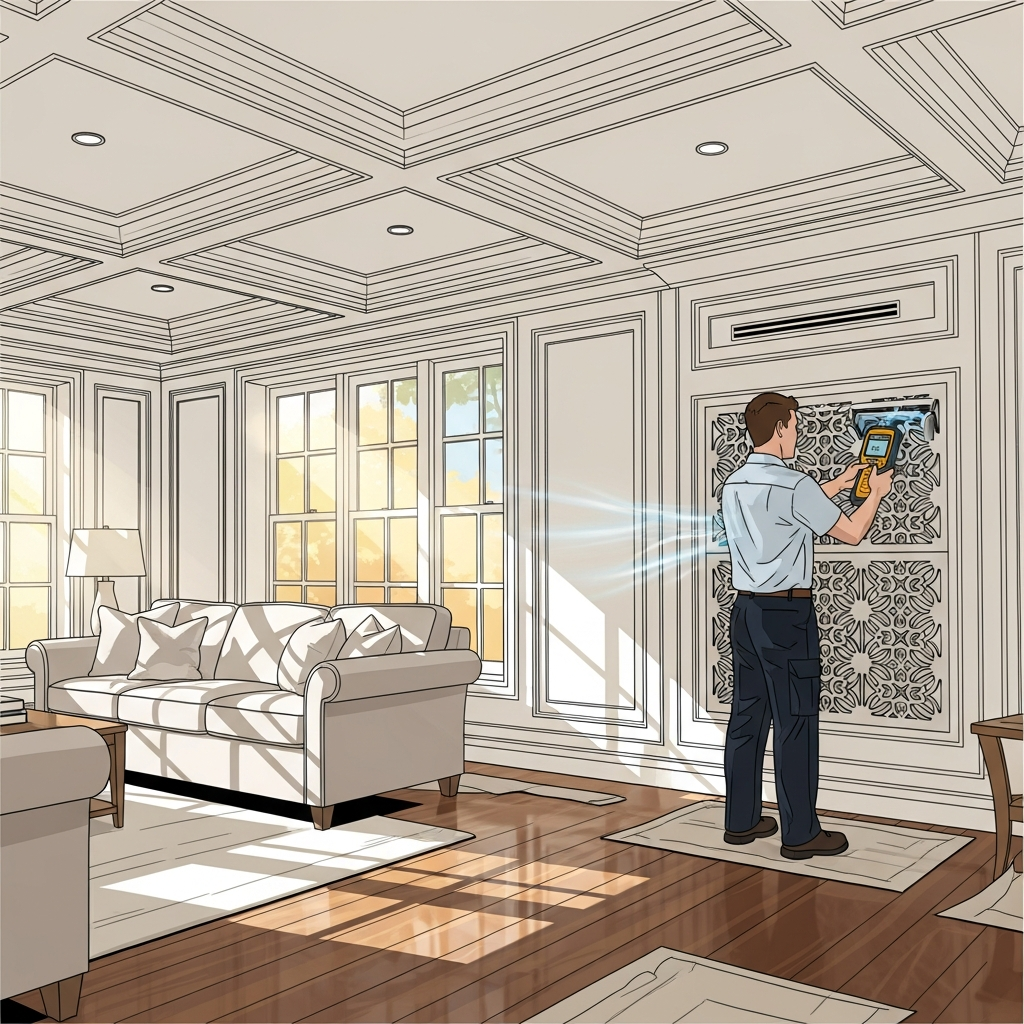
The residences here range from contemporary glass pavilions to venerable Mediterranean estates, each with different expectations for how new work blends with old. Professional services protect finishes meticulously: floors covered, corners padded, dust controlled. Crews plan moves like a choreography, foreseeing how a single duct trunk will be navigated through a narrow staircase or a courtyard without disturbing a hedge of jasmine. These are not frills; they are the habits of teams who understand that the worksite is your home and that diligence now prevents regrets later.
Design should enhance beauty as well as function. Register selection matters more than most people realize. A grille that throws air gently along a ceiling can solve a comfort challenge while looking intentional among crown mouldings or minimalist trim. Aligning grille finishes with surrounding hardware and considering sightlines from key angles are fine points that distinguish ordinary service from truly premium work.
Sealing, Insulation, and Airflow Integrity
The heart of a replacement project lies in how thoroughly ducts are sealed and insulated. Every joint, takeoff, and seam is an opportunity for unwanted leakage. High-quality mastic, properly applied, creates durable seals that remain effective even as temperatures swing across seasons. Insulation, installed without compression and with continuous coverage at fittings, stabilizes supply temperatures and reduces the equipment’s workload. Supporting flex ducts at the right intervals prevents sagging that would otherwise throttle airflow. Each of these steps is technical, but their effect is felt in the ordinary magic of opening a bedroom door and sensing the air already feels perfect.
Balanced airflow is the companion to tight sealing. A significant portion of service quality is found in the quiet art of balancing—making small damper adjustments so each space receives its share. Too often, homeowners live with loud registers in places they do not need and quiet registers where they do. A well-balanced system is like a well-conducted orchestra: no single instrument overwhelms, and the harmony feels effortless.
Permits, Standards, and Verification
California’s standards and the local expectations within Beverly Hills encourage a verification mindset. After installation, testing confirms that leakage is kept in check and that the distribution matches the design intent. This phase benefits homeowners twice: it validates the investment and produces documentation that supports future remodeling, sale, or system upgrades. Inspections, far from being a formality, help ensure that the new system begins its life on solid footing.
Quality services welcome this oversight. When the crew has executed with care—seams sealed, insulation continuous, supports correctly spaced—the tests are simply a reflection of what you can already feel: quieter operation, a lack of drafts, and rooms that settle rapidly into their set temperatures.
Special Considerations in Beverly Hills Homes
Whether located in the Flats, along Benedict Canyon, or in Trousdale Estates, homes here present unique conditions. In canyon properties, temperature gradients and shading patterns influence how air moves and how long runs need to be. Some residences include art collections or specialty rooms with stricter temperature stability requirements; those spaces deserve customized attention to diffuser type and return placement. The variety of rooflines, from low-slope moderns to steeply pitched Mediterranean tiles, affects attic accessibility and how crews stage materials without disturbing architecture.
Service providers with deep local experience know to anticipate these details, sometimes recommending minor carpentry or finish work to create elegant, serviceable access points. Those small investments in foresight prevent awkward maintenance later and preserve interior harmony you will appreciate daily.
Communication and Cleanliness
A hallmark of refined service is transparent communication. You should know who will be on-site, what will happen each day, and how the team will protect your home. Crews should establish pathways, lay protective coverings, and maintain negative air where demolition risks dust migration. Daily briefings and updates maintain trust, and photo documentation of hidden improvements gives you a satisfying record of work few people will ever see, but from which everyone benefits.
Cleanliness is not cosmetic; it affects air quality throughout the project. Careful containment, HEPA vacuuming of work areas, and end-of-day resets ensure life can continue around the project with minimal disruption. This respect is a service deliverable every bit as real as the ducts themselves.
What Happens in the Middle of the Project
The midpoint is where design meets reality. It is common to encounter surprises inside soffits or attics—an unexpected obstruction, a framing quirk, or an outdated transition. The difference between ordinary and outstanding service is how those discoveries are handled. Clear options, sketches if needed, and prompt communication keep the project aligned with goals. This is often the moment to confirm diffuser choices, decide on return relocations, or approve small layout changes that improve results by a meaningful margin. To stay oriented during these decisions, many homeowners consult a concise guide to duct replacement services so they can ask focused, productive questions.
Final Commissioning and Handover
When installation wraps, a methodical commissioning process makes the difference between “installed” and “complete.” Airflow to each register is measured and balanced, temperature splits are verified, and any remaining acoustic issues are tuned out with minor diffuser or damper adjustments. The handover includes maintenance guidance, such as filter access tips and recommendations for keeping returns clear. A well-prepared report documents the system’s baseline, so future remodels or equipment changes can build confidently on what now works beautifully.
The experience of a completed project is immediate. Spaces you once avoided because they were stuffy or drafty become comfortable destinations. The home quiets. Doors stop moving in response to pressure imbalances. The equipment seems to exhale with relief, no longer pushing against a maze of inefficiencies.
Longevity and Future-Ready Design
Quality air duct replacement is not a one-season fix; it is an infrastructure upgrade that supports how you live for years. By lowering resistance in the distribution system and ensuring airtight pathways, equipment runs more gently and predictably. That stability paves the way for future enhancements, such as zoning key areas or integrating advanced filtration when needs evolve. Planning with the long view in mind ensures today’s solution remains tomorrow’s foundation, avoiding the frustration of rework.
Homeowners often note an intangible benefit as well: peace of mind. Knowing the hidden system is well designed and documented reduces the background worry that something is “off.” Instead, you get to enjoy the go-anywhere comfort that aligns with Beverly Hills living.
Frequently Asked Questions
What signs suggest I need air duct replacement?
Hot or cold rooms, dust accumulation despite regular cleaning, noisy registers, or doors that move when the system runs all point toward airflow issues. If the equipment is modern but comfort remains elusive, the ducts are strong suspects. A professional assessment that measures pressures and checks leakage will clarify the path forward.
Will replacing ducts disrupt my daily routine?
Expect some activity and occasional access to ceilings or crawl spaces, but experienced teams structure work to minimize disruption. Protection, clear pathways, and end-of-day resets keep living areas usable. Communication about daily goals helps you plan around any noisier or dustier tasks.
Which duct materials are best for my home?
The best solution is usually a thoughtful mix tailored to your layout. Rigid sheet metal excels for main trunks and precise sizing. Flex is useful for short, well-supported connections. Duct board can deliver acoustical benefits when sealed carefully. The design, routing, and workmanship will influence performance more than the label on the material.
How do professionals verify the new system is performing?
Technicians measure duct leakage, confirm airflow volumes at registers, and verify temperature splits. Balancing dampers are adjusted until each room meets its target. This documentation gives you confidence that the results match the design intent and provides a baseline for future reference.
Can duct replacement improve indoor air quality?
Yes. By sealing ducts thoroughly and ensuring returns are properly sized, the system is less likely to draw dust from attics or crawl spaces. Improved filtration access encourages regular maintenance, and some designs allow for upgraded filters tailored to sensitivities such as pollen or smoke.
Do I need permits in Beverly Hills?
Permits and inspections help ensure safety and performance standards are met. A reputable service will handle this process, perform required testing, and deliver reports that stand up to future scrutiny during renovations or real estate transactions.
How long does the work usually take?
Timeframes vary depending on home size, access, and design complexity. The most respectful services maintain a steady, predictable schedule and keep you informed of progress and any discoveries that could influence timing.
What should I ask when comparing providers?
Ask about their assessment process, design calculations, sealing methods, insulation details, balancing approach, documentation, and how they will protect your finishes. The clarity and completeness of their answers will tell you as much as any reference list.
It is your home—make every room count
If you are ready to turn elusive comfort into an everyday certainty, partner with a team that treats design, installation, and verification as a single craft. From the first walkthrough to the final test, your home deserves care that is as thoughtful as it is thorough. Start by reviewing a local guide to air duct replacement and take the next step toward a quieter, more balanced home where every room feels inviting.