
Seeing the Patterns Behind Persistent Comfort Problems
When a Beverly Hills home never quite feels even—cooler in hallways, warmer in sunrooms, louder in a few spots—there is usually a pattern hiding in the ductwork. Replacement is a chance to fix root causes, but it can also introduce new issues if not planned and executed well. Understanding the most common duct replacement pitfalls helps homeowners ask sharper questions and ensure that the end result matches the comfort they expect. It also highlights why experienced planning matters more than any single material or gadget. At its best, carefully designed duct replacement becomes the quiet backbone of a home that simply feels right.
Because ducts are invisible most of the time, it is easy to overlook the details that make them work. In attics that see extreme summer heat and crawlspaces that challenge access, small shortcuts can compound into big performance gaps. The most avoidable problems show up as noise, drafts, long recovery times, and air that never seems as clean as it should. Naming these issues is the first step to avoiding them.
Pitfall 1: Undersized or Missing Returns
The return side of a system is often the unsung hero. Without adequate return area, supply air struggles to get where it is needed. You hear louder whooshing, feel drafts at doors, and watch the system work harder for less comfort. In many older homes, returns were placed based on convenience rather than design. During replacement, failing to correct this leaves performance on the table.
Solving it requires a fresh look at room usage and airflow patterns. Large open areas benefit from higher returns placed to capture warm air at ceiling level. Bedrooms do better with returns that maintain pressure balance without pulling air from hallways. When returns are properly sized and located, the system breathes quietly, filters better, and delivers steady comfort.
Pitfall 2: Overreliance on Tight Bends and Long, Meandering Runs
Every sharp turn creates turbulence and resistance. In attics with trusses and built-ins below, it is tempting to snake ducts around obstacles. The cost is high in performance. Air slows, noise rises, and rooms wait longer to feel the effect of a call for cooling or heat. Long, meandering runs can also collect dust and create temperature drop before air reaches its destination.
A better approach uses smooth transitions, wide-radius elbows, and shorter, more direct routes. Where obstacles exist, redesigning the path or slightly relocating a register can yield far better results than forcing a duct to twist its way to a target. The difference is noticeable in quieter operation and faster, more even conditioning.
Pitfall 3: Inadequate Sealing and Insulation in Hot Attics
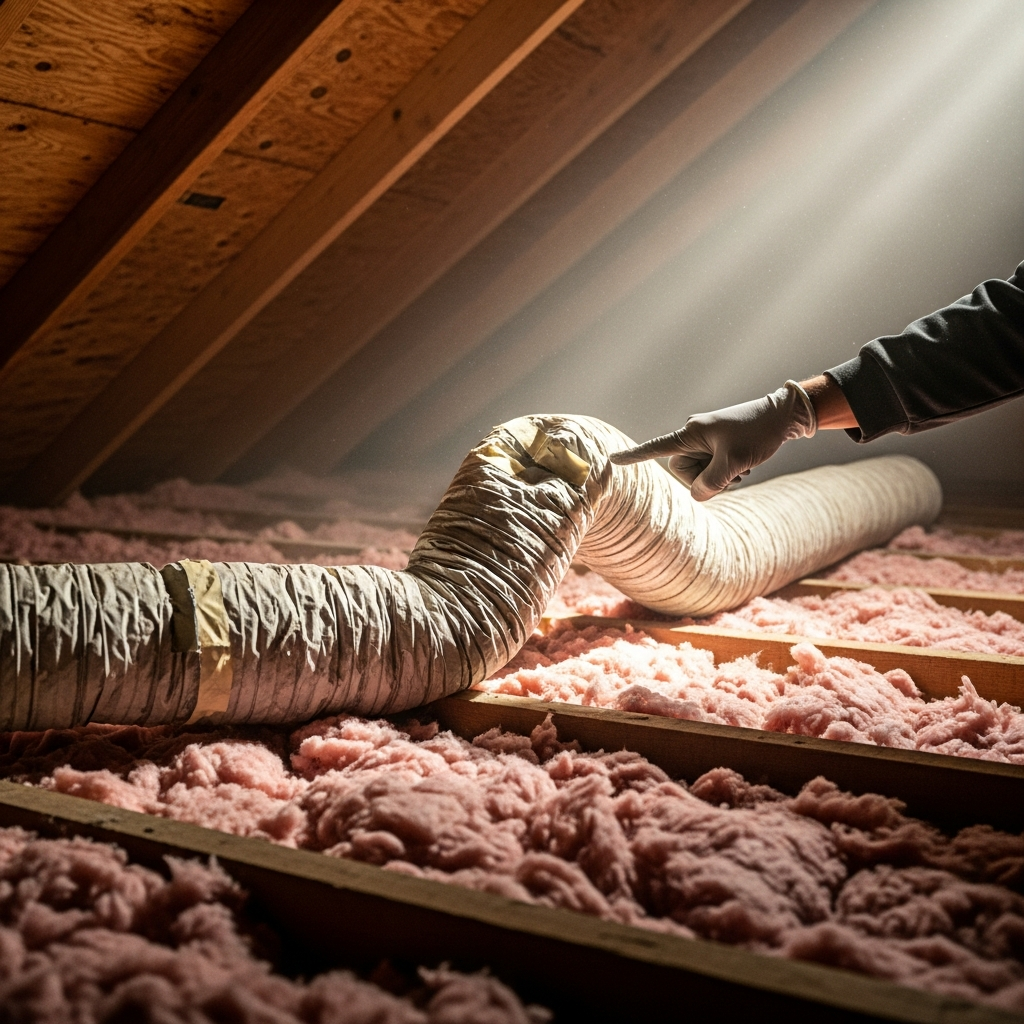
Attics in Beverly Hills can become intensely warm. Any duct that passes through those spaces must be well sealed and insulated, or the home pays the price. Leaks dump conditioned air where it is not needed, while low insulation values invite heat gain. The result is a system that cycles more, works louder, and still fails to deliver uniform comfort.
Correcting this means using long-life mastics, mechanical fasteners, and insulation values matched to conditions. Supports prevent sagging, which otherwise creates pockets of resistance. When sealed and wrapped properly, ducts move air at design temperatures, and rooms feel composed even during peak afternoon heat.
Pitfall 4: Neglecting Register and Boot Placement
The last few inches matter. A well-sized run that terminates in a poorly chosen or poorly placed register will not perform. Registers that blow directly onto seating areas create discomfort, and returns placed near kitchens or garages can recirculate odors. Boots that do not seat securely create air leaks and rattles that undermine the feeling of quality.
Thoughtful projects consider where people sit, sleep, and work. Supply air is aimed to wash exterior walls and counter solar gain without creating drafts. Returns are sited to promote circulation, not to draw from spaces that add contaminants. Boots are secured and sealed so that the final fit feels intentional and quiet.
Pitfall 5: Skipping Commissioning and Balancing
Design is theory until it is measured. Without post-installation verification—airflow readings, static pressure checks, and balancing—replacement risks becoming a best guess. The symptoms show up quickly: some rooms remain stubborn, others overdeliver, and the thermostat seems to overshoot or short-cycle.
Commissioning confirms that design became reality. Adjustments are made at dampers and registers so each room sees the intended supply. Pressure is checked to keep noise down and ensure that equipment operates in its sweet spot. Documentation provides a baseline for future service and gives homeowners confidence in the invisible work overhead.
Pitfall 6: Mismatch Between Equipment and Ducts
A high-performance air handler paired with a high-resistance duct network is a recipe for disappointment. The equipment will struggle to modulate quietly or maintain even temperatures. Likewise, replacing ducts without considering the capabilities of the existing system can miss opportunities to unlock quieter, more efficient operation.
Coordinating design targets with the equipment you have—or plan to install—prevents these mismatches. Right-sizing, planned velocities, and balanced return area allow variable-speed systems to shine and single-stage equipment to perform at its best.
Pitfall 7: Aesthetic Oversights in Architecturally Significant Homes
Beverly Hills homes often feature plaster walls, custom millwork, and period-specific registers. Duct replacement that ignores these elements can create visual mismatches that distract from the home’s character. While performance is the goal, a successful project blends into the architecture.
Solutions include reusing existing chases where possible, selecting registers that complement the era, and coordinating finish details so that the final look feels original. Communication in the planning phase ensures expectations are aligned and surprises are minimized.
How to Navigate These Challenges
The best defense against common issues is a thoughtful process. Start with a thorough assessment of existing conditions. Discuss how you actually use rooms, where you experience discomfort, and what improvements matter most. Expect a design that maps routes, sizes, and return locations clearly. During the project, ask about sealing methods, insulation levels, and how commissioning will be performed. These conversations are the scaffolding of a successful outcome.
Homeowners sometimes worry about disruption. In practice, most work unfolds in attics and mechanical areas, with daily cleanup that preserves normal routines. Schedules are coordinated to avoid surprises. The transformation tends to be felt most powerfully in the days and weeks after completion, when the home holds temperature more gracefully and the background noise simply fades.
If you are wrestling with persistent comfort issues and wonder whether your ducts are to blame, it may help to step back from piecemeal fixes. A comprehensive plan often costs less in time and worry than years of chasing symptoms. To understand what that plan could look like for your layout, speak with a local specialist about duct replacement in Beverly Hills and map the route to steady, quiet comfort.
Frequently Asked Questions
Q: My home has one room that is always hotter. Is that a duct issue?
A: Often yes. The cause can be a long or undersized run, tight turns, missing or undersized return, or heat gain through windows and roof. A replacement plan that right-sizes runs and adds or relocates returns typically resolves the imbalance.
Q: Can new ducts really make the house quieter?
A: Absolutely. Many noises come from turbulence at tight elbows, high static pressure in undersized trunks, and loose connections. Smoother paths, right-sized ducts, and secured fittings reduce the mechanical soundtrack of your home.
Q: Do I need to replace equipment at the same time?
A: Not necessarily. Many existing systems benefit greatly from improved ducts alone. If your equipment is aging, coordinate design targets so that when you do upgrade, the distribution network is ready to unlock its potential.
Q: How do I ensure my replacement is well sealed?
A: Ask about sealing methods, look for the use of mastics and mechanical fasteners, and confirm that joints are insulated appropriately. Post-install leakage testing and documentation provide assurance that the system is tight.
Q: What if my home has historic finishes?
A: Planning is key. Routes can often reuse existing chases, and registers can be selected to match the home’s style. Experienced teams coordinate carefully to protect plaster, millwork, and tile throughout the project.
Q: How long will it take to feel the difference?
A: Many homeowners notice improvement immediately, with further appreciation growing over the first few hot afternoons or cool evenings as the house proves it can hold steady comfort.
Your Next Step
The most common duct replacement issues are avoidable with care, communication, and craftsmanship. If your home is ready for a calmer, more even kind of comfort, connect with a trusted Beverly Hills team specializing in duct replacement to plan a solution that respects your architecture and delivers results you can feel every day.