
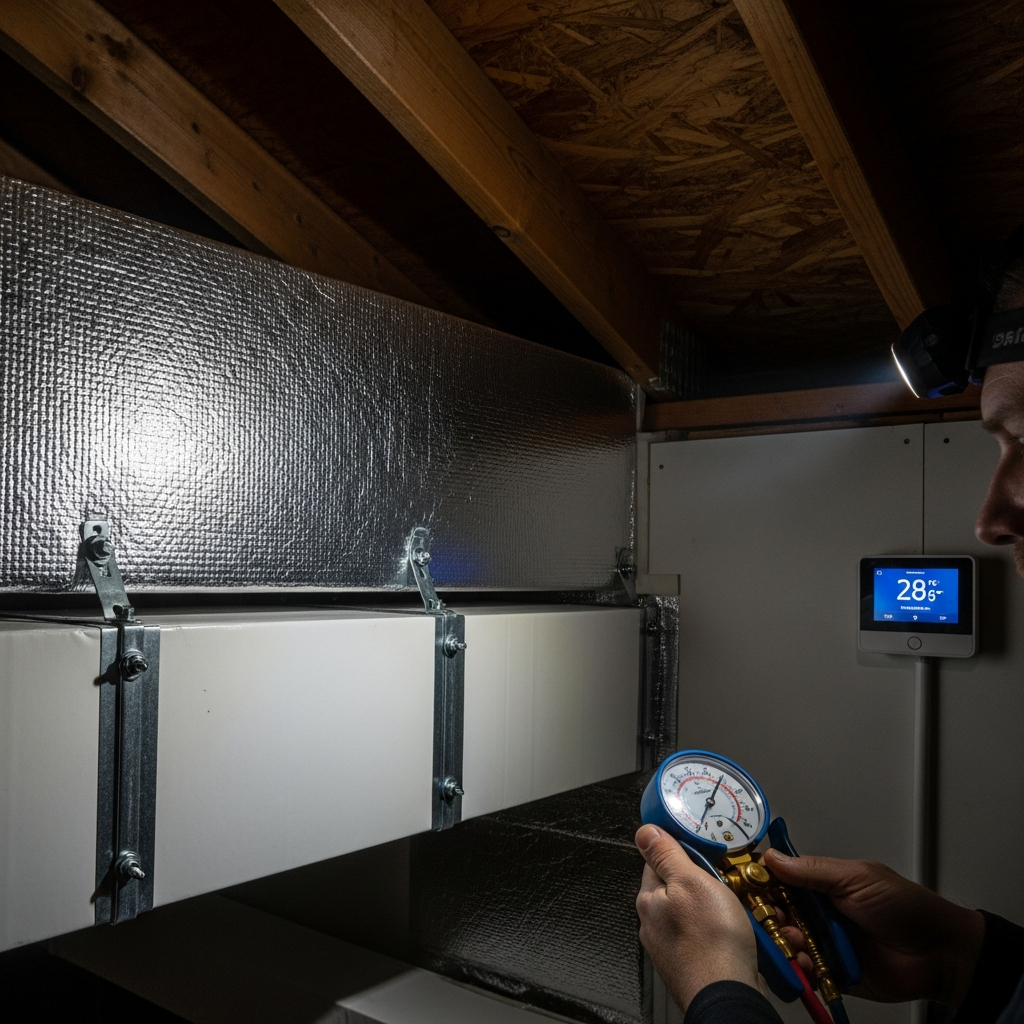
Why Energy-Efficient Ducts Are the Quiet Revolution in Comfort
Energy efficiency is no longer just a buzzword in Beverly Hills—it is an expectation. Homeowners who invest in renewable energy, high-performance windows, and smart controls quickly discover a pivotal truth: none of it performs at its peak if the ducts are outdated. The distribution network determines how quietly, cleanly, and efficiently your home breathes. That is why current trends in duct replacement focus on tighter construction, smarter design, and materials that stand up to our climate while delivering comfort with less effort from your equipment.
Unlike flashy upgrades, ducts work invisibly. But their impact touches everything from how quickly a room cools down at sunset to how often your system cycles during a hot spell. In a region where attics can heat up under long summer days and coastal air brings its own quirks, energy-smart duct strategies are not optional frills; they are foundational choices that shape daily living.
Trend 1: Airtight Duct Construction as a Baseline
Not long ago, it was considered acceptable for ducts to leak a surprising percentage of the air moving through them. Today’s standard has shifted toward airtightness as a given. The materials and methods have improved: long-life mastics replace aging tape, mechanical fasteners add redundancy at joints, and transitions are fabricated with smooth interiors that prevent turbulence and dust accumulation. The goal is straightforward—keep conditioned air inside the system until it reaches the room where it belongs.
In Beverly Hills, where many ducts run through warm attics, airtight construction pairs with careful insulation. Runs that leave the conditioned envelope are wrapped to higher R-values to mitigate radiant heat gains. This one-two punch—seal first, insulate second—reduces the workload on your equipment and steadies comfort, especially in rooms under expansive rooflines.
Trend 2: Right-Sizing for Modern Equipment
Many newer systems are variable-capacity or variable-speed, designed to throttle up or down to match the needs of the moment. They shine when ducts are properly sized and pressure is controlled. Current replacement projects start with airflow targets and static pressure goals, ensuring the distribution network is a fit for the equipment’s intelligence. Oversized ducts can be as problematic as undersized ones, creating sluggish airflow and stratification. Right-sizing, with attention to supply and return balance, enables quiet, efficient operation.
This trend has a practical, livable outcome: when ducts and equipment are aligned, you feel fewer temperature swings and hear less mechanical noise. Rooms reach setpoint without dramatic blasts. Thermostats run the show smoothly, and you notice comfort rather than the system itself.
Trend 3: Smarter Layouts and Gentle Air Pathways
Energy-efficient ducts are not just about materials; they are about the shape and flow of air. Gentle curves, wide-radius elbows, and streamlined plenums reduce resistance. Branch lines take thoughtful routes that avoid unnecessary turns and long, meandering paths. Returns are intentionally located to support circulation patterns in each room, promoting even temperatures without drafts.
Designers now pay special attention to return pathways in older homes that have been reconfigured over the decades. A missing or undersized return starves the system, raises noise, and compounds energy waste. Adding or resizing returns during replacement can transform how a home breathes, lowering static pressure and allowing supply air to do its work efficiently.
Trend 4: Strategic Zoning Where It Makes Sense
Not every residence benefits from zoning, but in larger homes or layouts with distinct day and night wings, it can be a powerful efficiency tool. The trend today is to implement zoning only where the duct design supports it from the ground up. That means anticipating damper placement, ensuring adequate bypass strategies are not needed, and confirming that each zone has an appropriate balance of supply and return. When executed well, zoning reduces runtime by matching conditioning to occupancy, delivering comfortable spaces without conditioning empty rooms unnecessarily.
Zoning also pairs naturally with variable-capacity equipment and smart controls, producing a quiet, steady experience rather than on-off extremes. It is less about gadgets and more about a duct framework that enables intelligent operation.
Trend 5: Accessibility for Maintenance and Monitoring
Energy efficiency is a living goal, not a one-time event. The newest replacement projects anticipate future maintenance by placing filters where they can be changed easily, incorporating access ports for testing, and creating service loops in flexible sections where appropriate. These details keep the system operating at peak efficiency for years because routine upkeep becomes simple rather than a chore.
Homeowners who can reach and change filters on schedule are homeowners who protect their investment. Likewise, technicians who can measure static pressure and airflow quickly during annual visits can spot drift from peak performance before it becomes noticeable in daily life.
Trend 6: Materials Matched to Our Climate
Energy-efficient ductwork in Beverly Hills must contend with warm attics, occasional dry winds, and the gentle cool of winter nights. Replacement choices reflect this reality. Insulation levels are heightened for runs outside the conditioned envelope. Fasteners and sealants are chosen for longevity in heat. Supports are spaced to prevent sags, which cause pressure and efficiency losses over time. Even register choices matter; designs that distribute air broadly at low velocities help condition rooms evenly, reducing the need for higher fan speeds.
In addition, thoughtful contractors consider how ducts interact with other building components. For example, reducing heat gain in an attic through radiant barriers or improved ventilation can enhance duct performance, and vice versa. An integrated mindset yields the best efficiency outcomes.
Trend 7: Verification and Commissioning as Standard Practice
What separates an efficient design from an efficient home is verification. The trend in high-quality replacements is to treat commissioning as essential. After installation, airflow is measured, static pressure is verified, and balancing is performed so that each room receives the intended supply and has adequate return. Documentation captures these results, providing a baseline for future service and confidence for the homeowner.
The payoff is immediate. You feel the difference in the way the house settles into temperature and how quietly it holds there. Commissioning is the bridge between plans on paper and comfort in real life.
Trend 8: Cleaner Air as Part of the Efficiency Story
Efficiency and indoor air quality are not separate goals. Smooth, sealed ducts prevent the intake of unfiltered attic air and reduce the dust and allergens that can circulate through a home. During replacement, many homeowners choose to integrate filtration cabinets or improved return strategies that allow higher-efficiency filters without choking airflow. The result is air that feels fresher, surfaces that stay cleaner longer, and a system that maintains efficiency because filters are accessible and replaced on time.
In seasons when outdoor air quality dips, airtight ducts become especially valuable. By reducing infiltration pathways, your system relies less on brute force to maintain comfort, which is another form of efficiency—doing more with less effort.
Applying These Trends to Older and Newer Homes Alike
Whether your Beverly Hills home dates to the 1930s or was completed last year, these trends apply. Older homes benefit from reimagined return paths and tighter construction; newer homes often discover that builder-grade ducts were sized for cost rather than performance. Replacement designed around your actual use patterns—what rooms you frequent, when you entertain, where you work—delivers efficiency you can feel every day.
Many homeowners describe the change as a deep calm in the background of the house. The thermostat no longer becomes a negotiation. Afternoon peaks are less dramatic. Conversations happen without the whoosh of air masking voices. If you are weighing options and want to map what an upgrade could look like for your layout, discussing duct replacement in Beverly Hills will clarify design paths, equipment compatibility, and the expected timeline.
What Success Feels Like
Success is not a number on a spreadsheet, though you may notice lower energy use. Success is waking to a home that already feels settled, returning from an afternoon out to find rooms still comfortable, and hosting guests who do not gravitate to or avoid certain corners. It is the nearly silent background of a system that is not fighting itself to move air.
The best part is that these gains are durable. Efficient ducts continue to deliver season after season because they remove the weaknesses—leaks, poor routing, pressure bottlenecks—that erode performance over time. They set a new baseline that everything else in your HVAC ecosystem builds upon.
Frequently Asked Questions
Q: What makes a duct system “energy efficient” in practical terms?
A: Airtight construction, appropriate insulation for unconditioned spaces, right-sized supply and return, smooth transitions that reduce resistance, and commissioning that verifies airflow and pressure. Together, these choices deliver comfort with less effort from your equipment.
Q: Will I need new HVAC equipment to benefit from efficient ducts?
A: Not necessarily. Many existing systems perform far better with improved ducts alone. If you do upgrade equipment later, you will already have the distribution network needed to unlock its potential.
Q: How disruptive is the replacement process?
A: Most work occurs in attics, crawlspaces, and mechanical areas. Living spaces remain accessible, and daily cleanup keeps the home orderly. Clear planning and communication reduce disruption significantly.
Q: Are there special considerations for homes with architectural significance?
A: Yes. Routes are planned to use existing chases where possible, penetrations are minimized, and register selections are made to complement the home’s style. The aim is to elevate comfort while respecting original details.
Q: How do I know if zoning makes sense for my home?
A: Zoning is beneficial when different parts of the home have distinct occupancy patterns or thermal loads. A design evaluation will determine whether your layout and duct paths can support effective zones without creating pressure issues.
Q: What should I expect after installation?
A: You should notice steadier temperatures, quieter operation, and quicker recovery to setpoints. The system will feel like it fades into the background, which is a hallmark of good design and commissioning.
Plan Your Next Step
If you are ready to align your home’s comfort with your expectations for efficiency, start with the system that touches everything: the ducts. A thoughtful strategy today pays dividends every hour you occupy the space. When the time comes to move forward, consult a local specialist in Beverly Hills duct replacement to map a design that fits your architecture, lifestyle, and long-term goals.