
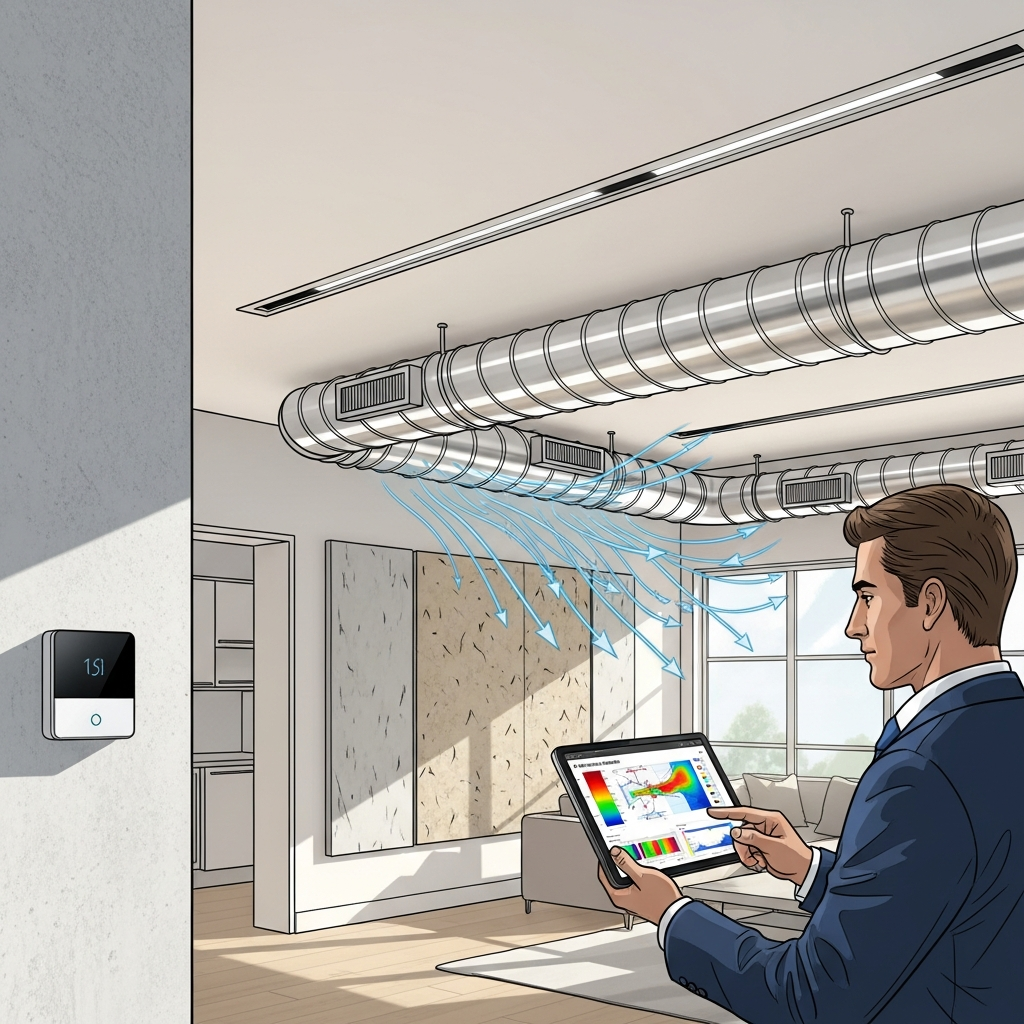
Walk into a Beverly Hills retrofit today and you’ll find a different conversation than you would have a decade ago. Homeowners, builders, and designers are all asking smarter questions about airflow, acoustics, sustainability, and smart home integration. The once-hidden duct system has moved from afterthought to centerpiece in performance-driven renovations. As a local HVAC professional, I see the same pattern again and again: when we treat ductwork as a designed system—not a set of parts—we unlock comfort, quiet, and efficiency that feels custom-fit to the architecture. Investing in thoughtful duct replacement has never offered more possibilities, and the trends shaping our Beverly Hills projects reflect a blend of engineering rigor and lifestyle sensitivity.
These trends arise from a few converging forces. First, homes here are evolving—bigger openings to the outdoors, more glass, refined finishes, and multipurpose rooms used from sunrise yoga to late-night screenings. Second, technology has matured: design tools model airflow with precision, and field instruments confirm results quickly. Third, the broader push toward electrification and energy mindfulness is elevating the importance of distribution. New heat pump systems excel when ducts are dialed in, and even conventional systems benefit from reduced static, shorter runs, and smarter returns.
Design-Led Ductwork: From Rule of Thumb to Calculated Precision
One of the most important trends is the shift from sizing by habit to sizing by calculation. Room-by-room load assessments, Manual D design, and pressure mapping used to be rare outside of specialty projects. Now they’re table stakes in Beverly Hills replacements. This means we no longer accept old compromises like oversized trunks feeding undersized branches or missing returns masked by cracked doors. Instead, we plan distribution to match how you live. For instance, if your family room anchors entertaining and the doors to the garden open often, we account for that transient load and equip the space with delivery that stabilizes temperatures without blasting.
The aesthetic dimension also gets design attention. We coordinate register placement with lighting layouts, art walls, and built-ins. In some luxury projects, we employ linear diffusers or discreet slot diffusers sized for low velocity, trimming visual clutter and sound while preserving throw. None of this works without a duct backbone designed to support it—smooth transitions, wide-radius fittings, and static pressure targets that give you quiet along with comfort.
Smart Monitoring Meets Old-School Balance
Another trend is continuous feedback. Smart sensors can track temperature and humidity by zone, while ECM blowers listen to system resistance and adapt. In the field, we use manometers and flow hoods to confirm, then leave homeowners with controls that nudge the system toward smooth operation day in and day out. The pairing is powerful: old-school balancing dampers set the stage; smart controls fine-tune performance through seasons and changing occupancy. Duct replacement enables this because the distribution network becomes predictable and responsive—two qualities that make smart features truly smart.
For owners who love data, noninvasive monitors can highlight when filters load up faster than expected or when a door-based return path isn’t adequate during large gatherings. We then adjust. Over time, this gentle feedback loop keeps comfort consistent without constant attention, aligning beautifully with the Beverly Hills lifestyle where you expect systems to support your day rather than interrupt it.
Decarbonization and The Rise of Heat Pumps
Electrification is accelerating across Los Angeles County, and Beverly Hills is part of that story. High-efficiency heat pumps shine in our climate, providing quiet, steady comfort with lower on-site emissions. But they also bring a truth to the fore: ducts define success. Replacement projects increasingly pair a heat pump upgrade with a full rework of the duct network to reduce static pressure, tighten leakage, and increase return capacity. When done well, the result is whisper-quiet heating in the early morning, smooth cooling during late afternoon sun, and a system that sips energy rather than gulping it.
We also see more interest in zoned systems that divide large homes into thoughtful areas—sleeping quarters, common spaces, and work zones—each with tailored delivery. Zoning is only as good as the ducts serving it, so we build dampers and bypass strategies into the design instead of bolting them on as afterthoughts. The goal is stable pressure across modes, preventing the whipsaw effect that makes some zoned homes noisy or drafty.
Materials Matter: Quiet, Clean, and Durable
Trend-wise, there’s a shift toward materials that balance performance and practicality. In accessible trunks, smooth metal with internal acoustic lining delivers durable, cleanable surfaces that mute sound. In constrained chases or attic runs, premium insulated flex, installed with generous sweep and proper support, avoids the kinks and compression that gave flex a bad name years ago. What’s new is not the material itself but the insistence on craftsmanship—supports every few feet, mastic-sealed joints, and fittings shaped for laminar flow.
Sustainability also plays a role. Homeowners ask about recycled content, low-VOC mastics, and insulation with robust thermal performance. While our climate rarely stresses ducts with condensation the way humid regions do, we still design for margin—continuous insulation, thermal breaks where needed, and routing that keeps supply runs within conditioned or semi-conditioned spaces when possible. The cleaner and tighter the system, the better it will pair with advanced filtration without overworking the blower.
Acoustics Are a First-Class Requirement
In Beverly Hills, quiet is luxury. Screening rooms, music spaces, and serene bedrooms demand a mechanical hush that blends with the home’s stillness. Duct replacement is how we get there. Wider ducts at lower velocities, lined trunks, and thoughtful diffuser selection replace the whoosh many people accept as inevitable. We measure and design for low static, then confirm in the field. The emerging norm is to address sound early, not as a patch. When your ducts carry a whisper instead of a rush, you experience a comfort that feels tailored, not forced.
Acoustic strategies extend to returns, too. Properly sized and routed returns avoid the telltale whistle of negative pressure. We often split a single return into two or three to stabilize pressure and reduce noise at each grille. Add to that a modern blower profile and well-sealed closets, and the net effect is dramatic—quiet you can feel.
Better Integration with Architecture
Today’s replacements are more collaborative. We coordinate with architects and builders to claim the right pathways early. This prevents the squeezed, contorted runs that used to sneak into attics as an afterthought. In remodels, we may reclaim a few inches from a soffit to convert a noisy elbow into a smooth sweep. In historic properties, we preserve sightlines while improving performance by stacking returns or threading trunks through service areas rather than prime rooms. Designers appreciate having air that arrives without stirring drapery or art, and homeowners enjoy rooms that behave beautifully without visible compromises.
Testing and Documentation as Deliverables
Another Beverly Hills trend is treating test results as part of the finished product. After replacement, we provide leakage numbers, static pressure readings, and register delivery data. Homeowners keep these alongside appliance manuals and finishes schedules. For future service, this becomes a roadmap. For potential resale, it’s a statement of care and quality. The culture is shifting: a duct system isn’t complete until it’s measured and the numbers tell the same story your senses do.
Mid-Project Upgrades that Pair Well
When homeowners see the new duct routes taking shape—clean trunks, proper supports, quiet returns—they often choose to add small improvements that punch above their weight: upgraded filter cabinets to support higher-MERV media, smart thermostats that stage equipment gently, or additional returns in rooms that double as home offices and gyms. It’s also a natural moment to think about future flexibility. If there’s a chance you’ll add a studio over the garage or reconfigure a wing, we can design trunks with spare capacity or routes that invite expansion later. The enthusiasm often peaks right here in the middle, when the vision becomes tangible and comprehensive duct replacement proves itself as the backbone of a modern comfort plan.
Resilience for a Changing Climate
We plan for heat waves and shoulder seasons that stretch longer than they used to. Resilient ducts keep systems within comfortable operating ranges even as outdoor conditions push boundaries. The benefits aren’t merely theoretical; when a high-pressure heat event arrives, a low-static, well-sealed distribution network helps your equipment hold setpoints without thrashing. That consistency shows up as quieter days and cooler nights when everyone on your block is leaning hard on their air conditioning.
What This Means for Your Next Project
The new standard in Beverly Hills is a duct system that looks planned because it is—engineered for your rooms, tuned for your routines, and quiet enough to disappear into the background. If your home was built or remodeled in an era when ducts were shoehorned in late, or if you’ve layered upgrades like new windows and insulation without revisiting distribution, you’re a prime candidate for a reimagined system. The transformation is rarely subtle; you’ll feel it in steadier temperatures, calmer air, and the absence of small annoyances you may have learned to live with.
Frequently Asked Questions
Q: What distinguishes a trend-forward duct replacement from a basic swap?
A: It starts with design. We calculate loads, plan returns, target low static, and coordinate with architecture and acoustics. Materials and sealing are elevated, and testing is part of the deliverable. The result is a system tuned for today’s expectations.
Q: Are smart thermostats enough to modernize my comfort?
A: They help, but controls can’t overcome poorly designed ducts. Modern replacements create a responsive, balanced network that smart controls can then fine-tune effectively.
Q: How do ducts influence noise so much?
A: Air speed and turbulence drive sound. Larger ducts at lower velocities, smooth transitions, and lined trunks reduce turbulence. Properly sized returns prevent whistling. The differences are dramatic in quiet rooms.
Q: Can I keep some of my old ducts if they look fine?
A: Sometimes, but only after testing. Even good-looking ducts can be undersized, leaky, or poorly routed. We evaluate performance, not just appearance, and keep sections only if they support the new design.
Q: Do these trends add complexity to maintenance?
A: Not at all. A well-designed system is often easier to maintain. Filters last as expected, airflow stays in spec, and service techs have clear data for tune-ups.
Q: Will a trend-focused replacement help with future heat pump plans?
A: Absolutely. Heat pumps excel with low static and balanced distribution. A modern duct backbone makes electrification smoother and more satisfying.
Q: How long does a project like this usually take?
A: Most homes see completion within several days to a week, depending on accessibility, finish coordination, and testing requirements.
Q: What can I expect to feel after the upgrade?
A: Quieter operation, more even temperatures, cleaner-feeling air, and far less fiddling with the thermostat. Many clients describe the experience as “effortless comfort.”
Bring Tomorrow’s Comfort Home
If you’re planning a renovation or simply want your home to feel as refined as it looks, start with the distribution system. We’ll design and install a duct network that reflects today’s best practices and your lifestyle, then prove its performance with real measurements. When you’re ready to experience the next level, schedule your Beverly Hills duct replacement with a team that blends engineering precision and local know-how.