
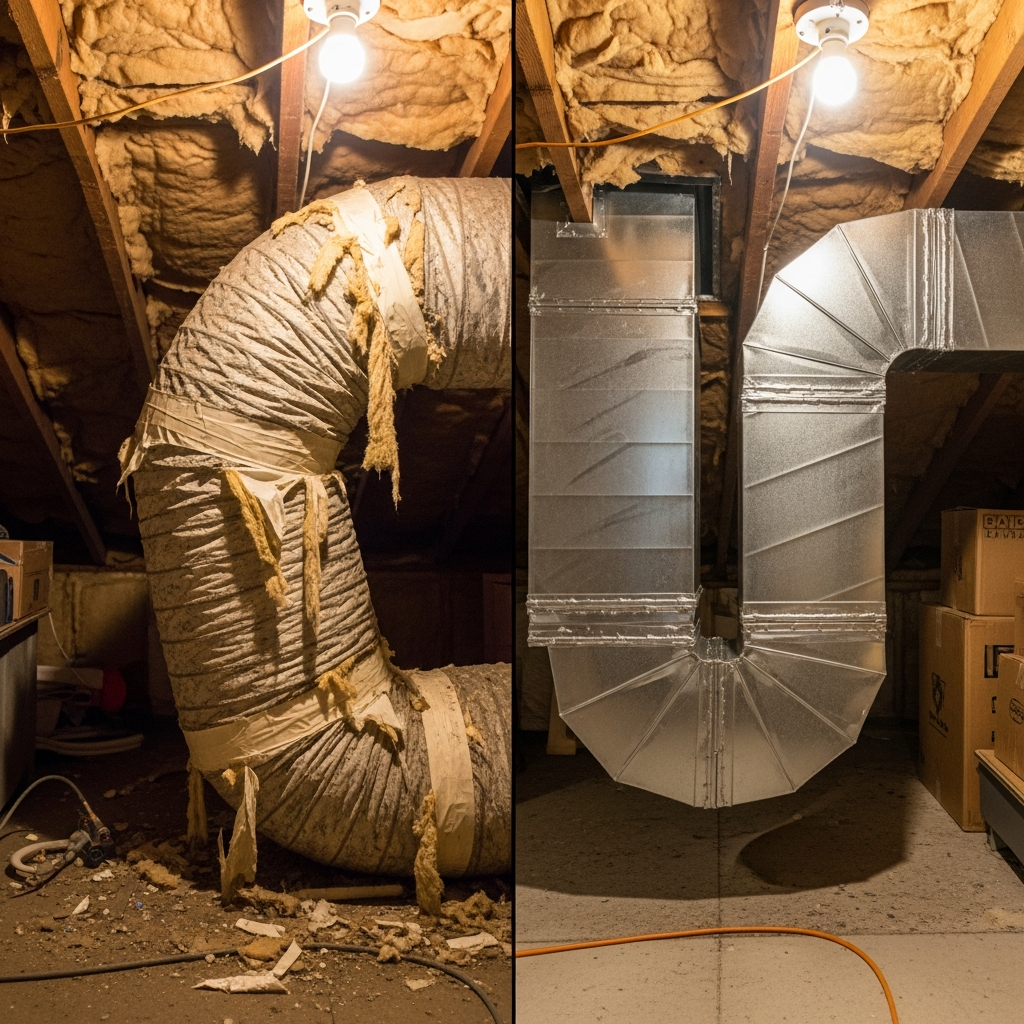
Behind the plaster and paneling of Beverly Hills homes lives a world of elbows, trunks, and branches that determine how your living spaces feel day to day. When it’s time to replace ducts, that hidden world comes into view—and with it, a set of issues that tend to appear again and again across our local housing styles. After years of crawling through attics on the flats, threading trunks through tight chases in hillside properties, and navigating vintage framing in classic estates, I can tell you that the most common duct replacement challenges are predictable, solvable, and worth addressing thoroughly. A well-executed duct replacement doesn’t just swap old for new; it corrects long-standing problems so comfort, quiet, and air quality rise together.
Understanding these issues before work begins is empowering. It lets you ask sharper questions, anticipate timelines, and appreciate why a methodical approach matters. In the sections below, I’ll walk through the patterns we see most often in Beverly Hills and how we resolve them without compromising your home’s architecture or routine.
Issue 1: Undersized Returns and Starved Air Handlers
If there’s a single culprit behind noisy systems, uneven temperatures, and dusty rooms, it’s undersized return air. Many older homes were designed when mechanical expectations were different, and the return path was an afterthought. Starved returns force the blower to pull harder, which raises static pressure, magnifies noise, and encourages infiltration from wherever cracks and gaps exist. During replacement, we right-size or add returns, often splitting a single central return into multiple points closer to the rooms that need the most support. The result is a calmer, cleaner airstream and more predictable operation across the home.
In Beverly Hills, balancing returns must respect aesthetics. We coordinate grille sizes and placements with finish carpentry, and we aim for low face velocities so you don’t feel a tug walking past. It’s a subtle upgrade that pays dividends the first time the system runs and sounds like a whisper instead of a gasp.
Issue 2: Overly Long or Convoluted Runs
We often encounter duct routes that snake around structural elements, plumbing, or previous remodels, racking up elbows and feet until friction steals airflow. Convoluted paths might have made sense when the home was first altered, but they burden today’s equipment and your comfort. During replacement, we reclaim straighter paths, use wide-radius fittings, and eliminate unnecessary transitions. Even a few feet saved or one severe elbow replaced with a smooth sweep can restore delivery to a room that always lagged in temperature.
In hillside homes where space is precious, we sometimes trade material choices—using compact, high-quality insulated flex in tight chases while keeping metal trunks where access allows. The goal is simple: shortest practical runs, smoothest practical turns, and consistent insulation to preserve supply temperatures.
Issue 3: Inadequate Insulation or Damaged Jacket
Insulation matters just as much as airflow. Old ducts with thin or damaged jackets waste cooling capacity into attics and crawlspaces. In our warm season, that lost capacity shows up as rooms that never quite “catch up,” especially late in the afternoon. Replacement allows us to select insulation thickness appropriate for our climate and ensure it is continuous and uncompressed. We also pay attention to vapor barriers where they apply, stitching seams carefully so you don’t get hot spots or, in rare conditions, moisture trickles that can carry odors downstream.
Just as importantly, we support ducts so insulation never bears the weight of the run. Proper strapping spacing and wide supports prevent compression that would thin the jacket and raise losses. It’s a small detail with an outsized impact on performance.
Issue 4: Leaky Connections and Old Tape
Time is unkind to tapes and loose joints. Heat cycles and vibration degrade adhesives, and joints shift under their own weight. We routinely discover connections that look adequate but leak significantly under pressure. The fix is simple in concept and precise in execution: every seam and fitting sealed with mastic, connections mechanically fastened, and transitions custom-fit rather than forced. Post-replacement leakage readings tell the story—tight systems that hold pressure, deliver air where it belongs, and keep attics from stealing what you’ve already paid to condition.
Reducing leakage also helps indoor air quality. Return leaks, in particular, can draw attic air full of dust into your airstream. Replacing and sealing returns shuts that door and lets filters do their job with confidence.
Issue 5: Poorly Supported Flexible Duct
Flexible duct can be an excellent solution when installed gently, with wide sweeps and frequent supports. But in many older installations, we find kinks, sags, or tight bends that throttle flow. Weight resting on sharp edges compresses insulation and the core, further increasing resistance. During replacement, we route flex with an engineer’s eye, maintain straight runs where possible, and use long-radius fittings to change direction. Proper supports every few feet keep the shape intact, and careful terminations prevent the crumpled ends that whistle under load.
Done right, flexible sections become silent, low-resistance conveyors rather than bottlenecks. The difference is easy to hear—quiet registers and steady delivery without the breathy sound of high-speed air squeezing through a pinch point.
Issue 6: Mismatched Equipment and Ducts
Homes that have seen piecemeal upgrades often end up with equipment that outpaces the duct network or vice versa. An efficient blower paired with a constricted distribution path will run loud and hard, while a modest air handler with oversized, poorly balanced ducts can leave rooms tepid. Replacement gives us a chance to realign the two. We calculate loads, target static pressure that suits your blower profile, and size ducts to meet the design conditions. This harmony reduces wear, stabilizes delivery, and improves air quality by keeping velocities and pressures within intended ranges.
As electrification grows and heat pumps become more common in Beverly Hills, this alignment becomes even more important. Heat pumps love low static and steady flow. Duct replacement is the bridge that lets them perform the way brochures promise.
Issue 7: Access Constraints in Attics and Crawlspaces
Some of the loveliest homes here have the tightest mechanical spaces. Low-clearance attics, delicate finishes, and intricate framing demand care. We protect finishes, stage work thoughtfully, and sometimes fabricate sections offsite for precise fits. In challenging crawlspaces, we plan supports and routes before a single strap goes up, ensuring that every foot of duct will be serviceable and protected long after installation. These projects benefit from patient sequencing—removing old ducts in controlled sections, cleaning the workspace, and installing the new network with the kind of craftsmanship you’d expect in a visible room.
Homeowners appreciate that this deliberate approach pays off in both performance and longevity. Ducts that are easy to access for future service are ducts that will continue to perform as designed.
Issue 8: Return Placement that Pulls from the Wrong Places
We sometimes find returns located in hallways far from where people actually spend time, or they’re undersized for large, open rooms with high ceilings. This encourages stratification and stale pockets of air. During replacement, we often redistribute returns so major living areas have dedicated pathways back to the air handler. The result is better filtration, quicker stabilization after doors to the patio or garden close, and a fresher feel throughout the home.
This shift also reduces noise. Several smaller returns running at lower face velocities are typically quieter than a single large return hustling to keep up. It’s a practical upgrade with aesthetic benefits too—grilles can be scaled to the room rather than dominating a hallway.
Issue 9: Code Updates and Testing Expectations
Standards evolve. Sealing requirements, support spacing, and insulation values that were acceptable decades ago may not meet today’s code or best practice. In Beverly Hills, that often means inspections and performance verification. We treat testing as a design feedback tool, not a hurdle. Leakage numbers, static pressure readings, and register measurements confirm that the new system does what the drawings intended. For homeowners, this documentation builds confidence and becomes part of the home’s care record.
It’s also an opportunity to tune. If a room measures a bit high or low in delivery during verification, a damper tweak or diffuser change brings it into line. You get a system that is both compliant and comfortable.
Issue 10: Managing Expectations and Sequencing with Other Trades
Renovations rarely happen in a vacuum. Painters, electricians, and finish carpenters may be working nearby. We sequence duct replacement to protect finishes and to coordinate with other schedules, especially when registers or returns integrate with millwork. Daily cleanup and clear pathways minimize disruption. The goal is to leave each day’s worksite feeling like a home, not a job site.
Homeowners who plan ahead—choosing grille styles, confirming access points, and discussing furniture placement—find the process smooth. Open communication is the best tool we carry; it ensures the final product supports both your comfort and your calendar.
Mid-Project Insight: The Power of Balance
There’s a point in many projects when the new trunks are in place, returns are framed, and early tests read steady. Homeowners often step into the attic or mechanical room and see the transformation—order replacing improvisation. This is when the logic behind comprehensive duct replacement really clicks. What once felt like a noisy mystery becomes a clear, calm system that breathes with the house instead of fighting it.
Preventing Future Issues
Once the new ducts are in, a few habits preserve performance. Change filters on schedule so the returns stay calm and the blower doesn’t work overtime. Keep registers clear, and let diffusers move air without obstruction from tall furniture. If you host large gatherings or frequently open big sliders to the garden, consider a brief fan-only circulation afterward to re-homogenize temperatures—your new distribution network will excel at it.
Seasonal maintenance also takes on new meaning when the duct backbone is sound. Tune-ups become verification rather than triage. Technicians can focus on fine adjustments rather than compensating for systemic duct issues that once masked as equipment problems.
Frequently Asked Questions
Q: How long does duct replacement usually take in Beverly Hills homes?
A: Most projects complete within several days to a week, depending on access, scope, and coordination with other trades. We stage work to keep living areas comfortable and clean throughout.
Q: Will new ducts make my system quieter?
A: Almost always. Proper sizing, smooth routing, and lined or well-insulated ducts reduce turbulence and transmission of sound. Balanced returns eliminate the whistle and whoosh many homeowners accept as normal.
Q: My rooms are dusty—will replacement help?
A: Yes. Return leaks often pull dusty attic air into the system. Sealed, well-designed returns coupled with clean interior duct surfaces reduce dust and help filters do their job effectively.
Q: Do I need to replace equipment at the same time?
A: Not necessarily. Many benefits come from ducts alone. If equipment is aging, we can coordinate timelines so the new distribution pairs perfectly with a future upgrade.
Q: How do you protect finishes during replacement?
A: We lay protective coverings, create clean pathways, and bag old duct sections as they come down. Daily cleanup keeps your home presentable, and we coordinate closely with your schedule.
Q: Are permits and inspections required?
A: Requirements vary by scope, but we follow applicable codes and arrange inspections when needed. Performance testing is part of our process to ensure the system meets design goals.
Q: What if space is too tight for ideal routes?
A: We choose the best materials for the constraints, use wide-radius fittings, and sometimes reclaim small amounts of space from soffits or service areas. The aim is always low resistance and clean access for future service.
Q: How will I know the new ducts are performing?
A: We provide leakage, static pressure, and register delivery measurements. You’ll also feel it—quieter operation, even temperatures, and air that smells neutral and fresh.
Ready for a Smoother, Quieter Home?
If your system is loud, rooms feel inconsistent, or dust seems to win the battle, it’s time to look beyond the thermostat. We’ll assess your home’s unique challenges, design a distribution network that solves them, and verify results with real measurements. When you’re ready to replace frustration with calm, schedule your Beverly Hills duct replacement with a local team that builds systems as carefully as they live within your home.