How Can You Tell It Is Time for a Replacement? Signs You Need New AC Beverly Hills
How do you know when your cooling system is truly on its last legs versus needing a simple fix? When temperature drops fail to match your thermostat settings or your monthly utility expenses suddenly climb, the answer often points toward major system decline. For homeowners in Beverly Hills, recognizing these signs early is the difference between planned, stress-free upgrades and emergency system failures in the middle of a historic heatwave. Knowing the warning signs allows you to transition seamlessly to a modern, reliable system before your indoor comfort disappears entirely.
Older units struggle to keep up with regional demands, especially when local temperatures spike. By understanding what mechanical and structural symptoms to look for, you can make an informed decision on whether to repair or invest in a modern system. Discover our complete analysis on modernizing your home by reading our guide on evaluating Beverly Hills AC replacement choices to see how new systems handle high bills.
Performance and Airflow Failure Indicators
- Verify weak or highly restricted airflow from your supply registers. If you feel barely a whisper of air coming from your vents when the blower motor is active, your compressor or fan motor may be nearing the end of its operational life.
- Monitor long, uninterrupted cooling cycles that never satisfy the thermostat. Systems that run continuously without stopping are unable to meet the cooling load of your home, leading to excessive wear on internal components.
- Check for inconsistent temperatures between different floors or rooms. When one wing of your estate remains warm while another is freezing, it indicates the existing system can no longer distribute conditioned air effectively.
- Identify warm air blowing directly from the registers when in cooling mode. If the air leaving your vents is tepid or warm despite correct thermostat settings, it often points to a failing compressor or a severe refrigerant leak.
- Observe rapid cycling where the system turns on and off every few minutes. This short-cycling behavior strains electrical parts and prevents the system from removing humidity from your living spaces.
Mechanical and Physical Warning Signs
If you want it handled correctly the first time, consider professional our services in Beverly Hills.
- Listen for unusual grinding, squealing, or rattling noises during startup. Loud, metallic sounds usually indicate failing motor bearings, a damaged blower wheel, or a compromised compressor assembly.
- Check for active water pooling or refrigerant leaks around the indoor evaporator coil. Excess moisture can point to a clogged condensate line, while oily residue often indicates a pinhole refrigerant leak in aging copper coils.
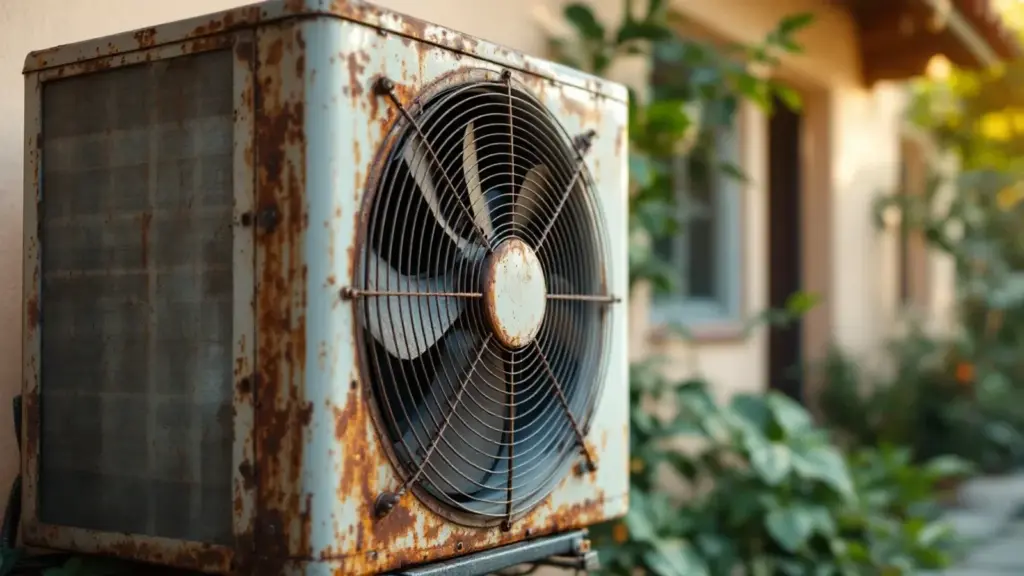
- Assess the age of your equipment against industry lifespans. If your system is over ten to fifteen years old, it relies on outdated components that are increasingly prone to failure.
- Track how often you need to schedule professional service calls. When minor issues turn into multiple annual service visits, the aggregate cost of keeping the old unit alive quickly surpasses the investment in a new one.
- Watch for constant circuit breaker trips when the compressor kicks on. This occurs when an aging motor draws excessive electrical current to start up, indicating an impending electrical or mechanical breakdown.
Beverly Hills Housing Stock and Climate Considerations
- Evaluate how historic home designs affect system longevity. Many Beverly Hills homes feature classic architecture, plaster walls, and unique layouts that require precise static pressure, which can strain older, poorly matched cooling units.
- Consider the impact of dry, dusty canyon winds on outdoor condenser coils. Local microclimates, especially near hillside areas, expose outdoor units to dirt and debris that accelerate coil corrosion and compressor fatigue.
- Review your home’s ductwork integration within older structural designs. Outdated duct systems often leak conditioned air, forcing your cooling unit to work twice as hard to maintain comfortable indoor temperatures. Read more about protecting your new system with our guide on sealing ducts after a new installation.
- Assess how high ambient summer temperatures strain older systems. Extended heat periods in the local area force older, low-efficiency units to run at maximum capacity, which can cause total system failure when the demand is highest. Check out our detailed look at managing summer energy spikes for more details.
- Analyze how architectural preservation rules impact system placement. Local design guidelines may dictate where outdoor units can be placed, sometimes forcing longer refrigerant line sets that put extra stress on older, struggling compressors.
Indoor Air Quality and Efficiency Red Flags
Many Beverly Hills homeowners rely on expert our services in Beverly Hills for exactly this.
- Look for sudden, unexplained jumps in your monthly energy bills. When your power usage spikes without a change in household habits, it shows your cooling system is losing its operational efficiency. To learn what drives these costs, view our breakdown of air conditioning installation cost factors.
- Notice an increase in dust, pet dander, and fine particles throughout your home. An aging system with a degraded blower assembly or failing filtration cannot adequately clean the air circulating through your living spaces.
- Monitor high indoor humidity levels during warmer months. If your home feels sticky or muggy, your cooling system is no longer performing its essential secondary job of extracting moisture from the air.
- Check for persistent musty or metallic odors coming from your supply vents. These smells can indicate mold growth inside an old evaporator coil or electrical components that are beginning to overheat.
- Inspect the physical condition of your registers for soot or dark residue. Accumulated debris around vent covers is a sign that your system is circulating dirty air rather than filtering it.
Frequently Asked Questions
How many years does an air conditioner typically last in Beverly Hills?
Most residential cooling systems last between ten and fifteen years. In coastal and canyon environments where dust, heat, and salt air can affect outdoor units, systems on the older end of this range often show significant drops in efficiency and reliability.
Ready for the next step? Learn how our services services in Beverly Hills can help and reach out to the team.
Can I just replace the outdoor compressor instead of the whole system?
While it is physically possible, matching a new outdoor unit with an old indoor evaporator coil is highly inefficient and often voids the manufacturer warranty. Replacing both units ensures they are properly matched for capacity, efficiency, and system pressure.
What should I do if my AC is blowing warm air and making a loud humming sound?
You should turn off the system immediately at the thermostat to prevent further damage and contact a professional. This combination of symptoms often points to a failed capacitor, a locked compressor, or a serious electrical issue that can permanently damage the system if left running.
Signs You Need New AC Beverly Hills: Key Takeaway
If your cooling system is over a decade old, requires frequent repairs, or struggles to keep your home comfortable, these are clear signs you need new AC Beverly Hills. Contact Smart HVAC System of Beverly Hills today to have a technician inspect your system, evaluate your home’s unique airflow requirements, and help you select an energy-efficient solution that restores peace of mind.