
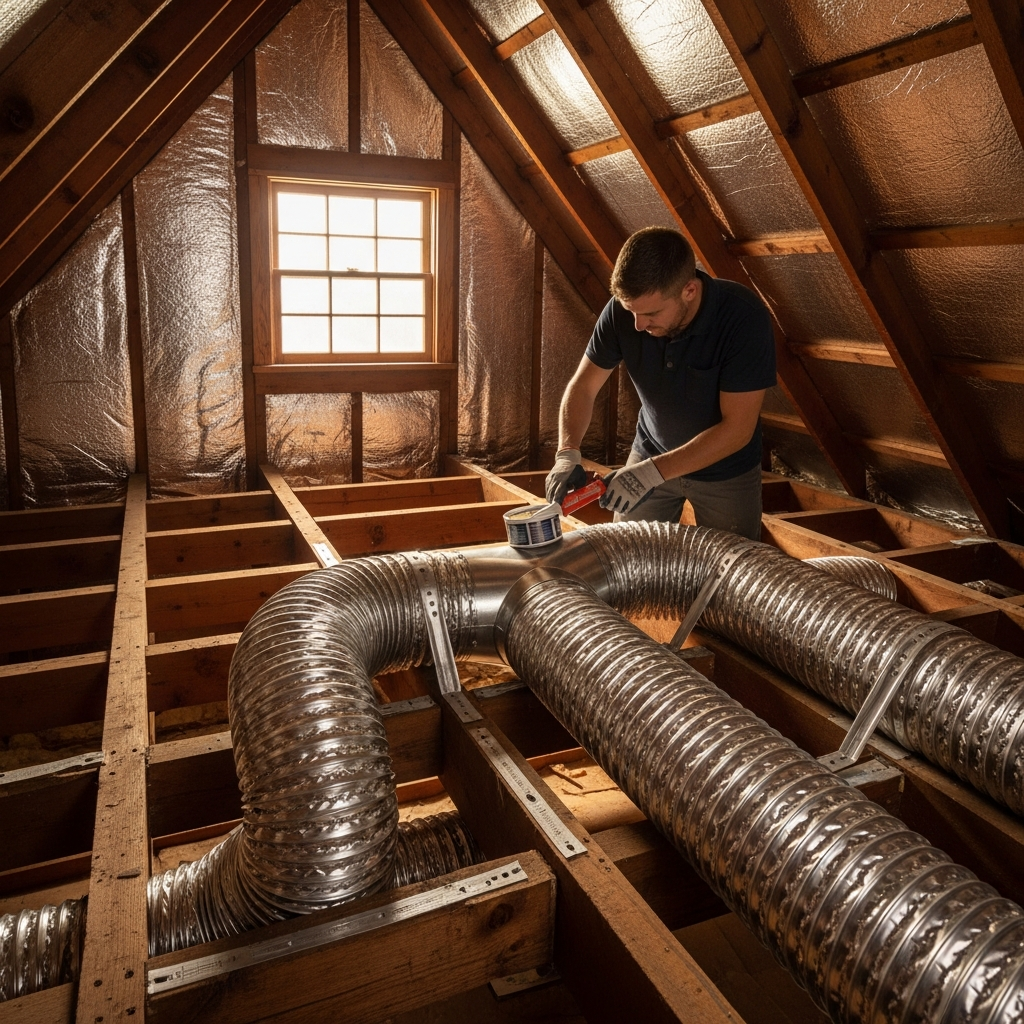
In Beverly Hills, the comfort of a home is shaped as much by what you do not see as by the architectural details that greet you at the door. Hidden above ceilings and behind walls, the ductwork is the quiet network that carries cooled air through our summer afternoons and warm air through the occasional crisp winter night. When that network is aging, leaky, or simply designed for a different era of equipment, the house lets you know in subtle ways: a room that lags behind on hot days, a faint hum that sounds out of proportion to the airflow, or dust settling a little too quickly on a cherished table. For many homeowners here, the path to restoring harmony runs through thoughtful duct replacement, a process that pairs modern standards with the realities of Beverly Hills’ varied housing stock.
As a local, you know our neighborhoods are anything but uniform. From Spanish Revival homes with plaster ceilings to sleek Mid-century residences where space is at a premium, each property brings its own considerations. Ducts live in attics that warm under the California sun, in tight crawl spaces that demand dexterous planning, and in mechanical closets carved into hallways that were never intended to house advanced comfort systems. The best residential duct projects begin with a full understanding of those constraints and an honest assessment of how air presently moves through the home. That is how you turn a frustrating hot room into a quiet showcase of even temperatures and steady, clean airflow.
Why ducts wear out and what that means for comfort
Residential ducts in our climate work year-round. They flex with seasonal temperature swings and endure the vibration of fans, the tug of gravity on long runs, and the occasional visit from a tradesperson stepping across attic joists. Older materials can separate at joints, insulation can slump, and makeshift repairs—often well-intended and years old—allow air to wander out of the system before it ever reaches a register. When you feel one room blasting while another feels starved, it is often a sign that airtightness has faltered or balancing dampers were never set for the way you actually live in the home. Replacing ducts is not only about installing new material; it is the opportunity to design the network around your lifestyle and the realities of each room.
In many Beverly Hills homes, return air is the unsung hero. A starved return forces the system to work harder, builds noise, and creates pressure differences that can draw dusty or unconditioned air into living spaces. A thoughtful design frequently involves adding a dedicated return in a hallway or a master suite, upsizing return pathways to lower resistance, and sealing the entire return side with modern mastics and tapes rated for duct systems. This holistic approach restores quiet operation and brings balance to rooms that previously seemed to have minds of their own.
Designing for California codes and local realities
California’s energy standards encourage efficient systems and tight ducting, and Beverly Hills homeowners benefit when their replacement projects embrace these expectations. Thoughtful designers consider airflow at a granular level, applying recognized methods to size each branch and trunk line to match the equipment and the load of each space. They plan supports that respect local seismic considerations, protect insulation from compression, and keep flexible ducts—where appropriate—stretched smoothly to limit turbulence. In finished ceilings, where access is limited, the plan might call for short metal trunks with carefully sealed transitions to reach key rooms without sacrificing aesthetics.
It is not uncommon for the ideal route to be blocked by structure or heritage finishes that should not be disturbed. In those cases, creativity rules. A narrow mechanical chase can be lined and sealed like a miniature hallway for air; a soffit can be discretely extended; or a return can be reimagined from a high wall opening to a low, quiet grill that moves more air at lower velocity. Successful residential duct replacement is rarely a cookie-cutter effort. It rewards collaboration between homeowner, designer, and installer so that air takes the smoothest path even when the house insists on curves.
Material choices that respect performance and aesthetics
Modern duct systems can be built from a blend of round metal, duct board, and flexible sections to suit the home. Round metal sections are excellent for long runs where you want the least friction. Duct board offers built-in insulation and quiets resonance in some applications. Flex duct, when installed correctly with straight runs, pulled tight, and generous radii at turns, solves tricky reaches without the thrum that poorly installed flex can introduce. The art is in the mix: choosing rigid for the trunk where airflow is highest, flexible only at the final connections where a little give avoids vibration, and sealing every joint with rated mastic instead of relying on tape alone.
Grilles and registers deserve the same care. The right style blends with a Spanish archway as easily as with a glass-and-steel living room. Quiet, wide-throw diffusers can deliver air gently across a room, circumventing that cold spot behind the sofa. Where a return sits near a bedroom, a deeper plenum with internal lining can hush the voice of moving air. It is the difference between “I notice the AC is on” and “I feel comfortable and do not quite know why.”
Healthy air as a design goal
Replacing ducts is an opportunity to elevate indoor air quality. Sealed returns prevent dusty attic or crawlspace air from being drawn into the system. Proper filtration, sized for the equipment and your preferences, keeps particulates down without overstressing the fan. Balanced supply and return keep rooms from going negative or positive, each of which can invite unwanted outdoor odors or push conditioned air out through gaps. Add to that the care of routing ducts away from hot roof decks where possible, or insulating adequately where they must cross warmer zones, and you have a system that not only cools and heats but nurtures the air you breathe.
Because Beverly Hills sits close to canyon winds and the coastal influence, there are days when outdoor air carries extra dust or warmth. A tight duct system paired with appropriate ventilation strategies avoids amplifying those swings indoors. And for families dealing with allergies, a well-designed return path and modern filtration can transform the daily experience in tangible, welcome ways, making bedrooms and living areas feel crisp, calm, and free of the faint mustiness that signals infiltration.
What the replacement process looks like
For most homes, the journey begins with evaluation. Professionals measure static pressure, check register flows, and examine existing runs to see where air is lost or starved. They map the rooms that run warm or cool and listen to how your household actually uses the space—who works from the den during summer afternoons, which bedrooms need gentler airflow at night, and where noise is most noticeable. The design phase then produces a plan that speaks to these realities, laying out trunk lines, branch sizes, and return placement in a way that will feel intuitively better once installed.
Installation days are choreographed to minimize disruption. Floors and furnishings are protected, attic paths are laid out to keep insulation tidy, and old ducts are removed methodically to avoid scattering debris. Each new section is supported and sealed as it goes in, with transitions treated like the vital junctions they are rather than afterthoughts. Once complete, the system is tested—not simply turned on. Airflow at key registers is verified, and any last balancing tweaks are made to ensure rooms receive the air they were promised on paper.
The midpoint of this arc is where the magic becomes visible. After the old has given way but before grills go back, you can see the gentle curves of smooth runs, the thoughtful routing that avoids crossovers, and the quiet intention behind each support. It is also a fitting time to revisit priorities if a discovery suggests a better path. The right team will communicate clearly, adjust as needed, and keep the final goal in sight: a system that disappears into the home while its benefits become impossible to miss. When these pieces align, duct replacement stops being a construction task and becomes an upgrade to daily life.
Comfort, efficiency, and the rhythm of the seasons
Summer days in Beverly Hills can swing from warm to hot, especially on still afternoons. A well-designed duct system tempers those extremes by delivering consistent airflow and ensuring every supply throws into the room rather than along a wall or into a curtain. In cooler months, the same system reduces stratification, so you do not feel heat pooling near the ceiling while your feet stay cool. Good ducts also collaborate with your equipment. Lower resistance means the fan works less to move the same air, which translates into quieter operation and the subtle satisfaction of even, orchestrated comfort.
Noise often recedes as part of this orchestra. When duct runs are sized to keep air speeds within reason and returns are generous enough to avoid whistling, a bedroom becomes a sanctuary again. If you have grown used to raising the volume during a summer cycle or pausing conversations as the fan ramps up, you may be surprised how quickly those habits vanish when the system is tuned correctly. The soundtrack of a home should be its people, not its equipment.
Planning ahead for maintenance and longevity
New ducts set the stage for years of calm service. Keeping them that way requires simple attention over time. Filters should be changed regularly with the right type for your system. Registers can be vacuumed to keep dust from recirculating. If access allows, a quick glance during annual HVAC service calls can confirm that supports and seals remain sound, insulation remains intact, and no one has disturbed the routing while working in the attic. Because the system is now balanced, avoid closing registers in a bid to micromanage comfort; doing so can raise static pressure and unravel the very quiet you have gained.
Smart controls can complement good ducts. Zoned systems, when designed carefully, give larger homes the flexibility to temper spaces independently without pushing a single system beyond its intent. A loft with late afternoon sun can have its own gentle boost, while a shadier downstairs remains tranquil. The ducts that feed these zones must be planned for it—oversized returns, bypass strategies avoided in favor of proper design, and damper placement that does not introduce turbulence. With those foundations, a home can move through the day adapting as sunlight shifts and rooms fill or empty.
Choosing the right partner for the work
In Beverly Hills, homeowners expect thoughtfulness and follow-through. The right partner brings both, along with clear communication and respect for your home’s finishes. They listen first, propose with detail, and test at the end so you can feel what was promised. They understand that attics in our area can be tight and warm, that historic details matter, and that comfort is a daily experience measured in small, repeated satisfactions. A project like this succeeds when the team embodies those values from day one through a quiet first evening after everything is complete.
Frequently asked questions about residential duct replacement
How do I know my ducts need to be replaced? Subtle symptoms often show up first: rooms that lag behind, rising dust, or a persistent hum. A professional assessment can measure leakage and pressure to confirm whether repair or replacement is the smarter path.
Will new ducts make my home quieter?
Yes, a thoughtfully designed system reduces air velocity where it matters, introduces proper returns, and avoids sharp transitions that cause turbulence. The result is softer airflow, fewer whistles, and calmer cycles.
Can you reuse any of my existing ducts?
It depends on condition and design. If parts of the system are well-sized, well-supported, and airtight, selective reuse might make sense. Most projects benefit from a cohesive design that treats the entire network as one integrated system.
How long does a typical residential project take?
Timelines vary with home size and accessibility. Many projects are scheduled to minimize disruption, with clear communication about each phase so you can plan around any necessary access to rooms or ceiling spaces.
Will duct replacement improve air quality?
Yes. Sealed returns, proper filtration, and prevention of infiltration from attics or crawl spaces all contribute. Many homeowners notice that settled dust decreases and rooms feel more “crisp” after the work is complete.
Do I need to upgrade my equipment at the same time?
Not necessarily. New ducts often enhance the performance of existing equipment. If a system is nearing the end of its life, integrating plans can be wise, but many homes see immediate benefits from duct work alone.
What about zoning for different floors or wings?
When designed into the ductwork from the start, zoning can be an elegant solution. The key is ensuring returns and supplies are sized and routed to accommodate zones without forcing excessive pressure or relying on workarounds.
How do you protect my home during the project?
Careful teams use floor coverings, seal off work areas where practical, and tidy up daily. They plan access paths, remove debris in stages, and communicate about any changes so surface finishes remain respected.
If your home has been hinting that comfort could be better, consider starting a conversation about solutions that respect both design and daily life. A well-planned project can restore balance in every season and give your equipment the easy, quiet path it deserves. When you are ready to take the next step and bring consistent, gentle airflow back to every room, reach out to a trusted local expert and explore duct replacement with an approach tailored to Beverly Hills living.