
Energy savings in a Beverly Hills home is not just about the equipment in the closet or on the roof; it is about the pathway air takes to reach every room. Ductwork is that pathway, and when it is well designed, tightly sealed, and thoughtfully balanced, it allows your system to do more with less effort. The result is a home that feels consistently comfortable while the equipment hums along at ease. When those pathways are compromised by leaks, poor sizing, or awkward routing, the system works harder and still leaves you with rooms that disagree. Reimagining the network through comprehensive duct replacement is often the surest route to both better comfort and meaningful efficiency gains.
In our local climate, we move air for much of the year. Warm afternoons, cool evenings, and the occasional heat wave create a rhythm that rewards systems capable of steady, quiet performance. Efficient ducts contribute to that rhythm by lowering resistance to airflow so fans can operate at calmer speeds, reducing losses to attics or chases, and ensuring each register delivers what the room actually needs. It is an unglamorous upgrade on the surface—but anyone who has lived with a well-tuned system knows that it changes the daily experience in subtle, satisfying ways.
Why duct design is central to efficiency
Equipment ratings assume ducts allow air to move freely. If ducts are undersized or full of sharp turns, the fan faces a tougher climb, and the promised efficiency never reaches your rooms. Proper design sets target air volumes for each space and maps routes with smooth transitions and minimal turbulence. Returns are generous because a relaxed return lowers system effort and noise. The net effect is a system that reaches setpoints without strain, and that can often run longer, gentler cycles that feel better and consume less energy than short, frantic bursts.
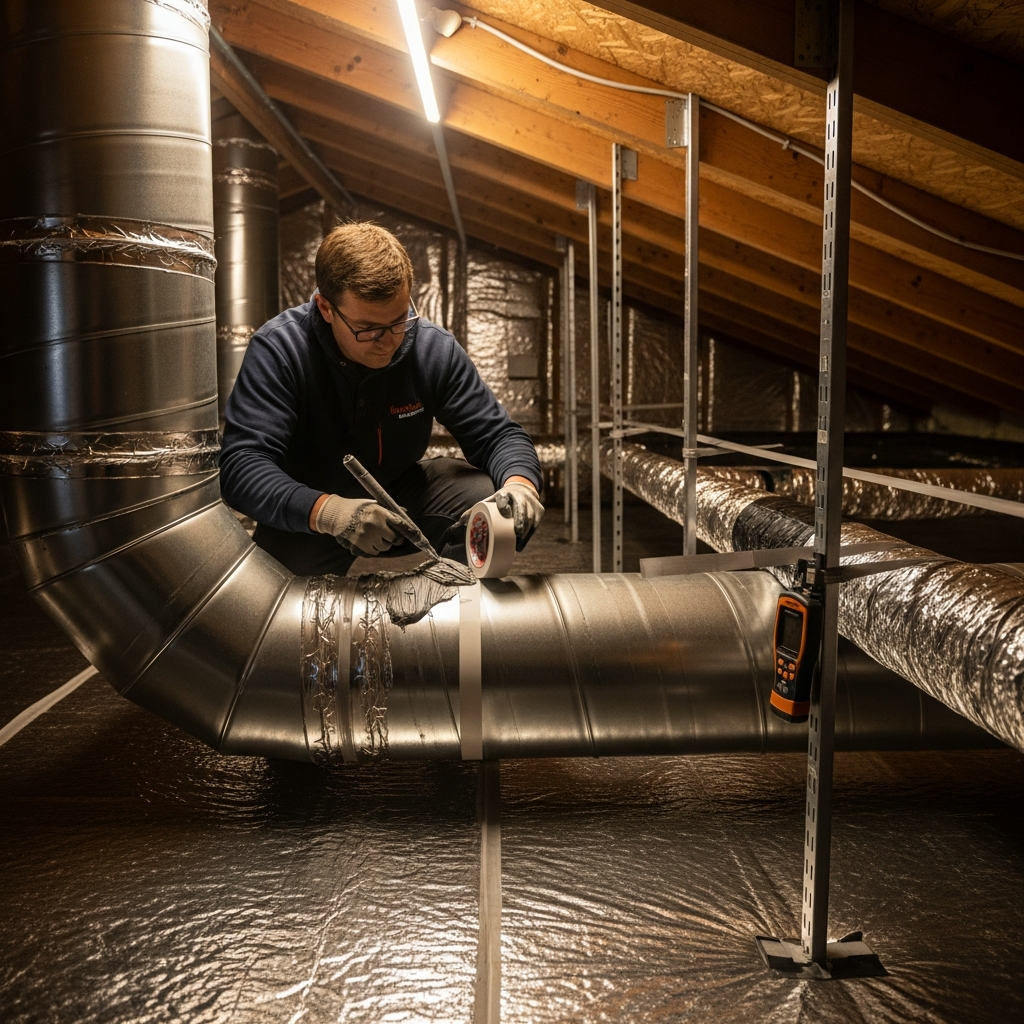
Sealing is the companion to sizing. Even a beautifully designed route will disappoint if conditioned air slips into the attic through leaky joints. Modern mastics and rated tapes close those gaps, and insulation protects temperature as air travels. In many homes, sealing the return side produces the most dramatic improvement, preventing unconditioned or dusty air from being pulled into the system. That change can be felt not only in comfort but also in air quality, with rooms feeling fresher and dust settling more slowly.
Balancing for real life
Energy efficiency is not achieved by throttling airflow blindly; it is achieved by sending the right amount to the right places. Balancing dampers at branches, properly set after airflow is measured, quiet the system and keep rooms from competing. A balanced system allows equipment to operate within intended pressure ranges, which is kinder to motors and reduces the background noise that many homeowners accept as normal. Over time, this balance keeps performance steady and helps the system maintain efficiency season after season.
In homes that have grown or evolved through remodels, ducts often tell the story of those changes—additions fed by long, improvised runs, or rooms served by routes that could not have been the first choice. Replacement offers the chance to reset that narrative. By reshaping trunks, right-sizing branches, and establishing proper returns, the system becomes coherent again. This coherence is what translates into comfort that feels even and energy use that feels reasonable for the space.
Materials and details that make the difference
Rigid trunks, where airflow is greatest, keep resistance low. Flexible connections, used sparingly and installed straight and tight, ease final alignments without compromising performance. Supports keep ducts from sagging so air does not slow and swirl. Transitions are shaped to preserve area, and bends are given the radius they deserve. These details are not just for pride of craft; they are the mechanisms through which efficiency is protected over the life of the system.
Registers and grilles matter, too. A diffuser that throws air across a sunlit room can lower peak loads by mixing conditioned air more effectively, preventing hot layers from forming at the ceiling. Quiet returns located to reduce short-circuiting and whistling let the system breathe easily. Together, these choices create an environment where the equipment’s efficiency can show up in day-to-day comfort rather than just on a specification sheet.
Smart controls and zoning—only when design supports them
Smart thermostats and zoned systems can complement efficient ducts, but they rely on the underlying network. Zoning a system that already struggles for airflow may add complexity without delivering benefits. When ducts are right, zoning can allow a wing that catches afternoon sun to receive a little extra attention while the rest of the home cruises at a steady setpoint. Smart controls can then fine-tune schedules around daily patterns, keeping conditions steady while avoiding unnecessary swings. The result is comfort that feels personal and energy use that feels sensible.
Ventilation strategies also pair with duct design. Where outside air is introduced, carefully sealing and routing that pathway preserves the intended mix and avoids drafts. Filtration sized for the system keeps particulates in check without overtaxing the fan. These elements contribute to the broader sense of well-being in the home: air that smells and feels clean, rooms that do not fight each other, and equipment that does not have to shout to be heard.
What a replacement project looks like
From the first visit, the focus is on listening—to the home and to the occupants. Which rooms are stubborn? Where does noise intrude? How does the family move through the day? Measurements of static pressure and register flows paint a picture of the current system’s behavior, and the design responds to that picture with routes, sizes, and returns that match the home’s realities. When work begins, protection goes down, old ducts come out in tidy stages, and new runs go in with supports and seals that will stand up over time.
At the midpoint, before grills are installed, you can often see the difference: smooth trunks, thoughtful bends, and connections that feel deliberate rather than improvised. It is also the perfect moment to walk the job, confirm priorities, and make small adjustments while access is easy. With communication and care, this period builds confidence that the finished system will sound and feel the way you hoped. When testing and balancing follow, the project closes not with guesswork but with proof that each room is receiving its share and that the system is operating within the intended pressure range. This is how efficiency becomes something you can feel.
The benefits often reveal themselves immediately. Rooms settle into agreement, fan noise recedes, and the home feels calmer even on warmer afternoons. Over time, you also notice the quieter kind of savings—filters that stay cleaner, motors that do not seem to strain, and a system that stays out of the spotlight while keeping the house exactly where you want it.
Frequently asked questions about energy-focused duct replacement
Will new ducts really make a difference if my equipment is fairly new? Yes. Even the most advanced equipment cannot overcome poorly designed or leaky ducts. Improving the pathway allows the equipment to deliver on its potential.
How disruptive is the work?
Much of it occurs in attics or designated chases. When brief access to interior spaces is needed, it is planned and protected. Clear schedules help you know what to expect each day, and areas are returned to order at the end of each shift.
Do I need zoning for energy savings?
Not always. Many homes achieve excellent results with a single, well-designed system. Zoning adds value when the home’s layout or usage patterns call for it and when the ducts are sized and routed to support it.
How will I know the system is performing better?
Expect evidence. Airflow should be measured at registers, and static pressure checked to ensure the equipment is operating comfortably. You will also notice practical changes—steadier temperatures, quieter cycles, and less dust movement.
Can duct replacement improve indoor air quality?
Yes. Sealed returns prevent infiltration from attics or crawlspaces, and properly selected filtration keeps particulates down. Many homeowners remark that the home feels fresher after the work is complete.
What about future maintenance?
With well-supported ducts and accessible components, routine maintenance becomes simpler and more predictable. Keep filters on schedule, and have the system checked periodically to ensure seals and supports remain sound.
If you are ready to turn daily comfort into a quiet form of energy savings, begin with the pathway that touches every room. A thoughtful plan and careful installation can unlock the performance your equipment was built to deliver, giving you a home that feels calm, consistent, and efficient in every season. Start a conversation today and explore duct replacement with a local team that treats efficiency as the natural outcome of good design and respectful craftsmanship.