
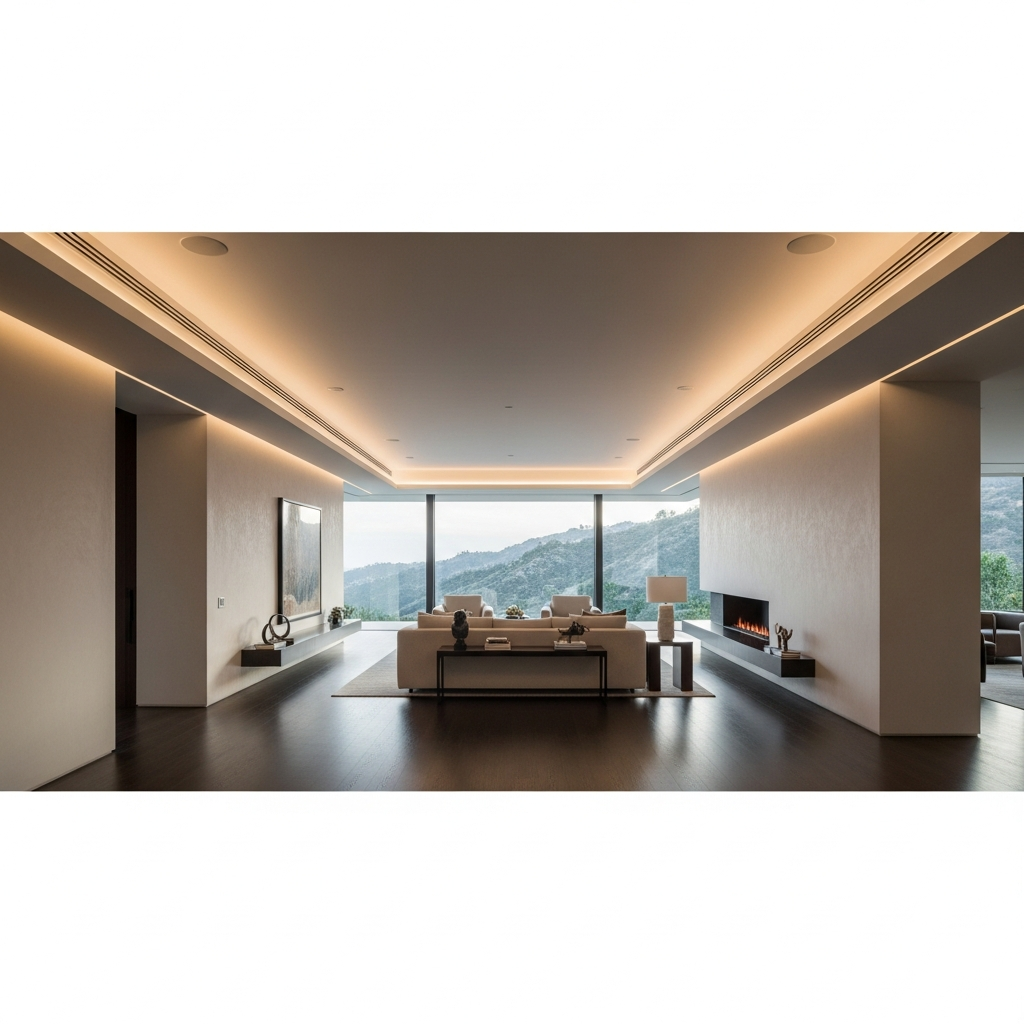
In Beverly Hills, luxury is less about spectacle and more about refinement that quietly elevates everyday life. The same holds true for modern HVAC design in high-end residences, where duct replacement has become a vehicle for comfort, acoustics, and aesthetics that blend seamlessly with architecture. From hidden linear diffusers to data-driven balancing, today’s projects show how a meticulously planned air distribution system supports the serenity and polish that define the finest homes. For owners and design teams considering upgrades, understanding the latest approaches to duct replacement reveals just how much the invisible can shape the extraordinary.
Step into a newly renovated estate off Sunset and you may not see a single grille at first glance. Air arrives through slim, plaster-in slots that disappear into the geometry of the ceiling. The room is calm, with no audible rush of air, and temperature holds steady from corner to corner. Achieving that effect takes more than premium equipment; it requires ductwork designed as part of the interior architecture. The past few years have seen a shift from merely adequate airflow to curated delivery, where velocity, direction, and diffusion are tuned the way lighting designers tune layers of illumination.
Aesthetics first: the rise of architectural diffusers
One of the most visible trends is, paradoxically, invisible. Linear slot diffusers, flush plaster grilles, and custom-finished registers now take the place of conventional stamped vents. These elements demand low, even air velocities to avoid drafts and noise, which in turn requires ducts with generous cross-sectional area and gentle transitions. When replacing older networks, designers specify trunks and branches that maintain laminar flow, reducing turbulence that could telegraph as sound. The payoff is a ceiling that reads as uninterrupted surface while still delivering comfort worthy of a gallery or salon.
Quiet as a baseline, not a bonus
In luxury projects, silence is a design requirement. Duct replacement strategies therefore prioritize low static pressure and acoustic attenuation. Wider trunks, fewer sharp elbows, and thoughtful placement of returns keep the system in a pressure range where fans can idle rather than strain. Lined plenums are used judiciously to temper sound at the source, and flexible connectors decouple equipment vibration from structure. The result is a barely-there whoosh that supports conversation, music, or film without intrusion. For homes with dedicated theaters, gyms, or studios, this acoustic discipline extends to room-specific provisions so each space feels purpose-built.
Smart zoning aligned to how the home is lived in
Large residences rarely function as a single thermal zone. Families occupy wings differently throughout the day, and guests change occupancy patterns on a whim. Modern duct replacement plans embrace this by designing zones that mirror real use: owner’s suite, entertaining level, work wing, guest quarters. Duct routes and damper locations support independent control, while balancing ensures that opening one area does not starve another. This is not zoning as an afterthought; it is a mapped strategy that anticipates doors opening, fireplaces crackling, and kitchens bustling, so the system feels intuitive and responsive.
Filtration and fresh air elevated to wellness features
The wellness conversation has entered HVAC with seriousness, and duct replacement is where those aspirations become practical. Sealed returns ensure all air passes through high-performance filtration. Distribution layouts allow for filter cabinets with sufficient face area to keep velocities low, preserving quiet while improving capture of fine particulates. Where projects call for dedicated fresh air, the duct network is sized to blend outdoor air gently and evenly, avoiding drafts. In wildfire season or during high pollen counts, the home maintains a sanctuary-like quality of air, supporting rest and focus without theatrical effort.
Designing for electrification and low-static equipment
Heat pump technology has made significant strides, and many luxury homes are choosing equipment that thrives on low static pressure. Duct replacement plays a pivotal role by setting the stage for efficient, whisper-quiet operation. Trunks are mapped to minimize total equivalent length, branches are right-sized to achieve target velocities, and returns are generous to avoid bottlenecks. With this foundation, variable-speed systems glide through setpoints, and comfort feels less like on-off cycles and more like a continuous, invisible backdrop.
The craft of balancing and commissioning
Perhaps the most exciting change in recent years is how data informs finishing steps. Commissioning no longer stops at “good enough.” Technicians measure delivered airflow at key registers, compare it to design values, and make adjustments until numbers and experience match. Temperature differentials across coils and ducts are checked to confirm the system’s health. In homes where comfort expectations are high, this meticulous process delivers the confidence that every corner lives up to the plan. Owners sense it as a home where the temperature is never in question and the air is always quietly present.
Space-savvy routing in challenging envelopes
Beverly Hills includes hillside properties with complex rooflines and tight mechanical chases. The newest duct replacement trend here is collaboration: architects, builders, and HVAC designers coordinate routes early so that soffits remain slender, chases remain discreet, and airflow remains uncompromised. Flattened oval ducts or wide, shallow trunks may replace tall round runs to navigate tight spaces without provoking velocity spikes. The finish looks effortless, but it is the product of careful geometry hidden just beyond the drywall.
Material choices that serve performance and durability
Rigid metal trunks with smooth interiors are a mainstay for their low friction and longevity. Short, tensioned sections of flexible duct are applied strategically at branches to decouple sound and simplify alignment, but they are never allowed to sag. Sealing relies on mastic rather than tapes that suffer under heat. Insulation values are chosen to protect temperature as air travels through warm attics or between floors. Even hangers and supports are specified to maintain shape, preventing the ovalization that robs airflow. The combined effect is a system that functions like a crafted instrument rather than a collection of parts.
Thermal comfort as a design language
Designers speak in the language of light and texture; duct replacement adds the language of air. Throw patterns are selected to wash walls evenly or to create gentle circulation that avoids drafts over seating. Supply locations consider how drapery moves, how art is protected, and how people gather. Returns are placed to promote mixing without calling attention to themselves. The outcome is a thermal experience that mirrors the visual one: layered, balanced, and quietly luxurious.
Case studies from recent projects
In a contemporary estate above Benedict Canyon, replacing a legacy duct network allowed linear diffusers to run the full length of a great room without the usual noise penalty. By widening trunks and softening transitions, air arrived at velocities low enough to disappear acoustically while still refreshing the space. In a classic villa near Greystone, a new return strategy relieved a chronic pressure imbalance that had made the owner’s suite difficult to condition. The fix was simple on paper but transformative in experience: the room settled to temperature quickly and stayed there, with the system nearly inaudible.
Integration with controls and monitoring
Luxury homes increasingly pair duct replacement with sophisticated controls. Variable-speed fans, smart dampers, and sensors feed data to a control platform that adjusts delivery in real time. The duct system’s job is to be quiet, low-resistance plumbing for air, so these controls can work their magic without fighting friction. With commissioning data as a baseline, homeowners and facility managers can monitor performance over seasons, ensuring the home continues to feel effortless year after year.
Mid-course motivation for owners and teams
There is a revealing moment midway through a project when mock-up diffusers are in place and the new trunks are live. You hear almost nothing and feel a soft, even wash of air. That sensation confirms the premise of today’s high-end duct replacement: results that are felt rather than seen, measured not only by numbers but by the calm they create.
What to expect during installation
Professional teams stage work to preserve privacy and protect finishes. Access points are planned to keep construction out of sightlines, and dust is managed with care. Sections are built and tested in sequence, with regular walk-throughs so owners and designers can see how details are handled. The final days focus on balancing, subtle grille adjustments, and a clean turnover. The experience should feel like a concierge service that just happens to reimagine the way your home breathes.
Frequently asked questions
Will new architectural diffusers reduce airflow? Not when the duct system is designed for them. Wider trunks, gentle transitions, and proper balancing deliver the required cfm at lower velocities, preserving both comfort and quiet.
Is duct replacement disruptive in a finished luxury home? With planning, disruption is kept to a minimum. Work is sequenced around your schedule, access is discreet, and finishes are protected. Communication stays clear so surprises are avoided.
Can I improve wildfire resilience through duct design? Yes. Sealed returns and appropriate filtration help keep indoor air clear during smoke events, and distribution layouts can accommodate high-performance filters without adding noise.
How does zoning fit high-end living? Zones are mapped to how the home is actually used, giving independent control to wings or floors. The duct network is designed to support those zones without starving or overfeeding adjacent spaces.
Do these upgrades work with heat pumps? Absolutely. Low-static duct design pairs beautifully with variable-speed heat pumps, allowing them to run quietly and efficiently while maintaining tight temperature control.
What proves the system is performing? Commissioning data. Technicians verify airflows and pressures against design, and you experience the payoff as rooms that settle quickly and stay serenely comfortable.
Make the invisible your home’s greatest luxury
If you are planning a renovation or simply seeking a quieter, more consistent home environment, let air distribution rise to the same level of attention as finishes and lighting. Partner with a team that treats ducts as part of the architecture, balancing performance with silence and style. When the time is right, explore how thoughtful duct replacement can sharpen the luxury you already own, so comfort arrives with the same ease as good light and beautiful materials.