
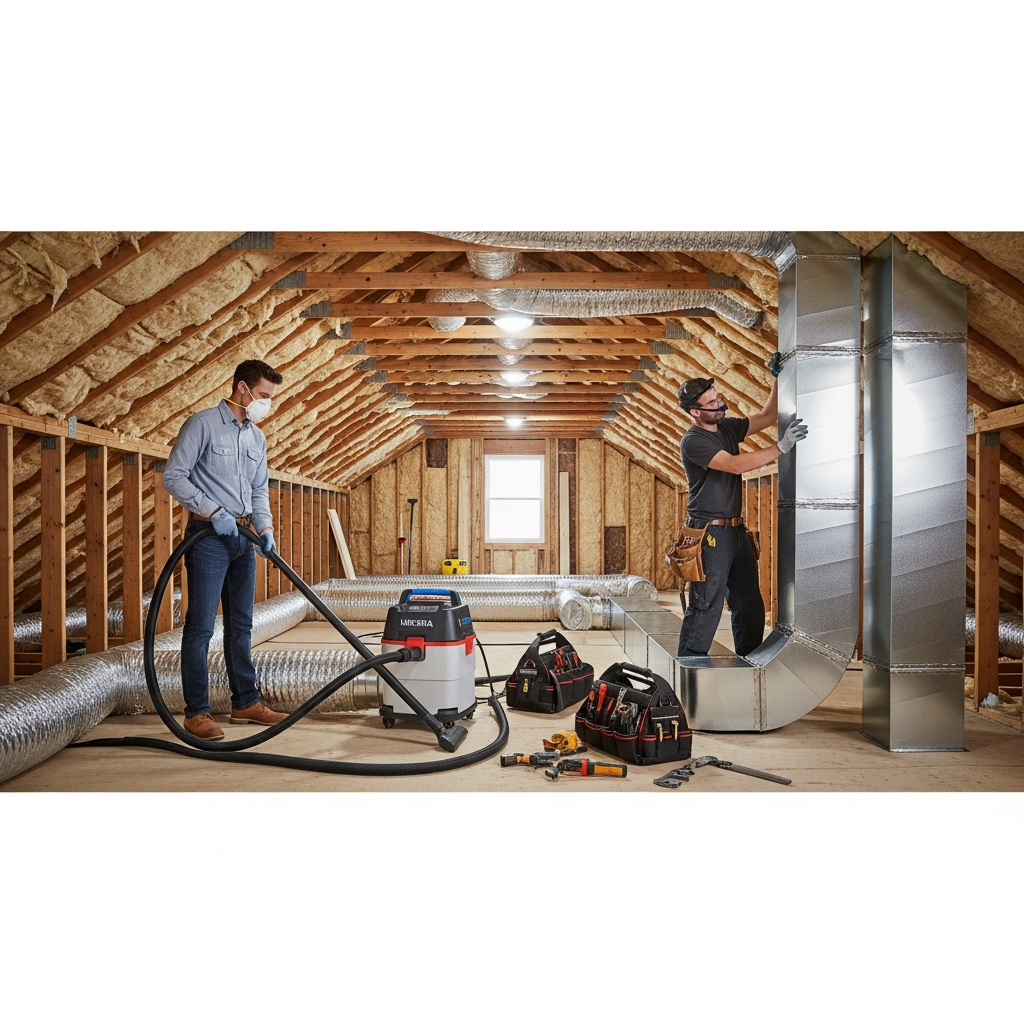
When homeowners in Beverly Hills weigh air duct replacement versus cleaning, they are really choosing between two very different outcomes. Cleaning refreshes the interior of existing ducts, while replacement reimagines the pathway your air travels, often addressing long‑standing comfort, noise, and efficiency issues that cleaning alone cannot touch. In a city where homes range from classic Spanish bungalows south of Wilshire to glass‑walled view properties in the hills, the needs change block by block. The key is to evaluate what you want to solve and how your home is built. If you are starting this decision process and want clarity tailored to your layout, materials, and comfort goals, begin by speaking with a local pro about duct replacement so you understand what is possible and what is practical.
What duct cleaning can and cannot do
Quality duct cleaning, performed with the right tools and containment practices, can remove accumulated dust, construction debris, and light microbial film from many duct interiors. In metal ducts with accessible trunk lines, cleaning can improve air freshness, reduce odors, and support better filtration. In well‑installed flexible duct systems that are relatively young, cleaning may help restore interior surfaces if contamination is modest. But cleaning has limits. It does not resize undersized runs, cannot fix crushed or kinked lines, will not reduce duct leakage at poorly sealed joints, and cannot change noisy airflow through sharp transitions. Think of cleaning like detailing a car: it makes what you have look and feel better, but it will not transform the engine or suspension.
When replacement is the right call
Replacement shines when the problems are structural rather than cosmetic. If you live in a mid‑century home with long, convoluted runs that were threaded through narrow chases, cleaning the interior will not change the path’s resistance to airflow. If your attic contains aging flex with deteriorated outer jackets or insulation, a vacuum will not restore lost R‑value or structural integrity. If rooms suffer chronic hot‑and‑cold imbalance, particularly on opposite sides of the home, you are looking at a sizing and layout question. When you replace ducts, you have the chance to right‑size the system, add balancing dampers, enlarge returns, and route branches more directly so the conditioned air arrives quietly and evenly where you live.
Health and indoor air quality considerations
Indoor air quality can be a strong motivator for both cleaning and replacement. If your ducts leak at joints or boots, they may be drawing dust from attics and crawlspaces—dust that cleaning will remove temporarily from interior surfaces but that can quickly return if those leaks remain. Replacement addresses this by sealing the system as it is rebuilt, reducing infiltration at the source. For households with allergies or sensitivities, pairing a new duct system with a properly sized filter cabinet and sealed returns can materially reduce particulate load in daily life. Cleaning plays a role, especially after renovations or when pets shed heavily, but it is not a substitute for a tight, well‑designed air pathway.
Comfort, noise, and everyday experience
Comfort is not just temperature. It is also how quietly air flows into the room and whether it mixes properly to prevent drafts. Cleaning does not influence duct velocity or diffuser selection; replacement does. If your vents howl or whistle, there is a good chance the ducts are undersized, the transition into the boot is abrupt, or the grille lacks free area. A thoughtful replacement can upsize strategic runs, soften turns, and specify diffusers that distribute air gently. The result feels different: even temperatures without the soundtrack.
Energy performance and the long view
Leaky ducts are silent energy thieves, especially when runs travel through unconditioned spaces. Cleaning does not seal joints or repair cracked mastic; replacement gives you a sealed, insulated network with measured leakage rates. In practice, this means your equipment can operate closer to its design efficiency, because the air you pay to condition actually reaches your living spaces. Over time, that improved performance shows up as steadier comfort and less runtime, a difference you feel long after the vacuum hoses leave.
Architecture and access in Beverly Hills homes
In Beverly Hills, access can drive this decision more than many homeowners expect. If your ducts are fully exposed in a large attic with generous headroom and you recently upgraded equipment, cleaning may be a reasonable first step. But in tight attics, behind lath‑and‑plaster ceilings, or within delicate historic finishes, you want to be sure that any intervention is worth the intrusion. Replacement done right anticipates openings, sequences work to protect finishes, and coordinates patching where needed. Cleaning in such spaces still requires access points, and if the ducts are compromised, you may endure the disruption without gaining lasting results. A candid evaluation of access, condition, and goals is essential before choosing a path.
How we evaluate your system for cleaning or replacement
Start with a visual inspection and pressure readings. We look for crushed or kinked runs, insulation gaps, tape failure, and signs of previous rodent activity. We measure static pressure and temperature splits, examine return sizing, and note any rooms that struggle. If the ducts are structurally sound, reasonably tight, and appropriately sized, cleaning paired with filter upgrades may be the right call. If we find systemic issues—undersized trunks, deteriorated materials, high leakage, or missing returns—replacement moves to the front of the line because it solves the root causes, not just the symptoms.
Material choices: metal, ductboard, and high‑quality flex
Cleaning outcomes vary by material. Metal ducts are the most cleanable over decades because the interior is smooth and robust. Ductboard is cleanable with care, but the focus should be on protecting the interior surface from damage. Flexible duct can be cleaned when it is in good shape, but aging or damaged flex is a poor candidate. For replacement, we often combine metal trunks with carefully routed flexible branches, or use ductboard plenums for quiet operation. The right blend depends on space, acoustics, serviceability, and your preferences.
What homeowners can do before deciding
Collect your concerns in plain language: which rooms run hot or cold, when the noise is most noticeable, whether dust feels persistent after regular cleaning. Note any recent work on the home, such as roof replacements or remodels, that may have introduced debris into the system. With this information, an inspection becomes efficient and targeted, and the path toward cleaning or replacement becomes clearer and less overwhelming. The more specific you are about daily frustrations, the easier it is to match a solution.
Common myths about cleaning versus replacement
One myth says cleaning always improves performance. It does not if resistance in the system is driven by sizing, not debris. Another myth insists replacement is overkill unless ducts are falling apart. In reality, many systems are simply mismatched to the home’s needs, and rebuilding them is what unlocks quiet, balanced comfort. A third myth imagines cleaning as a quick, no‑risk refresh. Quality cleaning is careful and methodical, and it should include containment and protection to avoid spreading dust into the home. The right choice is not about myth; it is about evidence from your actual system.
Some homeowners prefer to try the least invasive path first. That is reasonable when the ducts are in fair condition and comfort complaints are minor. But if you have a history of hot rooms, noisy vents, or lingering dust despite frequent filter changes, it is time to consider a plan centered on duct replacement. The goal is not to swap metal for metal; it is to redesign airflow so your living spaces feel the way you have always wanted them to.
What a replacement project looks like, step by step
Expect a measured rhythm: protection and staging, selective demolition of old runs, fabrication of new trunks, careful routing of branches, and precise sealing. Balancing dampers are set, registers are aligned with architectural features, and insulation is installed to code or better. A thorough team then pressure‑tests the system to verify low leakage and commissions airflow to match your equipment. You receive a walkthrough and clear guidance on filter changes and access points. The result is tangible the first evening after completion: rooms settle into even temperatures, and the background hush returns to the house.
How the decision plays out in different home types
In single‑story ranch homes south of Wilshire, attics often allow good access, so cleaning can be effective if materials are intact. In multi‑level hillside properties with staggered floorplates and partial crawlspaces, the duct pathways are more complex. Here, replacement commonly fixes structural issues in layout that cleaning cannot reach. In extensively remodeled estates, previous additions may have layered duct solutions that never quite harmonized. Replacement becomes a chance to integrate the system so it behaves as one, not as a patchwork of eras.
FAQ: Choosing between duct cleaning and replacement
Q: How often should ducts be cleaned if I choose not to replace?
A: Frequency depends on lifestyle, filtration, and home activity. Many homes benefit from periodic inspections and targeted cleaning after renovations or if dust becomes noticeable. Good filtration and sealed returns reduce how often cleaning is needed.
Q: Can cleaning make a noisy system quiet?
A: Not typically. Noise is usually a function of duct size, airflow velocity, grille free area, and abrupt transitions. Replacement addresses these factors directly; cleaning does not.
Q: If I replace ducts, should I also replace my registers and grilles?
A: Often yes. Registers and grilles influence airflow and noise. Selecting models with appropriate free area and throw for each room supports the goals of the new design and can subtly improve comfort.
Q: Will replacement improve air quality more than cleaning?
A: If your current system has leakage or draws from wall cavities or attics, replacement provides a greater improvement because it seals the air pathway as it is rebuilt. Cleaning removes existing debris but does not stop future infiltration if leaks remain.
Q: How do I know if my ducts are undersized?
A: Signs include high static pressure, loud vents, rooms that never catch up, and equipment that short cycles. An evaluation with measurements confirms sizing and points to the best remedy.
Q: Is there a benefit to combining both approaches?
A: Yes. After replacement, schedule a maintenance plan and keep filters updated. If you undergo future renovations that generate dust, a targeted cleaning of accessible areas can maintain that like‑new interior.
Move forward with confidence
Whether you end up choosing a careful cleaning or a complete redesign, the best decision is the one grounded in evidence from your home and aligned with your comfort priorities. If your evaluation points toward a new layout, materials, and better sealing, reach out to discuss duct replacement with a Beverly Hills team that treats design, protection, and testing as essentials, not extras. Your home will feel the difference every day.