
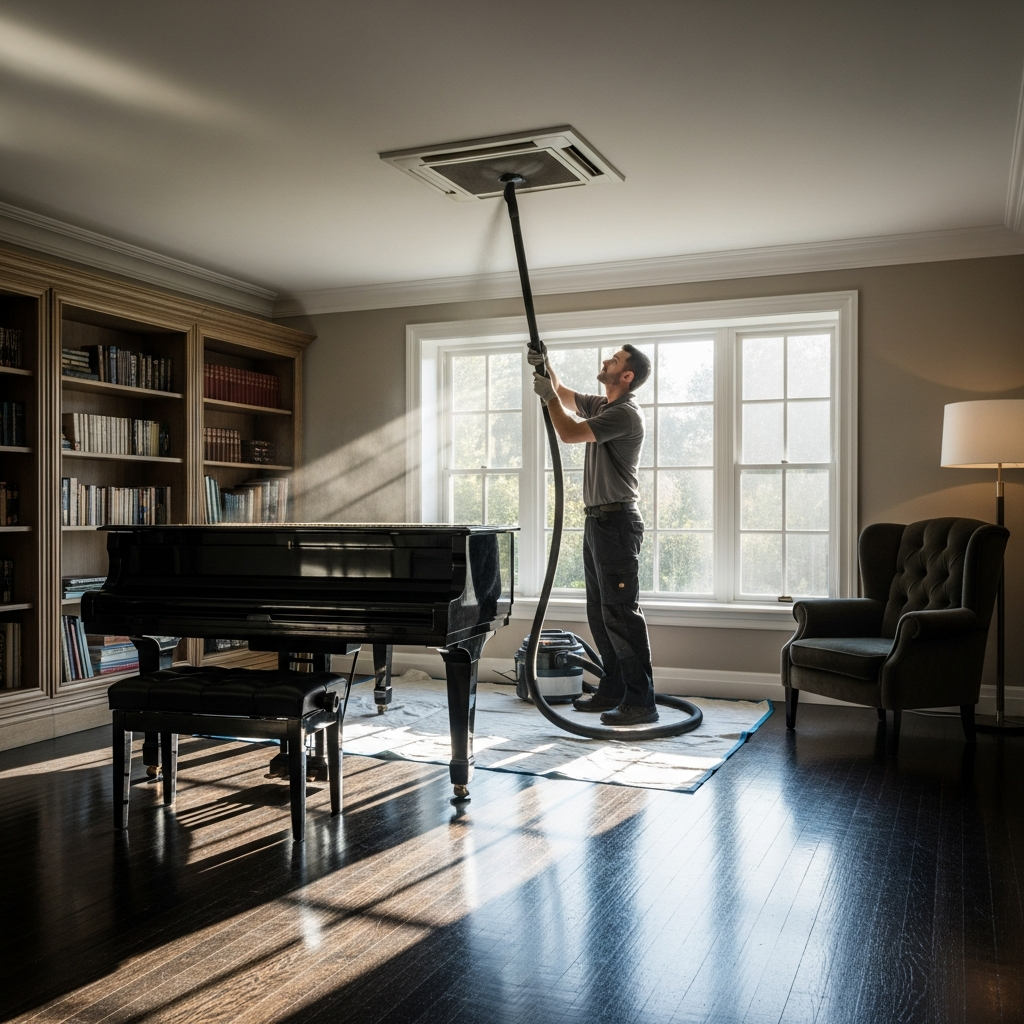
The Subtle Art of a Dust-Calm Home
Walk into a Beverly Hills residence on a bright afternoon and you can see everything the light touches. The glow across a lacquered table, the quiet sheen on stone floors, the fine line where air meets architecture—these details define the experience of home. Dust interrupts that serenity. It appears on piano lids days after careful polishing, settles along bookshelf edges, and surprises even diligent housekeepers with how quickly it returns. Having spent years servicing HVAC systems from the flats to the hills, I can say with confidence: when dust keeps coming back, the pathway to relief often runs through your ductwork.
Dust is not a single substance. It is a blend of fibers, skin cells, pollen, soot, fine soil, and residue from everyday living. Add the seasonal influence of Santa Ana winds and the occasional haze from regional wildfires, and Beverly Hills homes contend with a complex mix that moves differently than what you read in generic guides. If you are striving for less housekeeping labor, longer-lasting polish on delicate finishes, and a feeling of clarity when the afternoon sun pours in, a thoughtful approach to air duct cleaning can make a meaningful difference.
Why Ducts Matter in the Dust Story
Your HVAC system does more than heat and cool; it is the circulatory system of your home’s air. Returns pull air in, filters attempt to capture particles, and supply ducts distribute conditioned air back into rooms. Any build-up within this loop becomes a persistent source: dust that has settled along branch ducts and returns can lift off when the fan ramps up, traveling to the nearest supply grille and stepping back into the space you just cleaned. If the coil or blower compartment carries a film, each cycle can seed fresh particulates downstream.
In larger or multi-level homes—common across Beverly Hills—the duct network involves long runs, concealed chases, and architectural details such as linear slot diffusers. These features are beautiful and functional but give dust plenty of surfaces on which to land. Over years, fine particles accumulate in ways that ordinary filter changes cannot fully manage. That is where a professional reset becomes essential.
How Proper Cleaning Reduces Dust
Think of duct cleaning as resetting the baseline. We establish containment to protect interiors, then use agitation tools sized to your ducts, paired with high-filtration negative air equipment to draw debris out of the system instead of into the room. We remove and wash registers, inspect and clean plenums, and address the coil and blower so that new air is leaving clean components. The goal is not cosmetic—though the house will look better—it is to break the cycle of recirculation.
Once accumulation is removed, dust that does enter the home from normal life or from outdoors has nowhere to hide inside the system. The filter becomes truly effective, catching what it sees rather than constantly sharing the stage with old deposits. Many homeowners report that surfaces stay cleaner noticeably longer and that rooms feel less hazy in bright light.
Local Factors That Drive Indoor Dust
Our climate is generous with light and intermittent with humidity. Dry stretches favor static, which lets particles cling to duct walls until a gust—from a door opening, a fan change, or a wind event—dislodges them in bursts. Homes near canyons experience micro-breezes that move dust in patterns specific to slope and orientation. Landscaping adds seasonal contributions: when jacarandas bloom or when certain grasses release seed, a faint film may appear on sills within days. Finally, periodic renovations—even small ones—leave a legacy of fine dust that drifts unnoticed into returns.
All of these influences do not have to dominate your home. The trick is to recognize them and plan maintenance that respects how your property breathes. When ducts are clean, coils are clear, and filters are properly matched, dust returns to being what it should be: an occasional housekeeping task rather than a full-time opponent.
Filtration, Balanced With System Health
After cleaning, filtration strategy preserves your gains. The impulse to install the highest-rated filter is understandable, but it must be balanced with airflow. Systems need to breathe. We evaluate static pressure and available filter area to recommend the right MERV rating without adding strain. In certain homes, the answer is a deeper media cabinet or additional return capacity, which lets you capture more dust while allowing fans to run quietly and efficiently.
We also pay attention to how filters are seated. A high-quality filter that leaves even a small bypass path will allow dust to skirt the media and move downstream. Proper fits, intact gaskets, and cabinets aligned to avoid warping are small details that produce big results when your goal is a calm, dust-minimized home.
Real Examples From Beverly Hills Homes
In a classic mid-century property with sweeping glass, the owners kept battling a powdery layer along the low credenza beneath the windows. Our inspection found a return plenum that pulled unfiltered attic air through a tiny seam during high wind events. We sealed the return, cleaned the system thoroughly, and adjusted the fan profile. The surface stayed clean for weeks, then months, with only routine dusting needed.
Another client on a ridgeline above the flats experienced sudden dust blooms when the HVAC cycled on higher speeds. A deep branch duct carried a forgotten pocket of renovation residue. Cleaning that pocket, followed by coil and blower care, ended the bursts entirely. The experience underscored a truth we see often: it is not the whole system causing problems, but specific accumulations in specific places—find them, remove them, and the home settles back into a fresher rhythm.
Housekeeping Synergy: Small Habits, Big Impact
Your housekeeping team is an ally in the fight against dust, especially after a professional reset. We recommend vacuuming registers gently rather than wiping aggressively, which can push debris inward. After entertaining or on windy days, allow the fan to circulate a bit longer to move particulates into the filter before they settle. Keep doors and windows closed when the winds pick up, and consider a short, scheduled check of return grilles for early film—catching it early keeps it from compounding.
Finally, align filter changes with the home’s usage patterns. If entertaining increases, or if pets are shedding, advance the schedule rather than waiting for a fixed date. The goal is to keep the filter acting as a front-line capture tool, not a late response to accumulation you can already see.
The Mid-Project Pivot
Even in a well-planned service, surprises emerge. We pause mid-project to compare reality with the initial map, adjusting as needed. Sometimes we find a branch with unusual dust spiraling caused by an off-angle boot or a damper that never fully opened. Correcting those quirks while we are already engaged pays dividends. Together with thorough professional air duct cleaning, these small optimizations help sustain a dust-calm home long after we roll up our protective coverings.
Documentation follows our work. We record before-and-after images inside key ducts and returns and provide readings you can reference later. If your property is professionally managed, these records become part of the building’s living history, informing future decisions and ensuring consistency even as staff change.
Seasonal Timing That Works
When is the best time to address dust through your ducts? Late spring and early fall are ideal for many homes, catching the shoulder seasons between heavy heating and cooling. That said, the best time is when patterns become noticeable—after renovations, during a period of frequent entertaining, or following a particularly dusty wind event. Acting at the moment you feel the change ensures the home moves back into equilibrium quickly.
In homes with frequent guests or film shoots, we schedule services that keep air clear without interfering with operations. The aim is always the same: less interruption, more ease, and an environment that looks as pristine as it feels.
Frequently Asked Questions
Will duct cleaning remove all dust from my home? No service can eliminate dust entirely—life generates it—but a thorough cleaning dramatically reduces recirculated particles, so what you see on surfaces comes primarily from day-to-day activity and is far easier to manage.
How often should I schedule cleaning to keep dust down? Many Beverly Hills homes benefit from service every two to three years, with earlier check-ins after projects or during heavy wind seasons. Your home’s layout, finishes, and use patterns will guide the exact cadence.
Is the process disruptive? With proper containment and planning, disruption is minimal. We protect finishes, coordinate with household schedules, and leave spaces tidy—only less dusty.
Can higher-efficiency filters strain my system? They can if not matched to available filter area. We measure static pressure and recommend solutions—often a deeper media cabinet or added return capacity—so you capture more dust without stressing equipment.
Do I need coil cleaning too? If dust has accumulated in the ducts, the coil often carries a film as well. Cleaning both ensures particles are not reintroduced after you have reset the system.
Restore Clarity to Your Home
If you are ready for surfaces that stay clean longer and rooms that feel clearer in the afternoon light, it may be time to reset your system. Start with a focused assessment and a plan that respects your home’s architecture and routine. When you are ready, explore our approach to meticulous air duct cleaning, and take the first step toward a dust-calmer Beverly Hills home that looks—and feels—impeccably cared for.