
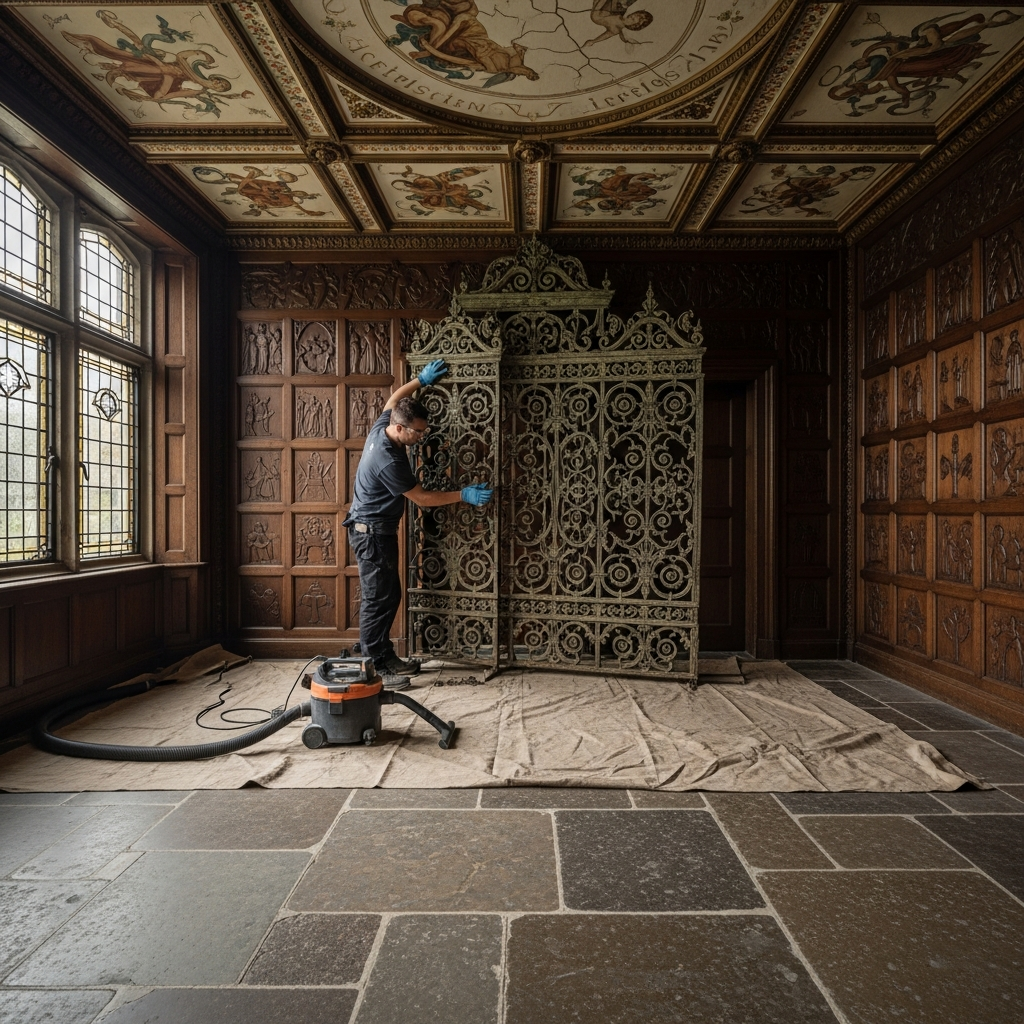
Preserving Air, Protecting Legacy
Historic estates in Beverly Hills tell stories through light, material, and proportion. Their charm arises from hand-troweled plaster, aged timber, patinaed metals, and gardens that have matured along with the architecture. Yet behind their walls lies another story—the path air takes as it circulates through ducts added or adapted across decades. As a local HVAC professional, I have learned that caring for these homes means more than restoring temperatures; it means preserving how delicately the building breathes. Clean, well-managed ductwork safeguards interiors, protects finishes, and keeps the living experience aligned with the home’s original spirit.
Many of our grandest properties evolved in phases—original construction followed by thoughtful additions, later mechanical upgrades, and, at times, rapid retrofits to meet modern expectations. Each change left its mark on the HVAC system. The result can be a patchwork of duct sizes, creative chases, and registers set into plaster or wood that deserves the same conservation mindset we apply to fine art. That is why air duct cleaning for historic estates is less an ordinary service and more a specialized practice grounded in respect for materials and history.
The Historic Home Context in Beverly Hills
Our city’s architectural heritage ranges from Spanish Colonial Revival and Mediterranean villas to Georgian-inspired mansions and mid-century gems. These homes predate modern mechanical conventions. Early designs prized cross-ventilation and thermal mass more than forced air. As air conditioning became the norm, ducts were threaded through attics and basements, around decorative trusses and beams, and behind millwork never intended for mechanical access. Today, efficient climate control is essential, yet it must coexist with finishes and fabric that time has rendered irreplaceable.
Local environmental factors also matter. Dry spells, seasonal winds, and occasional regional wildfires can introduce fine particulates that find their way indoors through micro-gaps in older envelopes. The very features that make these homes delightful—original windows, decorative vents, and thick plaster—require a careful approach when addressing indoor air quality. A professional plan honors the home’s age and character while protecting comfort for the present.
What Responsible Duct Cleaning Looks Like in a Historic Estate
We begin with documentation. Before a register is touched, we photograph and label each grille and diffuser, noting its finish, mounting style, and surrounding material. Some grilles are cast bronze with decades of patina; others are custom wood, flush to intricate trim. We create gentle containment paths with breathable, non-shedding covers that respect finishes and allow the house to “exhale” gradually as we work. Negative air equipment captures loosened debris before it can drift into adjacent rooms.
Inside the ducts, we use agitation tools scaled to material and diameter. Older sheet metal, flex retrofits, and lined ducts all call for different techniques. We advance slowly, protecting joints that might be less robust than modern equivalents. If we encounter fragile insulation or unexpected obstructions—say, an improvised repair from a past decade—we pause, document, and confer with the owner’s team before proceeding. Throughout, the goal is to remove settled particulates without imposing stress on the building fabric.
Beyond duct interiors, we attend to the mechanical heart: the coil, blower compartment, and drain pan. Any plan that ignores these components risks reseeding the system after cleaning. Where appropriate, we review return sizing; many estates inherited undersized returns built for a different era. Improving return pathways with minimal visual impact can lift comfort, reduce noise, and protect the integrity of the home.
Respect for Materials and Finishes
Historic finishes are both beautiful and sensitive. Silk wallcoverings, lime-washed plaster, waxed wood, and original metalwork respond poorly to aggressive methods. We choose protective coverings and work sequences that avoid contact abrasion and chemical interactions. Registers are removed and handled like artifacts, cataloged by room, and secured until they are reinstalled and balanced. Where a grille’s fasteners have aged, we source appropriate replacements or collaborate with restoration specialists to preserve appearance and function.
We also consider how air moves across surfaces. In some estates, a small diffuser shift restores gentle airflow that no longer stirs dust along a gilded frame or a plaster frieze. In others, adding a discrete return behind millwork allows air to circulate evenly without disturbing a room’s historic quiet. These refinements may be minor in scope but significant in experience, preventing the very dust and drafts that can dull the home’s presence.
When Past Work Leaves a Hidden Legacy
It is common to discover remnants of past projects within the mechanical system. A forgotten deposit of plaster dust in a return drop, an improvised flex section added during a hurried remodel, or a misaligned boot behind a register can leave a room perpetually dust-prone. Part of our job is investigative: we trace symptoms—settling on sills, a persistent film near a doorway—back to the mechanical cause. Removing these legacies and rebalancing the system returns the house to a state that feels closer to its original intent.
One memorable example involved a 1920s villa where a music room seemed forever hazy in afternoon light. We found an old transition inside the wall where a tight radius created turbulence and a dust shelf. By fabricating a gentler transition and performing a full cleaning, we restored a calm, even flow. Suddenly, the space felt as it should—a place where air supports the music rather than distracts from it.
Documentation and Stewardship
Historic estate care is a relay from one steward to the next. We provide photo logs, airflow readings, and notes on each register and branch so future work remains consistent and gentle. If the estate has a manager, these records integrate with broader maintenance archives, allowing the house to be understood as a whole living system. Thorough documentation also means that if anything ever changes—an addition, a conservation project, or a system upgrade—everyone begins with a clear map of what already exists.
In some cases, we coordinate with conservation teams. When a duct passes behind a mural or beneath an original ceiling, methods must be chosen with extraordinary care. Clean air and conservation are not at odds; they simply require conversation. The rewards are immediate: reduced dust on valuable surfaces, quieter operation, and comfort that feels appropriate to the age and dignity of the home.
Seasonal and Environmental Considerations
Our climate encourages planning. Dry periods increase static, allowing dust to cling to duct walls until a strong cycle releases it. Wind events can push particulates into micro-gaps, especially around older windows or attic planes. For these reasons, many historic estates adopt a schedule that anticipates the seasons. A thorough cleaning followed by proper filtration and gentle system tuning can keep air clearer during the times when the outdoors is most inclined to intrude.
Filtration must be balanced with system capability. Older returns and supply paths cannot always accommodate the highest-efficiency filters without adding stress. We measure static pressure and recommend solutions that protect the equipment while improving capture—sometimes a deeper media cabinet or a discreetly added return provides the best of both worlds.
Mid-Project Recalibration for Historic Sensitivity
We pause deliberately during service to reassess, especially in older homes. If we encounter a fragile plaster chase or a brittle joint, we adapt. Sometimes the right choice is to clean less aggressively in a particular segment and to address accumulation indirectly through improved filtration and airflow adjustments. When paired with a complete system cleaning and careful balancing, these contextual decisions deliver the desired results while honoring the building fabric. It is the difference between a one-size-fits-all service and a craft aligned with preservation values.
In the middle of a recent project, we revised our plan upon discovering an original wood grille that masked a tight S-curve in the duct behind it. We fabricated a smoother transition, restored the grille, and documented the change for the estate’s records. Alongside thorough professional air duct cleaning, the room quieted, dust diminished, and comfort returned without visual compromise.
Frequently Asked Questions
Will duct cleaning damage historic materials? In the right hands, no. We use gentle containment, matched tools, and careful staging to protect finishes. Registers and grilles are cataloged and reinstalled with conservation in mind, preserving the appearance you cherish.
How often should a historic estate schedule cleaning? Many properties benefit from a two- to three-year cadence, with earlier check-ins after interior work or during high-dust seasons. The home’s age, envelope condition, and use pattern guide the final schedule.
Can cleaning improve comfort without changing the look of rooms? Yes. Adjustments to airflow and returns, made discreetly, can reduce drafts and dust without altering visible features. Comfort and conservation can—and should—coexist.
Is filtration tricky in older systems? It requires balance. We measure static pressure to recommend filters that capture more while allowing gentle, quiet operation. Sometimes we expand filter area or add a return to achieve both goals.
What documentation will I receive? We provide photos, readings, and notes by location, creating a record that becomes part of the estate’s stewardship archive. Future teams can reference this to maintain consistent, respectful care.
Protect the Air That Preserves Your Estate
If your goal is to protect original finishes, quiet drafts, and present your home at its most gracious, now is the moment to act. A careful assessment and a conservation-minded plan will refresh your system without disturbing the elements that make your property irreplaceable. For guidance, begin with a conversation and explore our approach to preservation-focused air duct cleaning. Together, we will help your Beverly Hills estate breathe with the same dignity and ease that its architecture expresses every day.