
Allergy relief begins where you spend most of your time—at home—and in Beverly Hills, the rhythm of the seasons plays a bigger role than many realize. Canyon breezes, spring blooms across the basin, and dry stretches that coax fine dust into the air can all conspire to make sensitive days feel longer. For those who react to pollen, pet dander, or dust mites, the pathway to easier breathing often runs through a thoughtful approach to your HVAC system. A well-executed, Beverly Hills–savvy plan for professional air duct cleaning can reduce the reservoir of settled particulates, support better filtration, and help rooms feel fresher from the first system startup after service.
It helps to picture your home’s airflow as a quiet loop. Supply ducts deliver conditioned air to rooms; returns gather it up for another pass through filtration and the air handler. Over time, that loop can harbor fine debris—house dust, clothing fibers, pet dander, skin flakes, and pollen that drifted indoors during open-door moments. The accumulation isn’t dramatic day to day, but it can add up and contribute to that faint, stale note some people notice when the system first starts. For allergy-prone residents, this background layer can nudge symptoms along, especially when combined with outdoor triggers.
Cleaning ducts does not cure allergies; rather, it addresses one component of indoor triggers you can control. Think of it as clearing a storage shelf so your filtration can work smarter. By removing settled dust and reducing what can be dislodged during regular airflow, you allow your filters to focus on the particulates passing through in real time. That shift can be meaningful, particularly in homes where doors open frequently or where pets and fabrics create a gentle but steady stream of fibers and dander.
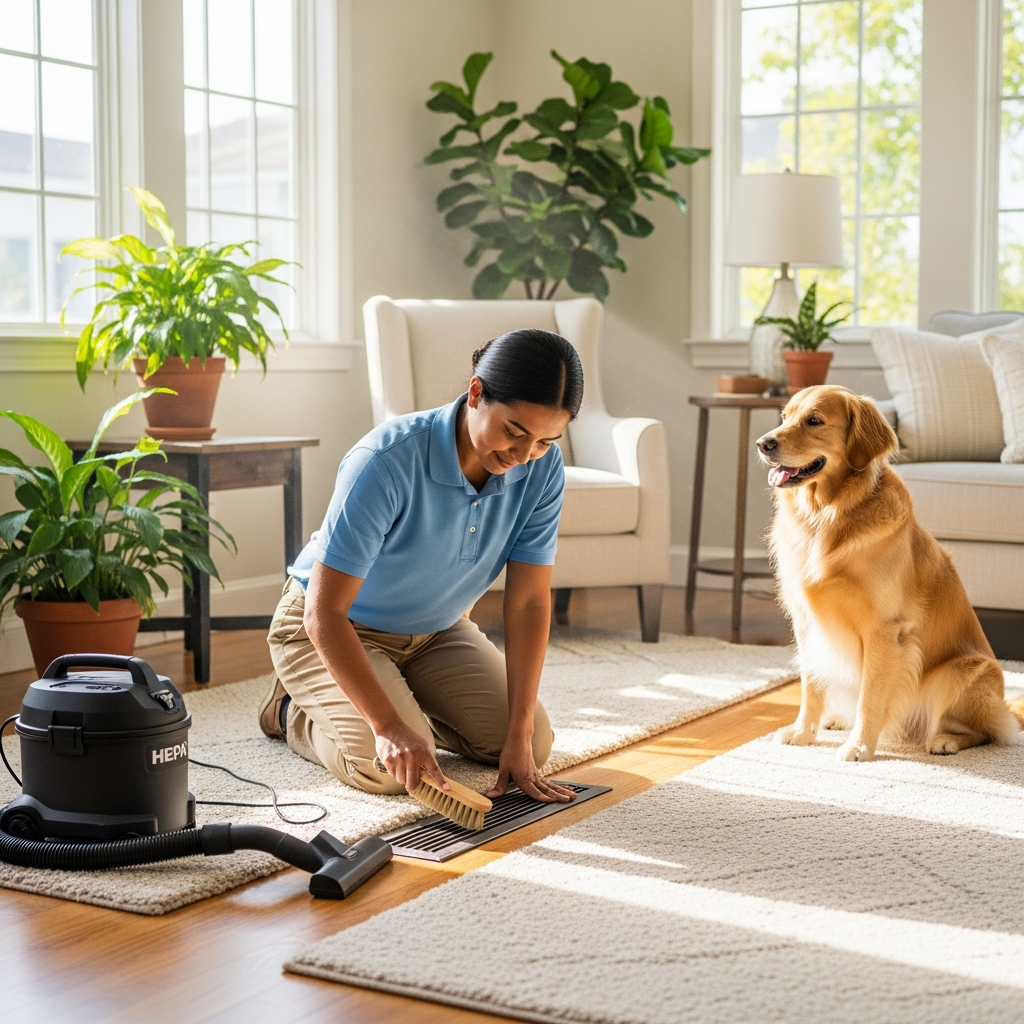
In Beverly Hills, homes present unique layouts that matter for allergy management. Classic residences may have older, winding duct runs and return cavities tucked into unexpected places; elegant new builds might rely on ultra-flush registers and hidden returns concealed behind millwork. Both require a careful, preservation-minded approach. A comprehensive service isolates the duct network, establishes negative pressure, and uses agitation tools suited to the duct material to loosen settled debris before capturing it in high-filtration vacuums. Registers and grilles are removed and cleaned; returns are addressed methodically; and sensitive rooms—nurseries, wellness spaces, or home offices—are sequenced to protect comfort throughout the day.
Residents often ask whether they’ll feel an immediate difference. Many do. One of the first things people report is a change in that initial startup scent; what was once a fleeting, musty tone gives way to a lighter, cleaner feel. Surfaces near vents show fewer dust streaks over the following weeks, and some notice less sneezing during calm indoor days. When this work is paired with better filtration and a reasonable replacement schedule, the gains become more consistent.
The local environment shapes the plan. Spring brings pollen from across the region; autumn’s warm, dry winds carry fine particulates along canyon roads; and year-round landscaping work gently feeds dust into the air. Homes with pets will see more dander and hair caught around return grilles, which can migrate into nearby branches if left untouched. Hosting plays a role too—when your home becomes a hub for gatherings, doors open, airflow shifts, and trace residues ride in on shoes and textiles. A targeted cleaning reduces the reservoir these patterns create.
Attention to adjacent components extends the benefits. While the focus is the duct interior, nearby elements—blower compartment, evaporator housing, and the immediate plenum—deserve a look. If these are notably dusty, addressing them keeps the just-cleaned ducts from receiving a backwash of debris at startup. Thoughtful technicians will explain what they see and why a small, coordinated step now can support longer-lasting comfort for allergy-prone households.
Filtration is the daily partner to duct hygiene. Filters that fit properly and are replaced on schedule do two important things: they catch the fine particulates that bother sensitive residents, and they slow redeposition inside ducts, extending the life of your cleaning. Your HVAC professional can recommend media with performance suited to your system’s airflow and to your household’s sensitivities, and ensure that the filter cabinet seals snugly so air doesn’t bypass the media at the edges.
Humidity and odor control also matter for comfort. While Beverly Hills isn’t known for swampy summers, localized humidity spikes can occur, especially in homes with lush landscaping or water features. If moisture lingers, dust can clump and settle more readily. Proactive HVAC maintenance—keeping condensate drains flowing, ensuring good airflow across the coil—helps maintain the dry, efficient environment that discourages accumulation. As for odors, removing settled dust often takes away the faint background scent that can aggravate sensitive noses.
For households with more pronounced sensitivities, sequencing and communication are key. A considerate crew will start in the most sensitive bedrooms first, then move to common areas, keeping those rooms closed so any stirred particles settle while they continue elsewhere. They’ll share progress images so you can see the work in spaces you rarely view, and they’ll coordinate with housekeepers so a light final dusting happens after registers are reinstalled. If you prefer fragrance-free practices, a reputable team will honor that preference without compromise.
Residents sometimes wonder if older ducts can be cleaned safely. The answer is yes, with patience and the right tools. Technicians avoid aggressive scraping and instead use gentle agitation to protect the duct interior, especially important in aging systems where materials may be more delicate. If they find sections that are compromised, they’ll explain the concern and suggest next steps with your HVAC professional—always with the goal of improving comfort without creating unnecessary disruption.
What does a well-executed day look like? It begins with a calm setup: pathway protection, corner padding, and a quiet walkthrough to confirm the day’s sequence. Negative pressure is established; registers are removed, cleaned, and set aside; branch lines are addressed methodically; and returns receive careful attention. Sensitive rooms are prioritized based on your family’s needs. When work wraps up, the team shares photos, offers practical tips for filter care, and confirms that the system starts cleanly with a light, fresh feel.
After cleaning, reinforce gains with everyday habits that respect sensitivities. Replace filters on schedule, consider shoe-free zones near key returns, and keep textiles—throws, pillows, and draperies—on a regular laundering rhythm to reduce fiber shedding. If you bring in fresh flowers or greenery for events, be mindful of pollen near prominent returns. None of these steps need to be onerous; together, they help your home’s airflow remain as calm and clear as possible.
In short, while no single step eliminates allergies, focusing on the airflow loop inside your home can be a meaningful part of a larger comfort plan. Duct hygiene reduces the reservoir of settled particulates; filtration captures what’s moving in real time; and consistent HVAC care keeps everything flowing the way it should. That partnership often translates into more peaceful mornings, easier afternoons, and evenings where windows can be opened without worry.
Frequently Asked Questions
Will duct cleaning eliminate my allergies? It won’t cure allergies, but it can reduce indoor triggers by removing settled dust and dander, helping filtration work more effectively. Many residents notice fewer flare-ups on calm indoor days after a thorough service.
How soon might I feel a difference? Some people notice a lighter scent and less dust near vents after the first system startup post-cleaning. Results continue to improve when paired with consistent filter changes and routine HVAC maintenance.
Is the process safe for older ducts? Yes, when performed with gentle techniques and the right tools. Seasoned technicians work patiently to protect aging materials and will advise if any sections merit separate attention.
Can I remain at home during service? Absolutely. Let the team know if you have sensitivities so they can sequence rooms accordingly and keep you comfortable throughout the day.
What else supports allergy relief? A snug, well-sealed filter cabinet with appropriately rated media, regular filter changes, and routine HVAC maintenance all complement duct hygiene to support cleaner, calmer indoor air.
Breathe easier with a local, allergy-aware approach
If you or someone in your household is sensitive to dust, dander, or seasonal pollen, a conversation with a Beverly Hills specialist can help you chart a clear, comfortable path forward. Share your priorities, from fragrance-free practices to room sequencing, and let a preservation-minded team tailor a plan to your home. When you’re ready, schedule professional air duct cleaning and enjoy the quieter, cleaner comfort that supports better days and easier nights.