
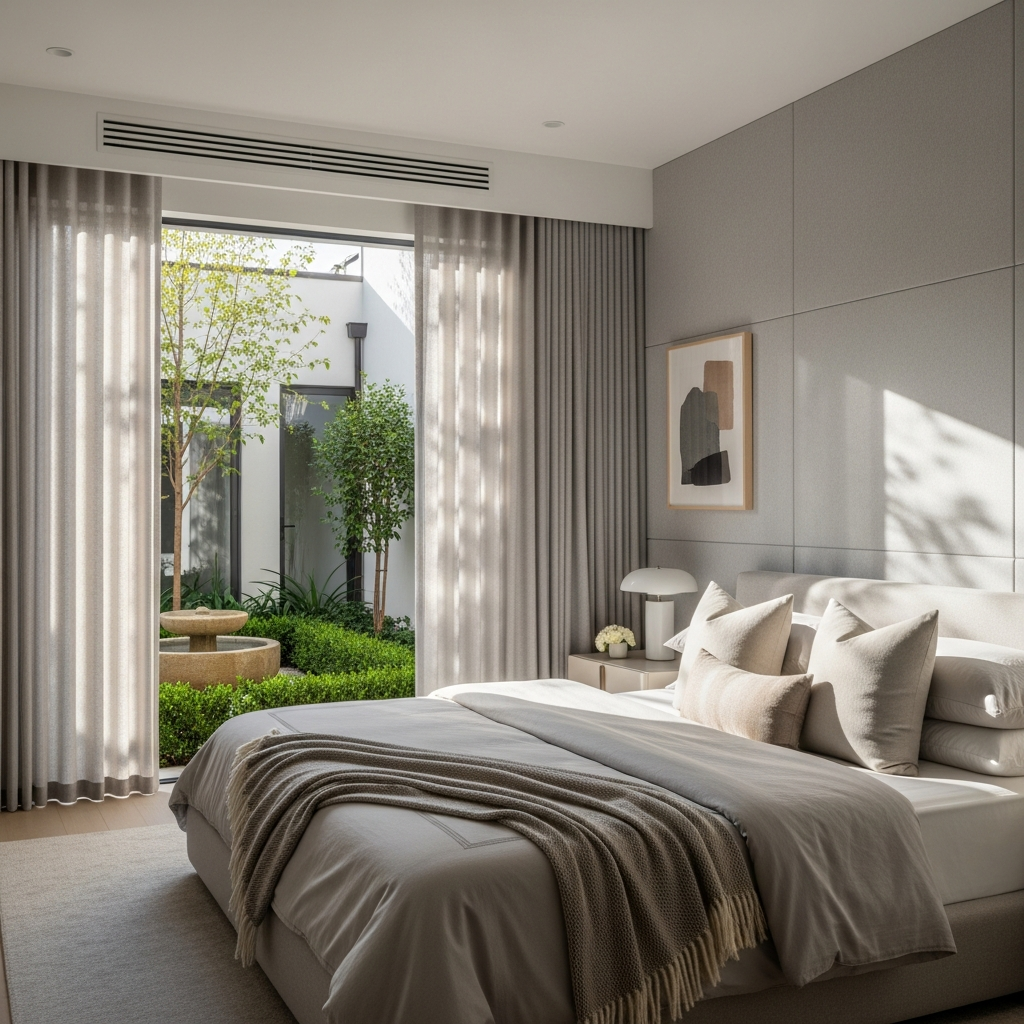
Ask any longtime Beverly Hills resident what defines comfort at home and you will hear the same phrase again and again: quiet elegance. In practice, that means walking from the foyer to the living room without ever noticing a draft, hearing a whisper of air if anything at all, and enjoying perfect temperatures that never draw attention to themselves. Achieving this kind of acoustical grace is entirely possible with today’s HVAC technology, but it is not accidental. It requires a design that understands architecture, microclimate, and the physics of sound. Over the years, working on hillside estates with commanding views and on low-slung mid-century gems with glassy pavilions, I have learned that the best quiet solutions are also the most efficient. They rely on careful sizing, thoughtful ductwork, and variable-capacity equipment tuned through commissioning. Above all, they blend into the fabric of daily life while delivering reliable air conditioning.
Silence begins outdoors. The placement of the condenser or heat pump determines how sound will travel across hardscape, reflect off walls, and filter through landscaping. On flat lots, condensers can be tucked behind hedges or architectural screens that diffuse sound without blocking airflow. In the hills, reflections from retaining walls can amplify noise if units are set too close, so we work with distances and angles that soften the acoustic path. Isolation pads, flexible connectors, and well-secured line sets cut down on vibration. Each choice makes small improvements that, together, achieve a profound difference indoors.
The Anatomy of a Whisper-Quiet System
Quiet performance starts with variable-speed compressors. Inverter-driven outdoor units throttle gently, running at the lowest speed needed to hold temperature and humidity. Because they do not surge to full output and shut off abruptly, the familiar on/off soundtrack of traditional systems disappears. Indoors, variable-speed air handlers keep airflow steady. That consistency helps with acoustics because pressure pulses in the ductwork are minimized. A right-sized system can then linger at low output, which is not only quieter but also more efficient and more comfortable.
Duct design is the next lever. Good ducts are generous, smooth, and quiet. We avoid sharp elbows where possible, choose larger trunks that keep velocities modest, and use sound-attenuating materials strategically. Returns get special attention: undersized or tortuous return paths create whistling and hiss. By providing the air handler with relaxed, straight return air, fan effort and noise both drop. Diffusers matter, too. We select models that deliver air in broad, gentle patterns, ensuring you feel the effect but rarely sense movement against your skin.
Architectural Harmony: Hiding the Mechanics
In homes where ceilings are works of art—coffered plaster, exposed beams, or millwork—air distribution must be nearly invisible. Slim ducted fan coils can sit behind access panels, feeding rooms through small linear slots that read as part of the design. Where retrofits are needed, we think like cabinetmakers, finding space in closets, above hallways, or inside built-ins. The goal is for you to stand in the room, admire the light, and never once think about where the cool air is coming from. When equipment is present but unseen and unheard, the house feels inherently more peaceful.
Busy rooms like kitchens and great rooms benefit from zoned systems so that airflow can be focused where people gather, keeping quieter zones, like bedrooms and studies, on a lower, nearly inaudible setting. With variable-capacity equipment, zoning does not mean blasts of air on command; it means a tailored baseline punctuated by soft increases when needed.
Commissioning: The Silent Finishing Touch
Commissioning is how quiet systems earn their voice—or rather, their lack of one. We measure static pressure, confirm airflow at diffusers, balance returns, and verify refrigerant charge. If registers hiss, we do not accept it. We find the cause: a restriction, a boot with a tight transition, or an elbow that should be a sweep. We trim velocities until the sound floor drops to a soft hush. Often, the sensation of quiet arrives alongside better efficiency because the fan no longer fights its ductwork.
Acoustic success also comes from attention to the building envelope. Door sweeps, window seals, and insulation in key partitions keep exterior sounds down, allowing the subtle noises of a poorly tuned HVAC system to be more easily perceived. When we address envelope issues, the entire soundscape improves, and the air conditioning can run at low levels without being noticed.
Mid-Project Lessons from the Field
Halfway through a renovation of a 1950s modernist home above Coldwater Canyon, the homeowners remarked that their previous system turned the living room into a wind tunnel every afternoon. We redesigned the supply layout, moved the returns out of line with the main seating area, and installed a variable-speed air handler to smooth delivery. The difference was immediate: the room felt calmed, as if the architecture had a chance to breathe. Thoughtful air conditioning is not only about temperature; it is about restoring the natural stillness that great spaces deserve.
On a Spanish Revival with thick plaster walls, we isolated the indoor equipment from structure-borne vibration by using anti-vibration hangers and soft connections at the plenum. Sound transmission through the framing dropped, and the bedrooms above became sanctuaries of quiet. These small interventions, multiplied across a project, yield a powerful result.
Filtration and Fresh Air Without the Noise
Clean air is part of quiet comfort. High-MERV filtration often increases static pressure, which can tempt designers to downsize filters or increase fan speeds, both of which can raise noise. The better path is to use larger filter cabinets with more surface area, allowing low face velocities that trap particles while keeping acoustics under control. For fresh air, dedicated ventilation units can exchange air through high-efficiency cores while using slow, quiet fans. When integrated with a variable-speed central system, background ventilation becomes nearly silent.
During wildfire season or dusty Santa Ana conditions, the ability to recirculate and filter efficiently is crucial. A quiet system is one you are more likely to let run continuously at low levels, which keeps particles at bay and temperature even. The result is a home that feels clean and tranquil, even when conditions outside are less forgiving.
Outdoor Spaces and Sound
Many Beverly Hills homes flow outdoors seamlessly. Patio conversations, poolside music, and the clink of dinnerware under the pergola make summer evenings special. We position outdoor units so their sound does not project onto these gathering areas. Landscaping can help: dense hedges and planter walls diffuse sound while maintaining service access. Where code and performance permit, we select low-sound condenser models and enable night quiet modes so the system reduces output during sleeping hours without sacrificing comfort indoors.
For hillside settings, we also watch for sound reflecting up the slope into neighbors’ windows. A slight rotation of the unit or a modest increase in setback can redirect sound in a way that makes a big difference. These adjustments reflect a core principle: quiet design is three-dimensional and site-specific.
Avoiding the Mistake of Oversizing
Oversizing is the enemy of quiet. It short-cycles, causes large airflow swings, and makes return grilles breathe audibly as the system surges. An inverter-based system matched to a careful load calculation avoids this. It idles, it hums, and it barely stirs the curtains. Add properly sized returns and thoughtfully chosen diffusers, and the house rests, cool and content, through long summer days.
Equipment maintenance also matters for acoustics. Dirty filters, matted coils, and loose fasteners all add noise. A service plan that keeps components clean and secure preserves the hush you worked so carefully to achieve.
Frequently Asked Questions
Q: What type of system is quietest for a luxury home?
A: Variable-capacity heat pumps or air conditioners paired with variable-speed air handlers are typically the quietest. Their ability to run at low speeds for extended periods minimizes both mechanical and airflow noise.
Q: Can ductless solutions be quiet enough for bedrooms?
A: Yes, high-end ductless units can be extremely quiet, especially at low fan settings. In many designs, we prefer slim ducted units for shared zones and ductless heads for isolated suites, balancing acoustics with architectural needs.
Q: How important is diffuser selection for noise?
A: Very. Diffusers control how air enters the room. Models with broad, gentle throw patterns help avoid drafts and high-velocity hiss. Placement away from seating and sleeping areas completes the acoustic picture.
Q: Will thicker filters make my system louder?
A: Not if designed correctly. Larger filter cabinets with more surface area maintain low face velocities, keeping noise low while capturing fine particles effectively.
Q: What role does commissioning play in quiet performance?
A: It is essential. Measuring and adjusting airflow, static pressure, and charge ensure the system operates in its quiet zone. Without commissioning, even premium equipment can sound louder than it should.
Invite Serenity Into Your Beverly Hills Home
If you are renovating, building, or simply ready to transform your home’s acoustic comfort, a quiet-focused design can make everyday life feel more refined. The right equipment, installed in the right places, and tuned to your lifestyle will fade into the background, leaving only calm, even cool.
When you are ready to explore a bespoke plan for silent, efficient air conditioning, let’s discuss your rooms, your routines, and your goals—and craft a solution that sounds like nothing at all.