
Replacing a central cooling system in Beverly Hills is less about swapping hardware and more about stewarding comfort through thoughtful design. When homeowners ask about replacement cost, the heart of the conversation is what it takes to deliver quiet, even cooling that harmonizes with architecture and lifestyle. From the first walk-through to the final commissioning, a good replacement project reads the home’s story—the way sun falls across rooms, how people gather, and where equipment can live discreetly. At the outset, it helps to revisit the essentials of air conditioning so the choices you make are rooted in function as much as form.
Unlike a first-time installation, a replacement begins with a legacy. Existing ducts, electrical infrastructure, and equipment locations set the stage. Sometimes that legacy is a solid foundation; other times it is a whisper asking for updates. The aim is to preserve what works, correct what does not, and install equipment that will serve faithfully for many seasons ahead. In Beverly Hills, where homes are a blend of classic and contemporary, the details matter as much as the headline decisions.
What drives the investment in a replacement
Several elements influence project scope. The most obvious is equipment selection—capacity, efficiency, and feature set. In many homes, variable-speed systems offer comfort benefits that are genuinely felt: stable temperatures, gentle airflow, and lower noise. Another driver is the state of the ductwork. Ducts that were acceptable years ago may be undersized for modern airflow targets, leaky at joints, or missing returns that balance pressure. Correcting these issues during replacement is often the most impactful way to improve comfort.
Placement also plays a role. Rooftop condensers have different access needs than side-yard units. Attic air handlers may require new platforms, improved drainage, and clear service space. If a previous installation squeezed equipment into a tight closet, a replacement offers the chance to rethink layout for longevity and ease of maintenance. Each decision shapes labor and materials, which in turn shapes total investment—without the need to quote numbers to understand how scope evolves.
Listening to the home: load, airflow, and return paths
A replacement project is an opportunity to recalculate the home’s cooling load, especially if windows were upgraded, insulation improved, or living patterns changed. Right-sizing is vital. Oversized systems can short cycle and leave air humid and clammy; undersized systems work hard and still leave rooms uneven. Airflow targets should be verified with the same rigor as equipment sizing. Returns must be adequate and properly placed; supply registers should deliver comfort without drafts. These steps are not optional niceties—they are the quiet mechanics of luxury-level comfort.
For multi-story homes, zoning can be refined or added. A floor that was always a little warmer in the afternoon might benefit from a dedicated zone with its own control logic. Done well, zoning allows gentle modulation rather than on/off extremes, and a replacement is the ideal moment to implement it.
Aesthetics, sound, and neighborly respect
Outdoor equipment lives in social spaces: near patios, along walkways, or on rooftops visible from windows and terraces. Sound ratings are one piece of the puzzle; the site itself completes it. Hard surfaces can reflect even a quiet unit, while soft landscaping absorbs and masks sound. A thoughtful plan aligns placement with how you use the space, and considers your neighbors as well. Concealment and screening should allow service access and airflow; beauty and function can coexist when designed together.
Indoors, register styles and grille choices offer a chance to align with interior design. The priority remains airflow, yet there is plenty of room to express a home’s character without compromising performance. This balance—between what you see and what you feel—is the art of replacement done well.
Controls and modern expectations
Smart thermostats and integrated controls are now part of everyday life. In Beverly Hills, many homes layer comfort with whole-home automation. Replacement projects should respect that ecosystem. The new system must communicate gracefully with existing scenes and schedules, and commissioning should include verification that handoffs between modes are smooth. If you prefer simplicity, a clean, intuitive interface can be configured to do a few things very well rather than many things half-heartedly.
Controls also influence how a system ages. Soft starts, extended low-speed operation, and humidity management reduce wear and allow equipment to run quietly. During replacement, these features should not be afterthoughts; they are central to how the system will feel and sound.
Permits, access, and considerate scheduling
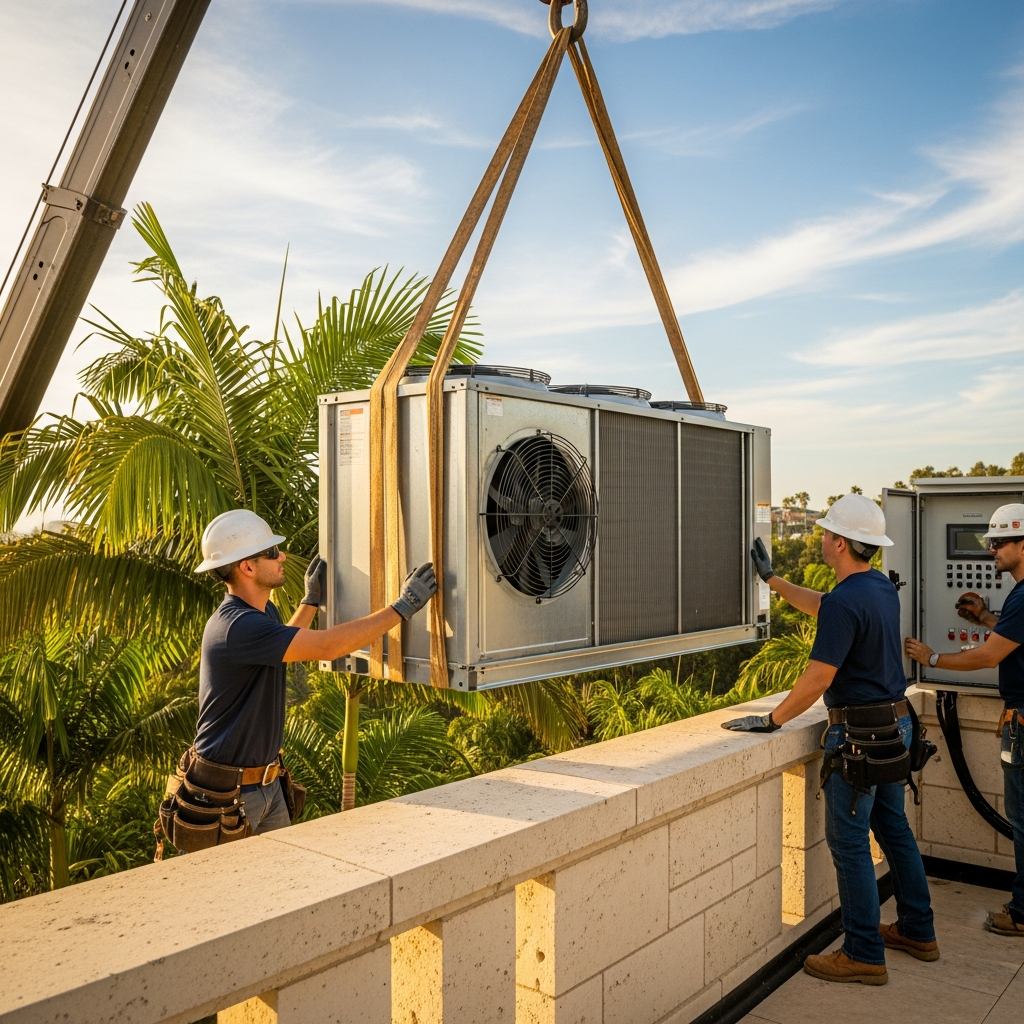
Local process expertise is part of the value. Permitting ensures safety and code compliance; experienced contractors navigate it smoothly and share clear timelines. Access planning is equally important. Rooftop work may require crane coordination and temporary street adjustments. Side yards can be narrow, with delicate landscaping that deserves protection. Attic work benefits from clean pathways and thoughtful staging. A good plan anticipates these details so your routine remains intact.
Inside the home, dust control and protection of finishes should be visible and consistent. Registers should be masked during dusty tasks, and the work area cleaned daily. The project tempo should feel calm and organized, not rushed, reflecting the respect due to your space.
Commissioning: proof that the design is real
When the new system starts for the first time, the job is not done. Commissioning measures tell the story: airflow verified with instruments, temperature split that matches design targets, refrigerant parameters that land in the right window, and control sequences that behave as intended. Documentation matters too—model numbers, filter sizes, line set routing, drain details, and safety devices. This is the moment where confidence is earned, because comfort is no longer theoretical; it is felt.
After the first week of operation, a brief follow-up is wise. A home breathes differently when real life resumes and doors open and close at their usual pace. A small tweak to a schedule or a balancing damper can polish the result from good to exceptional. Along the way, revisiting the foundations of air conditioning helps frame decisions with clarity rather than guesswork.
FAQ
Q: Do I need to replace ducts when replacing my system?
A: Not always, but ducts should be evaluated carefully. Many homes benefit from added returns, resealed joints, or resized runs to meet modern airflow targets and enhance comfort.
Q: How long does a replacement typically take?
A: Duration depends on scope—equipment accessibility, duct improvements, and control integration. Your contractor should provide a schedule and daily updates until commissioning is complete.
Q: Will a new system be quieter?
A: Properly selected and commissioned equipment can be significantly quieter, especially with variable-speed compressors and well-designed ducts. Placement and site acoustics also influence perceived sound.
Q: Can I keep my existing thermostat?
A: Sometimes. Compatibility depends on system type and features. Many homeowners choose to upgrade controls during replacement to take full advantage of modern capabilities.
Q: What should I expect after installation?
A: Clear documentation, a walk-through of controls, and a follow-up visit to confirm everything settles as intended. You should feel steady, even comfort without hot or cold spots.
Set the stage for years of quiet comfort
If your system is showing its age or struggling during warm afternoons, a thoughtful replacement can transform daily life at home. Start with a conversation about how you live, what comfort means in each room, and how the system should sound and feel. Then partner with a local team that treats your house with care and commissions their work with pride. When you are ready to explore options and map a plan that fits your space, connect with specialists in air conditioning who understand the standards and subtleties of Beverly Hills.