
When your home in Beverly Hills starts to feel warmer than it should, you notice it quickly. The rhythm of the day—morning light over the hills, afternoon sun along tree-lined streets, and the gentle evening breeze—relies on reliable cooling to stay comfortable. As someone who has spent years helping neighbors from the Flats to the hills above Sunset, I can tell you that timing is everything when it comes to repairs, and understanding the factors that shape your overall investment and schedule is the surest path to a calm, confident experience. If your system is acting up right now, you may be tempted to search fast, choose fast, and hope for the best. There is a better way. Take a breath, learn what matters, and begin with clarity. And because reliable guidance matters, let me point to a resource I trust whenever the topic is, quite simply, air conditioning.
The first thing to appreciate about repair timing in Beverly Hills is our microclimate. Ocean breezes, canyon winds, and seasonal heat spells create temperature swings that put different kinds of stress on systems from one neighborhood to the next. Homes closer to Wilshire may see more urban heat retention by late afternoon, while properties tucked into Benedict Canyon can cool suddenly at night, leading to frequent cycling. Those variations influence how a system behaves and, in turn, how technicians schedule diagnostics and repairs. An approach that is respectful of your neighborhood’s quirks consistently delivers better results and keeps surprises to a minimum.
When Rapid Response Truly Matters
There are repair scenarios where a same-day or near-immediate visit is appropriate, and they’re not always dramatic. A unit that is short-cycling without delivering cool air can indicate a range of issues, from a control board concern to a sensor problem. A system that suddenly grows loud may be protecting itself from damage or, if ignored, moving closer to it. Water around the air handler or along a closet wall may be condensate management that has gone sideways, not a plumbing leak. The earlier a professional arrives to assess these issues, the greater the chance of a straightforward, minimally disruptive solution. In practice, that means calling when you first notice a change rather than waiting for a full breakdown at the warmest point of the week.
Our community’s housing stock also shapes timing. Many homes here are exquisitely finished, and carefully concealed equipment is commonplace. Reaching an air handler behind custom millwork or in a tight attic requires finesse and sometimes a second technician for safe access. None of this is a reason to worry; it simply means that a thoughtful scheduler will ask the right questions up front—where the unit lives, whether ladders are required, how parking or driveway access works—so that the first visit is productive and respectful of your property.
Diagnostics That Respect Your Time and Home
A seasoned technician begins with conversation. When did you first notice the change in performance? Have you adjusted the thermostat settings recently? Did the problem coincide with a windy day, a heat wave, or routine housekeeping that might have stirred dust? Local pros know that a methodical walk-through—listening to the indoor unit, checking airflow at a few registers, and observing the outdoor unit’s startup behavior—often narrows the field before tools even come out of the truck. Once gauges and meters are connected, the goal is to confirm rather than guess, and to lay out a clear plan that matches your schedule and privacy preferences.
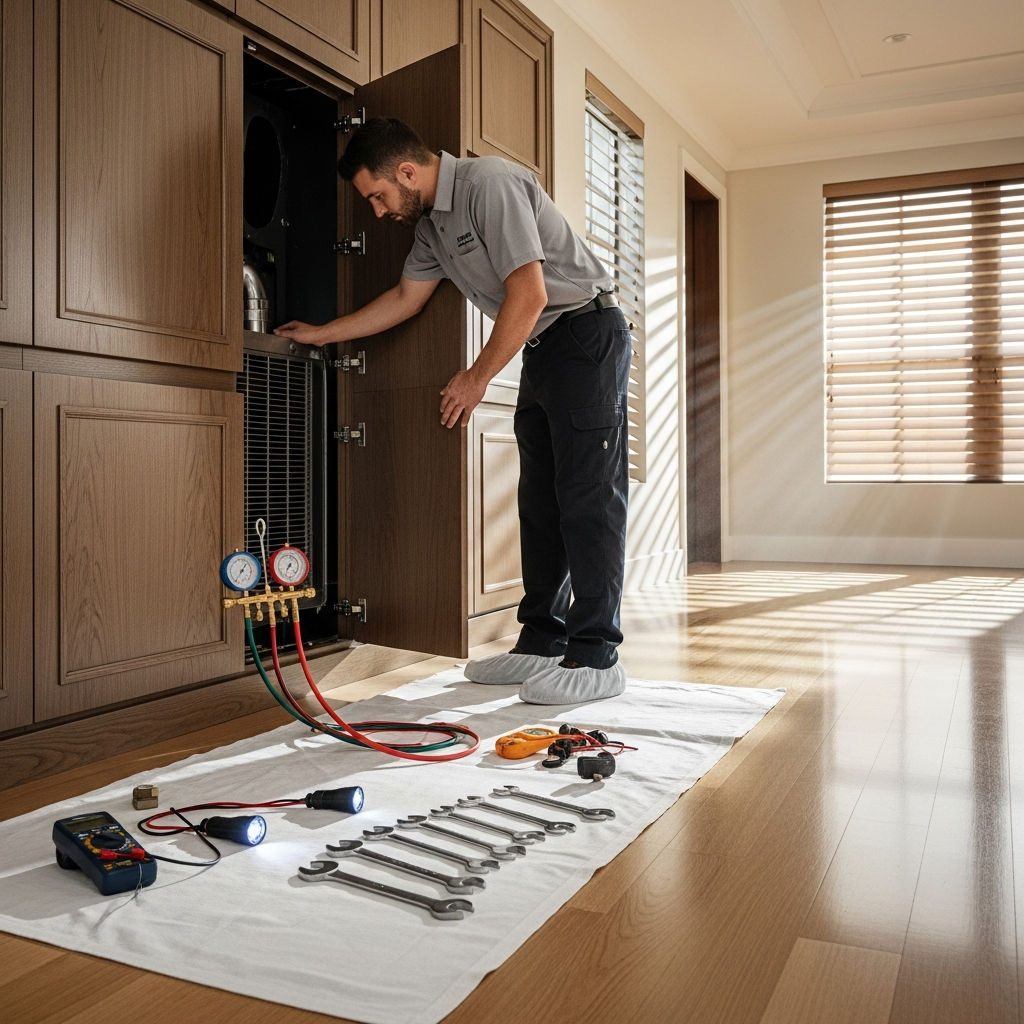
One of the common misunderstandings about repair timing is the assumption that a longer visit always signals a bigger issue. In reality, a technician who takes an extra moment to verify readings, check wiring integrity, and confirm airflow often prevents a second visit entirely. Beverly Hills homeowners expect a finish that looks as good as it functions, so tidy work practices—drop cloths under the air handler closet, careful coil cleaning, and quiet, respectful movement through the home—are as important as the technical steps themselves. This ethos saves time across the entire experience because it reduces the likelihood of collateral messes or callbacks.
How Architecture and Aesthetics Influence Repair Plans
From Spanish Revival residences to mid-century gems and glassy new builds, Beverly Hills architecture is a joy to work in, but it demands planning. Older plaster walls and original wood floors may limit how panels are removed or where condensate lines run. In newer homes, custom control systems and integrated thermostats can add a layer of coordination. Technicians used to our local styles carry protective materials, know how to move through tight stairwells with sensitivity, and account for HOA rules where applicable. All of this folds into repair timing: allowing a few extra minutes for safe access, or an additional step to coordinate with a home manager, can mean the difference between a rushed patch and a solution that respects your space.
Ventilation pathways are another local nuance. In hillside homes, longer duct runs or turns may mean a small mechanical issue presents as a much larger comfort problem at the far end of the house. A professional who understands how to measure static pressure, assess duct condition, and listen for telltale turbulence in the supply plenum can trace a symptom back to its root without unnecessary disassembly. That efficiency shortens repair time, minimizes disturbance, and protects finishes.
Seasonal Patterns and Scheduling Windows
Timing is also seasonal. In late spring, as households shift from gentle open-window evenings to more consistent cooling, lightweight issues emerge: a sluggish thermostat, a filter no one remembered to change, or a drain line with early buildup. In mid-summer, sustained demand can highlight parts that have been quietly weakening—contactors that arc, capacitors that struggle during peak heat, or fan motors that lost their edge after a dusty Santa Ana event. Experienced local teams anticipate these patterns and staff accordingly, building service windows that reflect peak call volume without compromising individualized attention. When you call, sharing a bit of context about your day—school pickups, deliveries, or privacy windows—helps create a schedule that keeps your life flowing.
And when it comes to the idea of overall investment in a repair, context is king. The question is seldom a single line item; it’s an understanding of the whole system: age, efficiency, maintenance history, and the comfort you expect. A well-documented inspection gives you a plain-English explanation of what your system needs now versus what can be scheduled later. That clarity empowers better decisions and avoids surprises down the road.
What You Can Do Before a Technician Arrives
Small steps go a long way without venturing into DIY territory. If it is safe, confirm the thermostat is set to cool, ensure any smart-home schedules aren’t overriding your temperature preference, and check that interior doors to key rooms are open to allow airflow. If you know where the air handler closet is, clearing a path saves precious minutes and limits jostling of nearby furnishings. Gently ask household members if anyone has moved vents or closed registers to redirect airflow. These simple observations provide valuable clues to the technician and can often prevent unnecessary labor once the visit begins.
For systems that are quiet but not cooling well, avoid turning them off and on repeatedly. Rapid cycling can add stress to components and create misleading symptoms. Note any unusual smells—dusty, musty, or electrical—so you can relay them accurately. If condensation is visible, set a towel in place, take a quick photo for reference, and resist the urge to open panels. A calm, observant approach sets the table for an efficient diagnostic visit.
Common Repair Scenarios in Beverly Hills
After years of local service calls, a few themes repeat. One is airflow restriction: a filter that did its job too well for too long, or a coil that collected fine dust during a windy week and now needs a careful cleaning. Another is controls: thermostats that are perfectly modern but slightly misconfigured for the home’s daily rhythm, or a sensor tucked in a sunlit hallway that sends mixed signals. Outdoor units perched near hedges often face leaf litter even in well-tended gardens, and a fan motor that ran hot for a while may now be asking for attention. None of these are mysteries to a local pro; they are patterns recognized and resolved with measured, respectful steps.
Occasionally, an older system presents a decision point. If the unit performs well after a targeted repair but shows signs of age, your technician should explain the tradeoffs of continued upkeep versus planning for eventual replacement. That conversation is not about pressure; it is about balancing reliability and comfort over time. With a clear maintenance plan and periodic evaluations, many homeowners enjoy comfortable interiors for years without rushing into major changes.
Coordination, Communication, and Mid-Project Adjustments
Repairs in Beverly Hills often involve a bit of coordination: a house manager who prefers updates via text, security staff at the gate, or an HOA requesting a brief notice before outdoor work begins. These are normal considerations, and a seasoned team will fold them into the plan. If a part is needed, clear communication about lead time and interim comfort strategies is essential. Perhaps the guest wing can be prioritized for airflow while a specific component is sourced, or temporary measures can keep living spaces pleasant during the warmest hours.
It is also here, in the middle of the project, that a trusted resource becomes invaluable. Whether you are fine-tuning a repair plan or simply want a second read on the health of your system, reliable local information about air conditioning keeps decisions grounded. Good information reduces anxiety and speeds resolution, because everyone is aligned on the facts.
Noise, Neighbors, and Neighborhood Etiquette
We all value quiet here. While repairs are rarely loud, thoughtful scheduling and equipment handling can prevent unnecessary disturbance. Technicians trained to stage tools carefully, power down respectfully, and communicate before running tests outdoors keep neighborly goodwill intact. If your property has strict guidelines or preferred hours for service, sharing those in advance helps the team adapt seamlessly. This is part of the Beverly Hills rhythm: discretion, calm, and professionalism.
Once the immediate issue is resolved, a quick conversation about ongoing care is wise. Gentle reminders about filter changes, the best places to store spare filters out of sight, and the ideal thermostat ranges for overnight comfort can make a meaningful difference in day-to-day performance. Thoughtful coaching is not a sales pitch; it is a courtesy that protects your investment and reduces future interruptions.
How Long Will It Take?
Homeowners often ask how long a repair will take, and the honest answer is that it depends on access, the nature of the issue, and parts availability. A clean, well-maintained system with a straightforward symptom may be resolved in a single visit. A more involved repair, especially in a tightly finished space or a system with specialized components, could require a brief return visit with the exact part in hand. The crucial element is transparency: a clear explanation after diagnostics, an agreed plan, and updates if anything shifts. When those pieces are in place, the experience feels calm and predictable.
During warmer stretches of the year, windows for same-day appointments fill quickly, but reputable local teams plan for surge capacity and keep priority slots for true comfort interruptions. Sharing flexibility—perhaps allowing access while you step out—can open earlier windows. Conversely, if privacy during a specific hour is non-negotiable, a good team will honor that and coordinate accordingly.
Safeguarding Finishes and Delivering a Polished Result
Beyond function, Beverly Hills homeowners care deeply about the home’s look and feel. That means technicians who move as if they live there: shoe covers, careful ladder placement, clean hands before touching walls or thermostat frames, and a final walkthrough to ensure that grilles, panels, and closet doors are aligned as neatly as when they arrived. The time taken for this polish is time well spent; it confirms that the repair is not merely complete but complete with care. Many clients tell me that this, more than anything, lowers their shoulders and restores calm.
At the end of a visit, you should feel informed. What was the cause? What changed today? What should you watch for, and when would it be wise to check in again? These questions are simple, and a good technician will answer them plainly. Clear documentation—rather than jargon—helps you communicate with family members, property managers, or future technicians, keeping the home’s comfort story intact.
Planning for the Season Ahead
Once your system is operating smoothly again, it is helpful to adopt a seasonal mindset. Light touchpoints before the hottest weeks—filter replacements, a quick visual on the outdoor unit, a thermostat check—can make the difference between an uneventful summer and a mid-season interruption. In homes where the system is concealed, placing a tiny reminder on a calendar or with household staff keeps those gentle habits in motion.
It is equally important to consider indoor air quality. Regular service visits offer a chance to evaluate whether enhanced filtration or a small adjustment to airflow balance would better support your lifestyle. Beverly Hills homes entertain, relax, and work hard; the system should match that rhythm, delivering quiet comfort and clean air without fuss.
Frequently Asked Questions
How quickly can someone arrive if my system stops cooling during a heat spell? Response windows depend on daily call volume and access, but local teams build capacity for warm-weather surges and often reserve priority slots for urgent comfort interruptions. Sharing your schedule and any access details when you call helps secure an optimal window.
What signs suggest I should stop running the system and call? Loud new noises, warm air from the vents when cooling is requested, unusual smells, water near the air handler, or frequent on-and-off cycling are common indicators. If you notice any of these, it is wise to call promptly and keep the system off until guidance is provided.
Is it better to repair or plan for a replacement if my system is older? The answer depends on performance, reliability, and your long-term comfort goals. A thorough diagnostic and honest conversation about the system’s condition will clarify whether a targeted repair aligns with your expectations or whether planning for an upgrade makes more sense in the near future.
Will a repair affect my finishes or décor? A careful technician will protect floors, walls, and trim, and will restore panels and grilles neatly. If access requires extra caution—such as moving a delicate piece or laddering near original plaster—those needs should be discussed before work begins and factored into the plan.
What can I do today to help the next visit go smoothly? Ensure the thermostat settings are correct, clear a safe path to the indoor unit, share any observations about noises or smells, and let your service team know about parking and access. These small steps save time and support a successful visit.
Can a thermostat or control issue mimic a larger mechanical problem? Absolutely. Settings, sensors, and schedules can create symptoms that resemble more serious concerns. That is why methodical diagnostics—observing behavior before and after adjustments—are essential before committing to a repair path.
How should I think about timing if a special part is needed? Ask for a clear update on availability and a plan for comfort in the interim. Sometimes a temporary adjustment balances temperatures in key rooms while you wait. A good team will communicate if timelines shift and will schedule promptly when the part arrives.
Do routine service visits really prevent breakdowns? They help significantly. Clean coils, correct airflow, and properly calibrated controls reduce stress on components and make it easier to spot small issues before they grow. Over time, these habits support steady comfort and fewer interruptions.
Ready for Reliable Comfort?
If your home feels warmer than it should or you simply want a confident assessment before the next warm spell, reach out to a trusted local team that understands the pace and polish Beverly Hills deserves. From discreet scheduling to respectful, well-documented work, the right partnership restores comfort without drama. If you would like to learn more or begin a conversation about your home’s air conditioning, now is the perfect time to take that first step and breathe easier.