
Air Conditioning Problems and Fixes in Beverly Hills, California
Every summer, as jacaranda petals line the curbs and late afternoons glow across terracotta roofs, I get the same calls: the family room feels stuffy, the guest suite on the west side is five degrees warmer, or the system that usually purrs has started clicking and sighing. Living and working in Beverly Hills, I have learned that air conditioning problems are as much about the home as they are about the equipment. The best fixes begin with patience—a willingness to listen to the symptoms and read the home’s architecture as carefully as the gauges.
Our city’s homes are distinct. A 1920s Spanish Revival with thick plaster walls behaves differently under heat load than a 1960s post-and-beam with wide glass and shaded eaves. A discreetly hidden condenser might be pressed by hedges and vines; an air handler tucked into a tight closet needs extra attention to condensate management to protect surrounding finishes. Diagnosing problems in Beverly Hills requires equal parts craft, respect for the setting, and clear communication.
Uneven Cooling Across Rooms
Uneven cooling is a classic complaint, particularly in larger residences and those with west-facing glass. While many assume the equipment is at fault, the cause often lies in airflow dynamics. I start by checking static pressure, confirming that returns are not restricted, and ensuring that supplies are balanced. In multi-zone homes, a sticky damper or a sensor that has drifted from calibration can cause a slow divide between spaces. Moving a thermostat or adding a remote sensor can realign perceived comfort with actual conditions.
When ducts run through attics or concealed chases, I verify that insulation is intact and that runs have not sagged or crimped. Even a small collapse can starve a distant room. The fix may be as simple as re-supporting a run or sealing a leak that bleeds cool air into an unused cavity. When I correct these issues, the change is immediate: registers sigh rather than rush, and previously stubborn rooms settle into the same quiet comfort as the rest of the home.
Short Cycling and Long, Ineffective Runs
Short cycling—the system turning on and off too frequently—points to issues ranging from oversizing to restricted airflow or a failing control. I confirm sizing against the home’s load profile, then drill into filters, coils, and blower operation. A wrong filter or a clogged evaporator will force the system to strain, tripping safeties and shortening cycles. On the other hand, a unit that runs long but fails to pull down temperature often suffers from low refrigerant charge, a tired compressor, or a condenser gasping through leaves, dust, or misplaced fencing. Cleaning and restoring correct charge, combined with a review of condenser clearance, frequently resets performance without drama.
In homes with variable-speed equipment, I examine control settings to ensure the system uses its full range. Too-conservative profiles may keep the unit loafing when a brief ramp would deliver a crisp, even cool-down with less overall energy.
Noise: Clicks, Hums, and Whistles
Noise is the language of mechanical systems, and it deserves translation. A sharp click on start may be a contactor nearing its end; a persistent hum can trace back to a motor bearing or transformer. Whistling registers tell of high static pressure or undersized grilles. In Beverly Hills, where quiet interiors are prized, I give noise complaints a full measure of respect. Fixes range from replacing electrical components and adjusting blower speeds to reworking a return path so the system breathes more naturally. The goal is not just cold air, but cold air delivered with grace and hush.
Sometimes, what sounds like a failing system is simply a resonance transmitted through framing. Replacing isolation pads under air handlers or condensers, or adding a thin acoustic buffer at a strategic mounting point, can make a startling difference without touching the heart of the equipment.
Water Where It Should Not Be
Water around the air handler, especially in closets or finished utility spaces, is a red flag. Condensate drains in our area collect not only moisture but a fine, persistent film of dust and organic matter that feeds algae. A float switch should halt the system before water spills; if it does not, I test, replace, or add one. Clearing the line, confirming slope, and insulating cold sections to prevent sweating in humid spells protect ceilings and built-ins. These are quiet fixes that save homeowners from the kind of repair no one wants—the one that ends with patching plaster or refinishing hardwoods.
For rooftop or attic installations, I check drain pans and secondary safeties. A clogged primary can overflow into a pan that should trip a switch before any damage occurs. If it does not, we correct that instantly and test again under simulated load to confirm protection is real, not theoretical.
Frozen Coils and Weak Airflow
Ice on refrigerant lines or a frosted evaporator coil is the system’s way of saying, “Slow down.” The causes include low airflow from a clogged filter, a dirty evaporator, or low refrigerant charge from a small leak. I thaw the coil carefully, correct the immediate cause, and then decide if a deeper leak search is warranted. In older systems, dye tests or electronic sniffers help locate the issue; the correct fix is a clean repair, not a recurring top-off that masks the root problem.
Weak airflow can also be a duct story. In attics that see large temperature swings, joints can open with seasonal expansion and contraction. Sealing these and rebalancing supplies returns vigor to the system without extra strain on the blower.
Electrical Failures Under Summer Load
Capacitors, contactors, and relays are small, unassuming parts that carry big responsibility. Under peak heat, they fail most often. I check microfarads against rating, inspect contact points for pitting, and verify that wiring is secure and protected. Replacing these components can feel mundane, but it is the kind of fix that turns a sweltering afternoon into a calm, cool evening without fanfare.
When a compressor refuses to start, I evaluate start components and windings methodically. A gentle approach—no rushed guesses—safeguards expensive equipment and ensures that when we do replace a part, it is truly the culprit.
Older Refrigerants and Planning Ahead
Systems relying on legacy refrigerants present a decision point. While many continue to perform well with attentive care, parts and compatible refrigerants become more complex over time. I present options clearly: continue service with a plan for eventual upgrade, or schedule a replacement on your terms rather than during a heat wave. Comfort is not only temperature; it is the confidence that your system will answer when you need it most.
Aesthetics, Access, and Respect for the Home
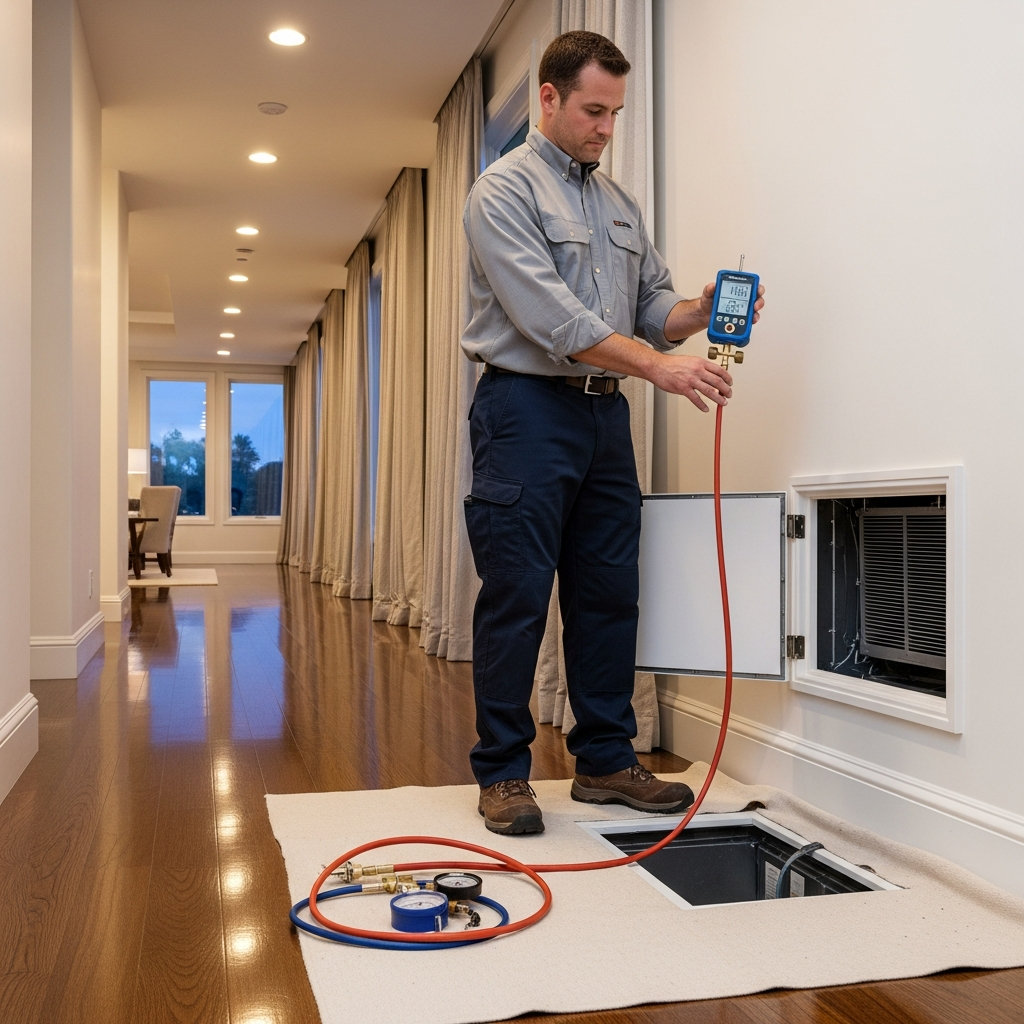
Fixes in Beverly Hills include choreography: where tools rest, how drop cloths are placed, how hedges near condensers are protected during cleaning. Even small service calls deserve that respect. Inside, I protect floors and corners, keep noise down, and leave the space as tranquil as I found it. Solving a technical issue should never introduce a design problem.
Prevention: Turning Problems into Footnotes
Many of the problems I fix could have been footnotes with a steady maintenance rhythm. A spring inspection catches drains before they clog, checks electrical values before components drift out of range, and cleans coils so heat transfers freely when summer peaks. Post-season checks confirm that the system is ready to rest without surprises building in the background. Prevention turns emergency calls into scheduled, convenient tune-ups.
Frequently Asked Questions
Why is one room always warmer? It is usually airflow or sensor location. A damper adjustment, a duct support, or a relocated thermostat can even things out quickly. Sometimes window exposure calls for a subtle schedule change in the afternoon.
What causes a system to cycle on and off too often? Oversizing, restricted filters, dirty coils, or control issues. A review of airflow and equipment settings usually reveals the path to steady operation.
How do I stop water leaks from the air handler? Ensure the condensate line is clear, safeties are functional, and insulation prevents sweating. Annual flushing and testing are simple safeguards.
Are loud clicks and hums serious? They are clues. Some signal minor electrical wear; others point to parts approaching failure. Addressing them early protects major components and restores quiet.
Should I be worried about older refrigerants? Not worried—prepared. Continue service if performance is good, but plan for an upgrade on your schedule, with comfort and aesthetics in mind.
Can landscaping affect performance? Yes. Condensers need clear space to breathe. Gentle trimming and respectful cleaning around outdoor units improve performance and reduce noise.
Ready to Solve the Issue and Restore Calm?
If your system is not keeping pace with the day or a new sound has caught your ear, let’s take a focused, respectful look and return your home to its quiet best. With experienced diagnostics and careful, lasting fixes, your air conditioning can settle back into the background—cool, steady, and ready for every Beverly Hills afternoon.