
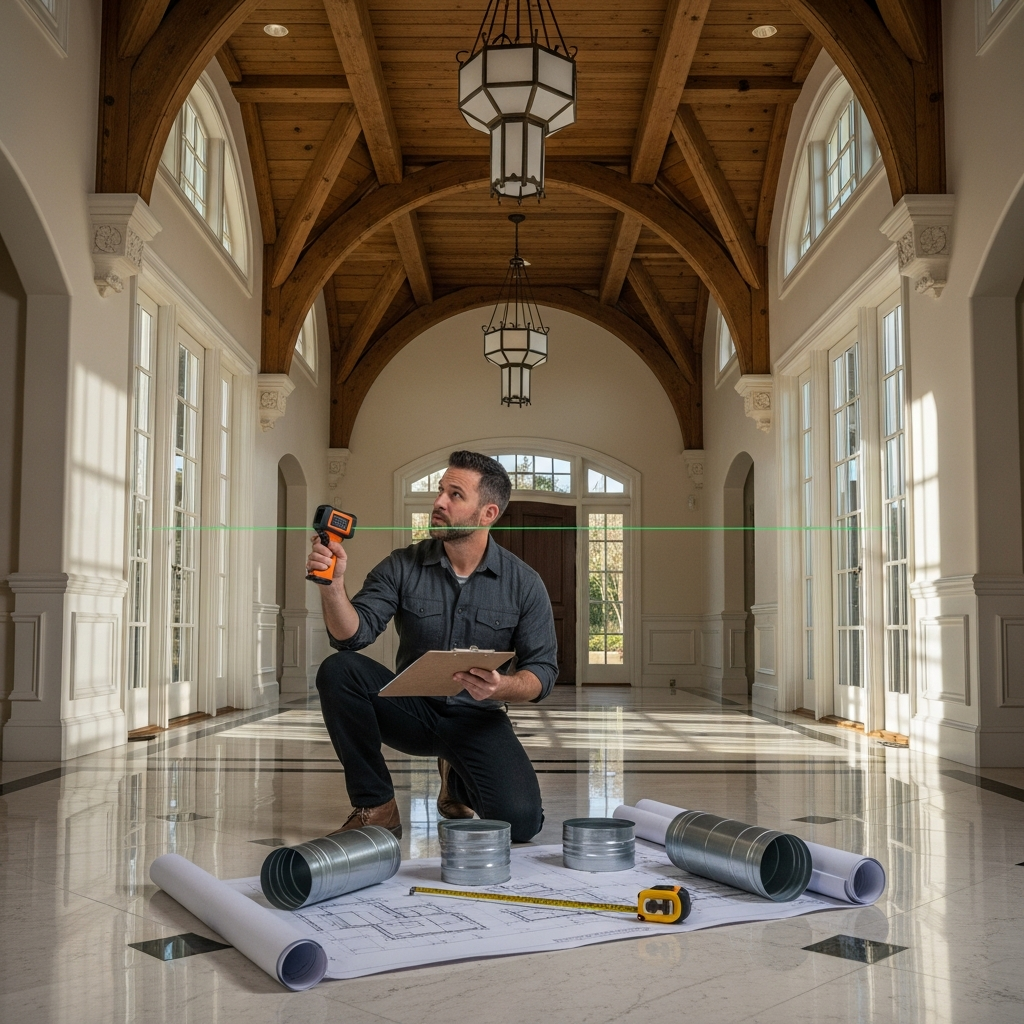
Understanding What Shapes Installation Decisions
In Beverly Hills, no two homes are alike, and that truth shapes every conversation about installing new cooling. While many people begin by asking about numbers, the most valuable first step is to understand the forces that influence those numbers—architecture, access, comfort goals, and the level of finish you expect. When you see how these elements interact, you gain clarity and control. You also set the stage for a result that feels tuned to your life rather than forced into it.
Consider how your home lives through the day. Large glass exposures may flood a room with light and warmth after lunch, while shaded courtyards stay calm. High ceilings and open-plan spaces ask for different strategies than cozy, segmented interiors. Walking through the house with an experienced local pro begins to reveal where cooling should be strongest, where it can be gentle, and what pathways are best for ducts, registers, or alternative solutions. If you want a primer that keeps the conversation grounded in local realities, explore resources focused on Beverly Hills air conditioning before you compare options.
Home Size, Layout, and Comfort Priorities
Square footage is a starting point, not a verdict. Two homes of identical size can carry different loads if one is wrapped in glass and the other nestles behind thick hedges. The way you use the house matters too. A home theater that runs in the evenings, a gym that warms quickly in the morning, or guest suites that demand independence all influence the design. Zoning, duct sizing, and equipment staging are tailored to these patterns so that your rooms feel balanced and responsive without wasting effort where it is not needed.
Older homes sometimes ask for a gentler touch, preserving plaster and trim while introducing better air distribution. Newer builds may allow for concealed chases that keep ceilings pristine. These paths shape not just the look but also the complexity of the work.
Access, Architecture, and Aesthetics
Many Beverly Hills residences sit on hillside lots or hide mechanical spaces behind elegant finishes. Access affects planning from the first sketch. Rooftop placements require thoughtful logistics, from equipment lifts to protective staging over delicate surfaces. Tight side yards and narrow lanes inform how crews move and where condensers can breathe quietly without intruding on courtyards or terraces. The choice to hide equipment behind screens must respect airflow; discretion and performance have to meet.
Inside, supply and return positioning that complements the architecture makes comfort feel effortless. In rooms where symmetry or specific sightlines matter, custom grilles or carefully selected registers can integrate seamlessly, preserving the design language while enhancing comfort.
Ductwork: The Silent Framework
If your project includes ducted distribution, these pathways are the skeleton of your comfort. Well-sealed ducts with the right diameters deliver even air, shorten runtimes, and calm acoustics. In homes with older or improvised ducts, strategic improvements can transform performance without changing the main equipment. In expansive or multi-level homes, dedicated returns ensure each zone gets a true reading of its conditions, not a blended guess that leads to overcooling elsewhere.
Where ducts are impractical or intrusive, alternative solutions like ductless zones can supplement or even anchor the design. The goal is always the same: precision where it matters, subtlety everywhere else.
Equipment Choices and the Feel of Comfort
Capacity is only part of the story. How equipment behaves—ramping gently or snapping on and off, whispering or announcing itself—defines the daily experience. Variable-speed and staged systems smooth out temperature swings and reduce drafts, which is particularly valuable in rooms with soaring ceilings or significant glass. Noise expectations also guide choices; serene interiors call for equipment and placements that honor that quiet.
Indoor air quality considerations join the conversation naturally. Filtration, ventilation, and humidity management not only protect health and finishes but also support the system’s efficiency over time. Matching these features to your lifestyle keeps the whole home in balance.
Electrical, Structural, and Code Considerations
Panel capacity, dedicated circuits, seismic anchoring, and clearances are the behind-the-scenes details that ensure both safety and longevity. Beverly Hills projects also intersect with Title 24 energy standards and local permitting requirements. A well-prepared proposal will outline these elements plainly, demonstrating how the design satisfies regulations without compromising aesthetics. Coordinating inspections and approvals with minimal disruption is central to a smooth experience.
When rooftop placements are involved, structural review confirms that weight and vibration remain nonissues. Proper pads, isolation, and fastening count just as much as the model number on the nameplate.
Site Logistics and Timing
Busy households and sensitive schedules influence installation phases. Protecting finishes, planning crew access, and sequencing trades to reduce overlap keep the process calm. For hillside properties, transport routes for equipment and materials are mapped ahead of time. Neighbors, HOA guidelines, and local noise expectations are part of planning as well. You should expect a timeline that feels organized and respectful of daily life.
Commissioning receives its own day in the spotlight. Verifying airflow, calibrating controls, and confirming refrigerant and electrical readings make comfort predictable from the first week, not the third. Detailed handoff materials help you operate the system with confidence.
What to Look for in Proposals
Clarity beats complexity. Look for a narrative that explains why each choice was made: equipment type, zones, duct sizes, register styles, and condenser placement. Detailed notes on how finishes will be protected, how access is achieved, and how condensate will be managed tell you the team cares about execution, not just concepts. Side-by-side model lists are easy to produce; craftsmanship is revealed in the plan for the work you will not see once the project is complete.
Ask how the design addresses the unique parts of your home. If you have a sun-drenched salon, what keeps it comfortable at 4 p.m. without chilling a library across the hall? If a guesthouse runs on a different schedule, how will controls keep energy use honest and comfort generous? The answers reveal whether the proposal is tailored or templated.
Living with the Result
Great installations feel invisible. Air arrives where and when it should, rooms match their purpose, and background sound fades into a soft hush. Controls are intuitive rather than clever for their own sake. Maintenance is straightforward, with filters accessible and drains clear. Over time, the right design pays off not just in even temperatures but also in the way the home holds itself—collected, poised, and welcoming.
If, after installation, a room’s behavior surprises you, adjustments happen. Small balancing moves, schedule refinements, or a nudge in blower speed can fine-tune the performance so that the promise on paper becomes the comfort you feel every day.
Frequently Asked Questions about Installation Factors
What are the biggest drivers behind installation decisions in Beverly Hills? Architecture, access, and comfort goals lead the way. Sun exposure, ceiling height, room use, and the desire to protect finishes influence distribution choices, equipment behavior, and placement.
Can existing ducts be reused?
Sometimes. A thorough inspection checks for size, leakage, insulation, and routing. Selective improvements can elevate performance dramatically, but when ducts compromise results or aesthetics, alternative pathways may be the wiser path.
How long does a typical installation take?
Schedules vary with scope and access. Projects that coordinate roof work, electrical updates, or discreet finish protection often require additional phases. A clear timeline, shared in advance, helps your household flow around the work comfortably.
What role do permits and inspections play?
They ensure safety, efficiency, and alignment with local expectations. Experienced teams manage the process quietly and efficiently, coordinating with inspectors and HOAs as needed so that your days remain undisturbed.
How do I compare different proposals?
Look for specificity. Clear explanations of duct strategies, zone plans, equipment behavior, and finish protection are more meaningful than long lists of model numbers. Ask installers to walk you through a day in the life of your home with their design.
Should I consider air quality features during installation?
Yes. Filtration, ventilation, and humidity management pair naturally with cooling design. Integrating them from the start protects health, furnishings, and the system itself, often with less effort than retrofitting later.
What can I do to prepare my home?
Coordinate access, identify sensitive areas or finishes, and discuss schedules that align with your routine. Providing this context up front lets the team design both the system and the experience with care.
Next Steps Toward Confident Comfort
If you are mapping out a project and want a plan that respects your home as much as it improves it, start the conversation with a local team that knows the terrain, the codes, and the character of our neighborhoods. As you refine options and expectations, lean on trusted Beverly Hills perspectives on air conditioning to keep decisions clear. When you are ready, reach out and let us design a path to cooling that feels inevitable—in the best possible way.