
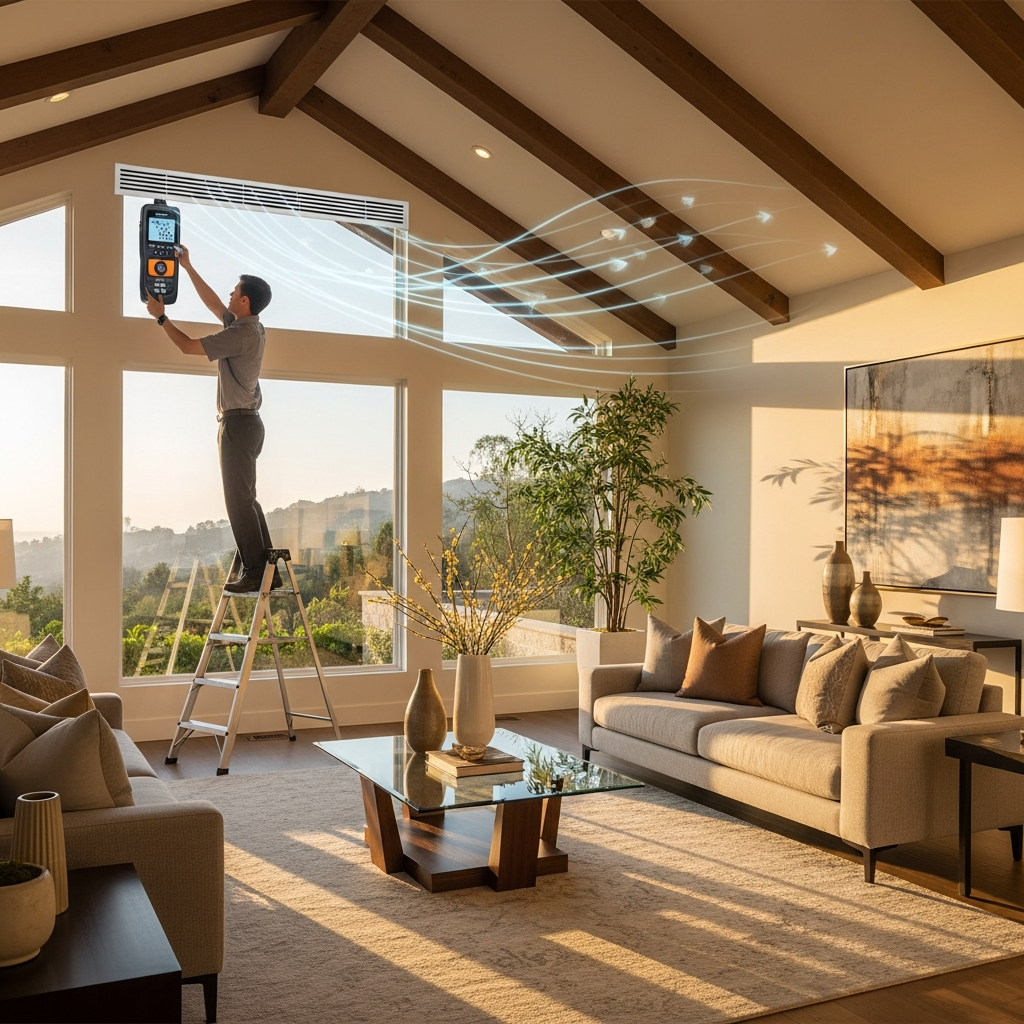
Walk into any Beverly Hills home and you can feel the architecture at work. Sunlit rooms open to terraces, quiet corridors lead to tucked-away suites, and ceilings rise and fall like gentle hills. Comfort in spaces like these isn’t an accident—it’s the outcome of careful detailing, and your HVAC ducts are central to that story. When ducts are designed and installed to match a home’s structure and the way people actually live in it, you get even temperatures, soft sound, and air that feels clean and fresh. When they aren’t, you chase comfort, adjusting the thermostat and wondering why certain rooms never quite get there. That is where a coordinated approach to duct replacement and airflow upgrades becomes the difference between “fine” and “effortless.” Early in your research, it can help to look at local guidance about duct replacement so you can frame decisions in terms of Beverly Hills homes, not generic models.
While modern HVAC equipment is remarkably capable, it can only deliver what the ductwork allows. Think of equipment as the heart and ducts as the arteries and veins. If the pathways are constricted or leaky, the best equipment in the world can’t create balance. That is why a well-executed replacement places as much emphasis on design and commissioning as on the materials themselves. With the right plan, airflow upgrades become the quiet hero of comfort, elevating the entire living experience without drawing attention to themselves.
Starting with the way you use your home
Before anyone talks about trunks and branches, we begin with patterns of life. Which rooms matter on bright afternoons? Where do you unwind in the evening? Are there quiet spaces where airflow noise would be especially unwelcome? Listening first shapes everything that follows. A family that gathers in an open living-dining-kitchen zone needs a distribution strategy different from a home filled with private suites. Multiple levels may require returns placed to equalize pressure on stair landings, while long galleries call for gentle, even supply across the run so you don’t feel a draft in one spot and stillness in another.
We also ask about your home’s particular history. In Beverly Hills, additions are common, and with them come duct systems stitched together across decades. A replacement project gives us a chance to reset—scrutinize what works, retire what doesn’t, and craft a design that respects the home’s present shape and aesthetics. That may mean relocating returns to calmer acoustic zones, resizing runs so distant rooms are no longer shortchanged, or rethinking register styles so air mixes beautifully without calling attention to itself.
Designing airflow that feels effortless
Airflow upgrades hinge on a few fundamentals. Balanced supply and return are essential; starve the return and you invite noise and inefficiency. Keep velocity in the right range and registers will sound like a hush rather than a hiss. Eliminate sharp turns and constrictions, and you let the system deliver comfort without a fight. Rigid trunks often form the backbone of a stable system, with short, well-supported flex connectors used strategically to reduce vibration. Meticulous sealing with mastic, proper insulation, and careful support prevent leakage and sagging that would otherwise erode performance.
Placement matters as much as sizing. Where a register throws air across a ceiling or down a wall determines how it washes into the occupied zone. In rooms with large glass exposures, supply air needs to mix firmly yet quietly to manage radiant loads without creating drafts. In bedrooms, a gentler approach typically prevails, placing registers to avoid direct blows while still ensuring the room comes to setpoint promptly. These are the kinds of choices that elevate everyday living without ever announcing themselves.
Air quality and acoustics: twin priorities
Comfort goes hand in hand with clean air and a calm soundscape. In seasons when outdoor air quality is challenged by regional events, leaky returns or poorly sealed supplies can draw pollutants into your home. Replacing ducts with an eye toward tight sealing and appropriately sized returns allows your filtration to do its work. Equally important is acoustics. We tune airflow for quiet by smoothing transitions, avoiding velocity spikes, and placing returns where sound won’t amplify. The outcome is a system you hardly notice—exactly as it should be.
In media rooms, nurseries, and home offices, these details shine. Registers sized and routed for calm delivery allow you to focus on what matters, not the whoosh of air. If you’ve ever turned up the volume during a quiet movie scene because a return roared to life, you already know why design and commissioning are non-negotiable.
Balancing a multi-level or hillside home
Many Beverly Hills homes climb hillsides or step across multiple levels. That adds nuance to duct design. Warm air wants to rise; cool air settles. Returns placed thoughtfully can ease these natural tendencies, helping temperatures stay consistent without requiring the system to overwork. Zonal considerations come into play, too. While full zoning systems are one avenue, even without them, duct layout can bias delivery toward the spaces that need it most at particular times of day, with dampers fine-tuned during commissioning to lock in results.
Hillside homes also bring access puzzles. Attics may be compact, and crawlspaces may run in sections rather than continuous paths. This is where craft matters. Preplanning routes, using modular sections where necessary, and sequencing work to keep living spaces protected help deliver upgrades with minimal disruption. Your comfort shouldn’t come at the cost of your peace of mind during the project.
Replacing aging or inadequate ductwork
Tell-tale signs that it’s time to replace ducts include rooms that consistently lag behind the thermostat, registers that roar to overcome restrictions, and dust that persists even with clean filters. Odors that appear when the system starts can signal leaks drawing air from attics or crawlspaces. If a contractor has made repeated tweaks without lasting improvement, a replacement allows us to step back and solve the root causes rather than piling on short-term fixes. The result is a distribution network that supports your equipment instead of hampering it.
Material choices are tailored to the home. Rigid metal offers durability and stable shape for main trunks. Where geometry calls for flexibility, short runs of well-supported flex can connect the last few feet to registers while dampening vibration. The secret sauce is in the details: carefully sealed joints, intelligent transitions, supports that prevent sagging, and insulation installed with intent.
Commissioning: where design meets reality
After installation, we move into commissioning—the moment of truth. We measure airflow at registers, adjust dampers to fine-tune distribution, and verify that static pressure and temperatures sit where they should. We also test for leakage to confirm that sealing has held from end to end. This is how we ensure that a beautiful design on paper becomes a beautiful experience in your rooms. Skipping or rushing this step is a sure path to disappointment; doing it right is the guarantee you’ll feel the difference every day.
Homeowners often appreciate a quick orientation after commissioning. We’ll show you how to change filters, point out where key components live, and note the signs that suggest a call for service before small issues grow. Empowered with that knowledge, you can enjoy the benefits of your upgraded system with confidence.
Middle-of-the-project insights
Midway through a project, it’s normal to refine small details. Perhaps a register location could be shifted a few inches to improve throw, or a return could move to a spot where sound diffuses more gracefully. Having a clear design and a collaborative mindset makes these changes straightforward. For additional perspective informed by Beverly Hills homes, you can review local approaches to duct replacement so refinements stay aligned with the broader goals of quiet, balance, and clean air.
Protecting finishes and maintaining daily rhythms
We know the value of serenity in a beautifully finished home. Protecting plaster, stone, and millwork is not an afterthought; it’s built into the process. Work areas are defined, surfaces are covered, and schedules are coordinated so your routines remain steady. Good organization makes the difference between a disruptive project and one that slips into the background of your life while important improvements take shape overhead.
When a home includes historic elements or custom details, we coordinate closely with designers and contractors. Routes are chosen to preserve aesthetics, and access is planned to minimize any need for intrusive work. This coordination ensures that your home’s character remains intact while its comfort quietly reaches a new level.
Life after airflow upgrades
The clearest testament to a successful project is how unremarkable your HVAC becomes. Rooms settle into even temperatures. Registers whisper. You find yourself forgetting where the thermostat is because you no longer need to negotiate with it. The air feels cleaner and lighter, and seasonal transitions pass without drama. Maintenance becomes a simple rhythm of filter changes and occasional visual checks. When future renovations arise, your upgraded ductwork provides a stable foundation that adapts rather than obstructs.
FAQ: How disruptive is duct replacement in a finished home?
With planning and care, disruption can be kept to a minimum. We establish contained work zones, protect surfaces, and sequence tasks to respect your schedule. Communication throughout the project ensures that preferences are honored and any surprises are resolved swiftly and cleanly.
FAQ: Will airflow upgrades change how quickly rooms reach setpoint?
Yes. By reducing restrictions, balancing supply and return, and ensuring proper register placement, rooms typically reach their targets more quickly and hold them more steadily. The system no longer needs to sprint to overcome bottlenecks, which reduces noise as a bonus.
FAQ: Are rigid ducts always better than flex?
Rigid trunks often provide the backbone for stable airflow, but short, well-supported flex connectors can be excellent for vibration isolation and final connections. The right solution blends materials to suit geometry and performance goals, with craftsmanship at the joints and supports determining success.
FAQ: Can upgrades help with indoor air quality?
Absolutely. Tight sealing and properly sized returns reduce the chance of drawing unfiltered attic or crawlspace air into the system. When paired with appropriate filtration, you’ll often notice cleaner air, fewer odors on startup, and more consistent humidity within the comfort band.
FAQ: What if my home has difficult access?
Limited attic or crawlspace access is common in hillside and architecturally distinctive homes. We address this through careful routing, modular sections where needed, and staging that protects finishes. A thoughtful plan turns difficult access from a stumbling block into a solvable design constraint.
FAQ: How will I know the system is performing as designed?
Commissioning provides proof. Airflow is measured at registers, dampers are tuned, and pressures are verified. You’ll feel the difference in even temperatures and quieter operation, and we’ll share the results of testing so you can see the numbers behind the comfort.
Ready for a calmer, more comfortable home?
If your home’s comfort feels just out of reach—rooms that lag, registers that hiss, or air that doesn’t feel as clean as it should—it’s time to look at the arteries of the system. With a thoughtful plan and diligent execution, duct replacement and airflow upgrades can unlock the performance your equipment was built to deliver. When you’re ready to talk with a Beverly Hills–focused team about duct replacement, reach out and let’s design a solution that blends seamlessly into the life you lead.