
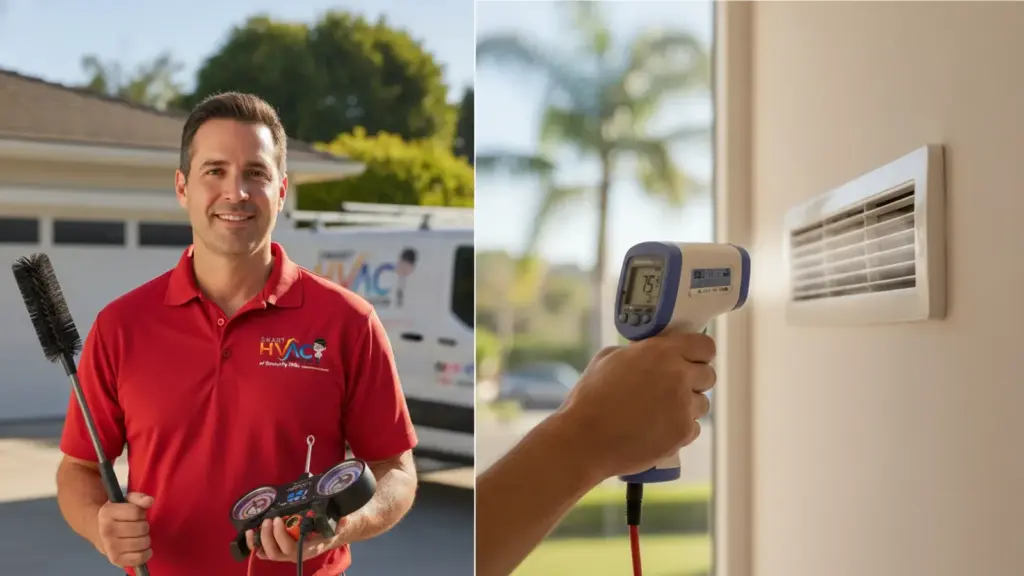
Why Is My Beverly Hills AC Blowing Warm Air? Common Myths and Realities
During a heatwave in Southern California, turning on your air conditioning only to feel lukewarm or hot air pouring out of the registers is incredibly frustrating. In Beverly Hills, where summer temperatures regularly test the limits of home comfort systems, this issue is more than just an inconvenience. It is a sign of system strain that can quickly escalate into a complete breakdown if left unaddressed. In fact, ignoring warm airflow can lead to electrical overloads where the ac keeps tripping breaker beverly hills.
Because comfort systems are complex, a vast amount of misinformation circulates regarding why a unit might stop cooling. Homeowners often fall victim to common myths, leading to incorrect DIY fixes, wasted time, and even costly damage to their equipment. Understanding the distinction between common cooling myths and the mechanical reality of your system is the first step toward restoring a cool, comfortable indoor environment.
Myth: Warm Air Always Means Your System Is Low on Refrigerant
Reality: This is perhaps the most common misconception in the HVAC industry. While a low refrigerant charge due to a leak will certainly cause your air conditioner to blow warm air, it is far from the only cause. Refrigerant runs in a closed loop, meaning it does not get consumed like gas in a car. If it is low, there is a physical leak that requires professional repair.
However, warm air is just as likely to be caused by a simple airflow restriction. When a system cannot draw in enough air, the cooling coils freeze over, blocking the heat transfer process and causing the air blowing into your home to feel warm. Before assuming you need a refrigerant recharge, it is critical to look at other components of the system first. If the compressor itself is failing to pump refrigerant altogether, you may need to evaluate signs you need AC compressor replacement in Beverly Hills.
Myth: Cranking the Thermostat Down to 60 Degrees Will Force It to Cool Faster
Reality: Air conditioning systems do not work like a gas pedal. Setting your thermostat to an extremely low temperature will not make the system produce colder air or cool the room any faster. Central air conditioning systems run at a single, consistent speed to lower the indoor temperature gradually.
When your system is struggling and blowing warm air, setting the thermostat to 60 degrees only forces the system to run continuously without relief. In the intense Beverly Hills summer heat, this constant operation overheats the compressor and fan motors. Instead of cooling your home, this practice places extreme strain on your electrical panel, which is a primary reason why systems overheat and trip the safety switches. If you find yourself in this situation, knowing how to reset an AC breaker in Beverly Hills can help you safely restore power, but it does not solve the underlying airflow or mechanical issue.
Myth: If the Outdoor Unit Is Running, the Problem Must Be Inside
Reality: Just because you hear the outdoor condenser fan spinning does not mean the outdoor unit is functioning correctly. The outdoor unit contains two major power-hungry components: the condenser fan motor and the compressor. They run on separate electrical circuits within the unit.
If you want it handled correctly the first time, consider professional our services in Beverly Hills.
Quite often, the condenser fan will spin, giving the illusion that the outdoor unit is working perfectly, while the compressor itself has failed to start. Without the compressor pumping refrigerant through the coils, no heat exchange occurs, and the indoor blower will simply recirculate warm indoor air. Only a qualified air conditioning repair beverly hills technician can safely test the electrical pull of both components to determine why the compressor is offline while the fan continues to run.
Myth: Dirty Air Filters Only Affect Air Quality, Not Air Temperature
Reality: A heavily clogged air filter is one of the most common reasons why an air conditioner starts blowing warm air. Your cooling system requires a precise volume of airflow crossing the indoor evaporator coil to transfer heat out of your home. When a dirty filter blocks this airflow, the temperature of the coil drops below freezing.
Once moisture in the air contacts this super-cooled coil, it freezes solid, turning the evaporator coil into a block of ice. This ice acts as an insulating barrier, preventing the remaining airflow from being cooled. The air passing through your vents then bypasses the frozen barrier entirely, entering your living spaces warm. Keeping up with preventative AC maintenance in Beverly Hills is the easiest way to prevent simple issues like dirty filters from escalating into frozen coils and warm airflow.
Myth: You Can Fix Warm Air Issues by Simply Washing the Outdoor Unit with a Hose
Reality: While keeping your outdoor condenser coils free of leaves, dirt, and debris is excellent practice, spraying the unit with a garden hose is rarely a cure-all for warm air. Dirt buildup on the outdoor coils does reduce the system’s efficiency by trapping heat, but a sudden shift from ice-cold air to warm air usually points to a more significant electrical or mechanical failure.
Additionally, spraying water directly into the electrical compartment of an outdoor condenser can cause short circuits, damage the contactor, or ruin sensitive capacitors. Cleaning the exterior casing is helpful, but deep mechanical troubleshooting should always be left to a licensed professional who can test electrical contacts and measure system pressures safely.
Myth: The Age of Your Home and Local Climate Don’t Affect Warm Air Troubleshooting
Reality: Local factors have a massive impact on how and why air conditioning systems fail. In Beverly Hills, the unique blend of historic estate homes, mid-century architectural masterpieces, and modern luxury properties creates distinct HVAC challenges. Many older homes in the area feature retrofitted ductwork that may be undersized or prone to leaks. When ductwork in a hot attic leaks, it draws in superheated attic air and blows it directly into your living spaces, making the AC feel like it is blowing warm air even if the equipment is working perfectly.
Many Beverly Hills homeowners rely on expert our services in Beverly Hills for exactly this.
Furthermore, Beverly Hills experiences microclimates where canyon homes might deal with high humidity and dust, while properties closer to the flats experience direct, punishing sunlight. The local electrical infrastructure in older neighborhoods can also experience voltage fluctuations during peak summer afternoons when every estate in the area is running high-tonnage climate control systems. This local grid stress can drop the incoming voltage to your home, causing your compressor to overheat, blow warm air, and eventually shut down entirely.
Frequently Asked Questions
Why is my AC running but blowing warm air?
This typically occurs when the indoor blower fan is operating, but the outdoor unit or the compressor has stopped working. Common causes include a tripped outdoor circuit breaker, a failed run capacitor, a severe refrigerant leak, or a frozen evaporator coil blocking heat transfer.
Can a dirty outdoor unit cause warm air to blow inside?
Yes, if the outdoor condenser coils are heavily coated in dirt, grime, or overgrown foliage, the system cannot expel the heat it gathered from inside your home. This causes the system to run incredibly hot, reducing its cooling capacity and eventually causing the compressor to shut down on thermal overload.
Should I turn off my AC if it is blowing warm air?
Yes, you should turn the system off immediately at the thermostat. Running an air conditioner that is blowing warm air can cause severe damage to the compressor, lead to electrical overloads, or burn out fan motors, turning a minor repair into an expensive replacement.
How long does it take for a frozen AC coil to thaw?
Depending on the ambient temperature inside your home, it can take anywhere from 2 to 24 hours for a frozen evaporator coil to melt completely. You should switch the system from “Cool” to “Off” and turn the fan setting to “On” to help circulate warm air over the coil and speed up the thawing process safely.
Restoring Reliable Comfort to Your Beverly Hills Home
When your air conditioning stops delivering the cool comfort you expect, acting quickly is the best way to protect your investment. Continuing to run a struggling system not only wastes energy but also risks causing permanent damage to key components like the compressor. By debunking common myths and addressing the real mechanical causes of warm airflow, you can avoid unnecessary downtime and keep your home safe.
If simple steps like replacing a dirty filter do not restore cold air, it is time to bring in professional expertise. A certified technician can quickly identify the exact cause of the malfunction, whether it is an electrical failure, a refrigerant issue, or local system strain. Contact Smart HVAC System of Beverly Hills today to schedule a comprehensive diagnostic visit and ensure your home stays cool all summer long.