
Preventative AC Maintenance Tips for Beverly Hills Summers
It is mid-July at two o’clock in the afternoon, and the heat radiating off the manicured hedges and stucco facades of Beverly Hills is reaching its peak. Inside, you hear the sudden, sharp click of your electrical panel, followed by the immediate silence of your cooling system shutting down. Preventative steps taken before the seasonal heatwaves arrive can protect your home comfort and keep your electrical system operating smoothly when the regional grid faces its highest demand.
Regular system upkeep is about more than just maintaining a comfortable indoor temperature. It directly affects the electrical load your cooling system draws. When dust, debris, and wear build up within your system, the equipment must work significantly harder to cool your home, drawing excess electricity that can lead to system failures. Implementing preventative AC maintenance in Beverly Hills ensures that your system functions efficiently and safely, preventing the safety mechanisms from shutting down your power when you need cooling the most.
Before You Start: Maintenance Prep List
Before beginning any basic preventative maintenance tasks, gather the necessary safety equipment and tools. Keeping your system clean requires minimal specialized gear, but safety and order are paramount.
- A high-quality replacement air filter (correctly sized for your system)
- A soft-bristle brush or vacuum cleaner with a brush attachment
- Safety glasses and heavy-duty work gloves
- A screwdriver or nut driver (to access service panels if necessary)
- A garden hose with a standard spray nozzle (avoid high-pressure washers)
- A can of approved foaming coil cleaner
Step 1: Shut Off the Power Safely
Never perform any inspection or cleaning on your cooling system while it is actively receiving electrical power. Locate the outdoor disconnect box near your condenser unit, which is typically housed in a metal box mounted on the exterior wall. Open the cover and pull the disconnect plug out completely, or switch the breaker to the off position. Indoors, navigate to your main electrical panel and turn off the dedicated breaker for your air conditioning system. Verifying that the system is entirely powered down prevents electrical hazards and protects the internal components from accidental shorts.
Step 2: Inspect and Replace the Air Filter
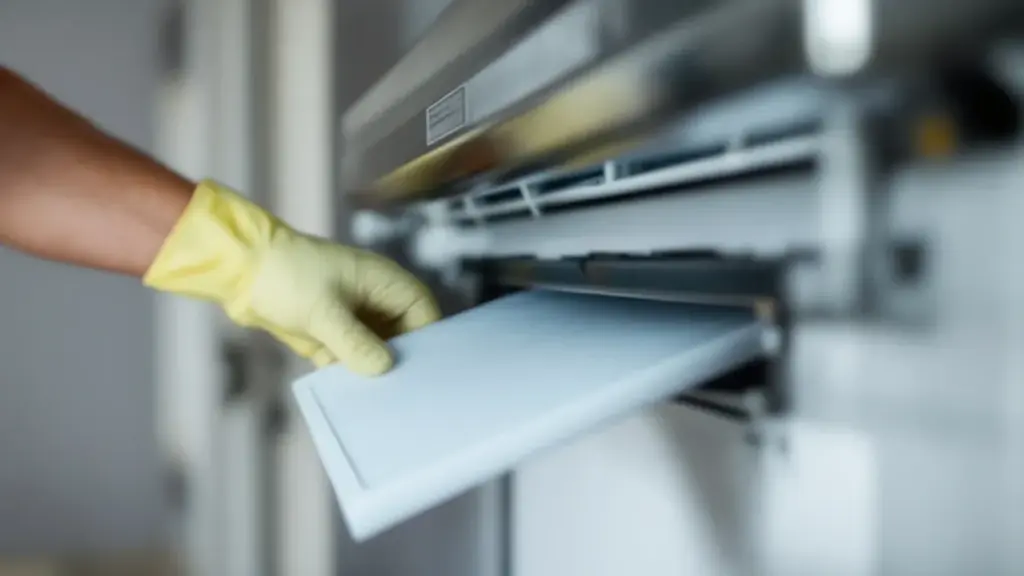
A dirty filter restricts the natural flow of air through your system, forcing the blower motor to run longer and hotter to circulate air. Locate your filter slot, which is usually found in the return air duct or right next to the indoor blower unit. Slide the old filter out and inspect it against a light source; if you cannot see light through the fibers, it needs replacement. Install a new filter with the airflow arrows pointing toward the unit. If you neglect this simple task, the severe restriction in airflow can cause your indoor coils to freeze or lead to electrical issues where the ac keeps tripping breaker beverly hills due to motor strain.
Step 3: Clear the Outdoor Condenser Perimeter
Your outdoor condenser unit relies on unobstructed airflow to release the heat extracted from your home. Walk around the exterior unit and remove any fallen leaves, twigs, overgrown brush, or climbing ivy within a two-foot radius of the metal housing. Trim back any decorative landscaping or low-hanging branches that could restrict upward airflow. Clearing this perimeter prevents debris from being drawn into the delicate aluminum fins, which can trap heat and put excessive strain on the compressor.
If you want it handled correctly the first time, consider professional our services in Beverly Hills.
Step 4: Clean the External Condenser Fins
Over time, wind-blown dust, lawn clippings, and pollen coat the exterior of the condenser fins, forming an insulating barrier that prevents heat transfer. Using a vacuum with a soft brush attachment, gently sweep away loose dirt and buildup from the outer grilles. Next, spray the fins gently with a garden hose from the inside out to wash away deeply embedded dirt. Avoid using high pressure, as these aluminum fins bend easily, which can permanently restrict vital airflow. If you find bent fins, you can carefully straighten them using a specialized fin comb.
Step 5: Inspect and Clear the Condensate Drain Line
As warm, humid air passes over the cold evaporator coil, moisture condenses on the metal and drips into a collection pan, which drains outdoors. Over the summer, algae, mold, and dust can clog this narrow drain line, leading to water backups that can damage your ceilings or trigger safety float switches that shut down your entire system. Locate the drain line outlet near your outdoor unit and check for steady dripping while the system runs. You can use a wet-dry vacuum to clear out minor blockages from the external drain pipe, ensuring a clear path for moisture to exit.
Step 6: Verify Vent Airflow and Clean Grilles
Walk through your living areas and ensure that all supply registers and return air grilles are completely open and unobstructed by heavy drapes, furniture, or rugs. Closing off vents in unused rooms does not save energy; instead, it increases pressure within the ductwork and disrupts the system’s engineered airflow balance. Use your vacuum brush attachment to remove accumulated dust from the metal slats of your vents to keep your indoor air circulating freely and reduce the strain on your system’s fan motor.
Step 7: Perform a Safe System Test Run
Once all cleaning is complete and the system has dried, restore power at both the main electrical panel and the outdoor disconnect box. Set your thermostat to cool and adjust the temperature a few degrees below the current room temperature. Listen carefully for any unusual clicking, rattling, or grinding noises as the unit starts up. Feel the air coming out of your supply vents to ensure it is cool, and watch the system run for a few minutes to ensure it operates smoothly without sudden shutoffs.
Understanding the Beverly Hills Climate and Electrical Demands
Many Beverly Hills homeowners rely on expert our services in Beverly Hills for exactly this.
Beverly Hills homes feature a unique mix of historic, early-twentieth-century estates and modern architectural masterpieces. Many older properties in neighborhoods near Sunset Boulevard or the flats of Beverly Hills still rely on original, outdated electrical panels that were never designed to handle the heavy electrical loads of modern, high-tonnage multi-zone cooling systems. When summer temperatures climb rapidly, the regional power grid experiences heightened demand, causing minor voltage fluctuations. If your cooling system is poorly maintained, its motors must draw even more current to overcome the resistance of clogged coils and filters, making old breakers highly susceptible to tripping during peak heat hours.
When to Call a Professional in Beverly Hills
While homeowners can safely handle basic tasks like replacing filters and clearing outdoor debris, more complex issues require specialized technical expertise. Working with high-voltage electricity, testing capacitors, checking refrigerant charges, and cleaning internal evaporator coils are tasks that should always be handled by a licensed professional. If your system continues to run poorly, makes strange noises, or if you find yourself needing to reset the breaker regularly, it is time to seek professional diagnostics.
If you encounter persistent electrical issues or want a professional technician to evaluate your system’s electrical draw, read our guide on how to reset an AC breaker safely before attempting to restore power. For complex technical issues, reaching out to a certified air conditioning contractor beverly hills ca ensures that your delicate cooling equipment is serviced safely and in compliance with local safety standards.
Frequently Asked Questions
How often should I change my AC filter during a Beverly Hills summer?
During the peak summer months, you should check your air filter every 30 days. If you have pets, live near active construction, or suffer from seasonal allergies, you may need to replace it monthly to maintain optimal airflow and prevent system strain.
Why does my AC breaker keep tripping on hot summer afternoons?
This usually occurs because your system is working harder to cool your home in peak heat, drawing more electrical current than the circuit breaker is rated to handle. Dirty coils, failing capacitors, or restricted airflow are common maintenance issues that cause this excessive electrical draw.
Can I clean the indoor evaporator coil myself?
The indoor evaporator coil is difficult to access and contains delicate aluminum fins and refrigerant lines that are easily damaged. To avoid costly damage and safety hazards, cleaning the indoor coil should be left to an experienced technician.
Protect Your System from Summer Strain
Consistent preventative maintenance is the most effective way to protect your cooling system from unexpected breakdowns during the hottest weeks of the year. Keeping your filters clean and your outdoor unit free of debris minimizes the physical and electrical stress placed on your equipment. If you notice signs of electrical trouble, such as flickering lights or breakers that shut off during operation, stop running your system immediately to prevent permanent component damage. For professional inspections, repairs, or system diagnostics, contact Smart HVAC System of Beverly Hills to schedule a thorough evaluation of your cooling system’s performance.