
Breathe Easier Where You Live
Allergy season in Beverly Hills is not a single month on the calendar—it ebbs and flows with the Santa Ana winds, the blooming cycles of our urban canopy, and the rhythms of life in canyon and hillside neighborhoods. If you or a family member wakes congested, notices itchy eyes during certain afternoons, or observes a faint dust shimmer in a beam of sunlight even after a thorough cleaning, your HVAC system may be recirculating irritants that are easy to ignore until they are not. As a local HVAC professional, I have watched countless households regain a sense of calm simply by addressing what moves invisibly through their homes: the air inside their ducts.
Because so many Beverly Hills residences feature multi-zone systems, high ceilings, and specialty spaces—home theaters, fitness rooms, bathrooms with steam functions—the duct network can be extensive. That means more surfaces on which particulates can settle, and more nooks where allergens can collect. A thoughtful approach to air duct cleaning is not just about neatness; it is about restoring the kind of breathable, low-irritant environment that allows daily routines to feel lighter and more comfortable.
Understanding the Local Allergen Landscape
The microclimates in and around Beverly Hills shape our indoor air. Canyon breezes move differently than flats along tree-lined streets, and landscape choices—from olive and oak to jacaranda and ornamental grasses—contribute seasonal pollen. Our famous sunshine also plays a role, creating convection currents inside high-volume rooms that transport dust and dander up into returns. During dry spells and wildfire events, ultra-fine particles can drift indoors through tiny envelope leaks, later riding the HVAC cycle through your ducts. None of this is to cause alarm; it simply explains why a home can look immaculate yet still provoke a sneeze at the wrong moment.
Allergens are not monolithic. In our climate, the common offenders include pollen, pet dander, dust mite fragments, and mold spores from damp-prone areas. Each behaves differently when air is moving. Dander tends to float and lodge in soft surfaces, pollen can settle and re-suspend with foot traffic, and ultra-fine dust may travel long distances down smooth ductwork. A cleaning strategy that accounts for these behaviors makes a real difference in how your home feels.
What Proper Air Duct Cleaning Actually Does
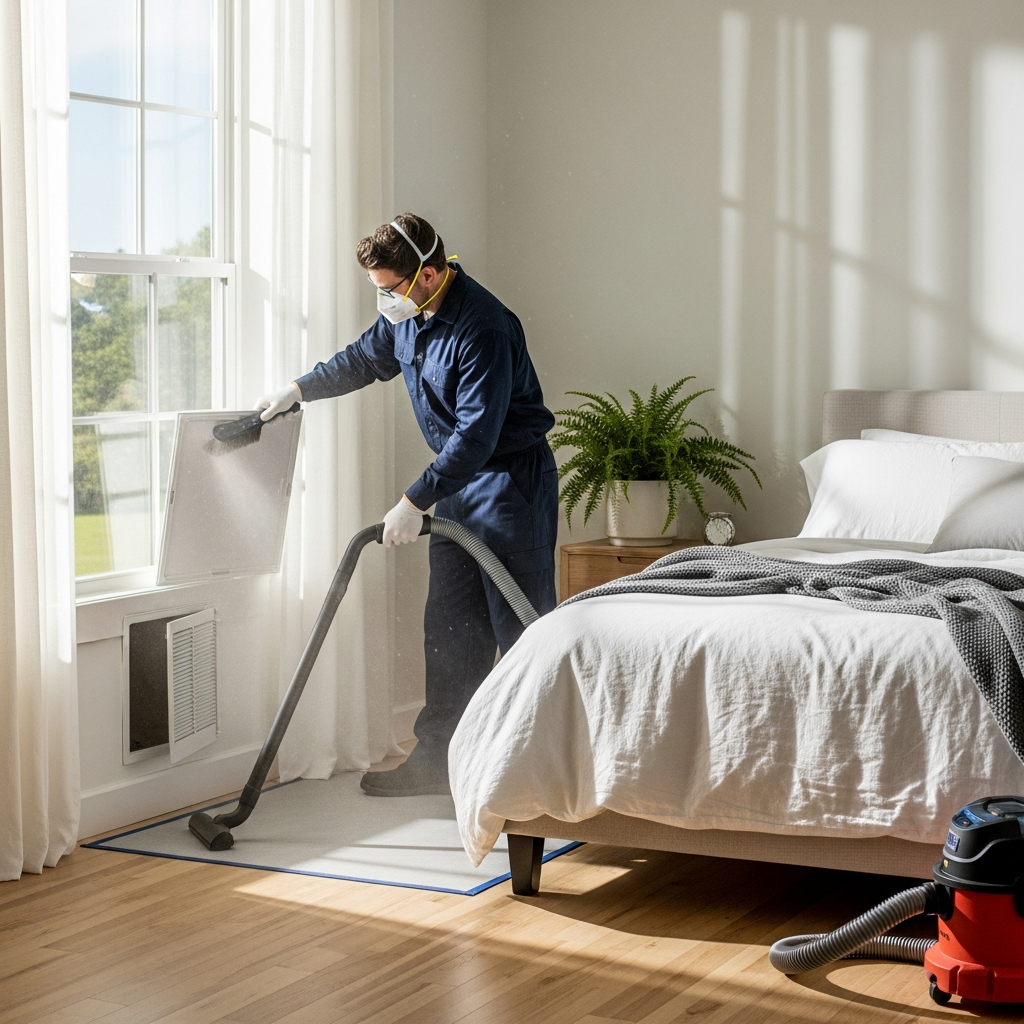
The essence of duct cleaning is simple: remove accumulated particles so they can no longer lift off and recirculate. The execution, however, demands care. We begin with a system-wide assessment, noting return sizes, filter type and age, coil condition, and branch configurations that may encourage build-up. We set containment to protect living spaces, then apply agitation tools matched to the duct’s diameter and material, drawing loosened debris into high-filtration negative air equipment. We also wash or replace registers carefully to avoid releasing captured dust back into the room.
Equally important is attention to the coil, blower compartment, and drain pan. Allergens do not respect boundaries; if the coil is coated, every clean branch downstream will be reintroduced to the very particles you sought to remove. A full-system approach restores the clean baseline that high-quality filtration can maintain over time.
Why Beverly Hills Homes Need a Tailored Approach
Many properties here have been remodeled over the decades, layering new comforts onto older frameworks. That can lead to returns that are slightly undersized for modern variable-speed equipment, or to long duct runs serving far-flung rooms. Both conditions can encourage particulate build-up if filters are not matched to the system’s static pressure capacity. Add in lifestyle factors—frequent entertaining, pets, windows opened on cool evenings—and the pathway for allergens to circulate widens. Tailoring cleaning and filtration to your specific home restores control and, more importantly, delivers relief you can feel.
We also consider acoustics, because quiet is part of comfort. A well-cleaned system often needs less fan effort to achieve the same air movement, which allows the equipment to operate at gentler settings more of the time. The result is a softer sound profile and fewer drafts, both of which make sensitive sinuses happier.
Signs Your Ducts May Be Contributing to Allergies
Beyond visible dust at registers, there are subtler signals. If a room feels a bit stuffy despite temperature readings that look fine, if a sneeze tends to arrive after the system cycles on, or if a layer of fine powder appears on surfaces soon after housekeeping, the ducts and coil deserve a look. Another clue is inconsistent filter color—if part of a filter looks clogged quickly while edges remain relatively clean, air may be bypassing as it seeks the path of least resistance. That can move particles around the filter rather than through it.
We also listen to stories. Families know their homes, and patterns emerge in daily life. Perhaps a child’s room collects more dust than others, or the primary suite feels better in the early morning than late evening. These lived details help us pinpoint where to focus and how to tune the system after cleaning.
How Filtration and Cleaning Work Together
Cleaning delivers the reset; filtration preserves it. After removing accumulated debris from ducts, returns, and the mechanical core, we evaluate filter type and schedule. In many Beverly Hills homes, owners wish to upgrade filters for allergen control but worry about strain on the system. The solution is to pair the right MERV rating with adequate filter area and to monitor static pressure so the equipment breathes easily. In some cases, adding a second return or a deeper media cabinet solves both problems at once—better capture without added stress.
For especially sensitive households, we look at sealing opportunities in the return path, where leaks can pull dusty air from attics or wall cavities. Closing those pathways ensures the air being filtered actually comes from the living space and that the system is not working against unseen intrusions.
A Real-World Story From the Flats
We recently serviced a classic Beverly Hills home where springtime always meant itchy eyes for one family member. The home looked pristine, and housekeeping was impeccable, but the front rooms faced a tree-lined street that exploded with blossoms every year. Our inspection found fine pollen accumulation in the main return drop and a film across the coil surface. We performed a full cleaning, rebalanced airflow, and shifted to a deeper media filter matched to the equipment’s capacity. The following season, the household reported a gentler spring—less sneezing, easier mornings, and a sense that the air simply felt lighter.
This pattern shows up across neighborhoods. Sometimes the source is pet dander that gathers in a beloved media room, other times it is ultra-fine dust from a recent project. The fixes are not dramatic; they are precise. Remove what has settled, tune airflow, and preserve the result with smart filtration.
Mid-Home Adjustments That Maximize Relief
Even mid-project, we pause to evaluate. If we discover unexpected accumulation in a branch serving a room with heavy fabric treatments, we adjust our plan. We may also recommend repositioning diffusers to avoid dead zones where dust can settle and then billow out when the fan ramps up. When these refinements pair with thorough professional air duct cleaning, families often notice immediate comfort gains—fewer sneezes when the system cycles and evenings that feel calmer.
We document our findings with photos and notes, creating a baseline for your property file. This helps the home remain consistently comfortable, season after season, and makes any future service faster and more targeted.
Maintaining the Gains: Habits That Help
For households looking to extend the relief, small habits matter. Change filters on schedule, ensuring the replacements are genuine and properly seated. Vacuum registers gently when dust first appears rather than waiting for a thicker layer to form. During high-pollen days or when the winds pick up, keep windows closed and let the system circulate through a clean filter. After entertaining, a brief extended fan run can pull particulates into the filter before they settle again on surfaces.
We also coordinate with housekeeping teams, sharing tips on dusting techniques that minimize re-suspension. When the home and the HVAC system work in tandem, clean becomes easier to maintain, and relief becomes part of the routine.
Frequently Asked Questions
Will duct cleaning cure allergies? It is not a medical treatment, but many clients report meaningful symptom relief once allergens are no longer recirculating through the system. Pairing cleaning with proper filtration and moisture control tends to deliver the best results.
How often should we schedule service? Many Beverly Hills homes benefit from a two- to three-year cycle, with earlier check-ins after renovations or during heavy pollen seasons. Your home’s design, usage, and location will guide the exact interval.
Is the process messy? Done properly, no. We use containment, high-filtration capture, and surface protection to keep dust moving toward our equipment, not into your rooms. Afterward, we leave the home as we found it—only fresher.
Do we need to leave the house? Not typically. We work discretely around your schedule and can prioritize areas so daily life proceeds with minimal interruption. For extremely sensitive individuals, we can plan to clean key zones first.
Will improved filtration strain my system? Not if we match filter efficiency to available filter area and monitor static pressure. We often recommend deeper media cabinets or additional returns so your system breathes easily while capturing more allergens.
Ready for Calmer, Cleaner Air
If mornings could feel brighter and evenings more at ease, consider a conversation about your home’s air pathway. A careful inspection and a tailored plan can reset your system and restore the kind of comfort that makes Beverly Hills living special. When you are ready to take the next step, explore how focused air duct cleaning supports lasting allergy relief, and let’s design a service that helps your household breathe easier every day.