
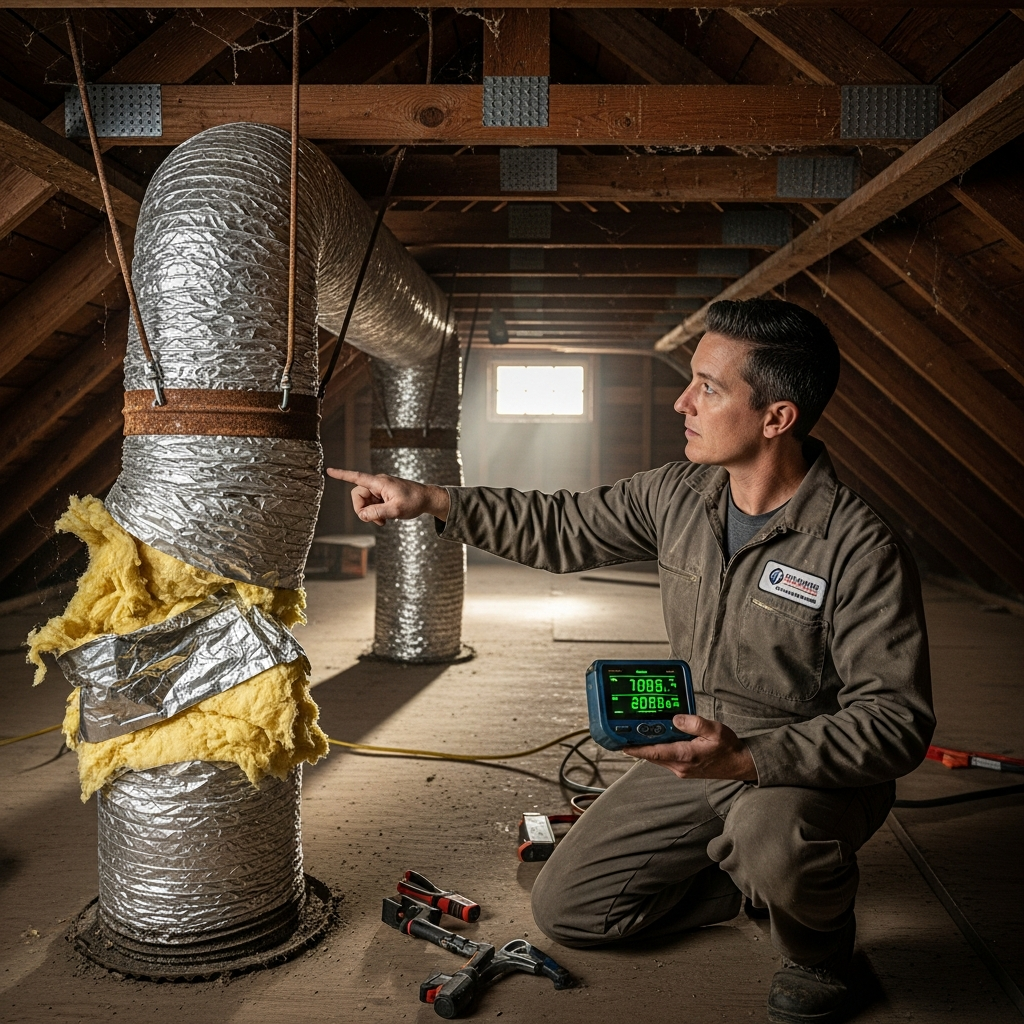
Knowing when duct replacement is truly needed in a Beverly Hills home requires more than a glance at dusty registers. Behind walls and above ceilings, the network that carries your conditioned air tells a story about materials, age, workmanship, and how the spaces are used. In our city, where architecture ranges from carefully preserved Spanish Revival residences to airy modern estates perched on the hills, the signs are consistent but the context varies. The goal is not to replace ductwork at the first annoyance; it is to read the evidence and decide when replacement is the most direct path to lasting comfort and quiet. If you are beginning that evaluation and want a local perspective tailored to your rooms, equipment, and lifestyle, start by learning what high‑quality duct replacement entails and how it addresses root causes rather than symptoms.
Age and material condition: the first checkpoint
Every duct system has a lifespan influenced by material, installation quality, and environment. Flexible ducts can suffer from UV‑resistant jackets that eventually crack in hot attics, crushed sections from storage or trades, and insulation that loses loft. Old cloth or foil tapes dry out and peel. Metal duct can last for decades but is only as good as its sealing and insulation; over time, joints can loosen and boot connections can leak into ceiling cavities. If your home’s ducts are decades old and you notice comfort or dust issues, a careful inspection may reveal it is time to plan a replacement rather than patch endlessly.
Airflow and pressure clues you can feel
Rooms that take ages to cool, vents that hiss, and doors that thump when the system starts are signals. These everyday sounds and sensations often point to high static pressure from undersized runs or starved returns. A quick test with instruments confirms what your ears and skin already suspect. While minor issues can sometimes be tuned, a pattern of high pressure across the system suggests the layout and sizing need a rethink—exactly what replacement provides.
Persistent hot and cold zones
If certain rooms are always outliers—warmer in summer, cooler in winter—despite filter changes and thermostat adjustments, you may be dealing with branch runs that are too small, too long, or too tortuous. Returns might be missing or undersized. Diffusers may be poorly placed, so air never mixes where you live. Replacement enables a holistic redesign: enlarging critical paths, adding balancing capability, and relocating diffusers so conditioned air reaches and blends in the right parts of the room.
Visible damage or contamination
Sometimes the evidence is as plain as a crushed flexible duct, a disconnected boot in the attic, or insulation gnawed by previous pests. In other cases, a smoky odor from past events or renovation dust that never fully clears suggests contaminated interiors. While targeted repairs and professional cleaning can help, widespread damage or contamination is a strong indicator that rebuilding the system will deliver better, cleaner results with less uncertainty about what remains hidden behind walls.
Energy performance that does not match expectations
Modern equipment is impressively capable, but it cannot overcome a constricted or leaky network. If your upgraded system still struggles, short cycles, or runs loudly, attention should shift from the air handler to the air pathway. Replacement designed around your equipment’s airflow requirements lets technology perform as intended. You feel it as smoother cycles, quicker stabilization of temperature, and a distinct reduction in background noise.
After renovations and additions
It is common in Beverly Hills for homes to evolve over time—an expanded kitchen one decade, a new primary suite the next. Ductwork added piece by piece often yields a patchwork of eras that never fully balance. If your home feels disjointed after additions, replacement offers a chance to start fresh: a single, coherent design that integrates new and old spaces into one quiet, balanced system.
Code compliance and testing realities
California’s Title 24 standards require duct leakage testing and appropriate insulation when work of substance is performed. If your system cannot meet these thresholds without extensive repair and resealing, replacement may be the more reliable path to compliance and performance. The benefit is not just a passed inspection—it is proof that the air you condition reaches your rooms instead of escaping into the attic.
Architectural access and the practicality test
Access dictates feasibility. In some attics, generous headroom makes selective repair or re‑routing attractive. In tight interstitial spaces with complex framing, the time and openings needed to chase individual fixes can exceed the scope of a well‑planned replacement. Choosing replacement in such cases is less about giving up and more about choosing the efficient, predictable path that protects finishes and delivers measurable results.
Indoor air quality goals
If anyone in the household has allergies, asthma, or sensitivities, duct leakage and interior contamination become more than nuisances—they are daily stressors. Replacing ducts lets you seal returns, specify smooth interiors, and pair the system with a filter cabinet that supports deeper media. The improvement is often immediate: less dust on surfaces, fewer musty notes after long off‑cycles, and cleaner morning air.
Noise as a diagnostic
We associate noise with equipment, but ducts are just as often the culprit. Whistling at grilles, rumbling in trunks, and a general rush of air suggest incorrect sizing or abrupt transitions. If your system is structurally sound yet perennially loud, replacement focused on velocity control and diffuser selection can deliver the quiet you expect from a luxury home.
What the evaluation process looks like
A thorough assessment starts with listening—understanding where you feel discomfort, what hours are most challenging, and how rooms are used. We then inspect accessible areas, measure static pressure, and document run sizes and routes. Thermal imaging may reveal where conditioned air is escaping. If the evidence points to systemic issues, we build a replacement design that corrects sizing, simplifies routing, and seals every joint. The proposal explains not just what we will do, but why, tying each change to a problem you experience.
How replacement addresses root causes
Replacement is an opportunity to rethink the system from the equipment outward. We size trunks based on airflow needs, place returns to prevent negative pressure, and select diffusers to suit room geometry and use. Gentle fittings replace tortured turns. Sealing and insulation are treated as performance essentials, not afterthoughts. The result is a network that supports your equipment rather than fighting it—quiet, efficient, and predictably comfortable.
Special considerations in historic and custom homes
Preserving plaster, millwork, and architectural intent is non‑negotiable. We plan openings carefully, coordinate with finish trades, and sometimes design custom transitions to fit existing chases. In contemporary homes that showcase clean lines and minimalist details, linear diffusers and concealed registers demand precise duct transitions and airflow control. Replacement respects both realities: honoring the home’s character while delivering modern comfort.
What happens during the project
Expect a steady rhythm: site protection, removal of old ducts, staged installation of trunks and branches, sealing and insulation, followed by testing and balancing. Each day concludes with cleanup and a status update so you know what is complete and what is next. The final day brings commissioning, where instruments confirm what your senses already detect—a calmer, more even home.
Halfway through many projects, homeowners recognize the shape of their new comfort. It is also the right moment to confirm grille finishes, adjust register locations by a few inches if the room layout suggests it, and ensure that return placement aligns with how doors are used. If questions arise, pause and revisit the goals that led you to consider duct replacement in the first place. Good teams welcome that collaboration because it sharpens the final result.
The outcome you can expect
After replacement, the story changes. Rooms that lagged behind fall in line. Background noise fades to a hush. Dust settles less often. Equipment cycles feel smoother and shorter. The transformation is not flashy, but it is unmistakable, and it persists through seasons rather than fading after a week.
FAQ: Knowing when ducts should be replaced
Q: Can cleaning or sealing alone solve my issues?
A: Cleaning and targeted sealing help when ducts are structurally sound and sized correctly. If problems stem from layout, missing returns, or widespread deterioration, replacement is the reliable solution because it corrects the system, not just the symptoms.
Q: How do I confirm that sizing is the issue?
A: Measurements tell the truth. High static pressure, persistent room imbalance, and noisy grilles often point to sizing errors. A professional evaluation pairs these readings with observations about run lengths, fittings, and return placement.
Q: Will replacement damage finishes?
A: Done thoughtfully, replacement is respectful of finishes. Protection and planning minimize openings, and any necessary patches are coordinated. In many homes, nearly all work occurs in attics or crawlspaces, keeping living areas undisturbed.
Q: What improvements should I feel right away?
A: Expect steadier temperatures, reduced noise, and cleaner air movement. Doors stop moving with pressure changes, vents stop whistling, and rooms level out across the day.
Q: Do I need zoning to fix imbalance?
A: Not always. Balanced duct sizing, added returns, and diffuser optimization solve many problems without adding the complexity of zoning. Where zoning fits, replacement is the moment to integrate it properly.
Q: How do I plan around a busy household?
A: Clear access to attics, closets, and mechanical rooms ahead of time, and set expectations for daily updates. Good crews stage work to fit your schedule and keep pathways tidy, so life goes on while the transformation happens overhead.
Take the next step with confidence
If the patterns in your home point toward a deeper fix, choose a partner who will test, design, and install with precision. Begin a conversation about layout, materials, and noise goals, and ask for proof through commissioning when the work is done. When you are ready, schedule a Beverly Hills–specific plan for duct replacement so your home can feel the way it should—quiet, even, and effortlessly comfortable.