
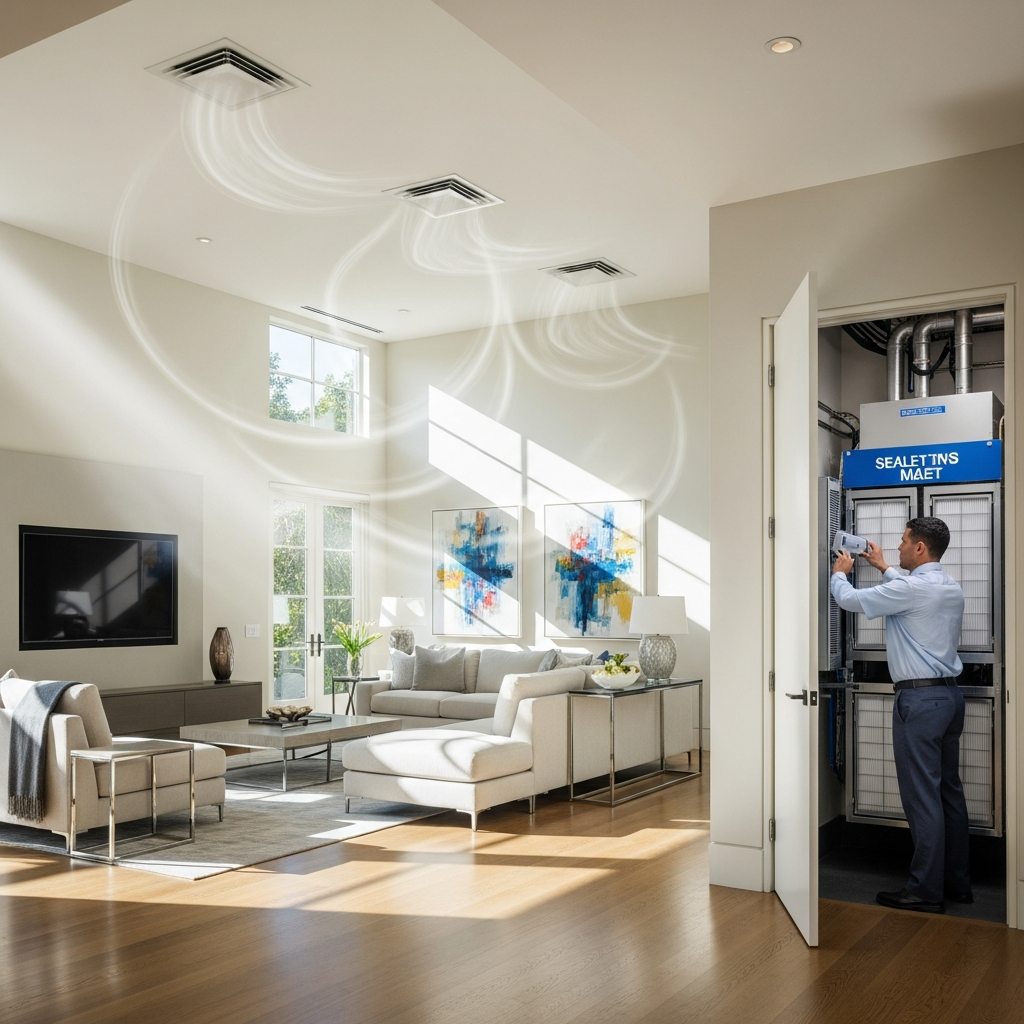
Step into any sunlit living room in Beverly Hills and you can feel why we love our homes—quiet, comfortable, and wrapped in the steady hum of the HVAC system that makes summer afternoons bearable and winter evenings cozy. Yet in all that comfort, there’s a hidden story traveling behind walls and above ceilings, where the air you trust to be fresh and balanced can be quietly compromised by years of dust, fibers, and residue. As someone who’s seen hundreds of homes from The Flats to Benedict Canyon, I can tell you that the everyday importance of clean ductwork goes far beyond what a quick dusting or a new thermostat can fix.
At its core, air duct cleaning is about restoring your home’s circulatory system so that every room breathes as well as the next. You feel the difference not just in fewer dust motes dancing in morning light, but in the sharper temperature control, the softer sound of airflow, and the absence of that faint stale note when the air first kicks on. In a place like Beverly Hills—part coastal influence, part hillside microclimate—those details add up to everyday comfort that you notice in small, satisfying ways.
How clean ducts support truly comfortable rooms
Comfort is more than air temperature; it’s how evenly that air moves and how quietly it delivers. When ducts accumulate debris, internal surfaces become rough, turning once-smooth pathways into a maze of turbulence. That turbulence can change how air splits between rooms, leaving one suite a bit stuffy while another gets a breeze. Clean ducts reduce those frictions, helping your system deliver balanced airflow without working overtime. And in large Beverly Hills homes where long duct runs span multiple stories, the benefit of restored interior smoothness shows up as fewer hot-and-cold complaints and a calmer acoustic profile throughout the day.
Indoor air quality: the daily difference you can’t see
Our city’s lifestyle brings with it unique challenges for indoor air. Landscapers stir up soil, canyon breezes carry fine mineral dust, and seasonal pollen settles on patios and quietly crosses thresholds. Once inside, particulates get caught in the rhythm of your HVAC cycles, collecting at elbows and transitions in the ductwork. Over months and years, that collection becomes a reservoir, lending a background haze to your air that you sense as dryness in the throat, a quick sneeze when the fan starts, or simply a need to dust more often than seems reasonable. Cleaning interrupts that pattern, trading the guesswork of scented candles or hastily shut windows for a real fix at the source.
Why Beverly Hills homes are especially sensitive to duct conditions
Architecture here is delightful but complex. Historic estates may have legacy duct materials, mid-century homes can feature creative routing after air conditioning was added, and new builds often achieve envelope tightness that demands careful attention to ventilation. Add to that our local quirks—marine layers that shift humidity, Santa Ana winds that test window seals, and wildfire seasons that leave behind a whisper of smoke—and you have a recipe for ducts that work hard and deserve periodic renewal. The difference between a system that merely runs and one that runs cleanly is night and day.
Energy efficiency and equipment longevity
While we tend to think first about air quality, clean ducts also benefit the mechanical heart of your system. Smoother, debris-free pathways lower static pressure, allowing the blower to move air with less strain. Reduced strain means gentler starts, fewer long cycles, and components that live closer to their design sweet spot. Over time, this can translate to fewer service headaches and a system that keeps its composure during heat waves. In my experience, homeowners are often surprised that a quieter, less labored sound after cleaning correlates with steadier temperatures and fewer nuisance issues.
The cleaning process: what good practice looks like
Effective duct cleaning is structured and calm. It begins with a walkthrough to understand how your system is laid out—where returns live, where supply trunks branch, and how long runs travel hidden paths through attics and between floors. Negative-pressure equipment draws debris out rather than in, while agitation tools dislodge what’s clung to surfaces over the years. Registers are sealed during the process, and technicians work in sections so that one area’s cleaning doesn’t send dust to another. The emphasis is on containment, removal, and respect for finishes and furnishings that make your home yours.
Post-cleaning benefits you can track
After cleaning, most families notice a constellation of small wins that sum to a big change. That thin, dusty note at startup fades. Powdery film on high-gloss tables builds more slowly. Rooms that once felt a touch sleepy perk up with livelier airflow. Filters often emerge from their first month less gray, a sign that you’re collecting what’s new instead of recycling what was trapped upstream. In large residences along Sunset or in the quiet lanes above Coldwater, these subtle shifts make living lighter, especially during seasons when you lean on your system the most.
Why filters alone aren’t enough
Filters matter, but they aren’t a magic wand. Even with a high-efficiency filter, gaps around the filter rack can invite bypass, letting dust skirt the media entirely. Duct interiors, once coated, don’t easily let go of hitchhiking particles, so you can find yourself swapping filters but still seeing the same dust return. After a proper cleaning, filters finally get to do the job they were meant for: grabbing fresh invaders before they can settle, rather than trying to trap the ghosts of seasons past.
The pet and textile factor
Between plush rugs, upholstered walls in screening rooms, and affectionate pets who consider every sofa their throne, Beverly Hills homes are rich in soft surfaces. These materials shed fine fibers and dander that drift invisibly into return grilles. Over time, that mix becomes a patchwork inside your ducts. A meticulous cleaning resets the canvas, so the fibers you add tomorrow don’t bond to the remnants of yesterday. For families sensitive to pet dander, this reset is particularly noticeable in the bedroom wing, where fresh air is most appreciated.
Timing cleanings around your household rhythm
There isn’t one perfect season for everyone, but there are smart moments. Before peak spring bloom, after summer’s dust, and following any interior work that sanded, sawed, or painted are reliable windows. If you entertain often or host guests in a detached casita, consider a schedule that anticipates those gatherings. The goal is to align a quiet, half-day project with the parts of your calendar that give you the longest runway of clean, comfortable air.
Local know-how makes the process seamless
Experience in Beverly Hills homes matters because the details are different here. Mechanical closets can be tight, duct pathways can traverse delicate attic spaces, and registers often live in carefully crafted millwork. A team accustomed to working in these environments moves thoughtfully, protecting finishes while achieving a deep, thorough clean. This familiarity also extends to climate cues: understanding when pollen peaks, how marine influence shifts morning moisture, and when Santa Anas may kick up dust that urges a preemptive appointment. Choosing a partner comfortable with our local rhythms ensures the results feel tailored rather than generic.
Investing in calm, healthy living
Clean air shows up in the way you feel at home—calmer mornings, less squinting at dust in a sunbeam, and a simple confidence that what you breathe is as cared for as the rest of your surroundings. I’ve watched households make small changes—better filter seals, a post-cleaning maintenance plan, a nudge to run the fan 10 minutes after closing windows—and those habits stick because the payoff is easy to feel. In a city that prizes wellness, taking ownership of what flows through your ducts is a natural extension of the care you give to every other corner of your property.
Midstream reminders and maintenance
Between cleanings, small checks pay dividends. Glance at return grilles monthly and wipe them when they show a line of dust. Confirm that your filter fits snugly and note whether its color deepens faster than it used to; a sudden change can hint at a construction project nearby or a gap that needs attention. If you notice a room growing sluggish or a faint mustiness emerging, you’ve got an early cue to inspect rather than wait. These small acts keep the system’s gains intact and help you catch issues while they’re still easy to correct. For a deeper reset when cues stack up, schedule focused air duct cleaning to bring the system back to baseline.
Frequently asked questions for Beverly Hills homeowners
How do I know my ducts need cleaning?
Look for recurring dust near supply vents, a faint stale odor when the system starts, and uneven room comfort that arrived gradually. If you’ve completed interior work, welcomed a new pet, or weathered a smoky season, odds are good your ducts would benefit from attention. A visual inspection at returns and accessible trunk lines often confirms it.
Will cleaning disrupt my day?
Professional teams work efficiently and respectfully. Expect a few hours, protective coverings where needed, and a steady, contained process. Most households go about their routine with minimal adjustment beyond ensuring access to mechanical spaces and registers. The payoff is an immediate freshness you’ll likely notice the next time the system cycles.
Do new homes need duct cleaning?
Yes, sometimes even more than older homes. Construction dust is tenacious and can linger in ducts despite site cleanup. If you’ve moved into new construction or completed a remodel, a one-time cleaning removes the residue left by sanding, cutting, and finishing, letting your pristine rooms enjoy air that matches the look.
Will duct cleaning improve energy efficiency?
Clean ducts reduce internal resistance and can help the blower move air more easily. While overall efficiency depends on many variables—equipment condition, duct design, insulation—the system generally runs more calmly and predictably after cleaning. Many homeowners also find that filters last longer and air distribution feels more even.
Is there a risk of damage to delicate finishes?
With the right team, risk is minimized by preparation and technique. Registers and surrounding surfaces are protected, negative-pressure containment prevents dust escape, and access points are chosen thoughtfully. The goal is a thorough internal clean with an external footprint so light you’d hardly know work was done, except for the fresher air.
What should I do after the cleaning?
Replace or wash filters on schedule, wipe registers occasionally, and consider a brief fan run after window ventilation to clear settled dust. Keep notes on how the home feels week to week; a living record helps you time future maintenance with precision rather than guesswork.
Bring balance back to your home
If your mornings start with a dry throat, if a favorite room feels just a touch dull, or if you’re simply ready for cleaner, calmer airflow, now is a sensible moment to act. Schedule a visit that fits your calendar, ask for a walkthrough tailored to your floor plan, and set a maintenance rhythm that keeps results humming along. For local expertise and a refresh that respects the way Beverly Hills homes are built, consider professional air duct cleaning and enjoy the quiet confidence of air that feels as good as your home looks.