
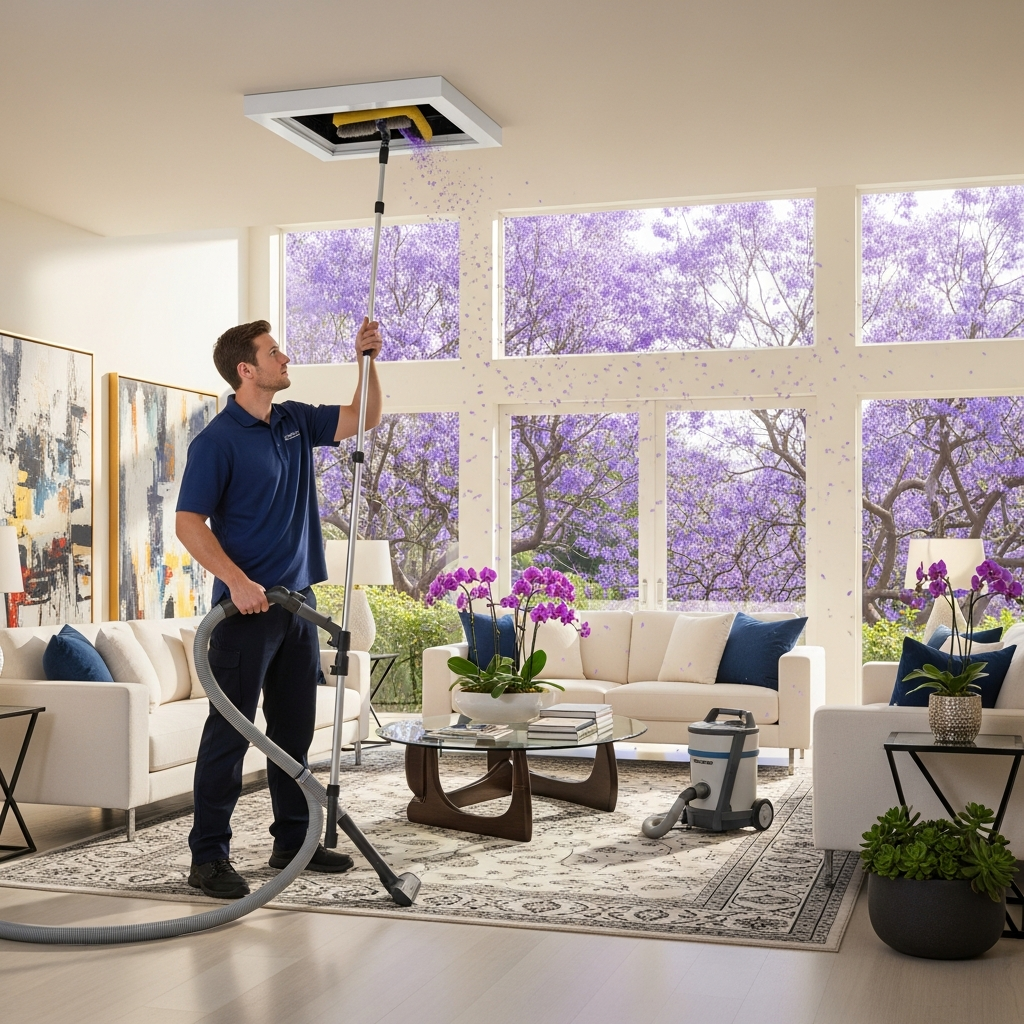
Every spring in Beverly Hills, the city’s famed jacaranda trees paint our streets purple while the dry foothills send a fine veil of dust drifting down toward The Flats and Trousdale. For many neighbors, this beautiful season arrives with itchy eyes, sneezing fits, and an unrelenting tickle in the throat. As a local who has spent years helping homeowners fine-tune their indoor air, I’ve seen how much relief can come from looking beyond over-the-counter remedies and into the quieter places allergens like to hide—most notably, the hidden corridors of your home’s ductwork. If you’ve ever wondered why symptoms flare the minute the AC kicks on, the answer may be circulating above your ceilings and behind your walls.
The unexpected reality is that a well-timed air duct cleaning can interrupt the cycle that sends dust, pollen, pet dander, and smoke residue from room to room. In a climate like ours—Mediterranean, with long, dry periods, bursts of Santa Ana winds, and occasional wildfire smoke events—particulate matter can accumulate quickly. Every time your HVAC system draws air, it transports fine particles through your intake grilles, across filters, and into duct runs. If those ducts have rough interiors, minor gaps, or older internal insulation, debris can cling inside and become a reservoir for what your nose reads as trouble. Clearing that reservoir is often the overlooked step toward calmer sinuses and easier mornings.
Why indoor allergies can feel worse in Beverly Hills homes
People are often surprised to learn that indoor allergen loads can rival or exceed what’s floating around outside. In Beverly Hills, the daily patterns of our microclimate amplify that effect. Morning marine layers roll in, the day warms rapidly, and then late-afternoon breezes push new air through open windows and leaky building joints. Over weeks and months, these variations drive particles into the home where they settle on surfaces and, crucially, get pulled into return vents whenever the air conditioner cycles on. If ducts are coated or the filter rack doesn’t seal perfectly, the system becomes more than a mover of air—it becomes a vehicle that redistributes the very irritants you’re trying to escape.
How allergens build up inside ductwork
To understand the benefits of a thorough cleaning, it helps to visualize what’s happening inside the ducts. Even if you change filters regularly, debris inevitably bypasses at the edges. Inside the duct, airflow slows at elbows, transitions, and long horizontal runs. That’s where dust, pet dander, and pollen settle, like silt in a slow bend of a river. In older estates in the Beverly Hills Post Office area, where duct runs often snake through attics and crawl spaces, tiny breaches can admit attic dust or insulation fibers. Add to that the electrostatic cling of certain plastics and aged duct liners, and you have a perfect landing pad for allergens. Over time, this layer can host microbes and hold onto smoke residue long after skies turn blue again, which is why symptoms often persist well beyond the last windy day.
Allergy symptoms that point to duct-related triggers
The indoor environment is complex, and allergies are personal. Still, some patterns offer strong clues. If you notice that sneezing spikes when the system first starts up, or that you wake with congestion despite keeping windows closed, your ducts may be involved. Families often report a faint, dusty odor that appears only when the blower runs, or a worsening for a few minutes after returning home and turning on the AC. Pets can amplify the issue, as dander is exceptionally light and stubborn. Even with vigilant housekeeping, what settles in the ducts can overwhelm what you remove from surfaces, reintroducing allergens every hour the fan is on.
What a professional duct cleaning really accomplishes
An effective cleaning is not a quick vacuum at the registers. It’s a methodical, end-to-end process that dislodges adhered debris and safely extracts it without scattering dust into the living space. The most reliable approach combines negative pressure with agitation, so the ducts are placed under suction while specialized brushes or air whips free the buildup. Access panels may be opened strategically, and supply and return runs treated to ensure no section becomes the weak link. When done correctly, the result is a network of smoother interior surfaces less likely to capture particles the next time breezes carry pollen across Wilshire or down Benedict Canyon.
The Beverly Hills variables: canyon dust, landscaping, and seasonal smoke
Local geography adds context to why duct hygiene can be pivotal for allergy control. Homes hillside-above Sunset and north into BHPO contend with canyon dust and the fine mineral silt that rides in on dry days. In The Flats, mature landscaping—olive, cypress, ficus, and brilliantly flowering ornamentals—sheds pollen through windows and even under door sweeps. During late summer and fall, wildfire smoke from distant hills can leave an invisible film that later off-gases when the ducts warm. Each of these factors doesn’t just affect surfaces you wipe; they affect the unseen pathways of your HVAC, making a focused cleaning one of the most impactful indoor air upgrades you can make without remodeling.
Complementary strategies that magnify results
Duct cleaning is most powerful when paired with small, sustainable habits. A high-quality, correctly sized filter installed with tight seals helps trap new intruders before they lodge inside. Sealing the return plenum and checking for gaps around filter racks matter more than most realize; even a pencil-width crack can invite bypass dust that compounds the problem. Simple routines—changing or washing filters on schedule, running the fan briefly after you close windows post-ventilation, and wiping supply registers—extend the benefits of a newly cleaned system. In many Beverly Hills homes with spacious floor plans, zoning dampers and long runs make balanced airflow especially important, as uneven velocities can let particles settle in slower branches.
Another layer to consider is source control. Pet grooming, mindful window-opening during heavy pollen hours, and sensible shoe-off habits help, but they cannot reach what already resides behind the grills. That’s why partnering with a team experienced in whole-home strategies matters. The right approach integrates filtration, sealing, and a thorough scrub of the duct interior, yielding cleaner air for months and often longer. If you’ve been relying on portable purifiers and still feel stuck, a mid-season reset with targeted air duct cleaning often provides the breakthrough you can feel within a day or two.
Understanding what’s normal and what’s not
No home is perfectly dust-free, and some baseline accumulation is inevitable. The key is whether your system is managing air in a way that supports health rather than undermining it. If you need to dust more than once a week despite modest foot traffic, or if you notice a gray film forming quickly on furniture near supply vents, it may indicate recycled particulates from within the ducts. Likewise, if a musty odor lingers when the air first flows, it could be residual moisture from past condensation pooling in a low spot of ductwork, trapping debris that then becomes a micro-environment for mold. Thorough cleaning combined with diagnosing those low spots or insulation gaps can break this feedback loop.
Homes of different ages need different attention
Beverly Hills has a distinctive blend of historic estates, mid-century modern masterpieces, and new construction. Older homes may harbor legacy duct materials and design choices that no longer match today’s air quality expectations. Internal duct liners can fray and shed, catching dust like Velcro. Mid-century properties with retrofitted central air often have creative routing that includes multiple transitions—each one a turbulence point where particles drop out of the airstream. Newer homes, while tighter, can concentrate indoor pollutants if ventilation isn’t balanced. Across all eras, the principle stands: reduce particle reservoirs, manage airflow, and you reduce allergic load.
Addressing pet dander and fabric fibers
Our love for dogs is evident in every Beverly Hills park, and their dander is a common trigger. Lightweight and persistent, dander floats long after the last tail wags past the sofa, migrating into return grilles. Likewise, fibers from plush rugs and draperies drift into ducts and mat to surfaces inside. Over time, the duct’s interior becomes a tapestry of mixed materials that release with each pressure change. Removing that layer doesn’t remove pets or textiles from your life; it simply returns your ducts to a neutral state so daily living adds only what your filters can realistically capture.
When wildfire season leaves its mark
Even when flames are far away, smoke’s tiny particles can find a path indoors. You may have kept windows shut, yet your HVAC still cycled to control temperature, drawing in a share of outside air through inevitable micro-leaks and through any fresh-air intakes. Smoke particulates are tricky; they embed odors and adsorb onto dust already inside ducts. Months later, a heat wave warms the system and those trapped compounds re-release, bringing back the memory of smoke. This is one of the most persuasive cases for a careful, equipment-safe duct cleaning that removes the substrate smoke clings to, letting your home’s natural scent return.
How to time cleaning for maximum allergy relief
If allergies dominate your spring, scheduling a cleaning in late winter lets you start strong before the jacarandas bloom. For those most sensitive to fall triggers, an early-September appointment can clear what summer dust and light construction season added. After major interior projects—painting, refinishing floors, or kitchen overhauls—duct cleaning can erase the fine particulates that inevitably escape plastic sheeting and roam the house. Ultimately, the timing should reflect your home’s unique rhythms: pets that shed seasonally, family members who train outdoors and bring particles back in, and the variable cadence of entertainment and guests that shifts how hard your system works.
Measuring improvement beyond how you feel
Relief is the goal, and the body is a great barometer. Still, some homeowners appreciate objective signs: fewer visible dust motes in morning light near vents, slower dust accumulation on dark furniture, and the simple silence of a family that isn’t sneezing through breakfast. In cases of severe sensitivity, periodic air sampling can offer snapshots; while not required, these can help confirm that reductions you sense are matched by lower particulate counts. Even without lab reports, track your filter. A post-cleaning filter that stays lighter for longer often signals that air is moving more cleanly through the system instead of shedding yesterday’s debris back toward the grille.
The human side of cleaner ducts
There’s a tangible mood shift that comes with breathing easier at home. Families report deeper sleep, less grumbling about morning stuffiness, and more willingness to open a window for a short, mindful refresh without fearing days of rebound symptoms. The value isn’t only biological; it’s also emotional, tied to the quiet confidence of a home that supports you rather than asks you to adapt. In a city where we invest thoughtfully in wellness—from carefully sourced foods to well-designed outdoor spaces—bringing that same intention to the air moving through our ducts completes the picture.
Setting expectations for the cleaning day
A well-executed cleaning is deliberate and respectful of your space. Technicians protect floors, seal registers during negative-pressure cleaning, and move methodically from return to supply. The sound is present but not overwhelming, and the process is as tidy as it is thorough. Communication matters: what was found, where buildup concentrated, and simple preventive steps. You shouldn’t be left with a mystery; you should be left with clearer air and a plan to keep it that way. When you combine that with mindful housekeeping and smart filtration, you create an indoor haven that softens the blow of our city’s most allergenic days.
Partnering locally makes a difference
Local familiarity isn’t just convenience; it shapes results. Teams who regularly work in Beverly Hills understand the idiosyncrasies of long hillside runs, tight mechanical closets in boutique condos along Wilshire, and the extra care required for high-end finishes around registers and grilles. They also understand seasonal rhythms—when high pollen hits, how coastal breezes change, and which neighborhoods face more canyon dust. Aligning with an experienced local provider for periodic air duct cleaning bridges the gap between generic maintenance and care that’s truly tuned to your home.
FAQ: Your top questions about allergens and duct care
Will duct cleaning fix my allergies completely?
No single step fixes allergies for everyone, because triggers and sensitivity vary. What duct cleaning does exceptionally well is remove a major reservoir that keeps recirculating irritants. Most homeowners report noticeable improvement—fewer flare-ups when the system starts, less morning congestion, and reduced dusting. Pairing cleaning with strong filtration, good housekeeping, and mindful ventilation multiplies the benefit.
How often should I clean the ducts if allergies are a problem?
A general guideline is every three to five years, but if you have pets, live near canyon areas, or react strongly to seasonal pollen, you may benefit from a shorter interval. Post-wildfire smoke exposure or after interior construction, a one-time cleaning can reset your baseline. The right cadence depends on how your household lives and how your system is built.
Will cleaning spread dust through my home?
When performed correctly with negative-pressure equipment and sealed registers, dust is contained and removed rather than pushed into rooms. Look for a process that isolates sections, agitates thoroughly, and includes careful vacuum capture. Protecting furnishings and maintaining cleanliness during the work are hallmarks of a professional approach.
Is there a best season for allergy-focused cleaning?
Late winter for spring allergy sufferers and early fall before Santa Ana winds pick up are smart targets. That said, if symptoms are constant, the best season is the one you’re in. Relief that starts now carries into the next season with momentum.
What about mold—will duct cleaning address it?
Cleaning removes dust that can feed mold, and it can dislodge light surface growth if it exists. If an inspection finds true moisture problems or active colonization, those conditions must be corrected at the source. A responsible provider will distinguish between routine debris and situations that call for remediation or component replacement.
Are there materials inside ducts that shouldn’t be disturbed?
Yes. Good technicians know how to work around delicate liners, seal minor breaches, and avoid damaging flexible ducts or aging materials. The goal is restorative, not destructive. Inspection before cleaning allows the team to tailor their tools so the system emerges cleaner and intact.
Final thoughts for Beverly Hills homeowners
Allergies thrive on repetition—of dust stirred up day after day, of pollen that rides the breeze and lingers, of dander that drifts into quiet corners. Breaking that repetition inside your ductwork can tilt the odds back in your favor. Whether your home is a historic gem north of Sunset or a contemporary sanctuary off Wilshire, a focused approach to duct hygiene complements every other wellness choice you make indoors.
Breathe easier starting now
If you’re ready to wake up clear-headed and reclaim the calm of your rooms when the system turns on, schedule professional help and make this the season you interrupt the cycle. Reach out today to plan a visit, align timing with your sensitivities, and set a simple maintenance rhythm that lasts. For a local partner that understands our climate, neighborhoods, and finishes, explore expert air duct cleaning and take the first, most practical step toward an allergy-smart Beverly Hills home.