
It is natural to look for a simple yardstick when planning a home project, and in real estate the phrase “per square foot” shows up everywhere. When it comes to air duct replacement in Beverly Hills, though, the square footage of the house is only a small part of the story. Ductwork is about the air your rooms require, the pathways available above ceilings and within chases, and the way the system breathes through returns and supplies. Two homes with identical square footage can demand entirely different designs depending on layout, ceiling finishes, and access. Understanding why this is so helps you plan more wisely and judge proposals by how well they address your home, not by a simplified metric. In practice, duct replacement is best considered through scope and outcomes rather than a one-size-fits-all number.
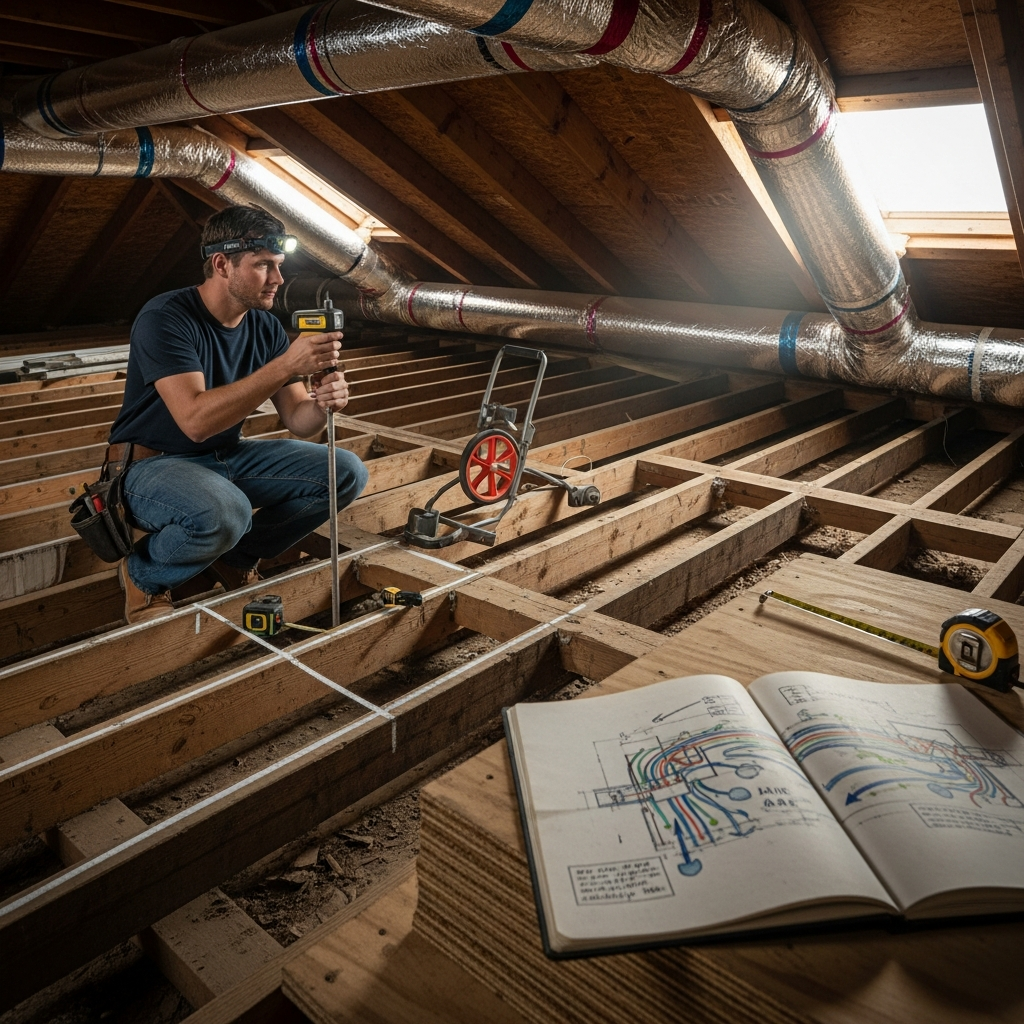
Consider a single-story ranch with a spacious attic versus a multi-level home with tray ceilings and intricate lighting. Both might occupy similar footprints, but the routes available to carry air will be dramatically different. In the first case, straight trunk runs with gentle branches can make for efficient airflow and quiet operation. In the second, ducts may need to navigate tight joist bays, curve around architectural features, and share space with lighting, sprinklers, or audio systems. These realities shape the design, the materials used, and the time it takes to achieve the level of performance you expect.
Airflow, not area, sets the design
At the heart of duct design is airflow—how much each room needs to feel right and how smoothly that air can travel from the equipment to the registers. Room orientation, window area, shading, and use patterns all matter. A home office with afternoon sun might need a firm, quiet push of cooled air when video calls stack back-to-back, while a lightly used guest room can be served more gently. Returns must be sized to feed the system without noise or strain, and in many Beverly Hills homes, adding or relocating returns is a major part of elevating comfort. None of these essentials show up in a per-square-foot calculation, yet they define the quality of the final result.
Another dimension is balance. Imagine delivering air precisely to a sunlit living room only to starve the adjacent hallway. Good design prevents rooms from competing by sizing branches to the need of each space and by keeping total pressure within a healthy range. Supporting that balance requires thought about register style and placement as well—selecting diffusers that throw air across the room and locate drafts away from seating. Again, these choices flow from how a home lives and breathes, not from its footprint alone.
Access and architecture guide the route
Square footage does not reveal whether your attic allows upright movement or requires careful crawling along joists. It does not tell you if chases exist where you need them or if a return can be expanded without altering finishes. Design teams in Beverly Hills learn to read the house—recognizing when to extend a soffit discreetly, when to reimagine a return pathway, and when a small, strategic ceiling access will solve a long-standing comfort issue. The more constrained the route, the more intentional the solution must be, and the more that solution relies on skilled installation.
In homes with significant architectural detail, ducts should disappear visually and acoustically. That often leads to combinations of rigid trunks for low resistance and short, tight flexible connections for final alignment. Where a bedroom shares a wall with a return, deeper plenums and internal lining hush the system. These details are not extras; they are how you achieve the serenity that residents here rightly expect.
Materials and methods matter more than a metric
Rigid round metal, rectangular sheet transitions, duct board, and flexible whips each have a role. The craft lies in mixing them to suit the space: long, smooth trunks where airflow is highest; carefully supported branches with gentle radii; and sealed joints that do not shed air into attics or chases. Supports keep ducts straight and insulation uncompressed. Transitions are shaped to preserve cross-sectional area so air does not speed up and roar where it should glide. These are the elements that define quiet, dependable operation.
Registers and grilles deserve equal attention. Their throw patterns, sizes, and finishes should complement both the room’s design and its comfort goals. In a media room, a wide, soft throw keeps the air subtle. In a kitchen, a slightly more directed pattern tempers warm spots near cooking areas. Achieving this balance is part science and part listening to how the household uses each space.
Why per-square-foot often misleads
A simple metric cannot account for how returns are improved, how tricky rooms are served, or how the final system will be verified with testing. It does not recognize the difference between replacing only visible runs and redesigning the system to resolve chronic hot and cold spots. It does not capture the nuance of working in tight attics during warmer seasons, or the care required to protect finishes and return spaces to order daily. Most importantly, it does not measure the calm that comes from a system that fades into the background, doing its work without drawing attention.
When homeowners compare proposals, the most instructive differences tend to be scope and proof. Does the plan include airflow measurements at completion? Will returns be resized or relocated to reduce noise? Are registers being selected for each room’s needs? These questions anchor the conversation in results rather than a single figure. They also invite a collaborative process in which your priorities—quiet bedrooms, focused home offices, serene living spaces—shape the final system.
Planning a project around your life
Successful projects respect routines. Clear schedules explain which rooms need access when, how furnishings will be protected, and what you can expect to hear and see on a given day. In many Beverly Hills homes, the bulk of the work occurs in attics, minimizing interior disruption. Where a brief interior access is needed, teams plan it like a surgical step—clean, quick, and followed by careful restoration. Communication throughout keeps surprises to a minimum and assures you that attention to detail extends beyond what goes behind the ceiling.
Midway through the work, you might glimpse the new system’s backbone—smooth runs, secure supports, thoughtful routing that avoids unnecessary bends. This is a valuable checkpoint. Walking the space with the installer lets you confirm priorities, ask for minor adjustments, and appreciate how the design is coming to life. When the final touches go in and airflow is verified at registers, the home settles into a new normal: rooms that agree with each other, reduced dust, and a system that sounds more like a whisper than a conversation. In that moment, the logic of moving beyond a per-square-foot mindset becomes clear. A home is not a grid; it is a lived-in place that deserves a custom approach. And a well-executed duct replacement project reflects that reality beautifully.
Frequently asked questions about “per square foot” and duct replacement
Is there ever a useful square-foot guideline? It can provide a very rough orientation, but it overlooks room-by-room needs, access constraints, and the importance of returns and testing. Treat it as background noise, not a decision-maker.
How do I compare proposals without a simple metric?
Ask each team to explain the design: branch sizes, return strategy, register selection, and how performance will be verified. Clarity in scope is more valuable than a single number that cannot reflect your home’s real needs.
Will new ducts make a noticeable difference?
Yes, especially if you currently experience uneven rooms, noise, or dust. A design that addresses these directly often produces an immediately calmer, more consistent environment.
What about preserving architectural finishes?
Skilled teams plan routes that respect ceilings and walls. When access is necessary, it is deliberate and followed by careful restoration. Protection of finishes is a central part of project planning.
Do I need to replace the equipment too?
Not necessarily. Many homes benefit significantly from new ductwork alone. If equipment is nearing the end of its life, integrating plans can be wise, but ducts and equipment can be approached separately when appropriate.
How long does the process take?
Timelines vary with home size, access, and scope. Clear scheduling sets expectations at the outset, and open communication keeps the project smooth from first day to final verification.
If you are weighing options and want results that honor both comfort and design, start a conversation with a local expert who sees beyond square footage and into how your home truly moves air. Share your priorities, ask for a plan that speaks in specifics, and choose a path that ends with quieter rooms and steadier temperatures. When you are ready to take that step, explore duct replacement with a team that treats performance and respect for your home as inseparable goals.