
When you have just invested in new ducts for your Beverly Hills home, the difference is immediate. Rooms equalize, registers hush, and the system seems to know what you want before you do. The next question is how to preserve that feeling day after day, season after season. As someone who has helped homeowners from Benedict Canyon to the Flats live with their upgraded systems, I can tell you that maintenance is less about chores and more about attention—small, smart habits that keep everything tuned. Whether your project included zoning refinements, new returns, or a full duct replacement, a thoughtful approach will extend performance and protect your investment.
New ducts are a strong foundation, but like any high-performing system, they respond to care. The goal is not maintenance for its own sake; it is preserving the quiet, even comfort that led you to replace the ducts in the first place. You do not need a clipboard to succeed. You need a sense of how air moves through your home, an eye for small changes, and a seasonal rhythm that keeps details from drifting.
Start with Airflow Awareness
Great maintenance begins with understanding your home’s airflow story. Stand beneath key registers during a typical cycle and pay attention to the character of the air—its temperature, its velocity, and its sound. In bedrooms, it should arrive as a suggestion; in kitchens and high-use spaces, it should feel present but never pushy. Once you have a mental snapshot, you will recognize when something shifts. That shift might be a sign that a filter needs attention or that a damper was bumped during housekeeping.
Returns deserve the same awareness. Clear the area around them and keep fabrics, furniture, or art from hugging the grille. A return that breathes freely allows filters to work efficiently and keeps noise down. If your home has decorative treatments, make sure they do not impede access for seasonal checks.
Filters and the Cadence of Clean
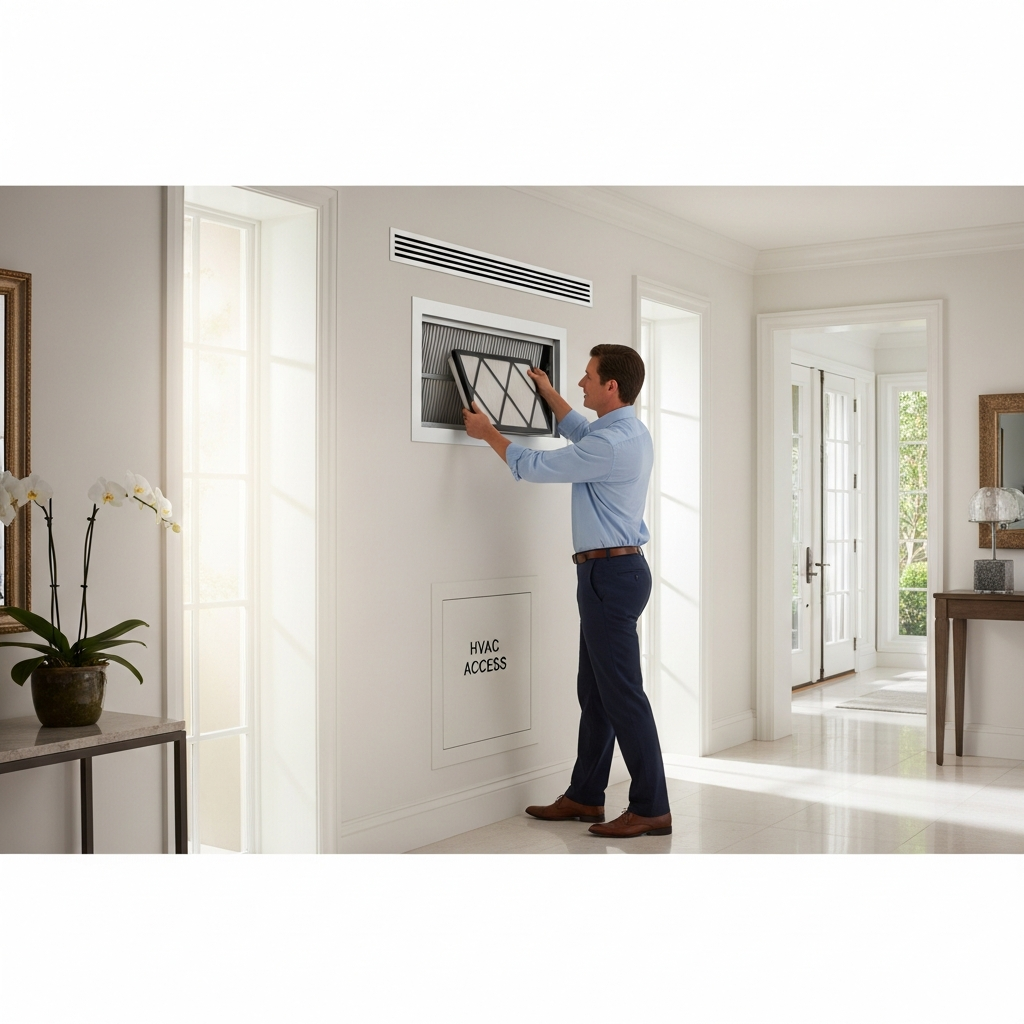
Filters are the frontline of air quality and the guardian of happy ducts. Follow the cadence recommended for your specific filter type and lifestyle. Homes with pets, proximity to busy streets, or frequent entertaining will load filters faster than quiet, low-traffic spaces. Mark your calendar based on experience after the first few cycles. Replacement is a small task with outsized impact; clean filters keep static pressure in check, preserve airflow, and protect the quiet you enjoy.
If your system uses higher-grade filtration, confirm that returns and air handler connections remain tight after each change. A small gap where a filter slides into place can bypass the media and allow unfiltered air to slip by. During smoke season or heavy pollen weeks, be ready to check more often; your senses will tell you when the home feels slightly less crisp, and that is your cue.
Seasonal Walkthroughs and Gentle Housekeeping
Twice a year, take a calm walkthrough of the areas that matter: the mechanical room, attic access, and visible returns. Look for anything that seems out of place—insulation that has shifted near a duct run, an access panel that is not snug, or a grille with dust halos that hint at infiltration. These are small details, easily corrected when found early. Keep storage items in attics and closets from pressing on duct insulation or pinching a run that takes a tight turn.
In homes with staff or regular housekeeping services, share a few guidelines: avoid leaning ladders or brooms against return grilles, do not cover registers temporarily for cleaning, and maintain clear paths to access panels. These courtesies protect both performance and finishes.
Mind the Dampers and the Zones
If your replacement included zoning, spend time learning the logic behind it. Zones should reflect how you live—morning routines near the kitchen, workday comfort in offices, and evening focus in lounge and bedroom areas. Once you know the intent, you can spot when a damper may have been nudged or when a schedule needs a seasonal tweak. The best systems are forgiving, but your attention will keep them perfectly tuned.
During seasonal transitions, consider slight setpoint adjustments that match the outside air. On mild days, let the system breathe at lower fan speeds or wider temperature bands. It is a gentle way to give the equipment and ducts a break while maintaining the easy comfort you expect.
Protecting Registers and Returns as Design Elements
In Beverly Hills homes, registers and returns are often integrated as architectural details—flush with ceilings, aligned with trim, or shadowed in reveals. Maintaining them means more than quick dusting. Use soft tools that respect finishes, and avoid sprays or polishes that could be drawn into the system. If a diffuser feels loose, do not force it; a simple adjustment at the boot usually secures it without marring the surface.
When reconfiguring furniture or artwork, think about airflow. Avoid placing a tall sculpture directly beneath a supply, or wall-hanging fabrics over a return. Subtle choices like these keep the air path free and the feel of the room composed.
Attic Etiquette and Crawlspace Care
Attics in our climate can swing wildly in temperature. If you store items there, maintain generous clearances around duct runs. Cardboard boxes and soft goods can press into insulation and create thermal bridges. Place temporary walkway boards carefully so supports are not displaced. If you notice a section of insulation that appears flattened, a quick reposition restores performance that might otherwise be lost in small increments you would only feel on the warmest days.
In crawlspaces, guard against debris and keep an eye out for moisture. Even with well-sealed ducts, ambient conditions matter. If you detect a change in odor near a crawlspace return or access panel, address it early. New ducts are resilient, but the environment around them should remain clean and dry.
Listen for the System’s Whisper
Healthy ducts lower the home’s noise floor. If a register begins to hiss or a return grows louder than usual, take it as a helpful message rather than an alarm. Often, the fix is straightforward—an overdue filter change, a diffuser adjustment, or a small obstruction at the grille. If the sound persists, schedule a visit before a minor annoyance becomes a habit of living with less-than-ideal comfort.
In media rooms and bedrooms, pay attention to changes in the way the room settles after the system cycles. The best compliment to a great duct network is the absence of awareness that it is even running.
Plan Professional Touchpoints
Annual or semiannual professional check-ins are the anchor points of long-term performance. When a technician measures static pressure, verifies airflow at registers, and inspects damper operation, you get more than a thumbs-up; you get data. That baseline makes future decisions easier, whether it is adjusting a zone for a new home office or introducing enhanced filtration during allergy season.
These visits are also moments to discuss lifestyle shifts. If the guesthouse is becoming a studio, or the gym is moving into a different wing, a small branch adjustment now can save a larger rethink later. Maintenance, in this sense, is also strategy.
Guarding Against Smoke and Seasonal Extremes
Wildfire seasons are a reality we prepare for quietly. Your new ducts, with sealed seams and thoughtful returns, are built to help. When smoke is in the forecast, confirm filters are fresh and windows are sealed. If your system includes enhanced filtration or purification, run it to maintain indoor quality while keeping fan speeds reasonable. After a smoke event, a quick inspection of returns and grilles will tell you whether a mid-cycle filter change is wise.
Heat spikes and cool marine mornings ask different things of the system. During heat waves, trust the distribution to maintain setpoints with fewer dramatic swings when doors and windows remain closed. On cool mornings, avoid big thermostat adjustments; let the system nudge temperatures gently. Your ducts are designed for this, and restraint preserves the quiet equilibrium you enjoy.
Documentation as a Living Asset
Save the commissioning report from your replacement—the airflow readings, pressure measurements, and zone maps. Keep it where you can find it. When service is needed or when you make changes to the home, that document becomes a roadmap. It is also a point of pride. Too often, the behind-the-scenes excellence goes uncelebrated; knowing your system’s numbers is part of owning a home that performs as beautifully as it looks.
Photographs of key access points and labels on attic pathways can also help. If you ever need to direct a technician or verify a damper position, those references save time and reduce uncertainty. The less time spent searching, the more time spent refining.
Small Habits, Big Payoffs
Curtains, doors, and windows influence airflow patterns more than most people expect. In rooms where privacy or blackout shades are essential, check that the edges do not hug diffusers or returns. If you favor fresh air in the mornings, give the system a moment to recalibrate after you close up; a short period of fan-only circulation can clear residual humidity without a full cycle.
Guests and events present an opportunity to observe. When the house is lively, note how temperatures hold and how quickly rooms recover after doors have been opening and closing. If a space consistently runs warmer or cooler during gatherings, a small register adjustment or damper tweak can restore balance.
When to Call for Help
Trust your senses. If you feel a room consistently lagging despite clean filters and clear registers, or if you notice a persistent odor at a particular grille, bring in a professional. New ducts are robust, but the point of maintenance is not to ignore changes; it is to respond early. A quick static pressure check or airflow measurement can pinpoint the issue and preserve the graceful operation you expect.
Likewise, if construction elsewhere in the home shifts how a wall or ceiling cavity behaves, have the ducts re-evaluated. Houses evolve, and great comfort follows when the distribution evolves with them.
FAQ
Q: How often should I replace filters in a Beverly Hills home? A: It depends on your filter type and lifestyle, but many homes settle into a rhythm of checks every one to three months, with more frequent changes during smoke season or high-traffic periods.
Q: Do I need to clean new ducts? A: With well-sealed, properly installed ducts, routine cleaning is rarely needed. Focus on filters, returns, and system checks. If conditions suggest buildup, a targeted inspection will guide any cleaning decision.
Q: What are the first signs something needs attention? A: Increased register noise, uneven room temperatures, or a subtle shift in air quality are common early signals. Address them promptly to keep small issues from growing.
Q: Can I adjust diffusers myself? A: Gentle adjustments are fine, but avoid forcing mechanisms. If a diffuser feels stuck or a change does not deliver the expected result, consult a professional to prevent damage or imbalance.
Q: How does entertaining affect maintenance? A: Events change airflow patterns for a day or two. After gatherings, a quick filter check and a walk past key returns and registers help confirm everything is back to baseline.
Q: Are there seasonal best practices? A: Yes. Before summer and before cooler months, review filters, clear returns, and verify that dampers and schedules match your routines. A brief professional check at least annually anchors this rhythm.
Q: Will opening windows harm the system? A: Fresh air is part of California living. Simply allow the system to stabilize afterward. Run fan-only mode briefly to balance air without forcing a full heating or cooling cycle.
Maintenance is not a chore list; it is a mindset that protects the quiet, balanced comfort you invested in. If you are ready to anchor your home’s performance with expert guidance and a plan tailored to how you live, schedule a conversation today. Preserve the ease you feel in every room by partnering with a local team that understands Beverly Hills architecture and daily rhythms, and keep your home at its best with attentive care following your duct replacement.