
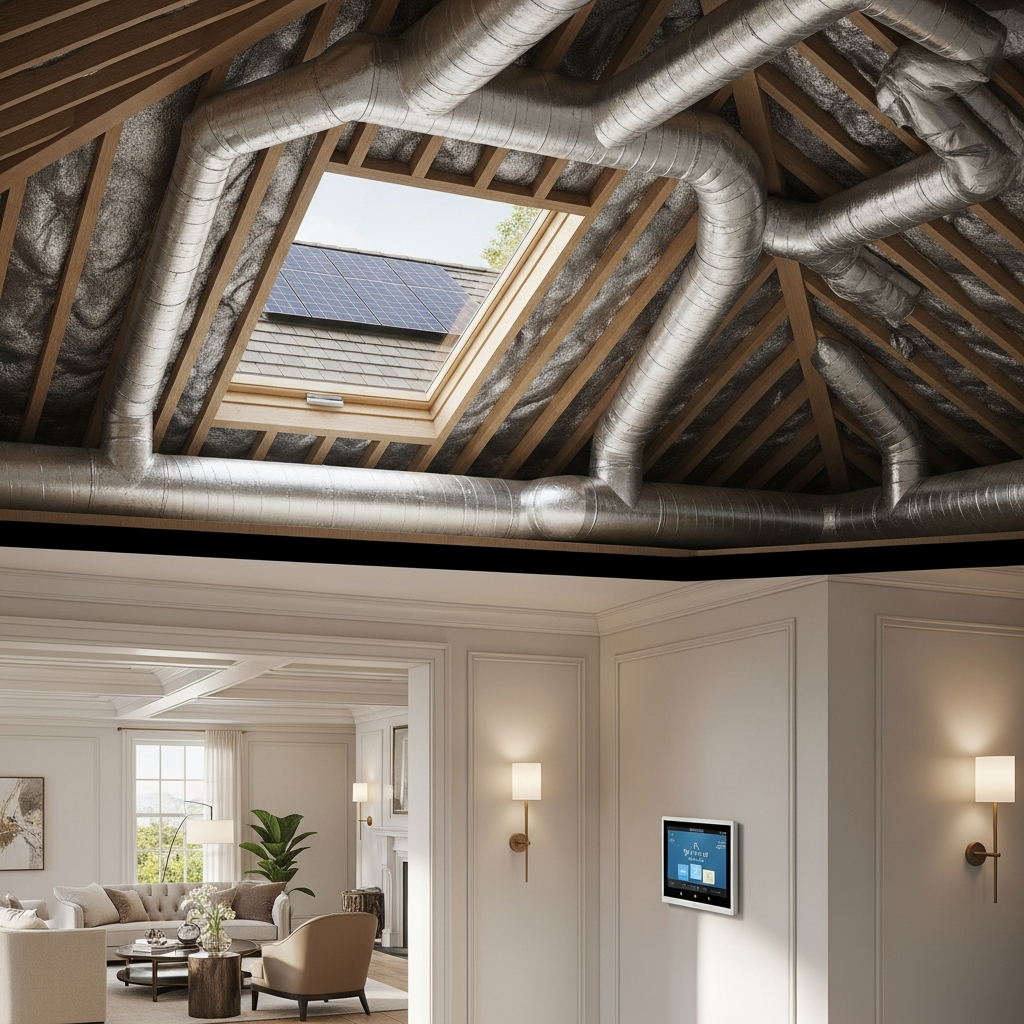
Environmental performance in Beverly Hills homes is often discussed in terms of solar panels, battery backups, and high-performance windows. Yet one of the quietest, most consequential upgrades you can make—especially in larger residences—is to the ductwork that carries conditioned air. Thoughtful duct replacement speaks to sustainability at every level: it helps cut wasted energy, protects indoor air from outdoor particulates, extends the life of mechanical equipment, and reduces strain on the grid during heat waves. The result isn’t just a greener home; it’s a calmer, cleaner, more resilient space that aligns with the understated sophistication Beverly Hills is known for.
Energy use and the case for tighter ducts
Leaky, poorly insulated ducts waste energy in ways you can’t see but definitely feel. In attics that bake under summer sun or cool quickly at night, a small gap or thinly wrapped run can bleed conditioned air into voids. When new ducts are sealed with mastic at every seam and properly insulated end to end, the HVAC system doesn’t have to work as hard. That means steadier temperatures, shorter runtimes, and less energy drawn from the grid when demand spikes across Los Angeles.
We often pair duct replacement with a reevaluation of airflow pathways and diffuser types. When air moves smoothly through correctly sized trunks and branches, velocity drops, turbulence calms, and the fan can idle at lower speeds more of the time. This is where everyday comfort and environmental benefit intersect. Reduced electrical draw from fans and compressors translates to lower emissions upstream, particularly at peak times when power is most carbon intensive.
Indoor air quality as an environmental value
People sometimes separate “green” upgrades from health upgrades, but in real homes they are deeply connected. Cleaner indoor air reduces the need for chemical masking and frequent deep cleans, and it protects finishes that otherwise degrade faster in polluted environments. With tight ducts and smart return placement, filtration works as designed. During wildfire events, your home becomes a refuge instead of a hazy compromise. The system recirculates through filters that capture fine particulates, minimizing infiltration from attics or crawlspaces where uncontrolled air would otherwise be drawn in.
Humidity moderation is another quiet win. Even in our dry climate, seasonal shifts and coastal influence can nudge moisture up or down. Ducts that maintain supply temperature reduce condensation risk and the micro-environmental stresses that encourage mold in marginal spaces. Fewer moisture events mean fewer remediation products and less material waste over the life of the home.
Extending equipment life and reducing embodied impacts
When ducts are right, equipment lasts longer. Compressors and fans aren’t fighting against high static pressure or compensating for leaks, so they cycle less and stay within their design envelopes. Deferring equipment replacement has an environmental upside: fewer large components manufactured, shipped, and installed over the timeline of your ownership. Even small shifts in longevity matter when scaled across a neighborhood of estates with multiple systems.
On the materials side, modern ductboard and metal systems can be specified with recycled content, and demolition from old runs can be responsibly sorted. We’ve worked with haulers who understand how to separate metal, fiberglass, and incidental waste to keep more material out of landfills. These backstage choices don’t show up in listing photos, but they align with the values many Beverly Hills residents bring to their projects.
Peak demand and community resilience
Hot afternoons strain the grid. If your ducts leak, your system runs longer, often right when the grid is at its limits. Tight ducts and balanced airflow help your home ride through heat waves with fewer high-speed cycles. If you have solar and storage, this efficiency means more of your comfort is powered by your own system rather than pulled from the grid at its dirtiest hour. Multiply that effect by a block of homes and the neighborhood becomes a little more resilient without any visible change to the streetscape.
Respecting architecture while improving performance
People rightly worry that environmental upgrades could compromise design. In practice, replacement work is remarkably discreet. Routing within existing chases and soffits preserves ceiling lines and moldings. Register styles can be selected to match or elevate the interior language—linear slots for minimalist spaces, classic grilles for traditional rooms. At the end of the process, the home looks the same or better, but moves air in a way that is measurably cleaner and more efficient.
Real-world outcomes in Beverly Hills homes
Consider a hillside property with extensive glazing. Before replacement, the upper gallery ran warm each afternoon, and the system roared to compensate. After re-sizing trunks, smoothing elbows, sealing every joint, and rebalancing supplies, the space held temperature quietly. The owners noticed they stopped fiddling with thermostats during heat spikes and had fewer “our home smells like the attic” moments when the Santa Ana winds kicked up. The environmental impact is embedded in those daily details: less runtime, less noise, less material wear.
Mid-project testing is instructive here. Static pressure numbers drop, airflow at key registers steadies, and supply temperatures hold closer to design. It’s often at this halfway mark—right after sealing and before final finishes—that you feel the green benefits in your bones. In the middle of your duct replacement journey, those metrics confirm you’re not just installing something new; you’re recalibrating how the house interacts with the environment.
Stewardship beyond the mechanical room
Environmental impact doesn’t end at the supply register. With better ducts, you can often choose gentler thermostat strategies that align with circadian rhythms and reduce peaks. Night setbacks become modest nudges rather than big swings. Rooms you used to overcool to compensate for hot corners can now sit at more natural setpoints. If you work from home part-time, targeted zoning allows you to condition a study without energizing an entire wing. These small habits, enabled by solid infrastructure, ripple outward into meaningful savings.
Frequently Asked Questions
How does duct replacement reduce energy use in a luxury home?
By eliminating leaks and lowering static pressure, the system runs more efficiently at lower speeds for longer, steadier cycles. That means less power drawn during peak periods and fewer temperature swings that require aggressive conditioning.
Will new ducts make a difference during wildfire smoke events?
Yes. Tight ducts paired with proper filtration and smart recirculation keep particulates from sneaking in via attics or crawlspaces. The improvement is tangible—cleaner air, fewer odors, and a more comfortable refuge when outdoor air quality dips.
Is there a way to recycle old duct materials?
Metal components are commonly recyclable, and many haulers can separate fiberglass and other materials for responsible disposal. Planning this at the outset reduces landfill contributions without delaying the project.
Do I need new equipment to see environmental benefits?
No. Many gains come from the ductwork alone. If you later pair tight ducts with variable-capacity equipment, the benefits stack, but you don’t have to do everything at once to make a meaningful difference.
Will replacement affect the look of my interiors?
With careful coordination, no. Access is strategic and discreet, and register styles can complement your design language. Most owners notice improved comfort and quiet without any visible disruption.
If you’re ready to enhance comfort, cut waste, and strengthen your home’s resilience, start a conversation with a Beverly Hills team that treats environmental performance as part of luxury. Align your values with your daily experience and choose duct replacement that looks invisible and lives beautifully.