
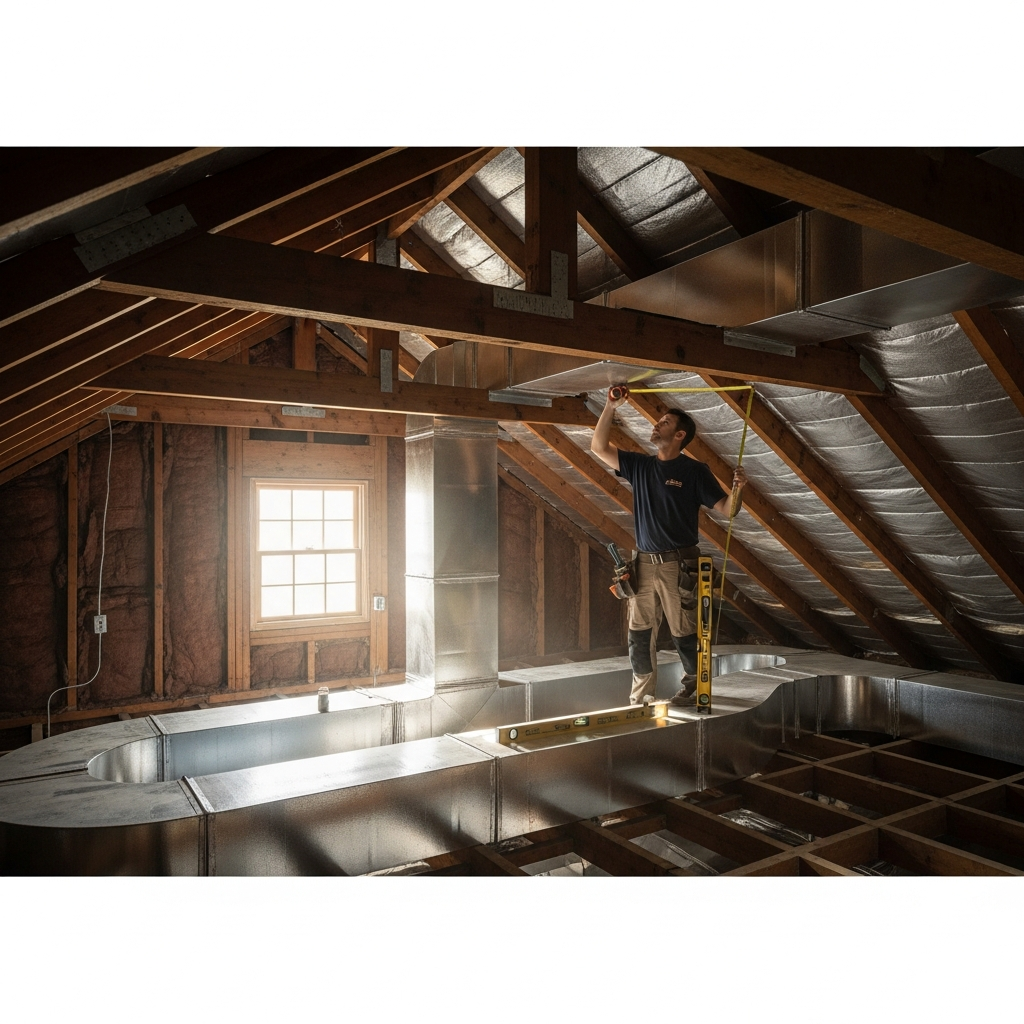
In Beverly Hills, the conversation around duct replacement often starts with a simple question that sounds perfectly straightforward: what does it look like per square foot? The reality, however, is richer and more nuanced than a single metric can capture. Homes here tell stories through architecture, materials, and the way they sit on a lot, and those details shape how a project is scoped, sequenced, and ultimately evaluated. When neighbors swap notes about remodeling, one might be talking about a restored Spanish Revival with a low-slope roof and tight rafters, while another lives in a hilltop mid-century with long runs and high ceilings. Both are looking for efficient, quiet air distribution and lasting workmanship, but the path to get there is different. Whether you’re in the flats or up Benedict Canyon, the way people talk about per-square-foot expectations is really a way of framing the factors that matter. That’s also why early planning, site-specific design, and a clear scope of work are essential to predictable outcomes with duct replacement.
As a local who has walked countless attics and crawlspaces in Beverly Hills, I find that breaking down the work from the home outward—rather than from a spreadsheet inward—gives homeowners the clarity they want. Per-square-foot thinking can be a helpful shorthand, especially when you’re comparing two homes of similar age and construction, but it must be backed by measurements, design intent, and code expectations. The things you feel when a system is done right—smooth, even airflow; the hush of a properly sealed plenum; the confidence that insulation is continuous and protected—are the result of many small decisions, each of which scales differently with square footage. In short, you can certainly discuss duct replacement per square foot, but it is far more illuminating to explore how your home’s square footage interacts with these practical details.
How Per-Square-Foot Metrics Work in Real Homes
Per-square-foot framing works best when you understand what is being measured. Most homeowners initially think about the conditioned floor area, because that is how we experience space. But duct design responds to more than finished square footage. It is shaped by the length of runs, the number of registers, the headroom to route trunks, and the accessibility of chases. In many Beverly Hills homes, the architectural ceiling and the structural roof plane are far apart, leaving irregular cavities that look promising but are broken up by struts and blocking. That can add turns, transitions, and fittings, all of which affect labor and performance. So when someone says “per square foot,” ask what’s bundled into that concept: demolition and disposal of old ducts, sealing methods, insulation thickness, balancing dampers, seismic considerations, and final commissioning. Each of these items responds to square footage in its own way.
Another way to think about this is linear footage versus floor footage. Ductwork is distributed throughout a home, not layered directly on top of the living space. A compact 2,000-square-foot home with straightforward joist bays might present an easier set of runs than a 1,500-square-foot home with a dramatic clerestory and split levels. So, yes, the floor area is a basic compass point. But the actual work is closer to a map of pathways: supply trunks, return paths, transitions around beams, and terminations into carefully placed grilles. The more complex that map, the more square-foot simplifications start to blur.
Beverly Hills Architectural Realities
From the palm-lined streets of the flats to the hillside lots, Beverly Hills architecture spans eras and construction techniques. Older homes often have tight attics, balloon framing, or noble but stubborn plaster that you want to respect. Newer homes may have sleek finishes and recessed lighting that complicate routing. Some properties sit on slopes where access is challenging, and staging plans take extra care. These details don’t necessarily increase the project scale by the square foot, but they do determine how crews move, where temporary protection is placed, and how openings are cut and repaired. All of that feeds into the experience of the job and the timeline for completion.
Another local reality is noise sensitivity. The quiet of a side street or a view home can amplify mechanical sounds in a living room. Proper sizing, thoughtful diffuser selection, and attenuation strategies become part of the conversation about perceived quality. Square footage cannot by itself predict how quiet a system will feel; that depends on air velocities, turn radii, plenum design, and even how the grille pattern interacts with furnishings. It’s here that homeowners begin to see per-square-foot metrics as a starting point, not an ending point, and they appreciate the craft behind balancing a system in both engineering and human terms.
Materials, Insulation, and Sealing: What They Mean for the Metric
Materials matter because they live in your home for decades. In our climate, insulation values and sealing methods are pivotal, and they are governed by California’s energy code as well as best practices. Choosing between rigid ductboard, sheet metal trunks with lined interiors, or high-performance flexible ducts for specific branches is not a merely stylistic choice. Each material behaves differently across long runs, around corners, and at junctions. Insulation thickness is another lever. Thicker insulation improves efficiency and minimizes condensation risk in certain areas, but it increases the overall diameter of a run, which affects access and routing. Sealants and tapes, when properly specified and applied, deliver air-tightness that holds up over time. When people discuss a per-square-foot approach, they should know which materials and performance standards are presumed, because those standards tangibly shape the scope.
Return-air strategy is also central. A central return may look clean on paper, but in a home with bedrooms along a long hallway, transfer grilles or undercut doors might not provide the pressure relief you want. A more distributed return strategy can transform comfort and noise profiles. These choices don’t always track one-for-one with the floor area but have outsize impact on the quality of the result.
Access, Logistics, and Site Protection
Access isn’t glamorous, but it is decisive. An attic with a generous, well-placed hatch invites clean routing, careful sealing, and strong continuous insulation. A crawlspace with adequate clearance allows secure strapping and gentle bends that protect static pressure. Conversely, tight or obstructed spaces demand more careful staging and smaller, more frequent fittings to navigate structure. Crews move purposely to protect finishes, set up dust containment where needed, and maintain a safe, clean site. In Beverly Hills, that level of care is expected, and it’s one reason homeowners appreciate when a plan accounts for logistics with the same seriousness as equipment choices. Per-square-foot conversations rarely capture the choreography of moving through a finished home, but it’s part of what you feel at the end when the home looks as pristine as when it began.
Demolition and disposal deserve mention, especially in homes with older duct materials or mastic that require careful handling. Responsible removal means isolating work areas, protecting return paths, and ensuring that debris does not enter living spaces. It’s a process that rewards planning. The smoother the demo, the more predictable the rebuild, and the more accurate your high-level metrics will be.
Title 24, Testing, and Performance Targets
California’s energy standards shape duct replacement more deeply than most homeowners initially realize. Title 24 performance requirements inform insulation levels, leakage limits, and verification steps. A thoughtful design anticipates these checkpoints from the beginning rather than treating them as hurdles at the end. Duct leakage testing, proper sealing at boots and plenums, and verification of airflow targets are not add-ons; they’re the proof that what’s drawn and promised is what’s installed. When someone quotes a square-foot perspective, confirm the performance targets embedded in that number and how they will be verified. It’s the difference between a system that looks tidy and one that demonstrably delivers comfort, efficiency, and longevity.
In homes with allergies, sensitivities, or special uses like home studios or theaters, performance targets can include enhanced filtration, sound attenuation, or zoning strategies. These refinements further tailor the system to the lifestyle inside the home. They may add design work and commissioning steps that show up differently than a simple square-foot line item, but the outcome is living comfort calibrated to your day-to-day life.
Estimating Square Footage Responsibly
So how do you responsibly use a per-square-foot lens? Start with a home walkthrough that ties floor area to actual duct pathways. Identify where registers will live, how returns will be handled, and what transitions are required to navigate structure. Note access points, attic or crawlspace conditions, and the presence of existing penetrations that must be sealed or repurposed. Then connect those observations to performance requirements you care about most, like air balance in bedrooms, quiet operation in family rooms, and clean, maintainable returns. With that foundation, a per-square-foot picture becomes an honest shorthand rather than a guess. In the middle of this process, homeowners often appreciate detailed options that align with their goals, whether that’s ultra-quiet bedrooms or a particular grille aesthetic that complements the home’s design.
It’s also during this planning stage that clear communication saves time and aligns expectations. Defining what’s included—demolition, site protection, duct materials, sealing standards, insulation thickness, balancing, testing, and final documentation—makes the per-square-foot conversation meaningful. If questions arise, they tend to be nuanced ones about routes, noise, or specific room comfort, which is the sign of a homeowner engaged in the right details for a strong outcome. When you’re ready to move from exploration to design, it helps to circle back to the original goal: a durable, verifiable improvement to comfort and air distribution, rather than a number divorced from context. For many residents, a mid-project check-in reinforces that perspective and keeps the work aligned.
Mid-Project Realities and Course Corrections
Even the best-laid plans meet a few surprises inside a ceiling cavity. A framing member might not be where old drawings suggested. An existing chase may pinch tighter than expected. The measure of a well-run project is not the absence of such discoveries, but the clarity of the response. When crews have the authority and communication lines to pivot—shifting a run slightly, upgrading a fitting for a smoother bend, or adding backing where needed—the finished system benefits. It’s one reason I encourage homeowners to understand how their provider documents field decisions. Those notes are part of the story you’ll tell later about why the bedroom finally feels balanced and the living room diffuser is whisper quiet. In the middle of any thorough upgrade, it’s helpful to revisit the essentials of HVAC duct replacement and confirm the plan still serves the comfort and performance goals you set at the start.
Permitting and inspections are another layer where mid-course coordination pays dividends. Beverly Hills expects orderly, compliant work with documentation that supports energy and safety standards. Inspections go smoothly when design intent, installation details, and code requirements are aligned from the beginning. This is where a per-square-foot expectation benefits from being attached to a transparent scope: no surprises at inspection, no last-minute scrambles to meet a performance threshold, and no questions about what was installed versus what was designed. Everyone—homeowner, installer, and inspector—then reads from the same script.
Comfort, Acoustics, and Aesthetics
A home’s ductwork is out of sight, but the results are felt and heard. The experience of comfort is more than hitting a thermostat setpoint; it’s the texture of the air, the evenness across rooms, and the confidence that each space is served as intended. Acoustically, air velocity, diffuser selection, and distance from elbows play a major role. A long run to a bedroom may need a different approach than a short branch to a powder room to balance sound with airflow. Aesthetically, the choice of registers or custom grilles can complement the design language of the home. These details do not alter the square footage, but they elevate its meaning by ensuring every square foot feels as good as it looks.
Maintenance and future access should also be woven into the design. Placement of balancing dampers where they can be reached, protection of insulation from compression, and avoidance of congested junctions all serve the life of the system. When per-square-foot thinking expands to include lifecycle considerations, homeowners end up with a system that’s easier to care for and performs consistently long after the project wraps.
Timeline, Sequencing, and Living Through the Work
Homeowners often ask how to live through a duct replacement with minimal disruption. The answer lies in sequencing. Areas can be strategized so that bedrooms are handled in a cluster, common spaces are protected and opened methodically, and daily cleanups return the home to livable order by evening. Communication about which rooms are open, which are sealed, and how to navigate the home keeps stress low. In multi-story homes or hillside properties with special access, staging plans factor in material movement and safety. These steps don’t always show up in a per-square-foot number, yet they define your day-to-day experience during the project and shape your memory of the process.
When a project is thoughtfully sequenced, inspection timing is also smooth. Rough work is verified before finishes close, leakage tests are scheduled when the system is ready, and final walkthroughs confirm airflow, register placement, and homeowner comfort. That kind of cadence gives shape to the per-square-foot lens, translating abstraction into each step you can see and feel.
Frequently Asked Questions
How does square footage actually factor into a duct replacement plan?
Square footage is a starting point that suggests the scope of air distribution and the likely number of supply and return locations. But the real drivers are pathways: how air moves from the air handler through trunks and branches to each room. Access, architectural complexity, and performance targets all add texture to the picture. A plan that maps runs, fittings, and registers, and that pairs those details with insulation and sealing standards, gives a truer story than square footage alone.
What Beverly Hills–specific details most influence a per-square-foot outlook?
Architectural diversity is the biggest factor. Many homes feature tight attics, unique ceiling lines, or hillside access, and those elements influence routing and staging. Energy code expectations, noise sensitivity, and an emphasis on clean finishes also play a role. A per-square-foot discussion becomes meaningful when it accounts for these local realities and sets performance targets with verification in mind.
Is it better to use rigid or flexible ducts?
It’s not either-or. Many well-executed systems combine rigid trunks for stable airflow and shaped transitions, with flexible branches for specific runs where gentle bends and vibration control are helpful. The selection is tailored to pathway geometry, desired acoustics, and access constraints. What matters most is that whichever materials are chosen, they are properly sized, supported, insulated, and sealed to meet performance goals.
How do returns factor into comfort and noise?
Return design is pivotal for both comfort and acoustics. A single central return may be appropriate for compact layouts, but larger or more compartmentalized homes often benefit from distributed returns to reduce pressure differences and door undercut noise. Proper sizing and placement tame air speeds and help rooms feel balanced and quiet. Planning returns early prevents compromises later when pathways are limited.
What testing should I expect at the end of the project?
Expect verification of duct leakage, confirmation of airflow targets, and a walkthrough to demonstrate delivered comfort in representative rooms. Documentation should reflect the materials and standards promised at the outset. When these steps are built into the plan, closing out the job is a confident handoff rather than a rushed finish.
How can I prepare my home before work starts?
Clear access to attics or crawlspaces, protect valuables, and discuss daily rhythms so the team can sequence spaces around your schedule. Agree on protection for floors and finishes and on any areas that require special care. Establishing communication norms—morning check-ins or end-of-day summaries—sets the tone for a smooth experience.
Ready to Plan with Confidence
If you’re weighing a per-square-foot framework for your home, the next step is a site-specific conversation that connects your square footage to the actual pathways your air will travel. A clear plan, performance benchmarks, and attention to architectural details make all the difference. Reach out to schedule a thoughtful assessment of your home’s air distribution and learn how a tailored approach can elevate comfort, quiet, and efficiency. Start by exploring expert duct replacement options designed specifically for Beverly Hills homes, and take the first step toward a system that feels as good as it looks.