
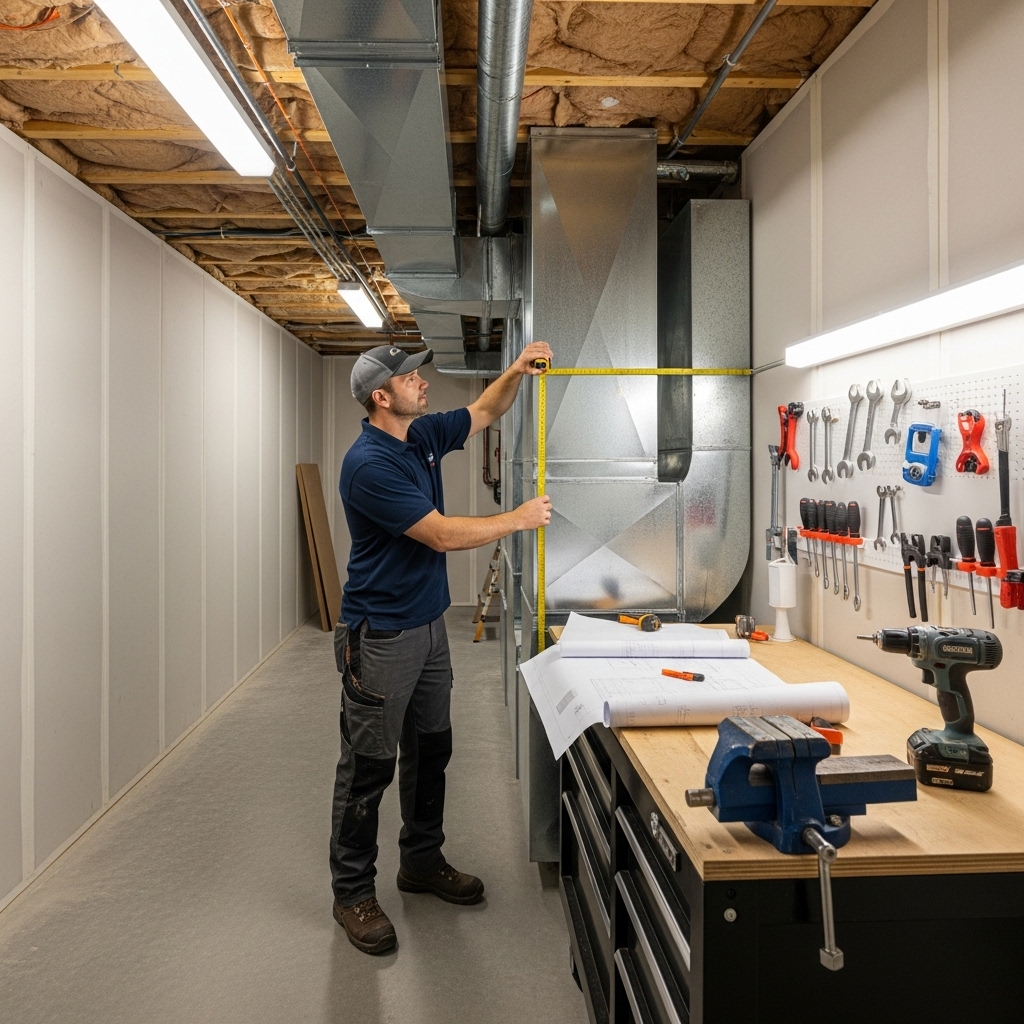
Ask ten people about duct replacement in Beverly Hills and you will hear at least ten different theories, but one recurring idea is a tidy price per square foot. It sounds convenient, like quoting paint by the gallon. In reality, a meaningful plan for your home’s air distribution cannot be reduced to a simple area calculation. Per-square-foot shortcuts ignore the pathway of air, the resistance it meets at each turn, and the local realities of building in attics and crawlspaces that don’t follow textbook dimensions. When you look beyond the surface, you quickly see that what you really want is not a blanket estimate, but a result: quiet comfort, reliable airflow, and a system that complements your architecture without calling attention to itself.
In Beverly Hills, estates evolve over decades. Wings are added, basements are finished, and skylights introduce new heat gains that did not exist on the original drawings. A number on a spreadsheet cannot accommodate such detail. That is why conversations that start with the words “per square foot” usually end with a more helpful map of the project—where ducts will travel, how balancing will be handled, and which spaces need special attention. If you are just starting to research duct replacement, it’s empowering to reframe the question away from generic metrics and toward the specific features that shape the final outcome.
Why Area Alone Doesn’t Predict Effort
Square footage describes floors, not the routes that run above them. Two homes with the same area can be polar opposites in effort. One might be a single-story with a generous attic, straight runs, and clear access. The other could be a multi-level hillside property with segmented attics, tight knee walls, and structural steel that forces longer, more creative pathways. The second home is not more complex because it is larger; it is more complex because air must navigate obstacles without adding the noise and friction that come with too many bends or undersized branches.
Layout, Zoning, and the Reality of Rooms
Rooms care about supply and return, not square feet. A great room with a vaulted ceiling asks for a different distribution strategy than a tucked-away study that doubles as a recording space. If your home is zoned, the duct design must respect how each zone will call for heating or cooling at different times. That means carefully managing static pressure, avoiding short cycling, and making sure that the return serves each zone adequately. Per-square-foot thinking glosses over these dynamics, but your everyday comfort depends on them.
Access is Everything
In Los Angeles County, building details aren’t merely interesting; they define whether a project is straightforward or surgical. Access to your ducts—through attic hatches, mechanical rooms, or crawlspace openings—determines how smoothly the old network can be removed and the new installed. Careful protection of interior finishes, daily cleanup, and safe work practices matter in occupied homes, especially when art, custom millwork, or delicate stone floors line the path. All of this planning is invisible to a square-foot formula, yet it is part of executing the project with the care Beverly Hills homes deserve.
Materials and Methods Impact Performance
Flexible duct, rigid metal, and lined trunk sections each bring their own strengths. The right blend depends on run length, required airflow, and noise goals. A short, straight branch can perform beautifully in flex when pulled tight and supported correctly. Longer trunks and high-volume branches typically benefit from smooth interiors and carefully shaped fittings. When you choose materials, you are actually choosing longevity, cleanability, and the acoustic character of your rooms. These decisions are better served by a site-specific plan than a generalized cost-per-area chart.
Design and Commissioning: The Hidden Work
Another reason per-square-foot thinking falls short is that the most consequential work happens on paper and at the end with testing. Before a single duct is replaced, a solid plan harmonizes your equipment’s airflow requirements with the home’s actual layout. After installation, commissioning validates that the registers deliver the expected air and that static pressure stays in the healthy zone. You feel the benefits in balanced rooms, calmer sound levels, and a thermostat that finally reflects reality. None of those outcomes are captured by a raw area calculation.
When Homes Don’t Fit the Mold
Consider a property with a cinema room, a glass-sided gym, and a guest wing added in the 1990s. The cinema needs quiet supply with minimal air movement sensation. The gym demands vigorous airflow and perhaps extra return for equipment that runs long. The guest wing may have its own microclimate due to its orientation. These spaces are not interchangeable, and their needs do not align neatly with their sizes. The best duct designs acknowledge this, using register selection and branch sizing as tools to tailor comfort without drama.
Local Codes and Testing Culture
California energy standards and local inspection protocols aren’t footnotes. They influence how the project is planned and executed, from sealing methods to insulation values and verification via third-party testing. HERS requirements for duct leakage and airflow protect performance for years to come. When crews approach the work with that culture in mind, you gain confidence that the system won’t just look new—it will behave like a well-orchestrated whole.
Noise: The Overlooked Design Goal
In high-end homes where calm is part of the lifestyle, noise control belongs in the first draft of the plan. Undersized or poorly routed ducts can make a system seem louder than it should be, particularly at bedrooms and studies. Thoughtful choices—long-radius elbows, proper plenum design, and attention to return placement—prevent the whoosh and hiss that erode the sense of quiet luxury. A price per square foot doesn’t signal whether those details are accounted for, but your ears certainly will.
Mid-Project Realities and Decisions
Even with meticulous planning, renovations reveal surprises behind walls and above ceilings. A beam appears where a trunk was meant to run, or a previous owner’s improvisation surfaces in an unexpected junction. Rather than treating these moments as detours, good teams adapt while safeguarding the design principles that preserve comfort and low noise. Around the midpoint of the work, you might revisit register placement in a stubborn room or discuss whether adding a return to a separate zone will improve balance. This is the ideal time to bring up any long-standing comfort quirks you want addressed as part of your duct replacement plan.
Square Footage vs. Airflow Reality
It’s tempting to imagine that doubling the area means doubling the effort. In ductwork, the relationship is non-linear. A compact 2,000-square-foot single story with clean access may be simpler than a 1,400-square-foot multi-level with tight chases and no attic over key rooms. Likewise, a well-designed trunk-and-branch system can serve a large home with elegance if access is straightforward, while a smaller but segmented structure might require creative routing and more time to commission properly. The orchestration, not the footprint, carries the day.
Beverly Hills Architecture and Mechanical Choreography
Spanish Revival homes often have thick plaster and limited chase space, midcentury residences present broad spans and flat roofs, and newer contemporary builds blend steel, glass, and minimal attic volume. Each style calls for a different mechanical choreography. In flat-roof situations, ducts may share space with insulation and radiant barriers, requiring careful sealing and support to prevent heat gain from harming performance. In older homes, protecting original finishes while upgrading the hidden infrastructure is both a logistical and an aesthetic undertaking. Respect for the fabric of the house is as important as the technical skill.
Comfort as the North Star
At the end of the day, homeowners don’t experience square footage; they experience rooms that feel right. If the office holds a steady temperature, the primary suite is serene at night, and the family room stays consistent during gatherings, the project has done its job. Clarity about goals—quiet, balance, clean air—helps guide decisions about materials, routes, and register placement. This alignment yields a result that holds up in everyday life, not only on paper.
What a Thoughtful Process Looks Like
A typical sequence begins with evaluation—measuring static pressure, inspecting duct integrity, and listening to how you describe comfort issues. Next, a tailored design outlines the new distribution, including branch sizes and return strategy. During installation, crews protect finishes, remove older ducts cleanly, and assemble new sections with careful sealing and support. Commissioning closes the loop with airflow verification, leakage testing, and small adjustments that dial in balance. Along the way, communication keeps choices visible, so you can weigh tradeoffs where needed and feel confident in the final product.
FAQ
Can a per-square-foot estimate be useful at all? It can serve as a conversation starter, but it should never stand in for a site-specific plan. The usefulness ends where the uniqueness of your home begins.
Will new ducts make my system more even from room to room? Yes, when paired with a design that addresses return sizing and thoughtful branch routing. Balancing dampers and correct register selection are key tools for smoothing out hot and cool spots.
Do older homes need special consideration? Absolutely. Plaster walls, limited chases, and the desire to preserve original finishes call for careful routing, dust control, and sometimes creative register solutions that respect the architecture.
How long should I expect the work to take? Timeline depends on access and the extent of reconfiguration. Many projects are phased to keep parts of the home comfortable throughout, with clear communication about which areas are impacted each day.
What testing happens after installation? Leakage testing, airflow verification at registers, and static pressure checks confirm that the system performs as designed. This commissioning step is crucial for quiet, efficient operation.
Can I address noise concerns during duct replacement? Yes. Proper sizing, long-radius fittings, and well-placed returns reduce turbulence and perceived noise, especially in bedrooms and work spaces.
When you are ready to trade area-based guesswork for a result you can feel, start with a thoughtful evaluation and a design conversation. A local team that understands Beverly Hills construction can turn a complex home into an easy place to live, day after day. If you want guidance tailored to your layout, reach out to discuss duct replacement with the attention and craftsmanship your property deserves.