
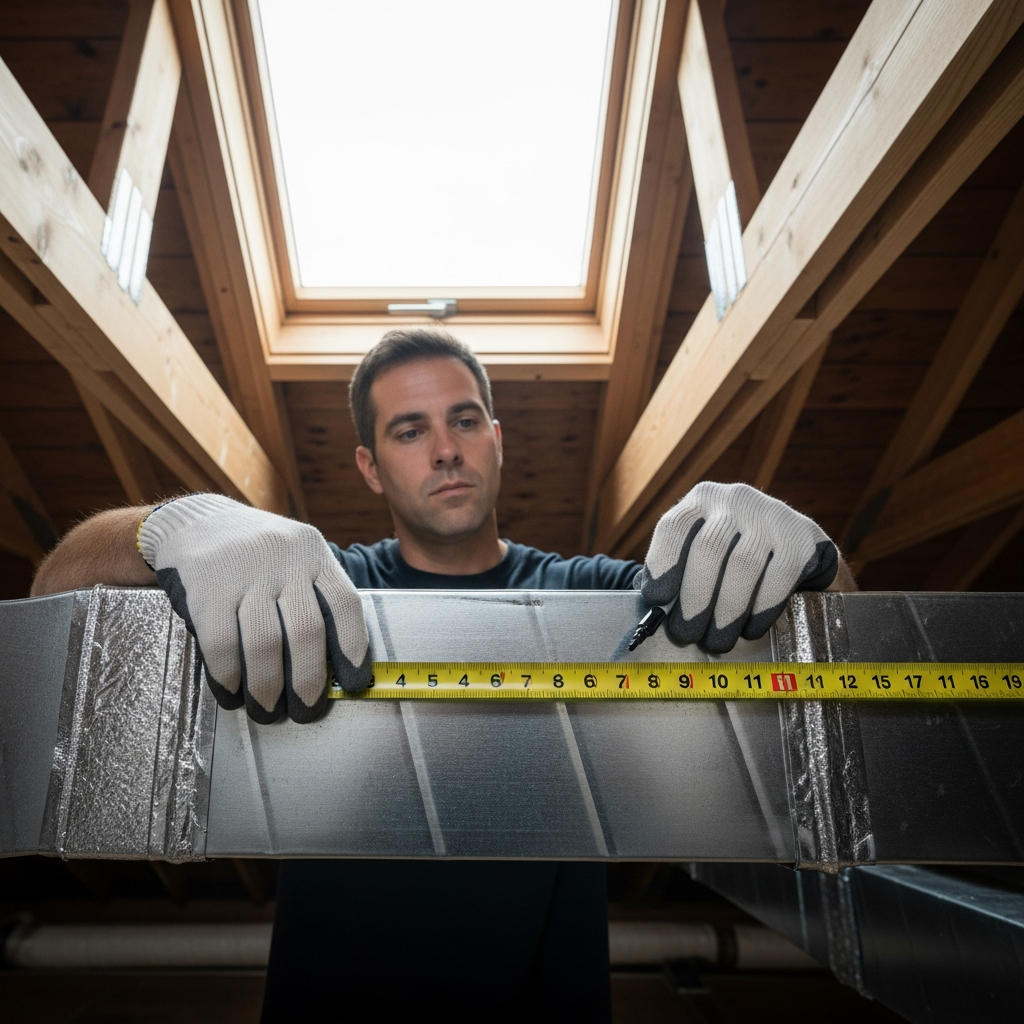
Homeowners in Beverly Hills often hear the phrase “cost per foot” when discussing duct replacement, and it’s easy to see why. Linear footage is a convenient way to visualize the scale of a project, helping you picture how air travels from the equipment to each room. Yet seasoned local pros will tell you that while linear feet matter, the real story includes the shape of those feet, the turns they take, the spaces they navigate, and the finishes they serve. If you are exploring options and want grounded guidance on how to think about the per-foot idea in the context of our local housing stock, review Beverly Hills–specific insights on duct replacement before you compare proposals.
Imagine two homes with the same total length of duct runs. One enjoys long, straight paths in a tall attic with generous access. The other threads through tight trusses, squeezes past skylight wells, and crosses multiple levels with short, angular segments. The linear footage could match, yet the experience and outcomes would differ. That’s because airflow isn’t simply about length; it’s about friction, resistance, and the quiet choreography of turns and transitions. This is why per-foot thinking is a starting point rather than a conclusion.
What “per foot” really measures
Per-foot metrics usually tally the length of duct runs, sometimes separated by material type. This helps establish a scope baseline, but it rarely captures the nuance that governs comfort. A single tight elbow can influence performance more than a stretch of straight duct. An oversized register connected by an undersized run can create noise and uneven temperatures, regardless of how many feet the system adds up to. The best designs respect the math of length while giving equal weight to geometry and destination—where the air needs to land, at what speed, and with how much pressure to spare.
Friction, velocity, and static pressure
Every foot of duct introduces a bit of resistance. When ducts turn or narrow, resistance increases, and velocity can spike. High velocity may sound energetic, but it often reads as noise at the register and uneven throw into the room. Static pressure—air’s push against the duct system—should sit in a happy range for your equipment. A per-foot tally that ignores these variables can lead to a system that looks good on paper but struggles in practice. By contrast, a design that marries length with resistance and pressure targets will feel effortless, with doors that stay still and rooms that settle into comfort quietly.
Material choices and their impact on the “foot”
Different materials change how each foot behaves. Rigid metal, with its smooth interior, can carry air gracefully over distance when sized properly. Flexible ducts, when stretched and supported correctly, handle short transitions well and can save invasive demolition in tricky spaces. Ductboard provides integrated insulation for specific segments. A per-foot cost that treats all materials as equal misses how each foot works in context. The best proposals tell you where each material will be used and why, linking choices to airflow, sound, and installation realities in your home.
Access conditions in Beverly Hills homes
Per-foot thinking often assumes easy access, but local homes present a spectrum. In a generous attic with standing height and clear pathways, each foot is efficient to install. In tight, braced spaces, every foot can require careful positioning, specialized tools, and extra protection for finishes below. Multi-level layouts and hillside properties add another layer, with runs that must weave vertically through narrow chases. When you see a per-foot figure, ask what access assumptions it carries and how the plan accounts for the real geometry above ceilings and behind walls.
Insulation, sealing, and the invisible details
Sealing and insulation are rarely priced per foot, yet they define the value of each run. Thorough mastic at joints, long-life tape where appropriate, and insulation matched to attic or crawlspace conditions deliver air that arrives at the right temperature with minimal loss. These details are the guardians of quiet and efficiency. A per-foot quote that is vague about sealing and insulation leaves out the very elements that transform length into comfort.
Registers, returns, and the destination of each foot
Every run terminates at a register or return, and these endpoints matter as much as the journey. The grille’s size, style, and placement influence noise, airflow spread, and how the room feels. Returns are the lungs of the system; starve them and the equipment strains, overfeed them and balance suffers. A per-foot number that doesn’t connect the dots to registers and returns risks being an accounting of pipe, not a plan for comfort.
Why averages can mislead
It is tempting to multiply linear footage by a typical figure and call it a day, but averages ignore the unique qualities that define Beverly Hills homes. Historic plaster, detailed trim, artful lighting, and high-value finishes demand cautious access and careful patching plans. Sloped ceilings and layered remodels complicate routes. The most reliable expectations come from a site visit that maps runs, notes obstacles, and translates design choices into a complete scope you can understand.
Comparing proposals that use per-foot pricing
When contractors present per-foot pricing, ask them to walk you through assumptions. What materials are included at which segments? How are elbows, transitions, and fittings handled? What are the standards for sealing and insulation? How many registers and returns are planned, and where? Clarity here turns a simple metric into a transparent plan. You are looking for a narrative that respects your home’s architecture and your expectations for quiet, even comfort.
Documentation and commissioning
Since most of the work disappears behind walls and ceilings, documentation builds trust. Expect photos of concealed connections, notes on support spacing, and records of insulation coverage. Commissioning steps—verifying static pressure, listening for airflow noise, and confirming register performance—ensure that each foot of duct translates into real-world comfort. Proposals that include these elements show a commitment to results, not just installation.
Where the per-foot idea helps
Despite its limitations, per-foot thinking remains useful. It provides a basis for discussing scope and visualizing the project’s reach. It can highlight where long runs might be trimmed with strategic rerouting or where returns can be added to ease pressure. Used wisely, it guides questions that lead to better outcomes: how can we make these feet smoother, quieter, and more direct?
Frequently asked questions
Is per-foot pricing a reliable way to plan my budget?
It’s a starting point, not a destination. Accuracy improves when per-foot figures are paired with specifics about materials, fittings, sealing, insulation, and access conditions. A short site visit typically refines estimates meaningfully.
Will changing register locations affect the per-foot total?
It may. Moving registers can shorten or lengthen runs, but more importantly, it can improve comfort and reduce noise. The best designs balance small increases in length against big gains in performance.
Does rigid metal always outperform flexible duct?
Rigid metal often excels on long, straight stretches thanks to its smooth interior. Flexible duct, installed correctly and used strategically for short transitions, can perform well and reduce the need for intrusive access. The right material in the right place wins.
How do tight crawlspaces influence per-foot assumptions?
Tight spaces slow installation and require extra care. Good proposals explain how crews will protect finishes, manage dust, and sequence work to keep progress steady despite limited maneuvering room.
Can per-foot pricing account for sealing and insulation quality?
Only if specified. Ask for explicit standards and photos after installation. The value of each foot depends heavily on how well it is sealed, supported, and insulated.
If you are ready to turn abstract linear footage into rooms that feel consistently comfortable, invite a Beverly Hills team to map your home and craft a plan that treats every foot with purpose. Start today by connecting with local experts in duct replacement who will translate measurements into quiet, balanced comfort and see the project through with care.