
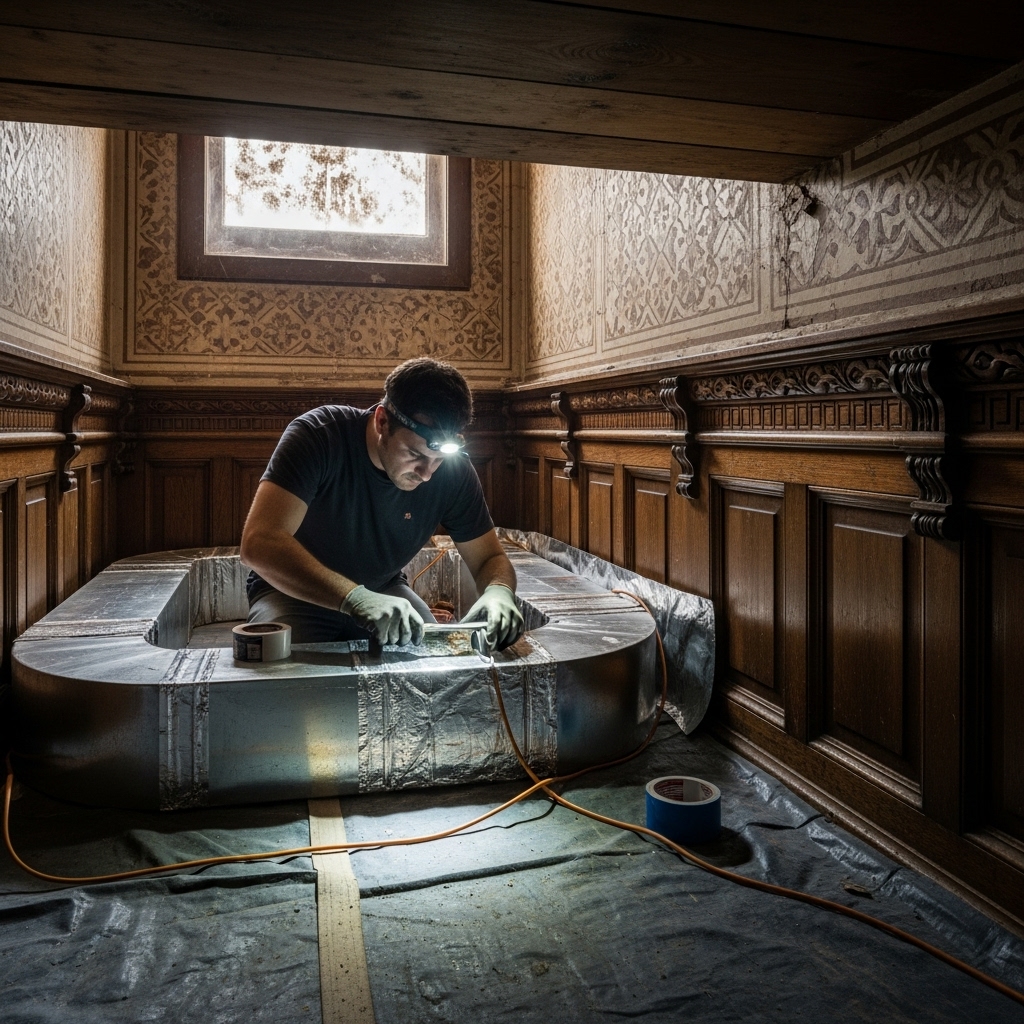
When you live in a historic Beverly Hills home, every improvement feels like a conversation with the past. That is especially true when you start thinking about the way air travels through a residence built decades ago. The architecture is special, the finishes are irreplaceable, and yet the comfort expectations of modern living are nonnegotiable. In this setting, planning for duct replacement is less about a simple swap and more about thoughtful preservation, subtle craftsmanship, and respect for the home’s story. As a local expert who has walked more than a few narrow crawlspaces under Spanish Colonials and navigated the tight knee walls of Mid-Century gems, I can share what truly shapes the investment and the experience for historic homeowners in Beverly Hills, from the first inspection to the final register grille.
The first and most important principle is that no two historic homes in Beverly Hills are alike. The footprints differ, the rooflines vary, and the way earlier tradespeople ran ducts or chases reflects different eras and standards. This means the planning phase carries real weight. Before anyone lifts a register cover, a thorough visual survey sets the tone: where are the existing supply runs, what registers are original, how was return air handled, and how do those choices affect temperatures in rooms that were designed long before high-efficiency equipment entered the picture? A careful walkthrough maps rooms that run hot or cold, identifies areas with limited access, and spotlights delicate finishes—decorative plaster, original paneling, and custom millwork—that must be protected at all costs.
Historic properties often rely on hidden pathways that can be both a blessing and a constraint. Older attics may have low clearances and irregular joist spacing. Crawlspaces may be tight or interrupted by older mechanicals and seismic retrofits. In some larger estates, you find abandoned runs that once served unconditioned additions, and in some bungalows, you discover the opposite—under-served bedrooms that never received balanced airflow. Each condition guides choices: whether to reroute a trunk line, to create a new discreet chase, or to build a soffit that reads as part of the original architecture. Because this work happens within a living piece of history, crews must stage carefully, protect floors and furnishings, and use methods that minimize dust and vibration.
Beyond the physical constraints, the character of a historic home asks for unobtrusive solutions. Many owners want to retain period-correct grilles or match the trim profile of registers to existing baseboards and casings. Achieving this balance can involve sourcing custom diffusers, painting to match, or using concealed linear slots in shadow lines. Sound control is another priority; older lath-and-plaster walls transmit vibration differently than modern drywall. Quiet airflow, properly sized returns, and careful placement of runs can preserve the serene atmosphere a historic home deserves, so the system fades into the background rather than calling attention to itself.
Homes here also encounter the realities of the hillside environment. Summer heat radiates into attic spaces, while cool evenings bring dramatic temperature swings. Filtration and tightness matter during fire season, when outdoor air quality can change quickly. In a historic home, selecting the right duct materials and insulation is less about a generic specification and more about how the system holds up in a challenging microclimate. Durable materials, well-sealed connections, and the right thermal protection help maintain comfort while safeguarding energy performance, especially when ducts traverse unconditioned spaces.
Permitting and coordination with preservation-minded stakeholders play a central role in historic Beverly Hills projects. Even when exterior changes are minimal, interior duct pathways can intersect with protected features. A team that understands local expectations can help anticipate which details will need review and which approaches are most likely to be approved. That experience saves disruption: fewer last-minute route changes, less intrusive access, and a smoother path from planning to completion.
One of the most overlooked dimensions in historic homes is the return air strategy. Many older systems relied on undersized or poorly placed returns, which created more noise and less comfort. Modern best practice pairs right-sized supply runs with thoughtfully located returns that reduce pressure, equalize temperatures, and keep the fan from working harder than it should. In a historic layout, achieving that balance without altering sightlines requires creativity—sometimes pulling air from a hallway, sometimes integrating returns into cabinetry, and sometimes borrowing space from closets to keep the integrity of the architecture.
Another consideration is indoor air quality. Historic residences often have beautiful but porous materials—wood, plaster, and natural stone—that absorb and release humidity. Upgrading duct systems presents an opportunity to improve filtration and ventilation, making the house feel consistently fresh without drafting air across delicate finishes. That might mean adding advanced filters or accommodating future enhancements, all without adding visual clutter. When done well, you enjoy cleaner air, quieter operation, and a home that feels comfortable in every season.
In the field, the practical sequence is as important as the design. Protecting historic fabric comes first: dust barriers, floor coverings, and strategic access points. Then comes careful removal of old ductwork, sometimes piece by piece to avoid damage. Routing new lines often starts with the longest, most challenging runs so the rest of the system can build off those established paths. Along the way, crews seal each connection meticulously, support ducts to eliminate sag, and test for leakage to ensure performance aligns with the design. Thoughtful commissioning—verifying airflow, balancing rooms, and checking sound levels—finishes the job and gives owners a clear baseline for future maintenance.
Because historic homes have lived many lives, surprises are more common than in newer construction. You might open a soffit and discover a forgotten chase or remove a grille and find decorative elements that deserve to be saved. Skilled teams anticipate these discoveries and keep open lines of communication with the homeowner. The process becomes collaborative, blending the best of modern comfort with a curator’s respect for what makes the home special.
It helps to think of the work in terms of values rather than just parts and pieces. In a historic Beverly Hills home, the value is in preserving character while delivering comfort silently. It’s in planning that avoids rework, in commissioning that validates performance, and in documentation that helps future stewards understand what was installed and why. When you treat the project as an investment in the home’s legacy, every decision becomes clearer, and the result feels cohesive and timeless.
Midway through many projects, owners ask about the balance between doing just enough and doing it right. The honest answer is that historic homes reward a comprehensive approach. If you are reconfiguring supply lines, it is the perfect moment to refine return placement, improve sealing, and set the system up for quiet operation. It’s also the right time to prepare for future improvements in filtration and ventilation. A holistic plan respects the building and minimizes repeat disruptions down the road, which matters greatly in homes where even a small opening in a plaster ceiling can have implications for repair and finish matching. That is why partnering with a team experienced in ductwork replacement for heritage properties can make all the difference.
Seasonality matters, too. Scheduling work when the home can be comfortably unoccupied or when mild weather makes temporary disruptions easier is practical in Beverly Hills. Neighbors, parking, and delivery windows also shape the day-to-day rhythm. Coordinating these logistics might not be visible in the final photographs, but they profoundly affect the homeowner’s experience. A well-orchestrated project feels almost effortless, even when the behind-the-scenes choreography is complex.
From the perspective of long-term stewardship, maintenance planning is the final piece of the puzzle. Historic homes benefit from gentle, consistent attention—filter changes on schedule, periodic inspections of accessible runs, and a quick check of registers and returns to confirm that everything remains clean and secure. Keeping ducts sealed and supported prevents gradual performance losses and helps the system age gracefully, much like the home itself. This attention gives peace of mind and preserves the care invested during installation.
For many Beverly Hills residents, the best part of this journey is walking into a once-temperamental room and feeling it perfectly balanced and whisper-quiet. That is when you know the design, the installation, and the respect for history all came together. You feel the difference rather than seeing it, and that is exactly the point in a historic home—comfort elevated, character untouched.
What makes duct work in historic homes different from newer houses?
Older homes often have irregular framing, unique architectural details, and finishes like lath-and-plaster that require careful handling. Existing duct pathways might be undersized or routed through tight spaces, and returns may not be ideally placed. The goal is to upgrade comfort and airflow while preserving original materials and sightlines.
Can I keep my original grilles and registers?
In many cases, yes. Original grilles can be cleaned, restored, or adapted to work with a modern system. When originals are too restrictive for proper airflow, custom or historically sympathetic replacements can match the style while meeting performance needs.
Will this process damage my plaster or millwork?
With careful planning and protection, disruption can be minimized. Access is planned around delicate finishes, dust control is prioritized, and any necessary openings are made strategically. A meticulous team will repair and blend finishes so the work is virtually invisible.
How long does a typical project take in a historic home?
Timelines vary with access, scope, and the discovery of hidden conditions. Historic properties often require additional coordination and testing. A project plan with clear milestones, communication, and contingencies helps ensure a smooth experience.
Do historic homes need special filtration?
They often benefit from upgraded filtration and balanced ventilation. Because older materials can be sensitive to humidity and particulates, integrated solutions that improve indoor air quality without adding visual clutter are a smart choice.
Is it possible to make the system quieter than the old one?
Absolutely. Proper duct sizing, gentle air velocities, and well-placed returns significantly reduce noise. Sealed connections and vibration isolation further enhance silence, preserving the calm that historic homes are known for.
Can I phase the work to reduce disruption?
Yes, many owners stage the project by floor or wing. Phasing requires careful design so each stage stands on its own while setting up the next phase seamlessly. Communication and protection of finished areas are key to a successful phased approach.
If you are ready to bring modern comfort to a classic Beverly Hills residence without compromising its soul, let a local team guide you from survey to commissioning with craft and care. For discreet planning, heritage-sensitive routing, and a result that feels effortless every day, explore your options for duct replacement with specialists who understand historic homes and the neighborhood standards they must honor.