
Talk to any Beverly Hills homeowner who has renovated, and you will hear the same refrain: the unseen details define the experience. Nowhere is that more true than in ductwork, the network that moves conditioned air from equipment to the rooms where you spend your life. When you start weighing the overall investment behind replacing ducts, it helps to treat the system as a set of components that must cooperate—supplies, returns, trunks, plenums, boots, and registers—each tuned to the architecture and the way your household lives. A brief conversation with a local expert in duct replacement can frame the choices so that performance and craftsmanship move in lockstep.
Because “ductwork” covers so much ground, it is easy to imagine that all projects look alike. In practice, Beverly Hills homes vary widely: classic estates with thick plaster and decorative ceilings, mid-century flats with low-slope roofs, hillside properties with tight crawlspaces, and modernist statements where mechanicals must disappear completely. Each setting changes how ducts can be routed, how quietly they should perform, and how carefully openings must be created and restored. The right plan feels like choreography—every piece moves with purpose, and the result is a home that simply feels better.
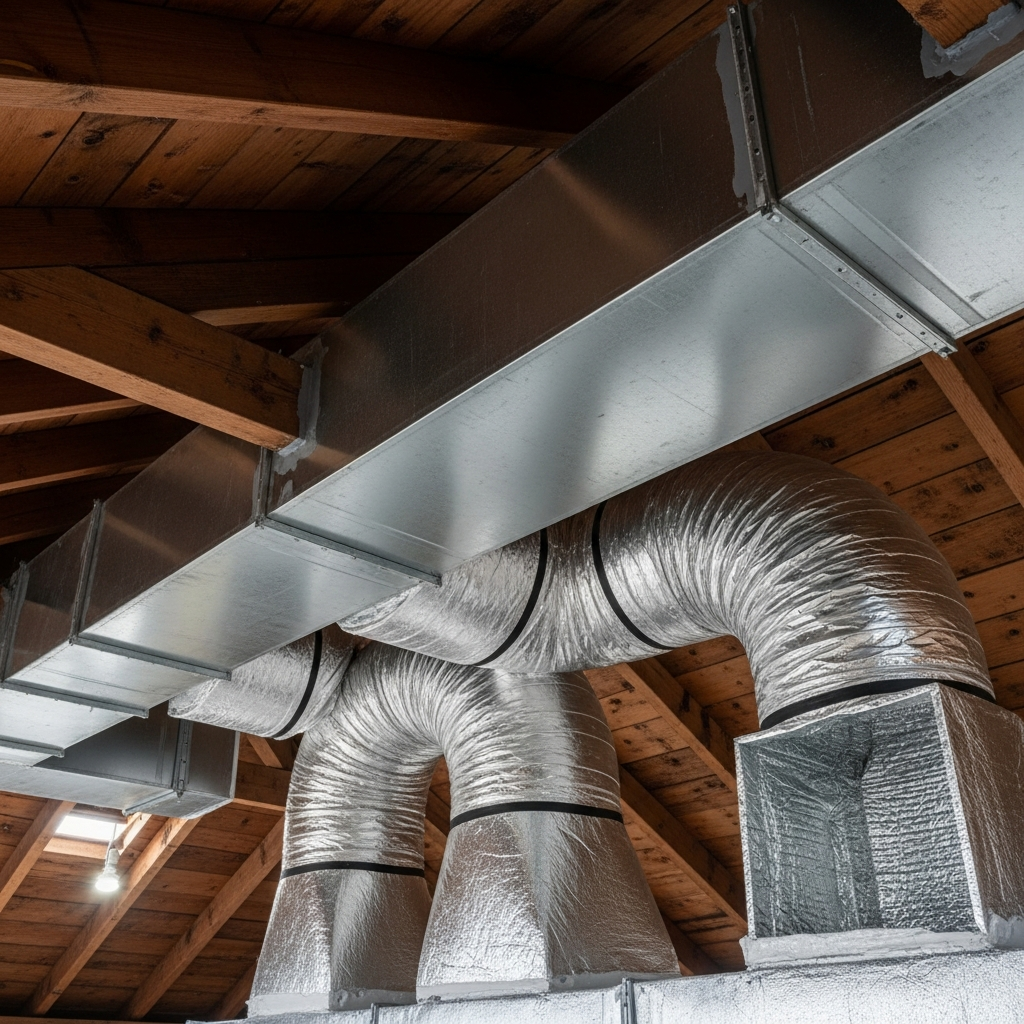
It helps to start by visualizing the system’s anatomy. The air handler or furnace connects to supply and return plenums. Trunks carry air across distance. Branches peel off to serve specific rooms. Boots transition the duct to a grille or register, which finally introduces air into the space. Along the way, the system must avoid unnecessary turbulence and friction, maintain insulation integrity, and keep connections sealed. When any link in the chain underperforms, you feel it as hot spots, drafts, noise, or dust.
Supply, return, and balance
Supply lines get a lot of attention because they deliver the air you feel directly, but returns are equally crucial. An undersized or poorly located return forces equipment to work harder and can starve distant rooms of conditioned air. In many older installations, returns draw from a single central hall. Replacement is a chance to add returns strategically, quieting the system and stabilizing comfort across wings and floors.
Balance is the art of making every room feel intentionally conditioned. That means matching branch size and length to the load of the room, setting dampers, and ensuring that throw and spread from the grill complement furniture layouts and how people actually use the space. You should not have to think about where you sit at dinner to avoid a draft; correct balancing makes comfort invisible.
Materials and routing decisions
The material palette depends on geometry and priorities. Flexible duct, when supported thoughtfully and routed with generous sweeps, is incredibly effective in attics with straightforward access. Rigid sheet metal excels on long trunks or where precise control and durability are vital. Lined metal and duct board plenums help manage acoustics. Hybrid systems take advantage of each: rigid where control and length demand it, flex where short, soft connections shine.
Routing is where experience shows. Tight chases, decorative beams, or low roof slopes may tempt sharp turns and compressions that sap airflow and create noise. Skilled installers find alternatives—slightly adjusting paths, creating smoother transitions, or relocating a boot to improve throw. These micro-decisions add up to macro-comfort.
Sealing, insulation, and the quiet factor
Even the best routing falters if connections leak. Sealed joints with the right mastics and tapes, mechanically fastened and inspected, keep conditioned air where it belongs while blocking attic particulates and insulation fibers from entering the airstream. Insulation should be continuous and uncompressed, preserving its rated performance. Together, sealing and insulation cut waste and support quieter operation because airflow is not battling against losses and turbulence.
Noise control deserves its own spotlight. Background whoosh in a media room or primary suite is more than a nuisance—it erodes the sense of calm that Beverly Hills homes are known for. Proper sizing, smooth transitions, and the occasional use of acoustically lined components convert that whoosh into a hush. The end result is a system that functions in the background, letting architecture and daily life take center stage.
Access, restoration, and respect for finishes
Not every path is open from above. Some projects require targeted openings in ceilings or walls to replace sections of duct concealed within framing. This is where planning and restoration discipline matter. Protection for floors and furnishings, dust containment, daily clean-up, and professional patch-and-paint ensure that the project enhances comfort without diminishing the home’s appearance. The process should feel as refined as the product.
In hillside properties, crawlspaces may demand low-profile movement and careful staging to protect landscaping and hardscapes. Heritage properties may require coordination with plaster specialists to match textures. Modern architectural statements might ask for registers that vanish into reveals. All of these details live under the umbrella of “ductwork,” reminding us that the investment is as much about finesse as it is about airflow.
Commissioning: the final handshake
When installation wraps, commissioning verifies the promise. Airflow is measured at registers, static pressure is confirmed, and any outliers are tuned with damper adjustments or minor routing changes. Temperature delivery is checked so rooms settle where the thermostat expects them to, quietly and consistently. Documentation—photos of routing before closures, notes on damper positions, and a diagram of the new layout—helps future maintenance respect your finishes.
Commissioning is where small choices shine. The slightly larger return that quiets the living room. The gently reoriented boot that evens out a breakfast nook. The added support on a long run that removes a faint vibration. These are the touches that produce a home that feels composed.
Working with a partner who understands Beverly Hills
Experience in our local housing stock accelerates good outcomes. An installer who has worked in flats, hills, and canyons knows how to move discreetly, protect access paths, and anticipate the quirks of each architectural era. They speak the language of both performance and aesthetics, so a technical conversation about friction rates easily coexists with a plan to protect a Venetian plaster ceiling.
Communication style matters as much as technical skill. You want clear explanations, a sequence that respects your schedule, and transparency about where openings may be required. The right team provides options and rationale, allowing you to choose confidently between alternatives because you understand how each supports comfort, air quality, and long-term reliability.
Frequently asked questions
Q: How intrusive is ductwork replacement?
A: With thoughtful planning, most households remain at home. Protection, containment, and daily restoration keep living spaces comfortable. Where openings are required, professional patch and paint return surfaces to their prior state.
Q: Can new ducts reduce background noise?
A: Absolutely. Correct sizing, smoother routing, and acoustical components where needed often transform a faint rush into near silence, especially noticeable in bedrooms and media rooms.
Q: Do returns really make that much difference?
A: Yes. Adequate, well-placed returns allow the system to “breathe,” stabilizing pressures and promoting even delivery. Many older systems are under-returned; addressing this yields immediate comfort gains.
Q: How long does a typical project take?
A: Many homes fit into a few working days. Complex architecture, tight access, or phased work around daily routines can extend timelines. A site assessment sets realistic expectations.
Q: Will insulation and sealing help indoor air quality?
A: Tight, well-sealed ducts reduce infiltration of attic particulates and help filtration perform to its potential. The result often feels like cleaner air and less dust on surfaces.
Q: What can I do to prepare?
A: Clear access paths, provide parking or gate details, and share daily schedules with your project lead. A brief checklist from your contractor ensures the first day starts smoothly.
Bring the system into harmony
Replacing ductwork is an opportunity to tune your home’s most important, least visible system so it performs with the grace your architecture deserves. If you are ready to explore a plan that balances comfort, quiet, and aesthetics, reach out to a Beverly Hills specialist in duct replacement. From assessment to commissioning, you will gain a system designed for the way you live—one that disappears into the background while delivering comfort you notice every day.