
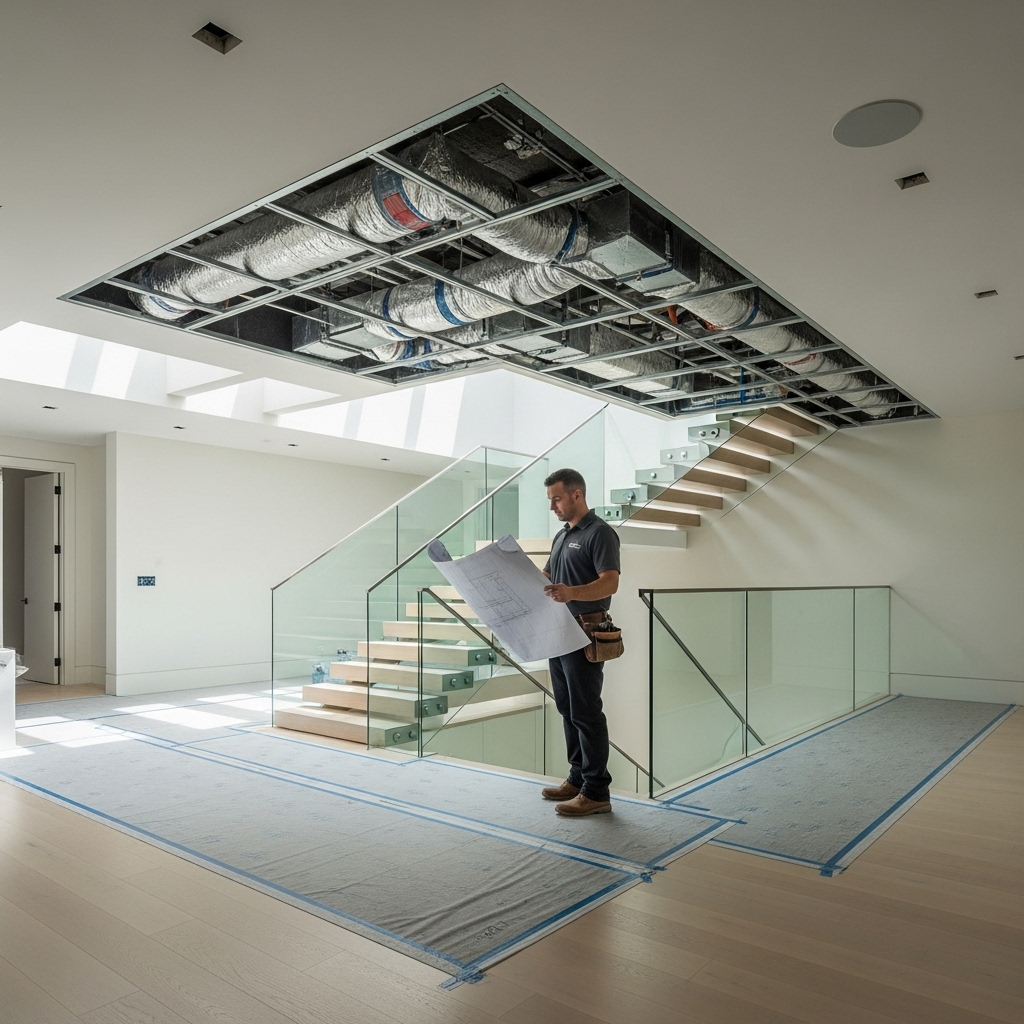
Every Beverly Hills home has its own rhythm—morning sun in the kitchen, cool shade in the den, evening gatherings on a terrace. The way air moves through the rooms should follow that rhythm quietly and reliably. When you explore new ductwork for your home, it’s easy to focus on parts and pieces. Yet the most satisfying projects approach the entire air pathway as a single, coherent system. Framing, finishes, climate, and lifestyle all shape the outcome. Planning for duct replacement becomes a conversation about comfort that you feel but rarely notice: steady temperatures, low noise, and clean air from corner to corner.
In Beverly Hills, variety is the rule. Hillside structures might have narrow crawlspaces and bold rooflines. Flats often present generous attics but also layered remodels that have added complexity to routes. Some homes retain original ducts from decades past; others show a patchwork of fixes layered over time. The first step is mapping the existing landscape—where supplies and returns run, where bottlenecks cause noise, and which rooms lag behind in comfort. With that picture in hand, a new design can simplify routes, smooth transitions, and align airflow with how the home is truly used.
The materials themselves play a starring role, but not in isolation. Rigid trunks, thoughtful branch sizing, and quality insulation form the backbone of a calm, effective system. Proper sealing is the quiet hero. Each joint, takeoff, and seam is an opportunity either for performance or for loss. When meticulously sealed and supported, ducts carry air at gentle velocities that reduce noise and deliver consistency. Homeowners often first notice that doors stop rattling when the system starts up, that a formerly cool corner warms to match the rest of the room, and that the living area feels peaceful even during peak operation.
Return air strategy is equally central. Many older homes rely on one or two undersized returns that force a fan to work harder and push air through narrow pathways, creating hiss and uneven distribution. Modern designs right-size returns and place them to keep airflow balanced. In practice, that might mean adding a discreet return in a hallway or borrowing space from a closet to open a better path. The payoff is less noise and a sense that air moves naturally through the house.
Air quality and cleanliness matter more each year. Pollen seasons, regional smoke, and everyday indoor activities all populate the air with particulates. Duct replacement presents the perfect moment to plan better filtration and to locate access panels where maintenance is easy and tidy. The same planning reduces dust buildup in the ducts themselves, helping the system stay clean and effective longer.
Architecture influences routing and choices. Minimalist spaces often call for invisible solutions—linear diffusers hidden in shadow lines or registers color-matched to walls and ceilings. Traditional homes invite grilles that echo period details. In both cases, the aim is to let airflow disappear visually so the architecture shines. This attention extends to service access: crews choose locations that allow future maintenance without intruding on living spaces.
Comfort also depends on the system being tuned to the structure’s thermal realities. Sunlit south-facing rooms and shaded north-facing rooms behave differently. Long hallways, open stairwells, and double-height living areas create microclimates. A thoughtful duct plan acknowledges these patterns and meets them with careful supply and return placement. Zoning may come into play for larger homes or for areas used intermittently, keeping main living spaces steady while allowing others to float gently when not in use.
Project execution builds trust. Homeowners should see a clear plan for protection, staging, and communication. Crews that move quietly, keep pathways clean, and provide updates at each milestone turn what could be disruptive into a well-managed process. Access points are created thoughtfully and closed meticulously, preserving finishes and leaving no trace aside from the new sense of ease in the air.
Testing and commissioning complete the performance picture. Balancing ensures each space receives the intended airflow. Small adjustments—opening a damper a touch here, softening a run there—add up to a whole house that feels “just right.” Those final checks provide confidence that the design on paper is fully realized in practice, and they give you a baseline for simple, predictable maintenance.
Homeowners often wonder where the biggest gains will come from. The answer is a blend: tighter sealing, smarter routing, and returns sized for quiet efficiency. Attic projects benefit from insulation that prevents radiant heat from undoing good work; crawlspace runs reward stable supports and protection from moisture. Each improvement reinforces the others, and together they deliver comfort that feels effortless.
For many Beverly Hills addresses, additions and remodels have created a patchwork of ductwork. Bringing coherence to this mosaic can be transformative. When the system no longer fights itself—when trunk lines and branches align, when returns release pressure—the home becomes calm. You notice it most on busy days when doors open and close, cooking fills the kitchen, and discussions carry from room to room, yet the air stays balanced and quiet.
Care after the project keeps everything on track. Filters are replaced regularly, accessible runs get a quick visual check, and a seasonal review confirms that sealing and supports remain sound. These simple steps extend the life of the ducts and maintain the quiet confidence you expect from a well-designed system.
Midway through any decision about ductwork, a useful perspective is to focus on the experience you want. Is it the bedroom that finally holds a steady temperature through the night? The office that stays even through the afternoon? The family room that feels peaceful during a movie? Aim the design at those moments, and let every detail—from material choices to return placement—serve them. A team seasoned in Beverly Hills homes reads the architecture, respects finishes, and delivers solutions that feel tailored rather than generic. That’s the difference between a replacement and an upgrade.
How do I know if my ducts are the weak link in my comfort?
Signs include uneven temperatures, audible hissing, and dust accumulation. An inspection can map restrictions, leaks, and imbalances, and recommend whether sealing, resizing, or full replacement will best address the issues.
Will duct replacement change the look of my rooms?
It doesn’t have to. With thoughtful diffuser and grille choices, airflow can disappear visually. Many solutions use low-profile or color-matched components to keep attention on your architecture.
What role does return air play in comfort?
Returns complete the circuit. When they’re sized and placed correctly, air moves calmly and quietly. Poor returns cause noise, drafts, and uneven temperatures even when supplies are well designed.
Can duct upgrades help during smoke events?
Yes. Cleaner ducts, effective sealing, and robust filtration reduce indoor particulates. Planning for accessible filter replacements ensures the system can respond quickly during challenging air quality days.
How disruptive is the work?
With careful protection, staging, and communication, disruption is minimized. Crews often work by zone, keeping key rooms functional while progress continues behind the scenes.
Is balancing really necessary after installation?
Balancing validates performance. It aligns delivered airflow with the design so that rooms behave as intended. Skipping it risks lingering hot and cold spots and unnecessary noise.
If you’re ready for air that feels as refined as the rest of your Beverly Hills home, partner with local specialists who treat comfort as an art supported by science. Start your plan for expertly executed duct replacement and enjoy quieter rooms, steadier temperatures, and a home that simply feels right every day.