
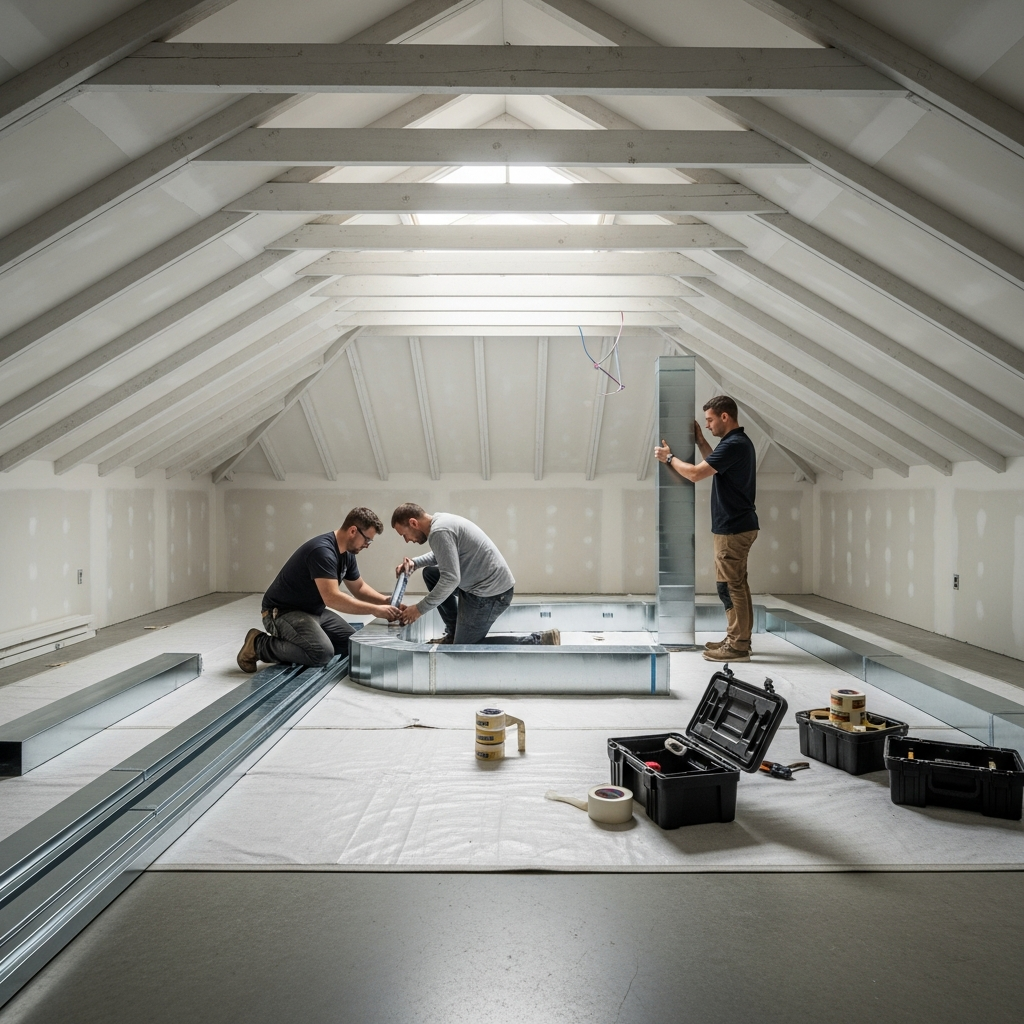
When homeowners in Beverly Hills start asking about the average cost to replace air ducts, what they are really trying to understand is how the many moving parts of a project translate into a smart, predictable investment. I’ve walked through Spanish Revivals in the Flats, hillside contemporaries with cantilevered rooms, and stately mid-century homes tucked into quiet cul-de-sacs, and the same question comes up every time: what should we expect? The truest answer is that the number everyone seeks is the product of craftsmanship, building layout, material selection, access conditions, and local codes, all woven together by a careful design. Early in the journey, it helps to speak with a team that knows these streets and these structures well, because experience with Beverly Hills architecture is just as important as experience with ductwork. If you are beginning your research and want a straightforward starting point, consider exploring professional duct replacement guidance tailored to our local building norms and microclimates.
Before you picture trucks in the driveway and technicians in the attic, take a breath and think about the path air takes through your home. Airflow quality and temperature stability are core to comfort, yet they also shape the life of your HVAC equipment. Replacing ductwork is not simply swapping old with new; it’s a chance to right-size runs, seal leakage points, and recalibrate how rooms breathe. That is why any talk of an “average” cost without studying your home’s particular story will always be incomplete. A measured, step-by-step planning process ensures that what you invest now pays you back in comfort, efficiency, and quiet operation for years to come.
What “average” means in Beverly Hills homes
In many parts of the country, homes share similar construction styles, but Beverly Hills has extraordinary variety. You can walk two blocks and see different eras of California design, each with its own duct routing realities. For example, a 1920s property might have limited crawlspace access and thick plaster that requires thoughtful pathfinding to avoid unnecessary disruption, while a 1970s renovation could present a maze of soffits and remodel layers. When people ask about an average cost here, they are asking about a moving target, one shaped by how much of the system needs renewal, how accessible the old ducts are, and how precisely the new layout must be engineered to match the home’s aesthetics and performance goals. The most accurate expectations grow from a meticulous evaluation rather than a one-size estimate.
Key influences that shape the overall investment
Think of a duct replacement as a composition with several instrumental sections playing together. First is scope: are we replacing a single branch that struggles to feed back bedrooms, or are we revitalizing the entire system from the plenum to the farthest supply register and return? Next is geometry: straight, short runs behave differently from long, bending paths that snake through framing. Then there is sealing and insulation, two details that quietly determine whether conditioned air arrives with minimal loss or drifts away into attics and crawlspaces. Add to that the demands of modern equipment—high-efficiency furnaces or heat pumps often prefer particular static pressure ranges—and you begin to see how design choices upstream influence the downstream budget picture. Each decision interacts with the others, and careful orchestration is what transforms a list of parts into a balanced, efficient system.
Local codes, permitting, and inspections
Within Beverly Hills and Los Angeles County at large, code compliance matters not only for safety but for the performance and longevity of your HVAC assets. Proper duct insulation values, secure support intervals, airtight connections, and combustion clearances (where relevant) all have minimum standards that must be met or exceeded. Inspections exist to protect your home and ensure that workmanship aligns with written requirements. Importantly, working with a team that understands local inspectors’ expectations can streamline the timeline, minimize do-overs, and provide peace of mind that what is behind the walls is as well-executed as what you see in your living spaces.
Home architecture and access considerations
A Beverly Hills duct project often begins not in a mechanical room but with a walk through hallways, living rooms, and secondary bedrooms, paying attention to clues: are certain rooms consistently stuffy, do doors flutter when the system runs, is there a whisper of air at some registers and a roar at others? These observations inform where and how to open access. High, vaulted ceilings may require specialized ladders and protective staging to preserve finishes. Low crawlspaces can demand low-profile tools, protective wear, and careful sequencing to maintain cleanliness. Where duct chases are concealed, small exploratory openings might be needed to map existing paths. The more complex the access, the more time and expertise are required to deliver a clean, low-impact installation that leaves your interiors as pristine as they were before the first toolcase crossed the threshold.
Materials and performance options
Your choice of materials influences airflow behavior, acoustic character, and maintenance needs. Rigid metal ducts are prized for durability and smooth interior surfaces that can support excellent airflow when sized correctly. Flexible duct, when thoughtfully installed with proper tension, minimal sag, and controlled bends, can serve specific runs efficiently. Ductboard can provide integrated insulation, reducing thermal loss when used in suitable segments of the system. No matter the material mix, two rules hold steady: air prefers the path of least resistance, and every unnecessary bend is a tiny tax on performance. An expert design pares down those taxes so that your equipment can do more with less effort, often yielding quieter rooms and more even temperatures.
Sealing, insulation, and energy outcomes
Sealing and insulation are the unsung heroes of duct replacement. With meticulous mastic application at joints, long-life tapes where appropriate, and fastening methods that resist seasonal movement, leaks can be minimized dramatically. Pair that with insulation values tailored to the thermal environment of your attic or crawlspace, and you’ll notice that rooms reach target temperatures steadily and hold them longer between cycles. Over time, the system’s reduced workload can limit wear and keep operation quieter, one of the underappreciated comforts of a well-executed upgrade. In homes with delicate finishes, it is common to plan sealing steps so that dust and debris are contained during removal and installation, safeguarding art, furnishings, and flooring.
Right-sizing and airflow balancing
Talk of averages often hides the most valuable detail: the correct size of each run and the balanced distribution of air room by room. Right-sizing is not a guess; it is a calculation rooted in room load, register placement, duct length, and friction losses across the network. Once installed, balancing dampers and thoughtful diffuser choices fine-tune the system so that bedrooms, living spaces, and kitchens each receive what they need. The best results arrive when design is performed up front and verified during commissioning. This careful front-loading of effort is part of why the feel of a home after a duct replacement can be transformational even if most of the new work lies out of sight.
Coordination with other trades and renovations
Many Beverly Hills homeowners undertake ductwork renewal alongside other home improvements. Coordinating with electricians, insulation crews, and general contractors avoids conflicts in attic pathways and wall cavities. When everyone’s sequence is aligned, penetrations can be shared or staggered, and spaces can be made ready for the next trade without rework. This orchestration saves time and reduces disturbance in lived-in spaces—particularly important in households where daily schedules, school routines, and home office needs must continue uninterrupted.
Working timeline and day-to-day experience
From the homeowner’s perspective, the best duct replacement is one that feels surprisingly calm. That typically begins with a clear schedule, dust control measures, protective floor coverings, and end-of-day tidying routines. Good communication continues throughout, so that if an unforeseen condition appears—say, a concealed chase or a remnant of an old remodel—options are discussed with photos and explanations before proceeding. The daily rhythm should feel respectful and predictable, with crews moving purposefully from demolition and removal into fabrication, placement, sealing, insulation, and final commissioning.
Maintenance and long-term care
Once new ducts are in place, the goal is years of effortless comfort. Routine filter changes, occasional grille cleaning, and visual checks in accessible areas are usually all that is required. If you’ve opted for a system that includes balancing dampers, periodic seasonal tweaks might be recommended to account for how sunlight and occupancy vary across the year. A well-executed system keeps its integrity, so its performance at year five should resemble its performance at month five, with only minor adjustments as household patterns evolve.
Choosing the right partner
In Beverly Hills, where craftsmanship and preservation matter, the partner you choose should carry a portfolio of local projects and references that speak to both skill and care. Expect a clear explanation of design decisions, photographic documentation of hidden work, and a commitment to protection and cleanliness inside the home. If you would like to understand how your particular home’s architecture will influence the approach, explore professional perspectives on duct replacement that account for attics, crawlspaces, and the delicate finishes that make our neighborhoods distinctive.
Common signs it’s time to replace
Persistent temperature swings between rooms, musty smells when the system starts, registers that deliver air noisily but weakly, and visible damage or kinks in accessible duct segments all hint at underlying issues. In older homes, insulation that crumbles to the touch or metal ducts with rusted seams signal a system that has worked hard well past its expected life. A comprehensive evaluation distinguishes between repairable shortcomings and systemic concerns that point toward replacement as the wiser path.
Frequently asked questions
How long does a typical duct replacement take in a Beverly Hills home?
Project duration depends on scope and access. A straightforward full-system renewal in a single-family home might be completed over several working days, while complex layouts, delicate finishes, or concurrent renovations can extend the timeline. A thorough plan and clear staging reduce surprises and help keep momentum steady from start to finish.
Will replacing ducts make my home quieter?
Yes, when ducts are sized appropriately and installed with smooth transitions and gentle bends, airflow noise often drops noticeably. Proper sealing also eliminates whistling at joints, and balanced distribution keeps doors from slamming or fluttering when the system starts.
Do I need to leave the house during the work?
Most homeowners remain in residence. Teams accustomed to working in occupied homes set up containment, protect walkways, and schedule louder or dustier tasks at predictable times. If certain phases would be disruptive, your contractor will coordinate with you in advance to minimize impact.
Can new ducts improve air quality?
Properly sealed, insulated, and clean ducts reduce the entry of dust and unconditioned air from attics and crawlspaces. When paired with appropriate filtration and regular filter changes, many households notice fresher air and fewer hotspots for dust accumulation.
What information should I have ready for an evaluation?
Share any comfort concerns by room, the age of current equipment, renovation history, and any photos of accessible ducts. Utility bills can also give context to seasonal performance. The more complete the picture, the more precisely the design can address your priorities.
If you are ready to feel consistent comfort season after season and want a plan tailored to your home’s architecture, now is the perfect time to connect with a local team that treats craftsmanship with the same respect you do. Begin the conversation, ask your questions, and schedule a site visit today through trusted Beverly Hills duct replacement professionals who understand how to protect your home while elevating its comfort.