
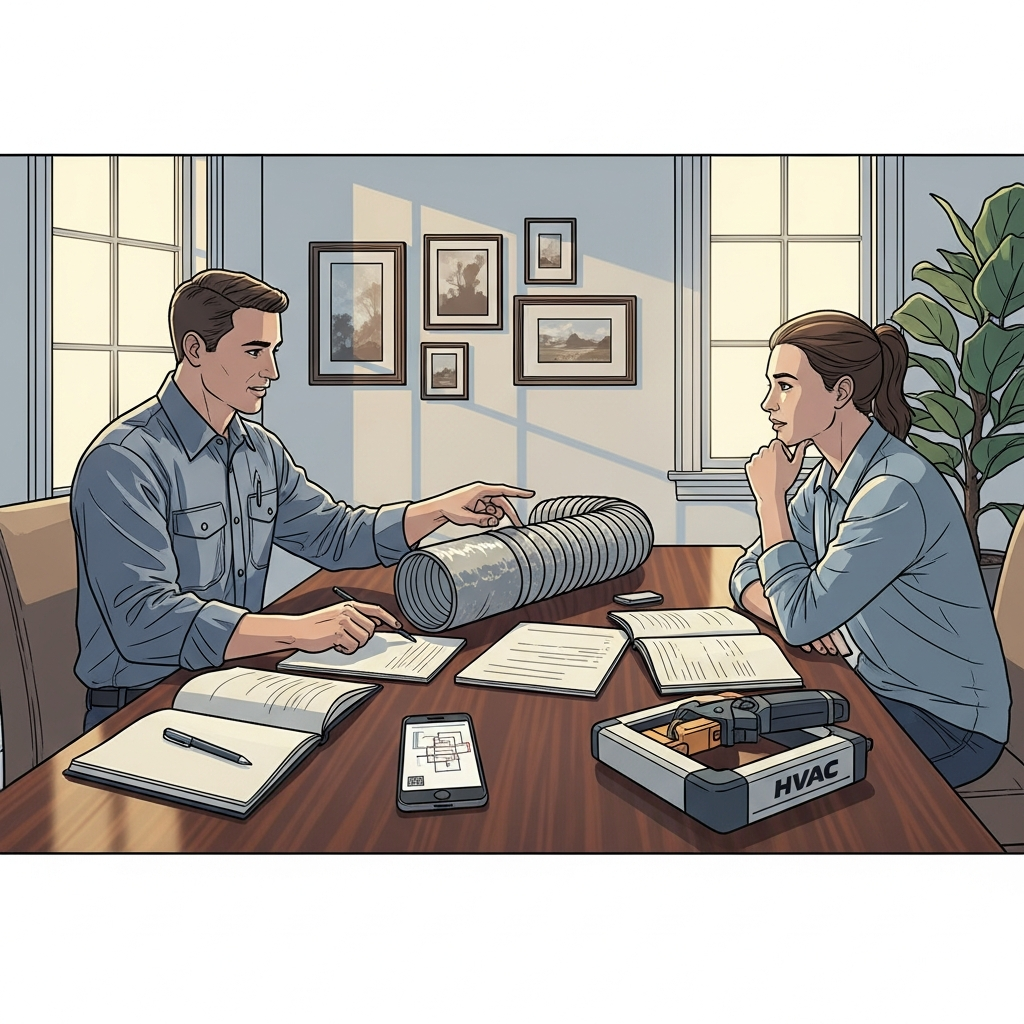
Every Beverly Hills home has its own rhythm: sunlight glancing across mid-century angles in Trousdale Estates, quiet courtyards tucked behind hedges in The Flats, and hillside views that sweep toward the canyons. Behind that beauty is a comfort system that should work without calling attention to itself. When air feels uneven, a faint rattle joins the soundtrack of a quiet room, or dust seems to gather too quickly, the duct system often deserves a closer look. If you are starting to explore professional duct replacement, this homeowner-forward FAQ brings together the questions we hear most—and the practical, local answers that help you move from uncertainty to confidence.
While no two properties are identical, successful projects share common threads. A thoughtful assessment maps airflow targets room by room. Design refines routes to be smooth and direct. Installation emphasizes sealing, insulation, and support that stand up to attic heat and seasonal shifts. Finally, testing verifies that promises on paper show up as quiet, even comfort you can feel in every space. Keep those pillars in mind as you read, and you will be equipped to ask the right questions and understand the answers you receive.
What signs suggest my ducts need replacement rather than repair?
Persistent temperature imbalances, unusual noise, and visible deterioration are your first clues. If multiple rooms never agree with the thermostat, if you hear whistling at grilles or tapping near boots, or if you see sagging, disconnected sections, or brittle sealing at joints, it is time to evaluate the system as a whole. Replacement does more than patch symptoms; it recalibrates the network for quiet, stable performance.
How long will my home be disrupted?
Expect a clearly staged plan, protective coverings over floors and furnishings, and tidy wrap-ups each day. While there will be intervals when the system is offline, good coordination keeps life moving. Homes with open attic access progress especially smoothly; tighter spaces or delicate finishes warrant additional care and planning.
Can new ducts really make the house quieter?
Yes. Noise often traces back to turbulence from sharp bends, restrictive runs, or undersized returns. Thoughtful routing, proper sizing, and considered register selection lower sound levels significantly, leaving rooms with the kind of calm you notice immediately.
Will replacement help air quality?
Sealed ducts prevent dusty attic air from being pulled into the system, and balanced returns support filters so they capture particulates more effectively. If desired, your team can recommend filtration enhancements that match the new layout and your goals.
Is zoning worth considering in Beverly Hills homes?
It depends on layout and lifestyle. Multi-level homes or residences where sleeping areas have different preferences than daytime spaces often benefit from zoning. In flatter layouts with balanced design, a well-executed single zone may be perfect. Your assessment will clarify which path aligns with comfort goals.
How does architecture influence duct design?
Architecture sets the canvas. Mid-century homes often reward straighter trunk lines through accessible attics, while hillside properties may require carefully planned routes that thread through compact spaces. In both cases, the aim is the same: smooth, sealed pathways that preserve quiet performance and even temperatures.
What does “verification” really mean?
It means measuring, not guessing. Static pressure tests show whether the blower operates in its ideal range. Duct leakage testing confirms air is staying in the system. Balancing aligns each room with its target airflow. These steps turn promises into predictable, everyday comfort.
Can I keep living at home during the project?
Yes. Crews schedule work to minimize downtime, communicate daily, and maintain a clean environment. Short windows without cooling or heating are planned so you can go about your day with minimal interruption.
Will I need permits?
In many cases, yes. Permits and inspections support safety and energy performance standards. A reputable team will handle the process and provide documentation at completion.
How do returns factor into comfort?
Returns are the lungs of the system. Undersized or poorly placed returns cause the blower to struggle and can elevate noise. Strategic additions or resizing during replacement often deliver immediate gains in quiet and balance.
Is there a best material for all homes?
There is a best combination for each home. Metal trunks excel on long, straight sections; quality insulated flex shines on short, gentle connections. The right mix reduces turbulence, preserves diameter, and supports quiet operation.
How will crews protect my finishes?
Experienced teams working in Beverly Hills treat protection as standard practice: surface coverings, careful access planning, and daily cleanups. They coordinate with other trades when needed to maintain the integrity of your spaces.
What should I expect at the end of the project?
A walk-through, documentation of routes and sizes, and measured results from testing and balancing. You should also feel immediate improvements: steadier temperatures, a calmer acoustic profile, and air that simply arrives where and when you want it.
How do I prepare my home before work begins?
Clear access to attics or mechanical closets, move delicate items away from work paths, and share any information about past remodels that may have affected duct routes. Open communication helps crews work efficiently and respectfully.
What ongoing care keeps performance high?
Replace filters on schedule, keep returns unobstructed, and plan periodic system checkups. If you remodel or change how you use certain rooms, ask for a quick review to ensure ducts remain aligned with your lifestyle.
Will replacement lower noise in bedrooms and offices?
Yes. Properly sized runs, smooth routing, and the right registers can make bedrooms, offices, and media rooms notably calmer. Many homeowners comment that the house sounds different—in the best way—after the upgrade.
What if my home has very limited access?
Limited access calls for creativity, not compromise. The plan will lean on meticulous routing, protective measures, and sometimes sequencing the work to avoid unnecessary openings. The outcome remains the same: quiet, even comfort that respects your home’s structure and finishes.
Are there benefits I will notice immediately?
Most people first notice the softening of airflow noise and the alignment of rooms that used to feel different. Over time, you will see steadier thermostat behavior and less dust gathering near registers.
What questions should I ask when choosing a contractor?
Ask how they measure and design, how they seal and support ducts, what verification steps they include, and how they will protect your finishes. Request examples from similar local projects and a clear explanation of scheduling and daily communication.
What about timing around remodels?
Share your plans early. Duct design integrates smoothly with renovations when addressed up front, preserving comfort throughout construction and preventing rework later.
Final Thoughts and Your Next Step
Comfort that feels effortless is the product of assessment, design, craftsmanship, and verification working in harmony. If you are ready to bring that harmony into your home, start with a professional evaluation shaped around the way you live. Expect answers that are measured, a plan that respects your architecture, and a finished system that fades elegantly into the background of daily life. When you are ready to move from questions to certainty, reach out to a trusted Beverly Hills team for expert duct replacement and experience the quiet difference for yourself.