
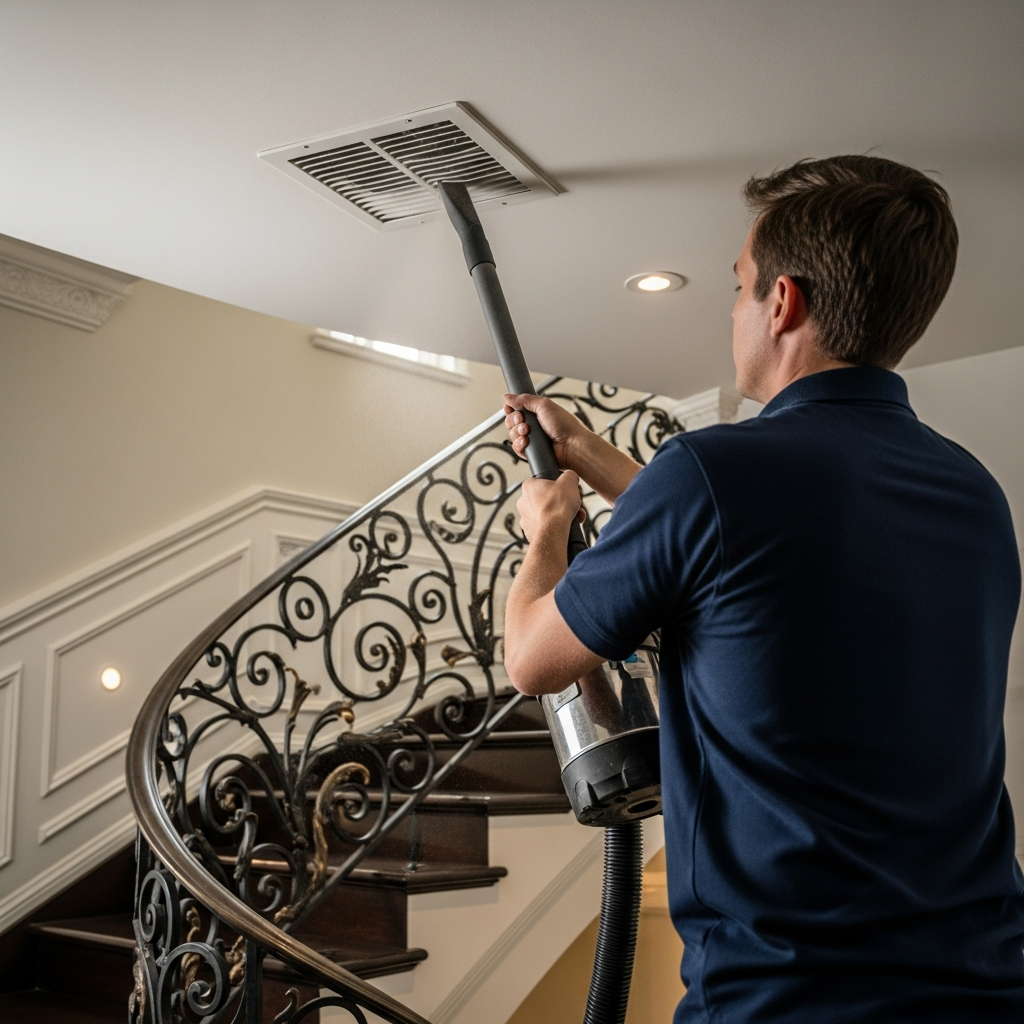
In Beverly Hills, the most luxurious homes often feel effortless—doors glide shut with a whisper, lights soften at dusk, and rooms wait at just the right temperature. That feeling depends on infrastructure you rarely see, especially the air ducts moving conditioned air where it is needed. When something in that hidden network goes awry, it tends to show up as subtle discomforts: a faint odor here, a persistent film of dust there, or a room that cannot quite catch up to the rest of the house. Understanding the common duct-related issues in our local homes empowers you to address them gracefully, protect finishes, and keep life moving in elegant rhythm. Along the way, targeted air duct cleaning remains one of the most effective tools for restoring balance.
The issues we see most often do not shout for attention; they whisper. They appear in homes of every vintage—from updated mid-century residences to contemporary hilltop builds with expansive glass—and they tend to accumulate slowly. Because dust and residue build in increments, a home can drift from perfection without anyone noticing the exact moment it happened. The good news is that most problems have straightforward, respectful solutions that fit the privacy-first expectations of Beverly Hills households.
Post-Renovation Residue
Even the best-managed construction projects produce fine particles that seem to have a life of their own. They travel around plastic barriers, through micro-gaps in doors, and into returns. Once inside the ductwork, those particles can settle far from the original project site. Weeks later, when airflow stirs, the dust finds its way back into rooms, leaving faint traces on dark finishes or a subtle smell that does not match the otherwise pristine interior. A focused cleaning that pays special attention to returns and nearby branches usually eliminates the issue, returning the home to the intended baseline.
For estates undergoing phased remodels, it is wise to consider light, targeted cleaning between stages. That habit prevents cumulative buildup that would otherwise require more invasive—and disruptive—work at the end.
Uneven Airflow And Temperature Drift
The longer the duct runs, the more sensitive they become to minor obstructions and surface roughness. In large homes with multiple stories, distant rooms or those served by complex branches may start lagging a degree or two behind the main living spaces. Occupants may notice that certain registers sound a bit more forceful without delivering the expected comfort. The root cause is often a modest film of dust inside the ducts that increases resistance. Restoring a clean interior helps air glide more predictably, smoothing out those little variances and making smart controls more effective.
Sometimes, the culprit is a register or grill that has collected debris and needs careful removal and cleaning. Because these fixtures are visible design elements, they warrant gentle handling and perfect reinstallation, preserving both function and aesthetic.
Lingering Odors
Homes are living places, and smells tell a story—cooking, floral arrangements, even new leather from a study chair. Most of these dissipate quickly when returns and ducts are clean. When odors linger, especially in rooms that see intermittent use, it can indicate residue within returns or nearby duct sections. Targeted duct cleaning often resolves this by removing the surfaces where odor molecules cling. For spaces like screening rooms or wine lounges that sit quiet between gatherings, this small intervention brings back that first-step freshness guests notice but cannot quite name.
Odor issues can also follow a season of closed windows, when minimal fresh air exchange means the system recirculates the same air longer. A reset puts the home back into a state where everyday aromas come and go without overstaying their welcome.
Dust That Will Not Quit
If your housekeeping team mentions that dust is resettling faster than expected on pianos, mirrors, or polished stone, the explanation may lie in your ductwork. Even with high-end filtration, some particles pass through and then ride the airflow currents until they find a place to rest. When ducts hold accumulated material, they can contribute to this cycle. Cleaning interrupts it. After a thorough service, many households report longer intervals between noticeable dusting, a small but satisfying improvement that preserves the polish your interiors deserve.
It is also worth noting that returns act like the lungs of the house. When they are free of buildup, they draw air smoothly and help the entire system breathe. A focus on returns during cleaning delivers outsized benefits at the lowest possible intrusion.
Noise From Registers Or Vents
In a quiet home, even a whisper becomes noticeable. If a vent begins to hiss or a register makes a faint rasping sound, think of airflow meeting a small obstruction. Dust and debris create micro-eddies that translate into sound. By restoring smooth interior surfaces and ensuring grills are reinstalled correctly, the noise often fades away. In larger estates where nighttime quiet is treasured, this outcome matters as much as temperature control.
Noise may also indicate that a zone is working harder than it should. When ducts are clear, the system does not need to push as aggressively, so fans and dampers can operate at calmer speeds. That elegance of operation is part of what sets a well-kept Beverly Hills home apart.
Access And Discretion Challenges
One practical issue in our area is simply accessing ductwork without disturbing the living environment. Architectural concealment is a hallmark of luxury homes. Good service providers plan pathways like a museum team plans an installation, protecting floors and finishes, communicating with staff, and staging equipment discreetly. Work proceeds by wing or by floor, and sensitive rooms are given extra protection. When done well, the home returns to normal the moment the last tool leaves—only the air feels noticeably better.
Documentation closes the loop. Photos from inside ducts and returns, along with notes on any areas needing follow-up, empower estate managers and homeowners to make smart choices about future maintenance and upgrades.
Seasonal Shifts And Outdoor Influences
Santa Ana winds, dry spells, and regional construction all nudge more particulates into the environment. Even if windows stay closed during dusty days, some material still finds a path indoors, especially through high-traffic entries. Over months, that can collect in returns and duct branches. A timely cleaning clears the slate, so your system does not recirculate what the season left behind. Pairing this with a filter check keeps the gains in place.
Homes with extensive landscaping also see a bit more organic material in the air—pollen, tiny leaf fragments, and soil dust from garden work. None of this is cause for alarm; it is simply a reminder that air is alive and ducts benefit from periodic attention.
Aftercare: Keeping Things Clean Longer
Once ducts are refreshed, small habits help maintain the result. Confirm that filters match the home’s usage and are replaced on a schedule tailored to real life, not a generic calendar. Encourage housekeeping to vacuum registers and returns as part of routine cleaning using gentle methods that protect finishes. Consider brief, targeted inspections before major entertaining seasons to catch any early signs of buildup. These are light-touch practices that prevent the slow creep back toward imbalance.
For multi-structure properties with guest houses and wellness pavilions, coordinate maintenance across buildings so airflow feels consistent everywhere family and guests spend time. Even small disparities are noticeable to sensitive occupants; keeping all systems in sync preserves the overall experience.
FAQs: Common Duct Issues
Why is one room always a little warmer or cooler? Distant runs and small obstructions in ductwork can affect airflow. Cleaning and a quick review of registers often resolve the imbalance.
Can duct cleaning remove persistent cooking smells? It frequently helps. By cleaning returns and nearby ducts, you reduce surfaces where odors can cling and later recirculate.
Is duct cleaning messy? Done professionally, it is not. Floors and furnishings are protected, negative air machines capture debris, and work proceeds in contained stages.
Do I need cleaning after renovating just one room? Yes, especially if the room connects to shared returns. Fine dust travels farther than expected and can settle in ducts serving adjoining spaces.
How quickly will I notice a difference? Many homeowners report a fresher scent and quieter, more even airflow within days. Housekeeping often sees slower dust resettling soon after.
Restore Balance To Your Home’s Air
If any of these issues sound familiar, consider a focused session of professional air duct cleaning. With careful staging, precise tools, and an approach designed for Beverly Hills estates, you can eliminate lingering odors, smooth out temperature drift, and lower the background noise that distracts from daily life. The path back to effortless comfort is simpler than you think, and it begins with a conversation.